
In an age where desk jobs dominate and screen time is at an all-time high, poor posture has become a silent epidemic. Slouching over laptops, hunching over smartphones, and sitting for hours without movement have led to widespread musculoskeletal discomfort. Enter the posture corrector — a small wearable device or brace promising to pull your shoulders back, align your spine, and retrain your body into better postural habits. But as these gadgets flood the market, from simple elastic braces to smart wearables with real-time feedback, a critical question emerges: Are posture correctors legitimate tools for long-term improvement, or are they merely temporary crutches that mask deeper issues?
The answer isn’t binary. Posture correctors sit at the intersection of biomechanics, behavioral psychology, and wearable technology. Their effectiveness depends not on the device itself, but on how it’s used, by whom, and in what context.
The Rise of Posture Wearable Technology
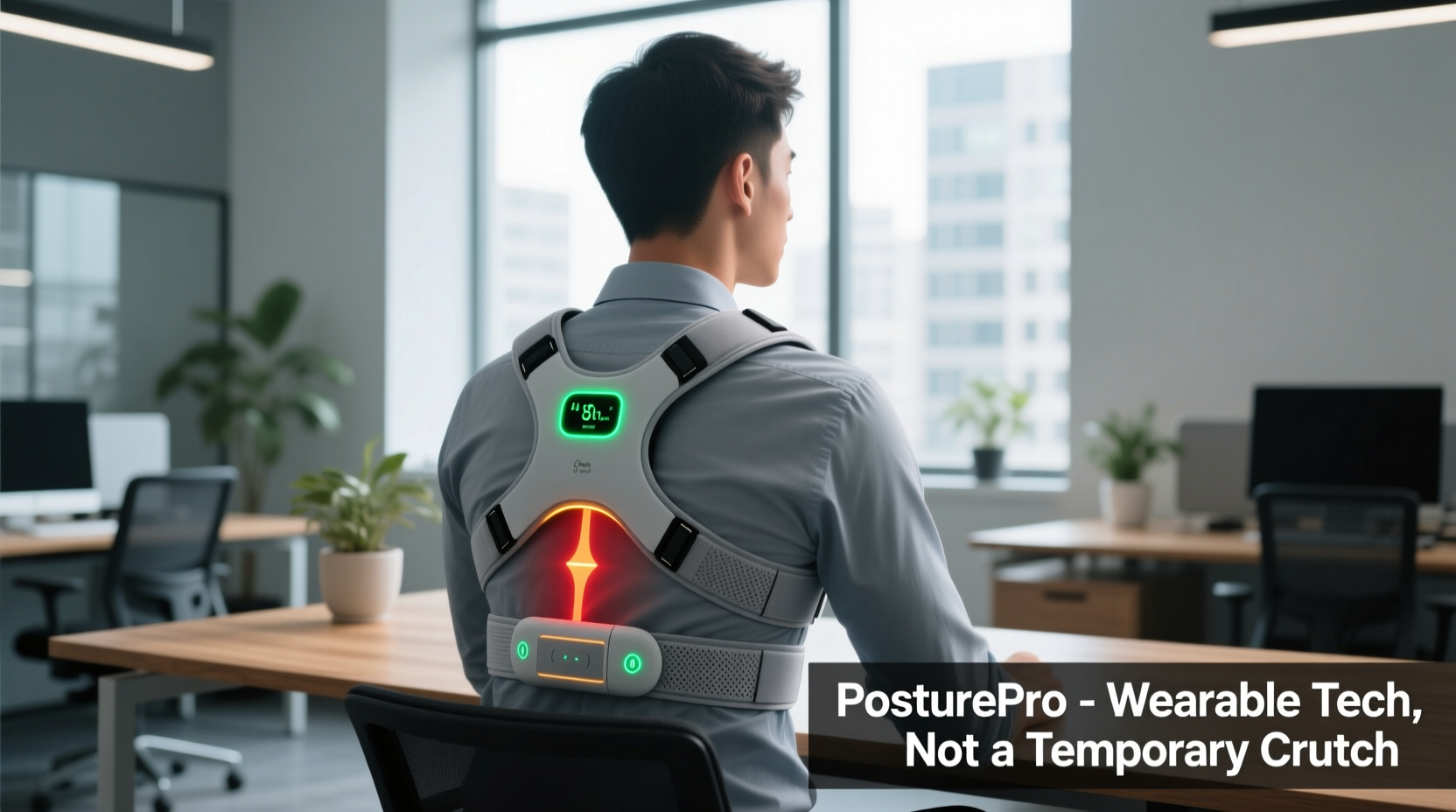
Posture correctors have evolved significantly over the past decade. Early versions were rigid, uncomfortable braces resembling medieval torture devices. Today’s models range from sleek fabric straps to sensor-laden smart wearables that sync with smartphone apps. These modern devices often include accelerometers, haptic feedback, and AI-driven analytics that detect slouching and vibrate gently to remind the wearer to sit up straight.
Brands like Upright Go, Lumo Lift, and BackEmbrace have positioned themselves as health-tech innovators, marketing their products as tools for “muscle memory retraining” and spinal alignment. They claim users can develop better posture within weeks through consistent use. But while the technology is impressive, the physiological reality is more nuanced.
Wearable posture correctors operate on a principle known as proprioceptive feedback — providing the body with external cues about its position in space. This can be valuable, especially for individuals who’ve lost awareness of their postural habits due to prolonged sedentary behavior. However, relying solely on external correction without addressing root causes may lead to dependency rather than lasting change.
How Posture Correctors Work: Mechanics vs. Muscle Memory
Most posture correctors fall into two categories:
- Mechanical Braces: These physically restrict forward shoulder rounding and pull the upper back into extension. They’re effective at creating immediate postural improvement — but only while worn.
- Sensor-Based Wearables: These don’t force posture but monitor spinal alignment and alert the user when slouching occurs. The goal is awareness and habit formation.
The distinction matters. Mechanical braces provide passive correction; they do the work for you. Sensor-based devices aim for active engagement, encouraging self-correction over time.
Dr. Rebecca Lee, a physical therapist specializing in ergonomic rehabilitation, explains:
“Devices that simply hold you upright don’t strengthen the muscles responsible for good posture. You might look better in the brace, but once it comes off, old patterns return. The real goal should be neuromuscular re-education — teaching the body to maintain alignment without assistance.” — Dr. Rebecca Lee, DPT
This highlights a fundamental flaw in many users’ approach: treating the symptom (slouching) without addressing the cause (weak postural muscles, poor ergonomics, lack of movement).
Benefits and Limitations: A Balanced View
When used appropriately, posture correctors can offer tangible benefits. However, they also come with significant limitations.
| Aspect | Benefits | Limitations |
|---|---|---|
| Awareness | Increases mindfulness of posture throughout the day. | Alerts may become background noise if ignored consistently. |
| Short-Term Relief | Reduces neck and upper back tension from slouching. | Does not address underlying muscle imbalances. |
| Habit Formation | Can help build consistency in postural correction. | Risk of dependency; some users feel unable to sit properly without the device. |
| Ease of Use | No training required; plug-and-play functionality. | Lack of personalization; one-size-fits-all design may not suit all body types. |
| Objective Feedback | Smart devices track progress and provide data insights. | Data doesn’t always translate to functional improvement. |
The table illustrates a key insight: posture correctors are most effective as feedback tools, not permanent solutions. They can jumpstart awareness, but lasting change requires strength, flexibility, and behavioral shifts.
Tip: Use a posture wearable for no more than 2–3 hours per day initially. Overuse can weaken muscles by making them reliant on external support.Real-World Case: Sarah’s Journey with a Smart Posture Device
Sarah, a 34-year-old software developer, spent eight hours daily coding at her home office. After months of chronic upper back pain and frequent headaches, she purchased a Upright Go 2. She wore it during work hours and received vibration alerts whenever she slouched.
At first, the device was eye-opening. She realized she slouched within minutes of sitting down. Over three weeks, she responded to the alerts and consciously corrected her posture. Her pain decreased slightly.
However, after six weeks, she noticed diminishing returns. The alerts became routine, and she began ignoring them. When she stopped using the device, her posture reverted completely. It wasn’t until she combined the wearable with targeted exercises — scapular retractions, chin tucks, and thoracic mobility drills — that she saw lasting improvement.
Sarah’s experience reflects a common pattern: wearables alone rarely produce durable results. They serve best as part of a broader strategy that includes movement, strengthening, and ergonomic adjustments.
When Posture Correctors Help — and When They Don’t
Not everyone benefits equally from posture correctors. Their usefulness depends on individual circumstances.
Situations Where They Can Be Helpful:
- Rehabilitation Phase: After injury or surgery, short-term use can protect healing tissues and reinforce proper alignment.
- Behavioral Reconditioning: For individuals with zero postural awareness, wearables act as a “wake-up call” to initiate change.
- Workplace Ergonomic Support: In jobs requiring prolonged sitting, periodic use can reduce fatigue and prevent strain.
Situations Where They May Do More Harm Than Good:
- Long-Term Daily Use: Continuous reliance can lead to muscular atrophy in postural stabilizers like the rhomboids and lower trapezius.
- Pain Without Diagnosis: Using a corrector to mask pain without understanding its origin (e.g., disc issue, nerve impingement) can delay proper treatment.
- Incorrect Fit or Usage: Wearing a brace too tightly or in improper alignment can create new sources of discomfort or joint stress.
“Think of a posture corrector like training wheels on a bike. They help you stay upright while you learn, but you can’t ride forever with them attached.” — Dr. Marcus Tran, Orthopedic Specialist
Building Sustainable Posture: A Step-by-Step Approach
If your goal is long-term postural health, consider posture correctors as one tool among many. True improvement comes from integrating movement, strength, and environment.
- Assess Your Current Posture: Stand sideways in front of a mirror. Ideally, your ear, shoulder, hip, knee, and ankle should form a straight line. Note any forward head posture or rounded shoulders.
- Optimize Your Workspace: Adjust your chair so feet are flat, knees at 90 degrees, and monitor at eye level. Use a lumbar roll if needed.
- Introduce Micro-Movements: Set a timer to stand or stretch every 30 minutes. Simple shoulder rolls, neck stretches, and standing backward bends can reset alignment.
- Strengthen Key Muscles: Focus on exercises that target the mid-back, deep neck flexors, and core. Examples:
- Rows (band or dumbbell)
- Face pulls
- Chin tucks
- Planks and bird-dogs
- Use a Wearable Strategically: Wear it during focused work sessions for 1–2 hours daily. Pair each alert with a deliberate correction and a breath. Gradually reduce usage as awareness improves.
- Seek Professional Guidance: Consult a physical therapist or certified ergonomic specialist for personalized assessment and exercise programming.
FAQ: Common Questions About Posture Correctors
Can posture correctors fix kyphosis or scoliosis?
No. While mild postural kyphosis (rounding of the upper back) may improve with behavioral changes and strengthening, structural conditions like Scheuermann’s kyphosis or scoliosis require medical evaluation and targeted treatment. Posture correctors cannot alter spinal curvature in these cases and may worsen discomfort if misused.
How long should I wear a posture corrector each day?
Start with 30–60 minutes per day and gradually increase to 2–3 hours maximum. Prolonged use can lead to muscle inhibition. The goal is to use it as a cue, not a crutch.
Are smart posture devices worth the investment?
For some, yes — particularly if you struggle with awareness and respond well to feedback. However, they are not essential. Mindfulness, ergonomic adjustments, and exercise deliver similar or better results at little to no cost.
Final Checklist: Using Posture Correctors Wisely
- ✅ Use only as a feedback tool, not a permanent solution
- ✅ Combine with strength and mobility exercises
- ✅ Limit daily wear to avoid muscle dependency
- ✅ Address workstation ergonomics
- ✅ Consult a healthcare provider if pain persists
- ✅ Track progress through posture photos or movement quality, not just device metrics
Conclusion: Beyond the Brace
Posture correctors occupy a gray area between helpful technology and psychological placebo. For some, they provide the missing link in postural awareness. For others, they become a symbol of dependency — a constant reminder that the body can’t function correctly on its own.
The truth is, there is no shortcut to sustainable posture. It’s not built in a day, nor maintained by a gadget. It emerges from consistent movement, balanced muscle strength, and mindful habits. Wearable tech can play a role in this journey, but only if treated as a guide, not a crutch.
Instead of asking whether a posture corrector works, ask a better question: What habits, movements, and environments will help my body naturally hold itself with strength and balance? Answer that, and you won’t need to rely on a device to stand tall.
🚀 Ready to transform your posture from the inside out? Start today: set a timer to move every hour, do five chin tucks, and reflect on how your body feels. Share your journey or tips in the comments below — your experience could inspire someone else to stand a little taller.








