
Pork has long been a staple in diets around the world, from Chinese char siu to European sausages and American pulled pork. Yet in recent years, questions about its health impact have grown louder. With increasing awareness of heart disease, cancer risks, and the broader implications of red meat consumption, many are asking: is pork unhealthy? The answer isn’t black and white. While pork provides essential nutrients, it also carries potential risks depending on how it’s raised, processed, and consumed. This article examines the nutritional profile of pork, evaluates associated health concerns, and offers balanced guidance for making informed dietary choices.
Nutritional Profile of Pork: More Than Just Fat
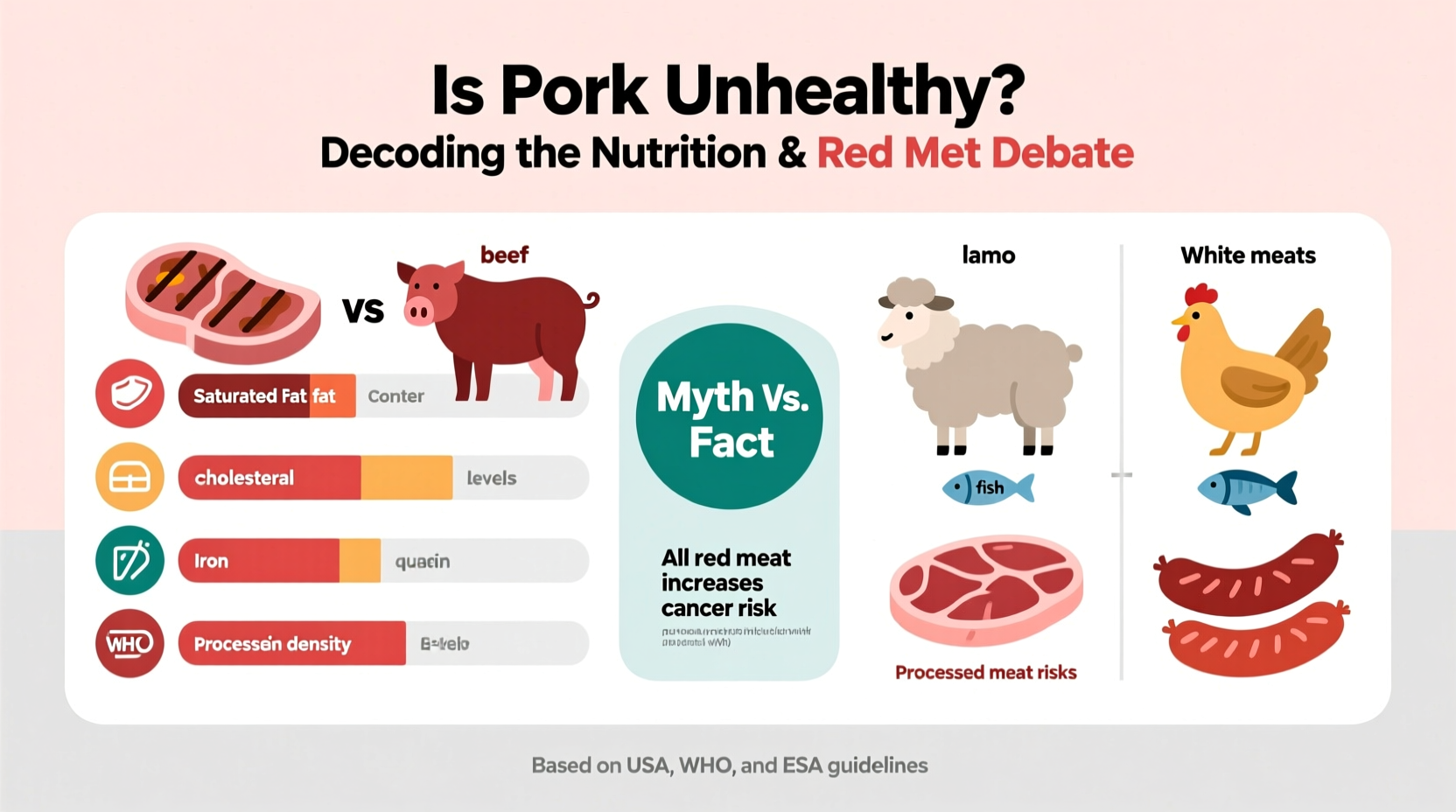
Pork is often unfairly labeled as a fatty, unhealthy meat, but modern farming and selective cuts have significantly improved its nutritional value. Lean cuts like pork tenderloin or loin chops can rival chicken breast in protein content while offering more flavor and versatility.
A 3-ounce (85g) serving of cooked lean pork provides approximately:
| Nutrient | Amount | % Daily Value (DV) |
|---|---|---|
| Calories | 120 | - |
| Protein | 22g | 44% |
| Total Fat | 3.5g | 5% |
| Saturated Fat | 1.2g | 6% |
| Thiamine (B1) | 0.7mg | 58% |
| Niacin (B3) | 5.8mg | 36% |
| Vitamin B6 | 0.4mg | 24% |
| Selenium | 33mcg | 60% |
Notably, pork is one of the richest dietary sources of thiamine, a B vitamin critical for energy metabolism and nerve function—unlike most other meats. It also contains zinc, phosphorus, and high-quality protein that supports muscle maintenance and satiety.
Tip: Choose \"loin\" or \"tenderloin\" cuts for lower fat and higher protein. Avoid marbled cuts like pork belly if managing saturated fat intake.Red Meat Classification and Health Implications
In 2015, the World Health Organization (WHO) classified pork—as a red meat—under Group 2A: “probably carcinogenic to humans,” primarily due to links with colorectal cancer when consumed in excess, especially in processed forms. This classification sparked widespread concern, but context matters.
Red meat includes all mammalian muscle meat: beef, lamb, veal, and pork. The WHO's International Agency for Research on Cancer (IARC) concluded that each 50-gram daily serving of processed meat increases the risk of colorectal cancer by about 18%. While this sounds alarming, it reflects relative risk, not absolute danger.
“While high intake of processed and red meat is associated with small increases in cancer risk, the evidence supports moderation rather than elimination.” — Dr. Renata Micha, Nutrition Epidemiologist, Tufts University
The primary mechanisms behind these risks include:
- Heme iron: May promote oxidative stress and damage in the gut lining.
- Nitrites and nitrates: Found in processed pork (bacon, ham, sausages), they can form carcinogenic N-nitroso compounds during digestion or cooking.
- High-temperature cooking: Grilling or frying produces heterocyclic amines (HCAs) and polycyclic aromatic hydrocarbons (PAHs), linked to DNA damage.
Processed vs. Unprocessed Pork: A Critical Difference
Not all pork is created equal. The distinction between processed and unprocessed pork is crucial for evaluating health risks.
Processed pork undergoes smoking, curing, salting, or chemical preservation to enhance flavor or extend shelf life. Examples include bacon, hot dogs, pepperoni, and deli ham. These products are typically high in sodium, preservatives, and saturated fats.
In contrast, unprocessed pork—such as grilled pork chops or roasted tenderloin—is minimally altered and retains its natural nutrient profile when cooked appropriately.
“Eliminating bacon and sausage may do more for your long-term health than cutting out lean pork altogether.” — Dr. Frank Hu, Chair of Nutrition, Harvard T.H. Chan School of Public Health
Do’s and Don’ts: Choosing Healthier Pork Options
| Action | Do | Don’t |
|---|---|---|
| Buying | Select fresh cuts labeled “lean” or “extra lean” | Buy heavily marbled cuts or pre-packaged processed meats |
| Cooking | Bake, roast, or slow-cook at moderate temperatures | Char or blacken meat over open flame |
| Frequency | Limited to 2–3 servings per week | Daily consumption, especially of processed forms |
| Pairing | Serve with vegetables, legumes, or whole grains | Combine with refined carbs or fried sides |
Real-Life Example: John’s Dietary Shift
John, a 48-year-old office worker, had high blood pressure and elevated LDL cholesterol. His typical breakfast included two strips of bacon and a sausage patty. Lunch often featured ham on white bread, and dinner rotated between pork chops and stir-fried pork. After a routine check-up revealed early signs of insulin resistance, his doctor recommended reducing processed meats and moderating red meat intake.
Over six months, John replaced bacon with eggs and avocado, switched to turkey breast on whole grain bread, and limited pork to two lean servings per week. He increased fish, beans, and plant-based proteins. His follow-up tests showed a 12-point drop in LDL cholesterol and improved blood pressure control—without medication changes.
This case illustrates how small, consistent changes in pork consumption—particularly eliminating processed forms—can yield measurable health benefits.
Practical Tips for Safer Pork Consumption
Enjoying pork doesn’t require complete avoidance. With mindful choices, you can incorporate it into a balanced diet. Follow this checklist to minimize risks:
Checklist: Healthy Pork Habits- ✔ Limit processed pork (bacon, sausages, ham) to occasional use
- ✔ Choose pasture-raised or organic pork when possible
- ✔ Trim visible fat before cooking to reduce saturated fat
- ✔ Marinate pork in antioxidant-rich herbs (rosemary, thyme, garlic) to reduce HCA formation
- ✔ Cook at lower temperatures using methods like braising or stewing
- ✔ Pair pork dishes with fiber-rich vegetables to support gut health
- ✔ Keep portion sizes moderate—3 to 4 ounces per serving
Frequently Asked Questions
Is pork worse than beef?
Not inherently. Lean pork can be lower in saturated fat than many beef cuts. However, processed pork products (like bacon) are often higher in sodium and preservatives than their beef counterparts. Overall, both should be consumed in moderation, with preference given to unprocessed, lean varieties.
Can you eat pork on a heart-healthy diet?
Yes, but selectively. Lean cuts of pork, prepared without added salt or saturated fats, can fit into a heart-healthy eating pattern such as the DASH or Mediterranean diet. The key is replacing processed meats and balancing pork intake with plant-based proteins, whole grains, and vegetables.
Does pork cause inflammation?
Excessive consumption of red and processed meats, including pork, has been linked to chronic low-grade inflammation due to high heme iron, advanced glycation end products (AGEs), and gut microbiome shifts. However, moderate intake of unprocessed pork as part of an anti-inflammatory diet (rich in fruits, vegetables, and omega-3s) does not appear to pose significant risk.
Conclusion: Balance Over Bans
Pork isn’t inherently unhealthy—but how you choose, prepare, and consume it determines its impact on your health. As a nutrient-dense source of protein, B vitamins, and minerals, lean pork can play a role in a balanced diet. The real concern lies in overconsumption, particularly of processed forms loaded with sodium, nitrites, and unhealthy fats.
Rather than labeling pork as “bad,” focus on quality, quantity, and context. Opt for fresh, lean cuts, cook them gently, and pair them with plant-based foods. By making informed decisions, you can enjoy the rich taste of pork while supporting long-term well-being.
💬 What’s your go-to way to prepare pork? Have you made changes to your red meat intake for health reasons? Share your experience in the comments and help others navigate smarter food choices!








