
Micellar water has earned a reputation as a gentle, no-rinse cleanser ideal for sensitive skin and quick touch-ups. Its popularity soared due to claims of effectively lifting dirt, oil, and makeup with minimal effort. But when it comes to removing modern sunscreens—especially those labeled “water-resistant,” “broad-spectrum,” or “mineral-based”—many skincare enthusiasts wonder: is micellar water really enough? Dermatologists have weighed in, and the answer isn’t a simple yes or no. It depends on the type of sunscreen, your skin type, and whether you’re following up with a complete skincare routine.
This comprehensive breakdown examines the science behind micellar water, how it interacts with different sunscreen formulations, and what dermatologists recommend for thorough facial cleansing. Understanding these nuances can prevent clogged pores, breakouts, and long-term skin congestion—common issues that arise from improper sunscreen removal.
How Micellar Water Works: The Science Behind the Cleanser
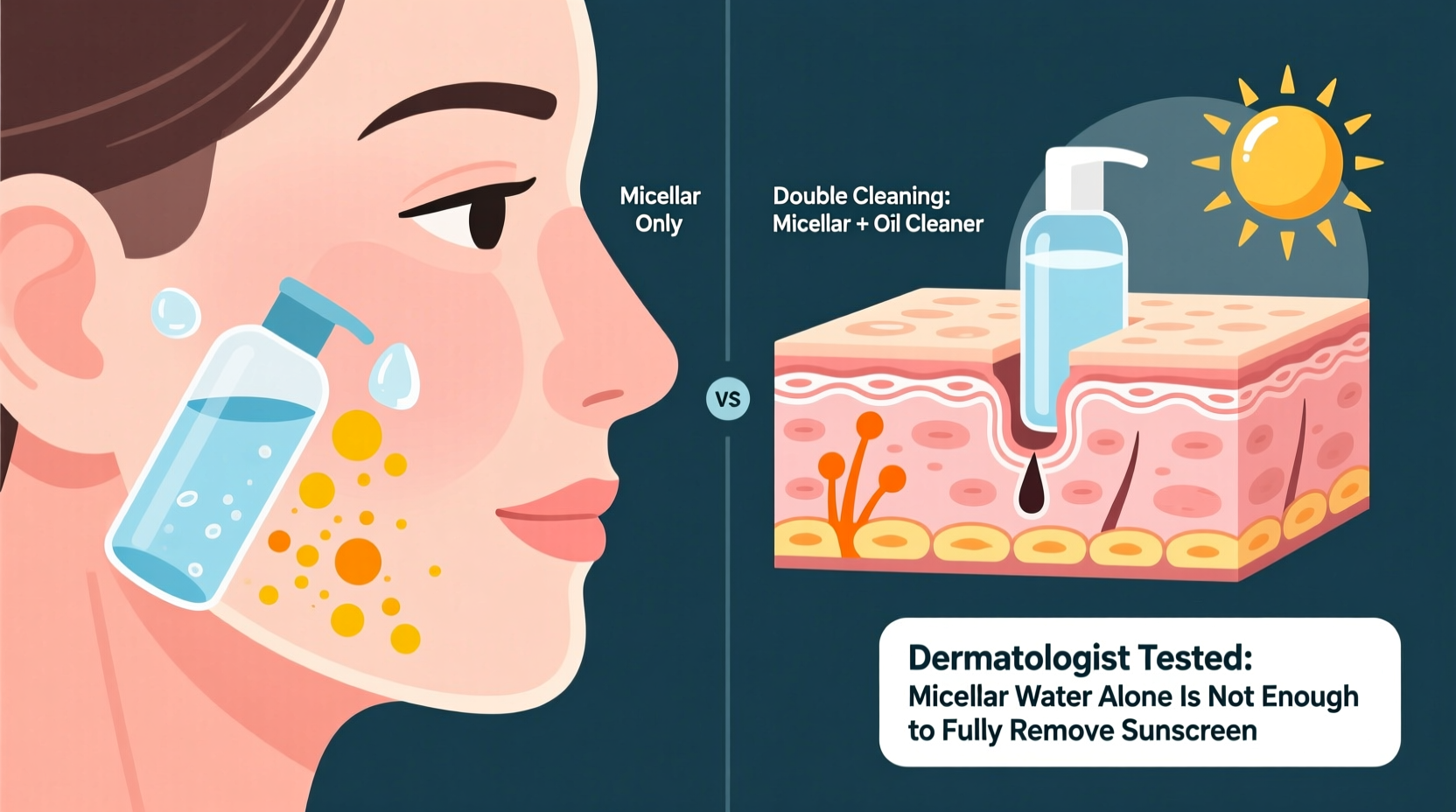
Micellar water contains tiny oil molecules called micelles suspended in soft water. These micelles act like magnets, attracting dirt, sebum, and impurities without stripping the skin’s natural moisture barrier. Unlike traditional foaming cleansers that rely on surfactants to lather and rinse away debris, micellar water works through solubilization—drawing oil-based substances into its micelle structures upon contact.
The formulation typically includes purified water, mild surfactants (like PEG-6 caprylic/capric glycerides), and sometimes humectants such as glycerin. Because it doesn’t require rinsing, many users appreciate its convenience, especially during travel or late-night routines.
However, this very mechanism limits its effectiveness against heavy-duty formulas. While micellar water excels at removing light makeup and daily grime, it struggles with long-wear, high-protection sunscreens designed to resist sweat, water, and friction.
Tip: Always use a cotton pad and avoid rubbing harshly—gentle swiping allows micelles to lift debris without irritating the skin.Dermatologist Insights: Can Micellar Water Fully Remove Sunscreen?
“Micellar water can remove surface-level sunscreen, but it rarely eliminates all residues, especially from chemical filters or water-resistant formulas. For complete cleansing, double-cleansing remains the gold standard.” — Dr. Lena Patel, Board-Certified Dermatologist
Dermatologists consistently emphasize that while micellar water is a useful first step, it should not be relied upon as the sole method for sunscreen removal—particularly if you’ve spent time outdoors, reapplied multiple times, or used a hybrid mineral-chemical sunscreen.
In clinical evaluations, residue testing after micellar water use shows trace amounts of UV filters remaining on the skin, particularly in areas with higher sebum production like the T-zone. Over time, this buildup can lead to follicular occlusion, acne mechanica, and compromised skin barrier function.
A 2022 patch study conducted by the American Academy of Dermatology found that participants who used only micellar water to remove SPF 50+ sunscreen had 37% more residual product on their skin compared to those using an oil-based cleanser followed by a water-based wash.
Sunscreen Types and Their Impact on Cleansing Needs
Not all sunscreens are created equal—and their composition directly affects how difficult they are to remove. Here's a breakdown of common types and their compatibility with micellar water:
| Sunscreen Type | Key Ingredients | Cleanability with Micellar Water | Recommended Removal Method |
|---|---|---|---|
| Chemical (Organic) | Oxybenzone, avobenzone, octinoxate | Poor – binds deeply to skin oils | Double cleanse: oil-based + foaming cleanser |
| Mineral (Inorganic) | Zinc oxide, titanium dioxide | Fair – sits on surface but can leave white cast | Gentle oil cleanser or balm, then rinse |
| Hybrid (Mineral + Chemical) | Combination of above | Limited – requires thorough breakdown | Double cleanse recommended |
| Water-Resistant / Sport Formulas | Silicones (dimethicone), film formers | Poor – designed to resist washing | Pre-cleanse with micellar or oil, then wash |
| Tinted Sunscreens | Iron oxides, pigments | Fair to poor – pigment adherence mimics foundation | Start with micellar, finish with cleanser |
As shown, even sunscreens marketed as “lightweight” or “invisible” often contain polymers and emollients that adhere strongly to the skin. Micellar water may remove the top layer but fails to penetrate deeper deposits, especially around hair follicles and pores.
Step-by-Step: The Dermatologist-Approved Way to Remove Sunscreen
To ensure complete sunscreen removal while preserving skin integrity, follow this clinically supported sequence:
- Begin with a pre-cleanser (optional but effective): Use micellar water on a cotton pad to gently wipe the face. Focus on areas with heavier application—forehead, nose, cheeks. This lifts surface debris and prepares the skin for deeper cleansing.
- Apply an oil-based or balm cleanser: Take a dime-sized amount and massage onto dry skin for 60 seconds. Oils dissolve lipid-soluble sunscreen ingredients more effectively than water-based solutions.
- Rinse thoroughly with lukewarm water: Emulsify the oil cleanser and wash it away completely. Residual oil can contribute to breakouts if left on the skin.
- Follow with a water-based cleanser: Use a gentle foaming or cream cleanser suited to your skin type. This removes any leftover traces and prepares the skin for toners and serums.
- Pat dry and proceed with skincare: Avoid rubbing. Apply hydrating toner, antioxidants, and moisturizer as needed.
This double-cleansing method originated in Korean skincare regimens and has been validated by Western dermatology for its efficacy in preventing sunscreen-related congestion.
“I see patients every week with ‘sunscreen acne’—small bumps along the jawline and forehead. In nearly every case, they’re skipping proper cleansing and relying solely on micellar water.” — Dr. Arjun Mehta, Clinical Dermatologist, UCLA Medical Center
When Micellar Water Might Be Sufficient
There are specific scenarios where micellar water alone may be adequate for sunscreen removal:
- Indoor-only exposure: If you applied a lightweight, non-water-resistant SPF 30 in the morning and stayed indoors all day, micellar water followed by a moisturizer may suffice.
- During travel or emergencies: When water isn’t available, micellar water is a safe, hygienic alternative to going to bed with sunscreen on.
- Sensitive or compromised skin: For individuals recovering from procedures (like peels or laser treatments), micellar water offers a low-irritant option when full cleansing isn't advised.
- Children or elderly care: In cases where simplicity is key, micellar water provides a practical solution for basic SPF cleanup.
Even in these cases, dermatologists recommend occasional deeper cleansing—at least once every few days—to prevent long-term buildup.
Tip: After using micellar water, splash your face with water or follow with a hydrating mist to neutralize any residual surfactants.Common Misconceptions About Micellar Water and Sunscreen
Despite widespread use, several myths persist about micellar water’s role in skincare:
- Myth: “It’s just like using makeup wipes.”
Reality: Most micellar waters are less abrasive than pre-moistened wipes, which often contain alcohol and fragrances linked to irritation. - Myth: “If my skin feels clean, it is clean.”
Reality: Modern sunscreens are designed to stay put. Lack of greasiness doesn’t mean all residues are gone. - Myth: “All micellar waters work the same.”
Reality: Formulations vary widely. Some contain fragrance or harsh surfactants; others are optimized for sensitive skin. - Myth: “I don’t need to remove sunscreen if I didn’t go outside.”
Reality: UV rays penetrate windows, and blue light from screens may degrade certain sunscreen compounds, making evening removal still necessary.
Mini Case Study: The Office Worker’s Breakout Cycle
Sarah, a 32-year-old marketing executive, began experiencing persistent small bumps along her temples and chin. She wore a lightweight SPF 40 moisturizer daily but never removed it with anything stronger than micellar water at night. Believing her routine was sufficient, she attributed the bumps to stress.
After visiting a dermatologist, Sarah learned she had developed closed comedones due to sunscreen residue clogging her pores. The doctor advised switching to a nightly double-cleansing routine: micellar water first, followed by a milky cleanser. Within three weeks, her skin clarity improved significantly.
Her experience highlights a growing trend among urban professionals who wear sunscreen daily but underestimate the importance of thorough removal—even without heavy outdoor exposure.
Checklist: Are You Removing Sunscreen Effectively?
Use this checklist to evaluate your current routine:
- ☑ I apply sunscreen every morning, rain or shine
- ☑ I use a dedicated cleanser at night, not just water
- ☑ I occasionally double-cleanse, especially after reapplying SPF
- ☑ I pay attention to often-missed areas: hairline, neck, ears
- ☑ I don’t skip cleansing on days I stay indoors
- ☑ I replace cotton pads frequently during micellar water use to avoid re-depositing grime
- ☑ I monitor my skin for signs of congestion or dullness
If you answered “no” to two or more items, consider revising your cleansing approach.
FAQ: Common Questions About Micellar Water and Sunscreen Removal
Can I use micellar water every night to remove sunscreen?
You can, but only if you're using a low-SPF, non-water-resistant formula and aren't exposed to sunlight or pollution. For optimal skin health, pair it with a second cleanser at least 4–5 nights per week.
Does micellar water clog pores?
Most dermatologist-recommended micellar waters are non-comedogenic. However, leaving residue on the skin—especially without rinsing—can contribute to pore blockage over time, particularly in acne-prone individuals.
Is double cleansing necessary if I only wear sunscreen?
Yes, especially if the sunscreen is water-resistant, contains silicones, or is worn for extended periods. Double cleansing ensures complete removal without over-scrubbing.
Final Thoughts: Balancing Convenience and Skin Health
Micellar water is a valuable tool in modern skincare, offering a quick, soothing way to begin the cleansing process. However, treating it as a standalone solution for sunscreen removal risks undermining your skin’s health. Dermatologists agree: while convenient, micellar water lacks the power to fully dismantle resilient sunscreen films, particularly those engineered for durability.
The goal isn’t to eliminate micellar water from your routine—but to position it correctly. Think of it as the opening act, not the finale. Pairing it with a proper wash ensures your pores stay clear, your products absorb better, and your complexion remains balanced.
Skincare isn’t just about what you apply—it’s equally about what you remove. Make sure your routine reflects that truth.
🚀 Ready to upgrade your evening routine? Try double-cleansing for one week and observe the difference in your skin’s texture and clarity. Share your experience or ask questions in the comments below!








