
Collagen has become a buzzword in skincare and wellness circles. From powders stirred into morning coffee to capsules marketed as “fountain of youth” pills, the promise is consistent: smoother, plumper, more youthful skin. But behind the glossy packaging and influencer endorsements lies a critical question—do collagen supplements actually produce visible improvements in skin texture, or are they simply another case of clever marketing capitalizing on consumer desire?
The answer isn’t a simple yes or no. It involves understanding how collagen works in the body, what clinical research reveals, and how individual factors like age, diet, and lifestyle influence outcomes. This article dives deep into the science, separates fact from fiction, and offers practical guidance for anyone considering collagen supplementation.
The Role of Collagen in Skin Health
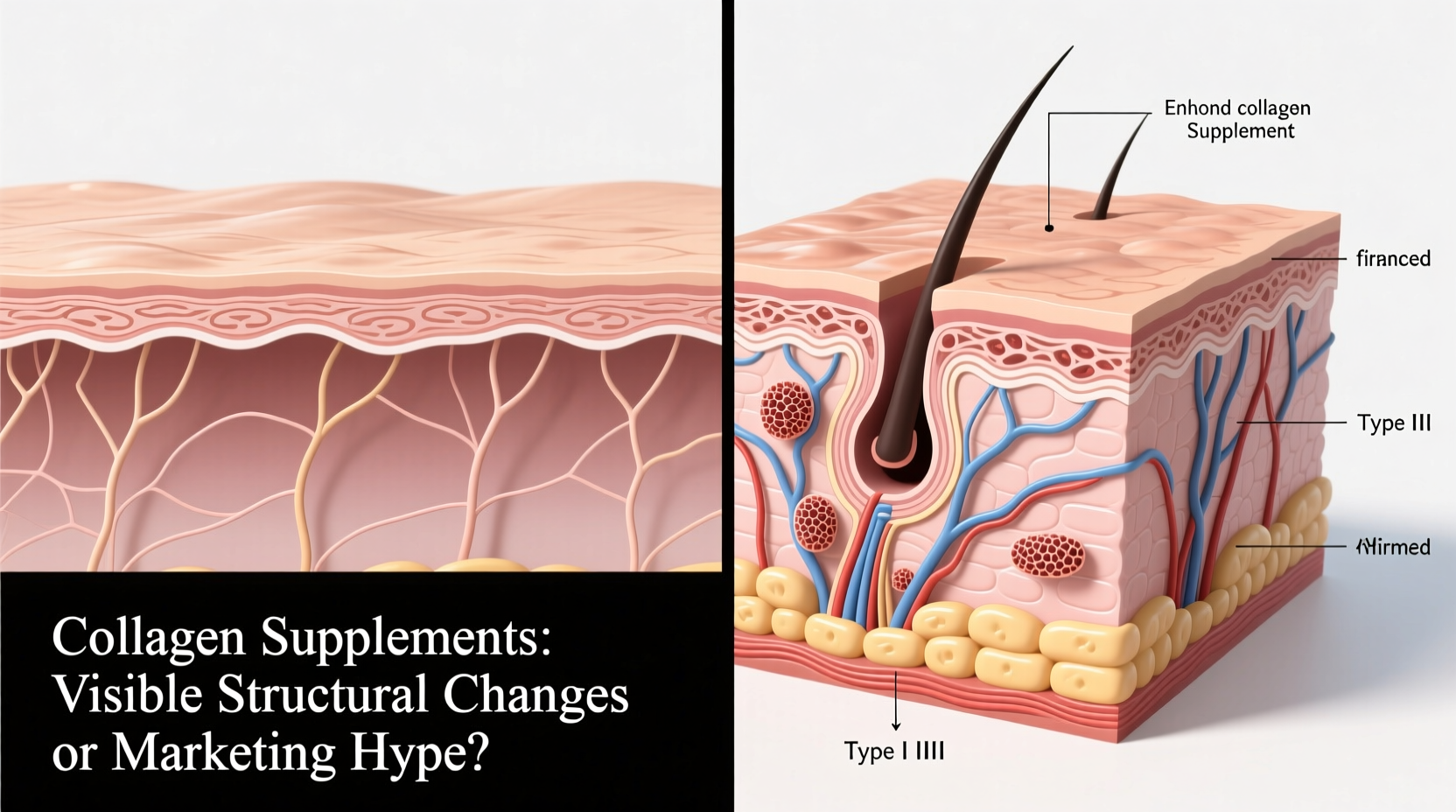
Collagen is the most abundant protein in the human body, making up about 30% of total protein content. In the skin, it forms a network within the dermis that provides structure, firmness, and elasticity. Type I collagen, in particular, dominates in skin tissue and is responsible for maintaining tensile strength and resilience.
Natural collagen production begins to decline around age 25, with an estimated loss of 1% per year. By the time someone reaches their 40s or 50s, this reduction becomes visibly apparent through fine lines, wrinkles, dryness, and sagging. Environmental stressors like UV exposure, pollution, and smoking accelerate this breakdown.
This biological reality has fueled demand for solutions that can replenish or stimulate collagen. While topical retinoids and vitamin C serums have long been proven to support collagen synthesis, oral supplements offer a systemic approach—delivering building blocks directly into the bloodstream.
What Do the Studies Say?
Over the past decade, numerous clinical trials have investigated the effects of hydrolyzed collagen peptides on skin health. These studies typically involve women aged 35–70 who take 2.5–10 grams of collagen daily for 8–12 weeks, measuring changes in skin hydration, elasticity, roughness, and wrinkle depth.
A 2019 meta-analysis published in Aesthetic Plastic Surgery reviewed 19 studies and concluded that oral collagen supplementation led to significant improvements in skin elasticity and hydration, with moderate but measurable reductions in wrinkle depth. Another double-blind, placebo-controlled trial found that women who took 5 grams of collagen peptides daily for 8 weeks showed a 20% average improvement in skin moisture and a noticeable decrease in eye wrinkle volume compared to the control group.
These findings suggest a biological mechanism: ingested collagen peptides are broken down into amino acids and smaller peptides, which then signal fibroblasts (the cells responsible for producing collagen) to ramp up activity. Some researchers refer to this as the “molecular mimicry” effect—where the presence of collagen fragments tricks the body into thinking it needs to repair damaged connective tissue.
“Oral collagen doesn’t rebuild your skin like Lego bricks, but it does appear to act as a signaling molecule that stimulates natural regeneration.” — Dr. Laura Nguyen, Dermatological Researcher at the University of Toronto
Visible Results: What Users Actually Experience
Scientific data is one thing; real-world experience is another. Many users report subtle but meaningful changes after several weeks of consistent use. The most commonly cited benefits include:
- Improved skin hydration, especially in dry or mature skin types
- Smoother texture, particularly around cheeks and forehead
- Reduced appearance of fine lines, especially around the eyes
- Stronger nails and shinier hair (a frequent secondary benefit)
However, not everyone sees dramatic transformations. Some individuals notice little to no change, even after months of use. This variability underscores the importance of expectations and context. Collagen supplements are not miracle workers—they work best as part of a holistic approach to skin health.
Mini Case Study: A Realistic Timeline
Sarah, a 42-year-old teacher from Portland, started taking a marine collagen powder daily after noticing increased dryness and crepiness on her neck and décolletage. She combined the supplement with a consistent skincare routine including sunscreen and a retinol serum.
After four weeks, she noticed her skin felt less tight after washing. By week eight, her partner commented that her complexion looked “more radiant.” At 12 weeks, a dermatologist observed improved epidermal thickness during a routine check-up. There was no overnight transformation, but gradual, cumulative improvement.
Sarah’s experience reflects the typical user journey: modest, progressive changes rather than instant glow-ups.
Tip: Consistency matters. Most visible benefits emerge after 8–12 weeks of daily use. Skipping doses or stopping early may prevent noticeable results.Marketing Hype vs. Scientific Reality
The supplement industry is largely unregulated, and many collagen products make bold claims without robust evidence. Terms like “clinically proven” are often used selectively—citing small, company-funded studies while omitting contradictory data.
Common misleading tactics include:
- Using before-and-after photos with lighting, makeup, or filters that exaggerate results
- Claiming “increased collagen production by 300%” based on blood marker changes, not actual skin outcomes
- Blending collagen with other ingredients (like hyaluronic acid or biotin) and attributing all benefits to collagen alone
Moreover, the source of collagen—bovine, marine, chicken, or plant-based alternatives—can affect absorption and efficacy. Marine collagen, derived from fish, has smaller peptide chains and may be more bioavailable than bovine sources, though evidence remains limited.
And despite growing popularity, plant-based “vegan collagen” supplements do not contain actual collagen (which only comes from animals). Instead, they provide nutrients like vitamin C, lysine, and proline intended to support the body’s own collagen production—a different mechanism altogether.
Do’s and Don’ts of Choosing a Collagen Supplement
| Do | Don’t |
|---|---|
| Choose hydrolyzed collagen peptides for better absorption | Assume all collagen types are the same—Type I and III are most relevant for skin |
| Look for third-party tested brands with transparent sourcing | Trust exaggerated claims like “erase wrinkles in 30 days” |
| Pair supplementation with sun protection and antioxidant-rich foods | Expect results without addressing lifestyle factors like sleep and stress |
| Give it at least 8–12 weeks before evaluating effectiveness | Combine multiple collagen products unnecessarily, risking over-supplementation |
How to Maximize Effectiveness: A Step-by-Step Guide
If you're considering collagen supplementation, follow this science-backed timeline to increase your chances of seeing real results:
- Week 1–2: Select a high-quality product. Choose a hydrolyzed collagen supplement with at least 5 grams of Type I and III peptides per serving. Opt for brands with independent lab testing and clear ingredient lists.
- Week 3–4: Establish consistency. Take your dose daily, preferably on an empty stomach or with vitamin C (e.g., orange juice or a supplement), which enhances collagen synthesis.
- Week 5–8: Support from within. Eat a nutrient-dense diet rich in antioxidants, healthy fats, and protein. Avoid excessive sugar and processed foods, which promote glycation and damage collagen.
- Week 9–12: Assess changes objectively. Take weekly selfies under the same lighting and compare them. Pay attention to areas like the jawline, neck, and around the eyes—common sites for early aging signs.
- After 12 weeks: Evaluate and adjust. If you notice improved hydration and smoothness, continue. If not, consider whether other factors (like poor sleep or UV exposure) are undermining progress.
Frequently Asked Questions
Can collagen supplements reverse deep wrinkles?
No single supplement can eliminate deep, established wrinkles. Collagen may improve skin texture and reduce the depth of fine lines, but significant structural changes require medical treatments like lasers, fillers, or prescription retinoids.
Are there side effects to taking collagen daily?
For most people, collagen is well-tolerated. Some report mild digestive discomfort, especially with higher doses. Individuals with fish or egg allergies should avoid marine or egg-based collagen. Always consult a healthcare provider if you have underlying conditions or are pregnant.
Is there a difference between liquid and powder forms?
There is no strong evidence that liquid collagen is more effective than powder or capsules. The key factor is the quality and concentration of collagen peptides, not the delivery method. Powders tend to be more cost-effective and customizable in dosage.
Expert Insight: Beyond the Hype
While clinical evidence supports modest benefits, experts emphasize that collagen supplements should not replace foundational skincare practices.
“You can take all the collagen in the world, but if you’re not wearing sunscreen, smoking, or chronically sleep-deprived, you won’t see lasting improvements. Supplements are adjuncts, not substitutes.” — Dr. Naomi Patel, Board-Certified Dermatologist
Additionally, emerging research suggests that gut health may influence how well the body utilizes collagen peptides. A balanced microbiome appears to enhance nutrient absorption and reduce systemic inflammation, both of which support skin integrity.
Conclusion: A Measured Approach to Realistic Results
So, are collagen supplements actually visible in skin texture, or is it just marketing? The truth lies in the middle. For many people, especially those over 30 with early signs of aging, daily collagen supplementation can lead to measurable improvements in hydration, firmness, and surface smoothness—but these changes are gradual and subtle.
They are not a magic bullet. Visible results depend on product quality, consistency of use, and alignment with broader lifestyle habits. When paired with sun protection, a balanced diet, and proven skincare ingredients like retinol and antioxidants, collagen can be a valuable piece of the puzzle.
Rather than chasing viral trends or expecting Hollywood-level transformations, approach collagen with realistic expectations and patience. Track your progress, listen to your skin, and remember that true radiance comes from inside-out care—not just what you add to your morning smoothie.
🚀 Ready to test collagen for yourself? Start with a reputable brand, commit to 12 weeks, and document your journey. Share your experience in the comments—your insights could help others navigate the noise and find what truly works.








