Gold has long been a symbol of wealth and stability, but its recent price surge has captured global attention. In 2023 and into 2024, gold reached record highs, surpassing $2,400 per ounce in key markets. This isn’t just inflation or seasonal fluctuation—it’s a complex interplay of macroeconomic forces, investor behavior, and shifting global dynamics. Understanding why gold prices are rising is essential for investors, policymakers, and everyday savers alike.
Global Economic Uncertainty Fuels Demand
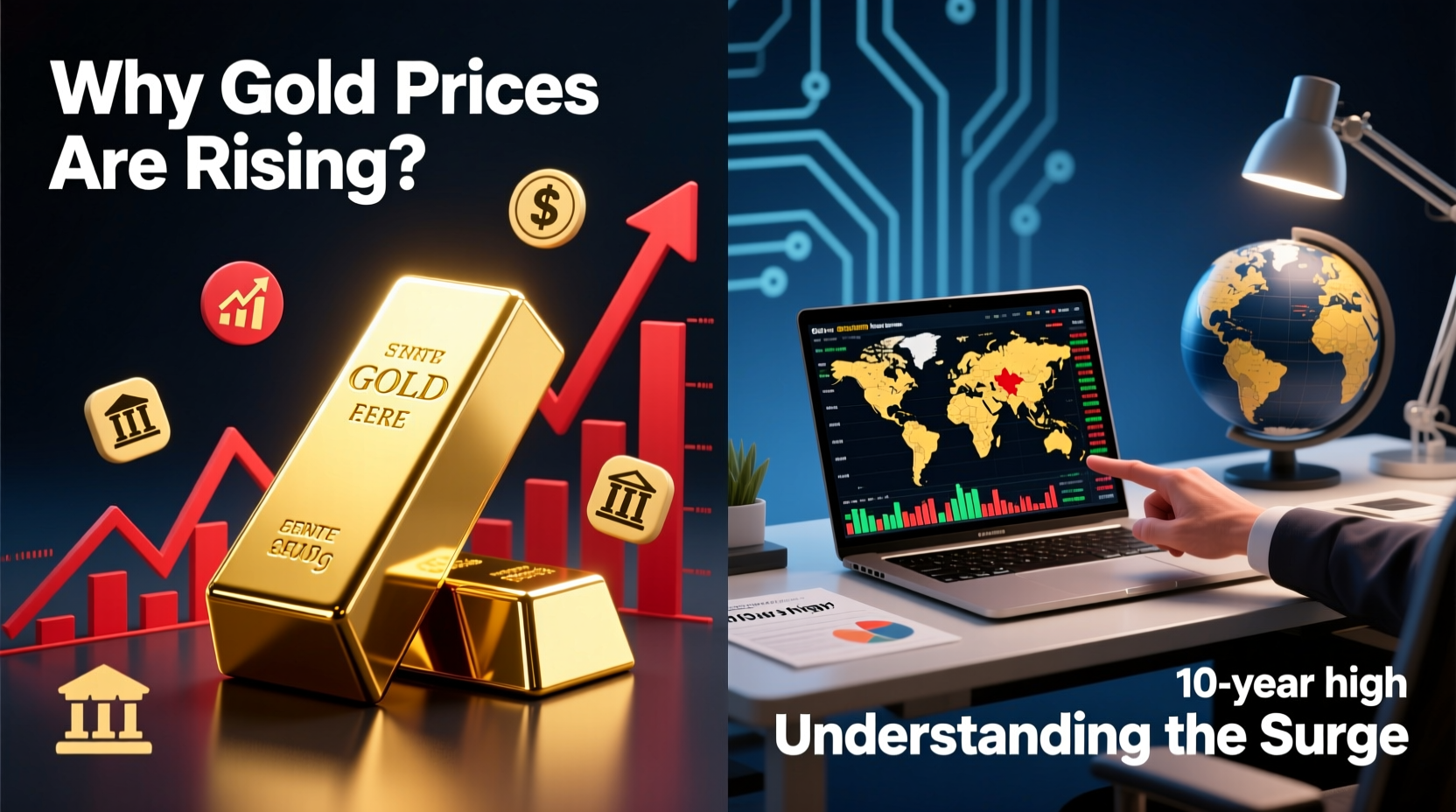
One of the primary drivers behind rising gold prices is persistent global economic uncertainty. When traditional financial assets like stocks and bonds appear volatile or risky, investors turn to gold as a \"safe haven.\" Events such as banking sector instability—including the collapse of regional banks in the U.S. and credit concerns in Europe—have pushed institutional and retail investors toward physical gold and gold-backed ETFs.
Central banks themselves have become major buyers. According to the World Gold Council, central banks purchased over 1,100 tonnes of gold in 2023—the highest annual total in recorded history. Countries like China, Turkey, India, and Poland have significantly increased their reserves, signaling a strategic shift away from overreliance on the U.S. dollar.
“Gold is no longer just a portfolio diversifier—it’s becoming a cornerstone of national financial resilience.” — Dr. Lena Patel, Senior Economist at Global Macro InsightsTip: Monitor central bank gold purchases—they often signal long-term confidence in gold’s value during times of currency risk.
Inflation and Currency Devaluation Pressures
Inflation remains a critical factor. While headline inflation rates have cooled slightly in some developed economies, underlying pressures persist. Gold has historically served as a hedge against inflation because its value tends to rise when fiat currencies lose purchasing power.
The U.S. dollar, while still dominant, faces growing skepticism. Persistent budget deficits, rising national debt, and expansive monetary policies have led many analysts to question long-term dollar stability. As trust in paper currencies wavers, demand for tangible assets like gold increases.
This effect is amplified in emerging markets, where local currencies are more vulnerable to devaluation. In countries like Argentina, Turkey, and Egypt, citizens are increasingly turning to gold to preserve savings amid hyperinflation and currency crises.
Geopolitical Tensions Amplify Safe-Haven Appeal
Escalating geopolitical conflicts—from the war in Ukraine to rising U.S.-China tensions and instability in the Middle East—have intensified gold’s role as a crisis asset. During periods of war or diplomatic breakdown, investors seek assets that are not tied to any single government or military outcome.
Gold fits this profile perfectly. Unlike bonds or equities, it carries no counterparty risk. It cannot be hacked, frozen, or defaulted on. This intrinsic reliability makes it uniquely valuable when trust in institutions erodes.
Moreover, sanctions and financial weaponization—such as freezing foreign reserves—have prompted nations to diversify into non-dollar assets. Gold offers an apolitical alternative that can be stored domestically and traded globally without dependency on Western financial systems.
Supply Constraints and Mining Challenges
While demand for gold is soaring, supply growth is stagnating. Annual mine production has remained relatively flat over the past decade, averaging around 3,000–3,500 tonnes per year. Discoveries of new large-scale deposits are rare, and existing mines face increasing operational hurdles.
- Rising energy and labor costs
- Environmental regulations limiting expansion
- Permitting delays in key producing countries (e.g., Indonesia, Peru)
- Depletion of high-grade ore bodies
Recycling contributes about 1,200 tonnes annually, but this too has limits. As demand continues to outpace incremental supply gains, scarcity dynamics begin to influence pricing—especially when combined with strong investment demand.
Investor Behavior and Market Speculation
Financial markets are not purely rational. Sentiment and momentum play powerful roles in commodity pricing. As gold prices began climbing in early 2023, media coverage intensified, drawing in both institutional traders and individual investors.
ETF inflows surged, particularly in North America and Asia. Platforms like futures contracts and digital gold tokens made access easier than ever, broadening the investor base. Speculative buying—where investors buy based on expectations of future price increases—can amplify upward trends, sometimes beyond what fundamentals alone would justify.
However, unlike speculative bubbles in tech or crypto, gold’s rise is underpinned by real-world utility and institutional adoption, giving the trend greater staying power.
Real Example: How India’s Festive Season Impacted 2023 Prices
In October 2023, Indian jewelers reported a 30% increase in gold purchases compared to the previous year during Diwali, the country’s most important festival for gifting and investment. Despite high prices, consumers bought heavily, driven by cultural tradition and fear of missing out on future gains.
This domestic demand coincided with ongoing central bank buying and contributed to a short-term spike of nearly $120 per ounce within six weeks. The case illustrates how cultural and emotional factors can intersect with macroeconomic trends to create sustained upward pressure.
What This Means for Investors: A Practical Checklist
Whether you're considering gold as part of a diversified portfolio or simply want to understand its role in today’s economy, here’s a checklist to guide your decisions:
- Evaluate your risk tolerance: Are you seeking stability during uncertain times? Gold may serve as a buffer.
- Diversify across forms: Consider physical bullion, ETFs, mining stocks, or digital gold platforms.
- Assess storage and liquidity: Physical gold requires secure storage; ETFs offer easier access.
- Monitor central bank activity: Sustained official sector buying often precedes longer-term price strength.
- Set clear entry and exit points: Avoid emotional trading—use technical levels or valuation metrics.
- Stay informed on inflation and interest rates: Real yields (interest rates minus inflation) are inversely correlated with gold prices.
Do’s and Don’ts of Investing in Gold
| Do’s | Don’ts |
|---|---|
| Allocate 5–10% of your portfolio to gold for diversification | Don’t allocate more than 15% unless you have a specific risk profile |
| Buy during dips caused by short-term rate hikes | Don’t panic sell during temporary corrections |
| Use dollar-cost averaging for long-term accumulation | Don’t try to time the market perfectly |
| Verify authenticity when buying physical gold | Don’t store large amounts at home without insurance |
Frequently Asked Questions
Will gold prices keep rising?
While no one can predict exact future prices, the structural drivers—central bank demand, de-dollarization, inflation, and geopolitical risk—are likely to persist. Most analysts expect gold to remain supported above $2,000/ounce, with potential for further gains if global instability deepens.
Is now a good time to buy gold?
For long-term investors, yes—particularly if you’re under-allocated to hard assets. Timing the absolute bottom is difficult, but dollar-cost averaging allows you to build a position gradually without risking poor entry points.
How does interest rate policy affect gold?
Rising interest rates typically make non-yielding assets like gold less attractive. However, if real rates (adjusted for inflation) remain negative or low, gold can still perform well. Recently, even with Fed rate hikes, strong demand has offset traditional headwinds.
Conclusion: Navigating the Golden Surge
The rise in gold prices is not a fleeting moment but a reflection of deeper shifts in the global financial order. From central banks hedging against systemic risks to individuals protecting their wealth, gold is reclaiming its status as money that cannot be printed or devalued at will.
Understanding these forces empowers smarter financial decisions. Whether you choose to invest directly or simply stay informed, recognizing gold’s evolving role helps you navigate an era of volatility with greater confidence.
🚀 Ready to take control of your financial resilience? Review your asset allocation today and consider how gold might strengthen your long-term strategy. Share your thoughts or experiences with gold investing in the comments below.