Sherry is not merely a fortified wine—it’s a living expression of climate, time, and craft. From the sun-baked vineyards of Jerez to the centuries-old solera systems where biological aging unfolds under a veil of flor, temperature governs every stage of its existence. Yet few considerations are as quietly decisive—and frequently overlooked—as the temperature at which it’s served. Unlike red wines that tolerate slight warmth or whites that endure chilling, sherry occupies a precise thermal window where volatile compounds, alcohol perception, acidity, and oxidative nuance converge. Serve it outside that range, and even a meticulously aged Amontillado or vibrant Manzanilla can lose its voice: aromas mute, textures flatten, bitterness sharpens, or alcohol surges unnaturally. This isn’t about preference alone—it’s about respecting the wine’s structural integrity and revealing what decades of careful aging were designed to deliver.
The Science Behind Sherry’s Thermal Sensitivity
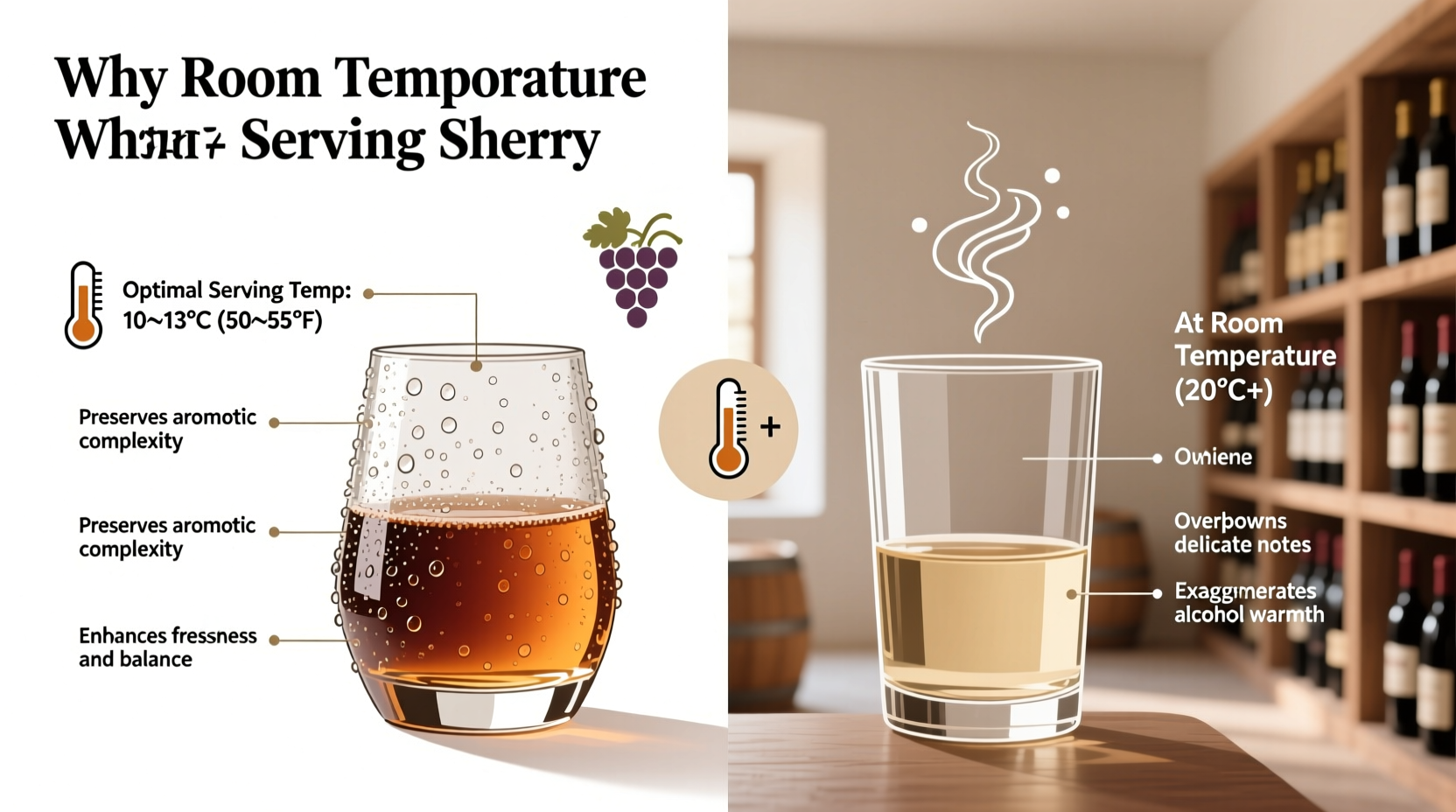
Sherry’s unique composition makes it exceptionally responsive to temperature shifts. Its alcohol content (typically 15–22% ABV) interacts dynamically with volatile aromatic compounds—esters, aldehydes, and terpenes—that carry notes of chamomile, sea breeze, roasted almond, or dried fig. At cooler temperatures (below 10°C), these compounds remain trapped in solution; their volatility drops, suppressing aroma release. Simultaneously, acidity—especially in Fino and Manzanilla—becomes more aggressive and one-dimensional, while delicate flor-derived nuances like acetaldehyde (responsible for its signature tangy, yeasty lift) recede. Conversely, above 18°C, alcohol volatilizes excessively, creating a hot, unbalanced sensation that overwhelms subtlety. The wine’s glycerol content and residual sugars (in sweeter styles like Pedro Ximénez) also behave differently: warmth amplifies perceived sweetness and body, but risks cloying heaviness if unchecked.
This sensitivity is amplified by sherry’s low pH (often 3.0–3.4) and high free sulfur dioxide levels—both critical for microbial stability during aging but prone to sensory distortion when thermal equilibrium is lost. As Dr. María José Sánchez, oenologist at the Consejo Regulador de Jerez, explains:
“Sherry’s aromatic architecture is built on tension—between flor and oxidation, between salinity and richness, between freshness and depth. Temperature is the tuning fork that either harmonizes or fractures that tension. A Manzanilla served at 8°C doesn’t just smell muted—it loses its saline precision. At 20°C, it tastes alcoholic and flat, betraying none of the elegance its biological aging was meant to achieve.” — Dr. María José Sánchez, Jerez Oenology Institute
Optimal Serving Temperatures by Style
There is no universal “room temperature” for sherry—not in London, Madrid, or New York. What matters is the wine’s style and structure. Traditional Spanish cellars maintain ambient temperatures of 14–16°C year-round, a range validated by generations of bodegueros. Modern research confirms this as the functional sweet spot across categories. Below is a practical guide grounded in both empirical testing and cellar practice:
| Sherry Style | Optimal Serving Range | Why This Range? | Risk of Deviation |
|---|---|---|---|
| Fino & Manzanilla | 12–14°C | Preserves flor-driven freshness, saline lift, and crisp acidity without numbing complexity. | Below 11°C: aromas vanish; acidity dominates. Above 15°C: alcohol spikes, yeast notes turn sour. |
| Amontillado | 14–16°C | Allows oxidative notes (walnut, tobacco) to emerge while retaining underlying freshness and structure. | Below 13°C: oxidative layers feel closed and disjointed. Above 17°C: bitterness intensifies, fruit dries out. |
| Oloroso | 16–18°C | Reveals depth, nuttiness, and savory umami without amplifying alcohol or overwhelming tannic grip. | Below 15°C: feels thin and austere. Above 19°C: heat dominates, masking complexity. |
| Pedro Ximénez (PX) & Cream | 14–16°C | Softens intense sweetness, lifts molasses and fig notes, and balances viscosity with acidity. | Below 13°C: cloying, syrupy, lacks lift. Above 17°C: alcohol clashes with sugar, tasting harsh. |
Note: These ranges assume the wine has been stored at stable cellar conditions (12–15°C). If chilled from refrigeration (4°C), allow 15–20 minutes in a cool room before serving. Never serve sherry straight from the fridge—or worse, heated in a microwave, a practice occasionally seen in misguided attempts to “open up” an older bottle.
A Real-World Example: The Seville Tapas Bar Incident
In early 2023, a respected tapas bar in Seville began receiving consistent feedback about its house Manzanilla tasting “dull and sharp” despite sourcing directly from a trusted bodega. Staff insisted the wine was fresh and properly stored. An independent consultant discovered the issue wasn’t the wine—but the service protocol. The bar used a commercial beverage cooler set to 6°C, standard for lager and soft drinks. Bottles were pulled, poured immediately, and served at ~9°C—well below the ideal 12–14°C. Patrons described “a wall of acidity” and “no smell at all,” missing entirely the wine’s hallmark briny, almond-kissed character.
The fix was simple: bottles were moved to a dedicated, temperature-stabilized cabinet held at 13°C. Staff received training to decant and serve within two minutes of removal. Within a week, customer comments shifted dramatically: “crisp but complex,” “you can taste the sea air,” “finally, real Manzanilla.” No change in supplier, vintage, or glassware—only temperature alignment restored the wine’s intended expression. This case underscores that technical precision matters most where tradition meets modern infrastructure.
Practical Tips for Home Serving
Tip: Use a wine thermometer—not your hand—to verify temperature. A digital probe inserted into the bottle neck for 30 seconds gives accurate readings. Your palm senses only extremes; sherry’s ideal range is too narrow for tactile guesswork.Most homes lack climate-controlled wine cabinets. Fortunately, precise control is achievable with minimal tools:
- For Fino/Manzanilla: Remove from refrigerator 20 minutes before serving. In summer, reduce to 15 minutes; in winter, extend to 25. Test with thermometer.
- For Amontillado/Oloroso: Store upright in a cool closet (ideally 15–17°C) and serve directly. If refrigerated, remove 30–40 minutes ahead.
- For PX/Cream: Chill lightly (to 14°C), then serve in small 60ml portions—warms quickly in the glass, so smaller pours preserve optimal temperature longer.
- Avoid ice buckets: Even brief immersion cools wine below 10°C. If a glass warms too fast, chill the *next* pour—not the current one.
- Glassware matters: Use tulip-shaped copitas (traditional sherry glasses) or white wine glasses with narrow openings. They concentrate delicate aromas and slow warming better than wide bowls.
Step-by-Step: Calibrating Your Sherry Service Routine
- Assess your storage: Where do you keep opened and unopened bottles? Ideal: dark, vibration-free space at 12–15°C (e.g., interior closet, basement shelf away from furnace).
- Check current fridge temp: Most domestic fridges run at 2–4°C—far too cold. Use a thermometer to confirm. Adjust settings if possible, or designate a warmer drawer section.
- Pre-chill intentionally: For Fino/Manzanilla, refrigerate unopened bottles for 2 hours before service—not overnight. For others, avoid refrigeration unless ambient temps exceed 22°C.
- Time the tempering: Set a kitchen timer: 20 min for Fino, 30 min for Amontillado, 40 min for Oloroso/PX after removing from cold storage.
- Verify & serve: Insert thermometer into bottle neck. When reading hits target range (e.g., 13°C for Manzanilla), pour immediately into pre-chilled copitas (chilled to ~10°C prevents rapid warming on contact).
- Monitor during service: Taste midway through the bottle. If aromas fade or alcohol emerges, gently swirl the glass to re-awaken volatiles—or briefly rest the glass in your palm for 10 seconds to nudge it upward.
FAQ
Can I re-chill an opened bottle of Fino and serve it again the next day?
Yes—but only if stored properly. Recork tightly, refrigerate immediately, and consume within 24 hours. Oxidation begins the moment air contacts the wine, and flor ceases protecting it once bottled. Re-chilling won’t reverse staling, but it slows further degradation. Never leave an open Fino at room temperature overnight.
Why do some restaurants serve sherry too cold, even in Spain?
Many establishments conflate “refreshing” with “cold,” especially for lighter styles. Others rely on standard bar coolers calibrated for beer, not nuanced wines. Additionally, staff training on sherry service remains inconsistent—even in Jerez, where tourism-driven volume sometimes overrides tradition. Always feel empowered to ask for a slight warm-up: “Could we let this breathe for two minutes?” is both polite and precise.
Does decanting help sherry reach ideal temperature faster?
No—and it’s generally inadvisable. Decanting accelerates oxidation, which benefits only very old, closed Olorosos or rare vintage sherries. For Fino, Manzanilla, and Amontillado, it dulls freshness and shortens drinking window. Temperature adjustment is best done in-bottle, where CO₂ and SO₂ remain protective.
Conclusion
Temperature is not a footnote in sherry appreciation—it’s the first note of the symphony. Getting it right transforms a simple pour into a revelation: the oceanic clarity of a chilled Manzanilla, the haunting depth of an Amontillado at precisely 15°C, the resonant warmth of an Oloroso that speaks of century-old soleras without shouting. It requires no special equipment—just awareness, a modest investment in a $15 thermometer, and the willingness to pause for two minutes before pouring. In a world of rushed consumption and algorithmic recommendations, serving sherry at its true temperature is a quiet act of reverence—for the land, the flor, the bodeguero’s patience, and the wine’s fragile, fleeting perfection. Don’t wait for a special occasion. Open a bottle tonight. Check the temperature. Breathe deeply. Taste the difference that care makes.
💬 Your experience matters. Have you noticed how temperature changes sherry’s character? Share your observations—or your favorite “aha!” moment—in the comments. Let’s deepen this conversation, one perfectly tempered sip at a time.