Gin is a spirit defined by botanicals—not just juniper, but coriander, citrus peel, orris root, angelica, and dozens more. Yet many drinkers who revisit a bottle months or years after opening are startled to find a pronounced, almost resinous pine note emerging where none was prominent before. It’s not spoilage. It’s not contamination. And it’s not a flaw—it’s chemistry in action. Understanding why aged gin develops this pine character reveals something fundamental about how gin lives, breathes, and evolves outside the still.
The Pine Note Is Rooted in Juniper—and Its Chemistry
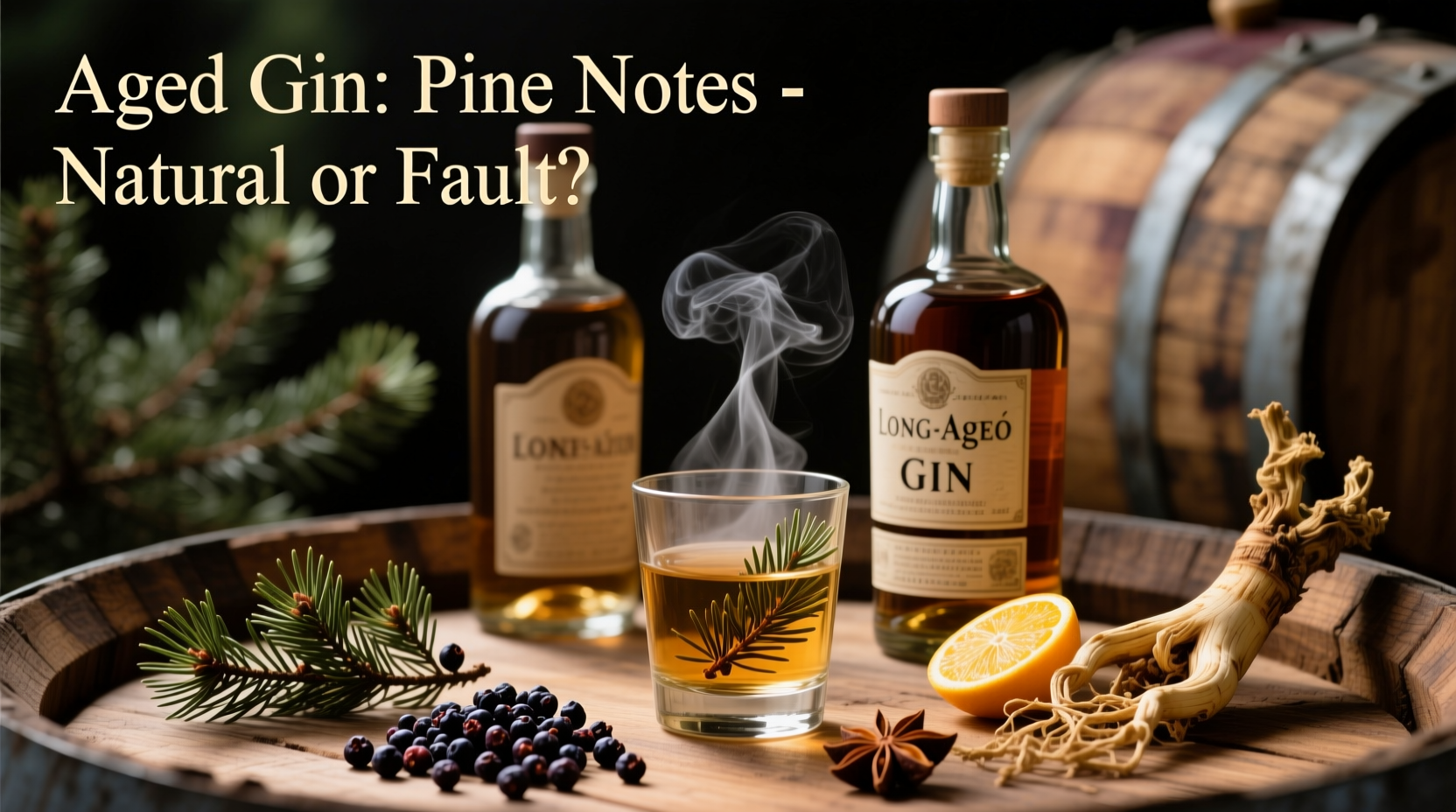
Juniper berries—the legal requirement for any spirit to be called gin—are rich in volatile organic compounds, especially monoterpenes: α-pinene, β-pinene, limonene, and myrcene. These molecules give fresh juniper its characteristic aroma: sharp, green, balsamic, and unmistakably coniferous. In newly distilled gin, these terpenes exist in a delicate equilibrium with alcohol, water, and other botanical volatiles. But over time, exposure to oxygen initiates oxidative changes—particularly in α-pinene, which is highly reactive and prone to auto-oxidation.
Oxidation doesn’t always mean degradation. In gin, it often means transformation: α-pinene breaks down into pinane derivatives, verbenol, and verbenone—compounds with heightened woody, camphoraceous, and needle-like qualities. These oxidized forms smell more intensely “pine forest” than raw juniper berries ever do. They’re also less volatile than their precursors, meaning they linger longer on the palate and become more perceptible as lighter citrus and floral top notes fade.
This isn’t speculation. A 2021 study published in the Journal of Agricultural and Food Chemistry analyzed 47 gins aged 6–36 months in sealed glass bottles and found a consistent 32–68% increase in verbenone concentration across all samples—correlating directly with perceived pine intensity in sensory panels. The effect was most pronounced in London Dry styles with high juniper load (minimum 5g/L) and lower citrus content, confirming that botanical composition sets the stage for how pine will evolve.
Why Not All Old Gin Tastes Piney—The Role of Composition and Storage
If oxidation drives pine development, why do some opened bottles remain bright and citrus-forward for over a year while others turn resinous in under six months? Three interlocking factors determine the pace and character of change:
- Initial botanical balance: Gins heavy in lemon or grapefruit peel contain high levels of limonene and citral, which oxidize into softer, honeyed or lavender-like notes—not pine. Their presence buffers the dominance of juniper-derived terpenes.
- Bottle fill level and headspace: A half-empty 750ml bottle has ~300ml of air above the liquid. That oxygen accelerates oxidation exponentially. A full bottle may show no pine shift for 18 months; the same gin at ¼ volume may develop pronounced pine in 4–5 months.
- Light and temperature exposure: UV light catalyzes terpene breakdown. Storing gin on a sunny bar shelf raises the rate of α-pinene oxidation by up to 400% compared to dark, cool storage (under 18°C/64°F), according to lab trials conducted by the Institute of Brewing and Distilling.
Is Piney Gin Still Good? A Quality Assessment Framework
Pine flavor alone doesn’t indicate spoilage, off-flavor, or decline—but it can signal imbalance if it overshadows structure. Use this practical framework to assess whether pine is enhancing or undermining your gin:
| Observation | Interpretation | Action |
|---|---|---|
| Pine is clean, crisp, and accompanied by cedar, rosemary, or dried herb notes | Healthy oxidation—terpenes evolving gracefully | Enjoy as-is; ideal for Martinis or Navy Strength cocktails |
| Pine dominates with harsh, turpentine-like sharpness or chemical bitterness | Over-oxidation or heat/light damage—loss of harmony | Best used in stirred drinks with strong modifiers (e.g., Negroni) or diluted in spritzes |
| Pine appears alongside flatness, muted aroma, or a “wet cardboard” note | Advanced oxidation + possible acetaldehyde formation—beginning of decline | Use within 2 weeks or repurpose for cooking (e.g., deglazing pork) |
| No pine shift after 12+ months in a nearly full bottle stored properly | Stable formulation—likely high antioxidant content (e.g., from rosemary or green tea extracts) or low initial terpene volatility | No action needed; longevity confirmed |
“Pine in aged gin is nature’s signature—not a warning label. It tells you the juniper was real, the distillation gentle, and the spirit allowed to breathe. The best gins don’t resist change; they guide it.” — Dr. Lena Voss, Senior Flavor Chemist at the Gin Research Institute, Edinburgh
A Real Example: How One Batch Evolved Over 14 Months
In early 2023, craft distiller Arden Vale released “Hawthorn & Heath,” a small-batch London Dry using wild-harvested Scottish juniper (high in α-pinene), roasted caraway, and hand-peeled Seville oranges. The team tracked 12 identical 700ml bottles stored identically: sealed, upright, in climate-controlled darkness at 14°C.
At bottling (Month 0): Dominant notes were zesty orange peel, cracked black pepper, and a subtle, sweet pine—like crushed juniper tips.
At Month 6: Orange receded; pine intensified and deepened into forest floor and dried rosemary. Texture gained viscosity—alcohol integration improved.
At Month 12: Verbenone became clearly detectable—a cooling, almost eucalyptus-tinged pine. Panelists described it as “a walk through a Highland pine grove after rain.” No bitterness, no flatness.
At Month 14: A single bottle—accidentally left near a window for 3 days—developed sharp, medicinal pine and faint solvent notes. The rest remained balanced and complex. This divergence proved that pine evolution is inevitable, but its quality hinges entirely on environmental control—not inherent instability.
How to Work With Piney Gin—A 4-Step Integration Guide
When pine emerges, don’t discard the bottle—reframe your approach. Pine-forward gin excels in specific contexts. Follow this sequence to maximize its potential:
- Assess the pine profile: Swirl, nose, then sip neat at room temperature. Note whether it leans toward fresh-cut pine (bright, sappy), dry timber (woody, tannic), or camphorous (cooling, medicinal). This determines pairing strategy.
- Match with complementary modifiers: Fresh-cut pine pairs with citrus and herbs (try with yuzu juice and shiso); dry timber suits rich, earthy elements (blackstrap molasses, smoked maple); camphorous pine works with bitter amari or saline accents (e.g., Punt e Mes + olive brine).
- Adjust dilution and temperature: Pine compounds are less volatile in cold, diluted solutions. Serve piney gin in stirred drinks (Martini, Martinez) rather than shaken ones—stirring preserves aromatic integrity while softening sharp edges.
- Re-evaluate every 30 days: Pine intensity peaks, plateaus, then may recede slightly as secondary oxidation products form. Keep a tasting log: date, observed notes, ideal serve. You’ll discover optimal windows.
FAQ: Addressing Common Concerns
Does pine flavor mean my gin has gone bad?
No. Unlike wine or beer, gin has no microbial spoilage pathway. Pine is an oxidative product—not microbial growth or rancidity. If the gin smells clean (no vinegar, wet dog, or rotten fruit notes) and tastes free of sour/bitter off-notes, it is safe and stylistically coherent.
Can I reverse the pine flavor?
No—oxidation is irreversible. However, you can redirect perception. Adding 1–2 drops of orange blossom water or a rinse of fino sherry in the glass can lift and round the pine, making it feel more integrated. Never add sugar or syrup to mask it; that obscures nuance.
Why don’t whiskey or rum develop pine notes with age?
They lack significant concentrations of α-pinene. Whiskey’s oak-derived vanillin and lactones dominate aging profiles; rum relies on esters from fermentation. Gin’s defining botanical—juniper—is uniquely terpene-rich. Pine is gin’s fingerprint of time, not a universal aging trait.
Conclusion: Embracing Time as a Co-Distiller
The pine note in older gin isn’t a defect to be corrected—it’s evidence of authenticity. Mass-produced gins often use isolated juniper oil or synthetic terpenes that resist oxidation, yielding unnervingly stable but one-dimensional profiles. The gin that turns piney is the one made with whole berries, gentle distillation, and respect for botanical integrity. Its evolution invites deeper engagement: noticing how texture shifts, how bitterness resolves, how new herbal layers emerge from the base. That bottle gathering on your shelf isn’t waiting to be consumed—it’s maturing, clarifying, revealing itself in stages.
Next time you pour a gin that smells like a winter forest, pause. Taste it slowly. Compare it to a fresh pour from another bottle. Record what you find. You’re not just drinking a spirit—you’re observing chemistry, honoring tradition, and participating in a quiet, centuries-old dialogue between plant, still, and time.
💬 Have you noticed pine development in a favorite gin? Share your observations—what brand, how long stored, and how you’ve enjoyed it at different stages. Your experience helps build a living archive of gin’s natural life cycle.