There’s nothing more disappointing than pouring a vibrant, nutrient-packed smoothie only to return minutes later to find it split into layers—watery liquid at the bottom, foam or pulp floating on top. This common issue isn’t just unappealing; it can also affect texture and taste. The good news: separation is predictable, preventable, and largely within your control. Understanding the science behind emulsion stability and choosing the right ingredients can transform your smoothies from short-lived mixtures into consistently blended beverages.
The Science Behind Smoothie Separation
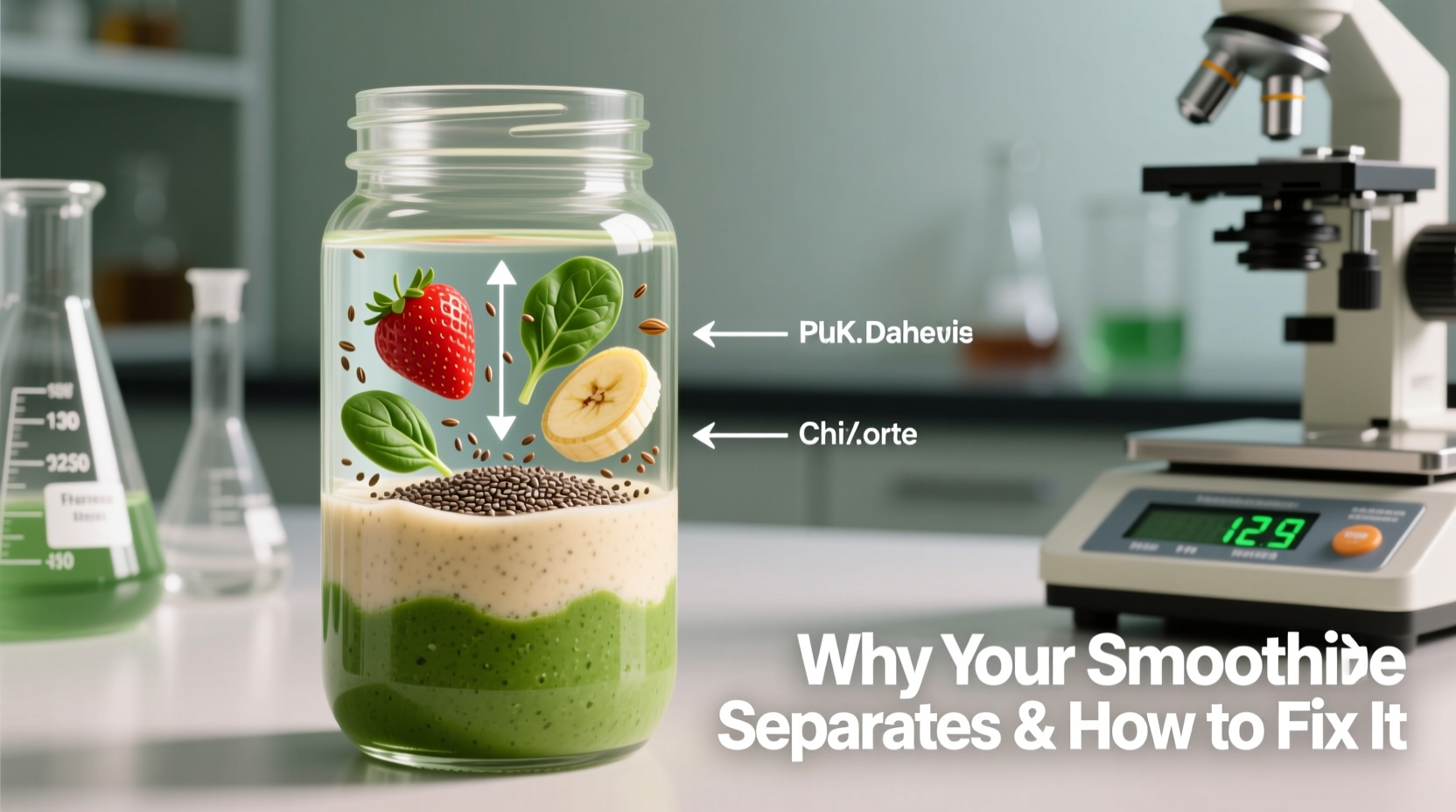
Smoothie separation occurs due to differences in density, solubility, and molecular structure among ingredients. When you blend fruits, vegetables, liquids, and supplements, you create a temporary suspension—a mixture where solid particles are dispersed in a liquid. Over time, gravity pulls denser components downward while lighter ones rise. This process, known as sedimentation and creaming, is natural but can be minimized.
Water-based liquids like coconut water, almond milk, or plain water have low viscosity and offer little resistance to particle movement. Leafy greens such as spinach or kale contain fibrous cellulose that doesn’t fully break down, leading to clumping and settling. Powders like protein or matcha may initially suspend but eventually sink if not properly integrated.
In contrast, stable emulsions—like salad dressings made with oil and vinegar using mustard as an emulsifier—resist separation because certain compounds bind water and fat molecules together. Smoothies lack this built-in stabilization unless specific ingredients are used intentionally.
“Without an emulsifying agent, most smoothies are physically unstable by design. It’s not a flaw—it’s chemistry.” — Dr. Lena Torres, Food Scientist at the Institute of Nutritional Dynamics
Key Factors That Accelerate Separation
Several variables influence how fast your smoothie splits. Recognizing these helps you adjust recipes proactively.
- Liquid choice: Thin liquids (water, juice) promote faster separation than thicker bases like oat milk or kefir.
- Fruit ripeness: Ripe bananas and mangoes release more pectin, a natural thickener, while underripe produce adds starch that may settle.
- Blending time and power: Under-blending leaves fibers intact; over-blending introduces excess air, creating foam that destabilizes the mix.
- Temperature: Cold ingredients slow separation slightly, but thermal shock (e.g., ice + hot liquids) can cause rapid phase separation.
- Order of addition: Adding dense ingredients first ensures better incorporation.
Ingredient Combinations That Stay Blended Longer
The secret to a long-lasting smoothie lies in balancing components that naturally resist layering. These include high-fiber thickeners, healthy fats, and emulsifiers. Below are proven combinations that maintain cohesion for up to two hours—ideal for on-the-go consumption.
1. Banana + Oats + Nut Butter Base
This trio creates a creamy, viscous foundation. Bananas contribute potassium and natural sugars, oats add soluble fiber (beta-glucan), and nut butter provides both fat and lecithin—an effective emulsifier found in peanuts and almonds.
2. Avocado + Coconut Milk + Chia Seeds
Avocado increases fat content, improving mouthfeel and slowing particle movement. Full-fat coconut milk contains medium-chain triglycerides that stabilize suspensions. Chia seeds swell in liquid, forming a gel matrix that traps other ingredients.
3. Greek Yogurt + Flaxseed + Berries
Yogurt contains casein proteins and lactic acid, both of which help bind water and solids. Ground flaxseed swells similarly to chia, releasing mucilage that acts as a natural thickener. Berries contribute antioxidants without excessive water content when used frozen.
4. Silken Tofu + Tahini + Dates
A plant-based powerhouse combo. Silken tofu blends smoothly, adding protein and soy lecithin. Tahini (sesame seed paste) contains natural oils and emulsifying properties. Pitted dates dissolve into syrup-like sweetness while boosting viscosity.
| Stabilizing Ingredient | Natural Property | Recommended Amount (per 16 oz smoothie) |
|---|---|---|
| Chia seeds | Hydrophilic gel formation | 1 tbsp soaked or 1.5 tbsp dry |
| Flaxseed (ground) | Mucilage release | 1–2 tbsp |
| Nut or seed butter | Lecithin content | 1–2 tbsp |
| Oats (rolled, gluten-free) | Soluble fiber (beta-glucan) | ¼ cup raw |
| Avocado (½ fruit) | Monounsaturated fat | ¼ to ½ avocado |
| Greek yogurt / skyr | Protein + acidity | ⅓ to ½ cup |
Step-by-Step Guide to Building a Stable Smoothie
Follow this sequence to maximize blending efficiency and minimize post-pour separation:
- Add liquid base first: Use ¾ to 1 cup of thick liquid (e.g., oat milk, kefir, coconut water with pulp).
- Incorporate stabilizers: Mix in 1–2 tablespoons of chia, flax, or psyllium husk. Let sit for 2–3 minutes to begin gelling.
- Include soft fruits and dairy alternatives: Add banana, steamed sweet potato, yogurt, or silken tofu.
- Add frozen elements: Place frozen berries, mango, or cauliflower florets next to ensure even crushing.
- Top with greens and powders: Spinach, kale, protein powder, or spices go last so they’re pulled directly into the vortex.
- Blend in stages: Start low, ramp up to high, then pulse intermittently to avoid overheating and aerating too much.
- Pour immediately: Serve right after blending. If storing, shake or stir before drinking—even “stable” smoothies will separate over time.
Real-World Example: From Soggy Failure to On-the-Go Success
Jamie, a fitness instructor in Portland, used to make green smoothies every morning with spinach, pineapple, water, and a scoop of vegan protein. Within 15 minutes, the drink would separate into a yellow sludge beneath a layer of green foam. Clients noticed her tossing half-finished drinks and asked what was wrong.
After consulting a nutrition coach, Jamie revised her recipe: she replaced water with unsweetened oat milk, added one tablespoon of almond butter, swapped half the pineapple for half a banana, and included one teaspoon of ground flaxseed. She also began blending for a full 60 seconds on high speed.
The result? A smooth, uniform texture that stayed mixed for over 90 minutes—long enough to finish during her commute and teach her first class. Her clients started requesting the updated recipe, and she now shares it weekly via email.
Common Mistakes That Cause Rapid Separation
Avoid these pitfalls to improve consistency:
- Using only water or juice as a base: Lacks viscosity and binding agents.
- Skipping thickeners: No structural support means faster sedimentation.
- Overloading with leafy greens: More than 2 cups per serving overwhelms the blend, especially with weak blenders.
- Adding ice last: Can disrupt vortex flow and leave chunks unblended.
- Not soaking seeds: Dry chia or flax won’t hydrate fully in standard blending cycles.
“Many people think their blender is the problem—but often, it’s the formula. You wouldn’t expect cake batter to hold without flour or eggs. Smoothies need binders too.” — Marcus Reed, Culinary Nutrition Educator
Checklist: Build a Separation-Resistant Smoothie
Use this checklist before blending:
- ☐ Liquid base includes at least one creamy option (oat milk, yogurt, avocado)
- ☐ At least one thickener included (chia, flax, oats, banana)
- ☐ Emulsifier present (nut butter, tahini, silken tofu)
- ☐ Greens chopped finely or loosely packed
- ☐ Blender jar assembled correctly (seal tight, blade secure)
- ☐ Blending time set to minimum 45 seconds on high
- ☐ Container ready to receive immediately (minimize air exposure)
Frequently Asked Questions
Can I prep smoothies the night before without separation?
You can, but expect some layering. To minimize it, use extra chia or flax (up to 2 tbsp), avoid carbonated liquids, and store in a sealed jar. Shake vigorously before consuming. Best consumed within 24 hours.
Why do protein powders make my smoothie separate faster?
Some protein powders—especially whey isolates or plant-based blends with fillers—don’t dissolve well and can form clumps. They may also alter pH, affecting emulsion stability. Choose micellar casein, collagen peptides, or hydrolyzed pea protein, which integrate more smoothly.
Does blending order really matter?
Yes. Starting with liquids and soft ingredients allows the blades to generate a vortex that pulls heavier items down. Reverse layering (greens first, liquid last) leads to uneven blending and trapped air pockets, accelerating foam formation and separation.
Final Thoughts: Make Every Sip Consistent
A smoothie that holds together isn’t just about aesthetics—it reflects thoughtful formulation and respect for food science. By selecting ingredients that naturally support emulsion stability and following a disciplined preparation method, you turn a fleeting breakfast into a reliable, nourishing ritual. Whether you're fueling a workout, managing blood sugar, or simply enjoying a refreshing drink, a well-balanced smoothie should deliver flavor and texture from first sip to last.
Don’t accept separation as inevitable. Experiment with ratios, track results, and refine your go-to recipes. Once you master the balance of liquid, fiber, fat, and emulsifiers, your smoothies won’t just taste better—they’ll perform better too.
💬 Have a favorite non-separating smoothie combo? Share your recipe in the comments and help others build better blends!