Ordering a gin and tonic or a Bloody Mary at 35,000 feet feels like a small luxury—until the first sip surprises you. The citrus lacks brightness, the gin tastes harsher, the tonic water seems flat, and the drink overall feels less vibrant, sometimes even slightly metallic or bland. It’s not your imagination. That subtle but unmistakable shift in flavor isn’t due to poor mixing or stale ingredients—it’s physics, physiology, and atmospheric chemistry working in concert. At cruising altitude, cabin pressure is equivalent to 6,000–8,000 feet above sea level, humidity drops below 20%, and oxygen saturation dips just enough to alter how your brain processes sensory input. These conditions don’t just affect your ears during descent—they fundamentally reshape your experience of taste and aroma.
The Science of Taste at 6,000 Feet
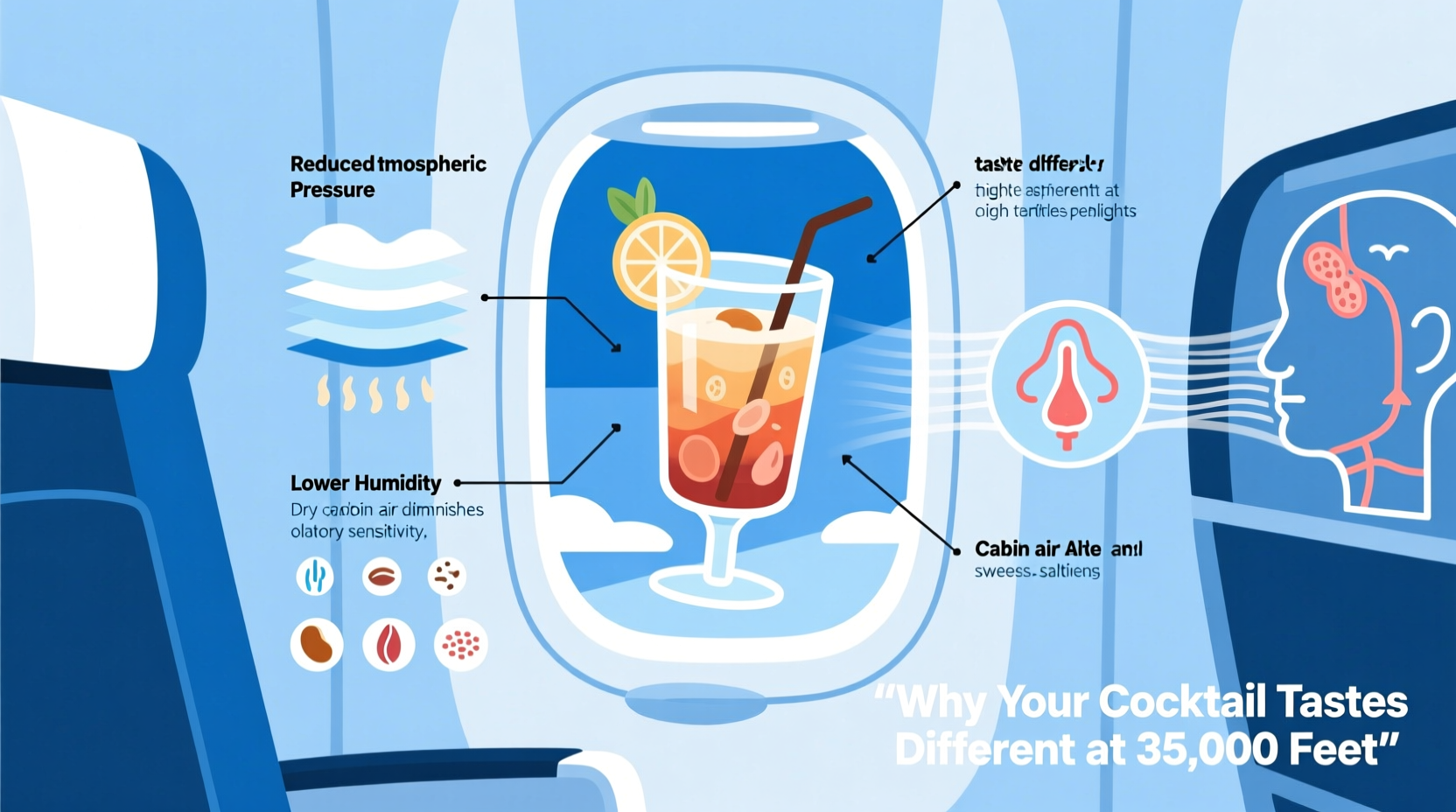
Human taste perception relies on two intertwined systems: gustation (taste buds detecting sweet, sour, salty, bitter, umami) and olfaction (smell, which contributes up to 80% of what we perceive as “flavor”). At high cabin altitudes, both systems are compromised—not broken, but recalibrated.
Cabin pressurization maintains air pressure at roughly 11.0–11.8 psi—about 75% of sea-level pressure (14.7 psi). This lower pressure reduces the volatility of aromatic compounds, meaning fewer scent molecules escape from your drink and reach your olfactory receptors. Simultaneously, low humidity (often 10–15%, drier than most deserts) dehydrates nasal mucosa and oral tissues, dulling chemoreceptor sensitivity. A 2010 Lufthansa study using fMRI scans confirmed that participants experienced up to a 30% reduction in perceived sweetness and saltiness—and a 20% increase in bitterness detection—under simulated flight conditions.
Temperature also plays a role. Most airline cocktails are served chilled—but cabin air is typically 22–24°C (72–75°F), causing drinks to warm faster than expected. As temperature rises, volatile esters and terpenes (the compounds behind citrus zest, herbal freshness, and floral notes) dissipate more rapidly—while heavier, less pleasant fusel alcohols and phenolic compounds become more perceptible.
How Cabin Environment Alters Key Flavor Components
A cocktail isn’t a static entity—it’s a dynamic matrix of alcohol, water, acids, sugars, aromatics, and dissolved gases. Each element responds differently to the flight environment:
- Sweetness: Sucrose and glucose perception drops significantly under low pressure and dry air. This is why many passengers report diet sodas tasting “off” or overly acidic—the missing sweetness no longer balances the citric acid.
- Bitterness: Compounds like quinine (in tonic), caffeine (in cola), and hop-derived alpha acids (in some craft gins) become more prominent. Bitter receptors remain highly sensitive—or even hyper-responsive—when other modalities fade.
- Sourness: Acids like citric and malic retain their intensity, but without supporting sweetness or aromatic lift, tartness can dominate and feel sharp or unbalanced.
- Aroma: Volatile organic compounds (VOCs) such as limonene (lemon), linalool (lavender), and eugenol (clove) evaporate less readily in low-pressure environments. Their concentration at the olfactory epithelium drops by 25–40%, muting top notes essential to complexity.
- Carbonation: Lower ambient pressure causes CO₂ to effervesce more aggressively upon opening. While this creates initial fizz, it accelerates gas loss—leading to rapid flattening. Flat sparkling wine or soda loses its textural contrast and aromatic lift.
What Airlines and Mixologists Are Doing About It
Major carriers recognized this challenge years ago. Singapore Airlines partnered with mixologist Charles Joly to reformulate its in-flight cocktail program, increasing citrus juice by 15% and adding small amounts of saline solution (0.2%) to heighten umami and round out bitterness. Emirates adjusted its gin selection for flights, favoring London Dry gins with higher juniper oil content and pronounced citrus distillates—compounds proven to retain volatility better at altitude.
Lufthansa’s 2015 “Taste Lab” initiative tested over 200 cocktail variations across simulated cabin conditions. Their findings led to three key adjustments now standard across many premium cabins:
- Using 20% more fresh citrus juice (especially grapefruit and lime) to compensate for dulled acidity perception;
- Reducing added sugar by 10–15%—since sweetness is overestimated when combined with heightened bitterness, excess syrup makes drinks cloying;
- Substituting still mineral water for club soda in high-acid drinks (e.g., Palomas), avoiding rapid CO₂ loss while preserving mouthfeel via natural bicarbonates.
“The goal isn’t to ‘fix’ the drink—it’s to anticipate how the environment will reinterpret it. We build cocktails backward: start with how it’ll taste at 35,000 feet, then reverse-engineer the recipe for sea level.” — Sarah Hodge, Lead Beverage Innovator, Cathay Pacific
Practical Cocktail Adjustments You Can Make
You don’t need access to an airline’s R&D lab to enjoy a better in-flight drink. With minor tweaks—before you board or once you’re seated—you can significantly improve balance and vibrancy.
| Component | At Sea Level | Recommended Adjustment for Flight | Why It Works |
|---|---|---|---|
| Citrus Juice | 0.75 oz fresh lemon/lime | 0.9–1.0 oz, strained twice | Compensates for reduced sour perception; double-straining removes pulp that dries out faster in low humidity |
| Sweetener | 0.5 oz simple syrup | 0.4 oz rich syrup (2:1) + 1 dash orange bitters | Rich syrup delivers more sucrose per volume; bitters add aromatic complexity without extra sugar |
| Base Spirit | Standard proof (40–45% ABV) | Choose higher-ester spirits (e.g., Jamaican rum, mezcal, or genever) | Esters and phenols are more stable volatiles; they project better in low-pressure air |
| Garnish | Twist or wedge | Expressed citrus oil directly onto surface + dehydrated citrus chip | Fresh oil provides immediate aroma burst; dehydrated garnish won’t wilt or oxidize mid-flight |
| Carbonation | Full pour of tonic or soda | ¾ pour, added last, stirred gently once | Minimizes premature CO₂ loss; gentle stir integrates without over-aerating |
Mini Case Study: The In-Flight Negroni Dilemma
When Delta introduced its “Sky Bar” premium cocktail service in 2022, early passenger feedback on the in-flight Negroni was consistently negative: “too bitter,” “no orange note,” “tastes medicinal.” Beverage director Marco Chen reviewed the formula and discovered three interlocking issues. First, the Campari batch used had elevated levels of humulone—a sesquiterpene contributing to harsh bitterness—which became disproportionately dominant at altitude. Second, the orange twist was expressed into the air rather than over the drink, losing 90% of its aromatic oils before reaching the glass. Third, the vermouth was served at room temperature (common for pre-batched service), accelerating oxidation of its delicate florals.
Chen’s solution involved supplier collaboration (switching to a lower-humulone Campari variant), retraining flight attendants to express citrus oil directly onto the drink’s surface, and switching to single-serve vermouth vials chilled to 4°C. Passenger satisfaction scores for the Negroni rose from 58% to 89% within four months. More tellingly, repeat requests for the drink increased by 220%—proof that targeted, science-informed adjustments yield tangible results.
Step-by-Step: How to Order a Better Cocktail Onboard
You can’t control cabin pressure—but you *can* guide your drink toward optimal flavor. Follow this sequence, whether you’re flying economy or first class:
- Hydrate first: Drink 150–200 mL of water before ordering. Dehydration amplifies bitterness and suppresses sweetness receptors.
- Request temperature control: Ask for your spirit “neat and chilled” (not on ice) and mixer “separately, very cold.” This prevents dilution and lets you control integration.
- Opt for aroma-forward modifiers: Choose drinks with orange bitters, absinthe rinse, or cucumber-infused vodka—these compounds resist volatility loss better than delicate florals like rose or violet.
- Time your order: Avoid ordering within 30 minutes of meal service. Strong food aromas compete with drink volatiles—and post-meal palate fatigue further dulls perception.
- Engage your nose intentionally: Before sipping, close your eyes, inhale deeply above the glass (not through the straw), then take a small sip and hold it for 3 seconds. This reactivates olfactory pathways suppressed by dry air.
FAQ
Does alcohol affect me more at high altitude?
No—blood alcohol concentration (BAC) remains unchanged. However, mild hypoxia (lower blood oxygen saturation) can intensify subjective effects like drowsiness or lightheadedness, especially if you’re dehydrated. The sensation of “feeling it more” is neurological, not pharmacokinetic.
Why do tomato-based drinks like Bloody Marys taste better at altitude?
They don’t inherently taste *better*—but their dominant umami and savory notes (glutamates, sodium, capsaicin) are less affected by low pressure than sweet or floral profiles. Additionally, the pungency of horseradish and black pepper stimulates trigeminal nerve receptors, which remain highly responsive even when taste and smell diminish—creating a compensatory “flavor boost.”
Can I bring my own cocktail ingredients onboard?
Yes—with limits. TSA allows liquids in containers ≤100 mL in a single quart-sized clear bag. Pre-mixed shrubs, house-made bitters, or citrus juice in compliant packaging are permitted. Note: alcohol >14% ABV (e.g., straight spirits) must be purchased post-security or onboard—TSA prohibits carrying them in carry-ons regardless of volume.
Conclusion
The next time your martini tastes leaner, your mojito flatter, or your whiskey sour sharper than expected at 35,000 feet, remember: it’s not a flaw in the drink—it’s a feature of the environment. Understanding the interplay between cabin physics and human neurobiology transforms frustration into fascination. You’re not drinking worse cocktails—you’re experiencing flavor through a different atmospheric lens. Armed with knowledge of volatility thresholds, receptor sensitivity shifts, and practical ordering strategies, you reclaim agency over your in-flight experience. Whether you’re a frequent flyer recalibrating your go-to order or a curious occasional traveler, these insights turn every flight into an opportunity to engage more deliberately with taste, texture, and tradition—even at cruising altitude.
💬 Have you noticed a particular cocktail that shines—or stumbles—above the clouds? Share your altitude tasting notes in the comments. Your real-world observations help refine this evolving science.