
It’s a familiar sight in many cities and towns: a favorite local restaurant suddenly closed, not due to an emergency or holiday, but simply because it’s Tuesday. While weekends bring packed dining rooms and buzzing kitchens, Tuesdays often represent one of the slowest days of the week for eateries. As a result, many restaurants—especially independents and fine-dining establishments—choose to close their doors every Tuesday. This practice isn’t random; it’s rooted in real operational, financial, and strategic decisions.
Understanding why so many restaurants shut down on Tuesdays offers insight into the challenges and rhythms of the hospitality industry. From managing labor costs to allowing staff recovery time, these closures serve multiple purposes that contribute to long-term sustainability.
Low Customer Traffic Makes Tuesday a Strategic Closure Day
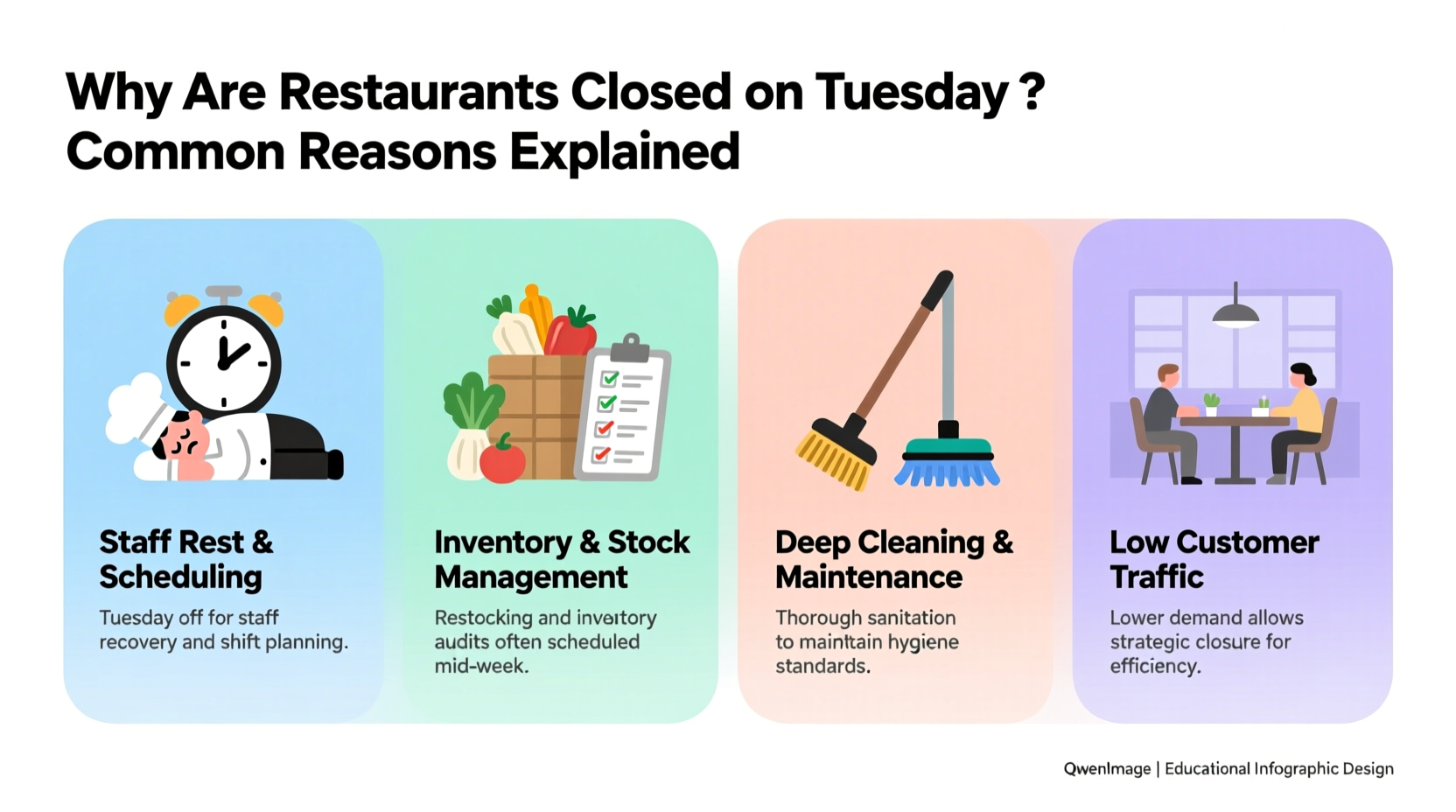
The most straightforward reason restaurants close on Tuesdays is low foot traffic. After the weekend rush, Monday and Tuesday typically see the fewest diners. Marketing data consistently shows that consumer spending on dining out drops sharply after Sunday night.
For a business operating on tight margins, opening with minimal revenue doesn’t make financial sense. The cost of paying staff, running utilities, and preparing inventory may exceed the income generated on a quiet Tuesday. Closing allows owners to avoid losses while redirecting resources toward busier days.
Consider this: if a restaurant earns 70% of its weekly revenue between Friday and Sunday, maintaining full operations on slower weekdays becomes inefficient. By closing on Tuesday, operators can consolidate efforts, reduce waste, and maintain quality without stretching thin.
Tip: If you're planning a special dinner out, always check a restaurant's hours online—many proudly list their \"closed Tuesday\" status upfront.Staff Well-Being and Scheduling Efficiency
Hospitality work is physically and emotionally demanding. Chefs, servers, dishwashers, and managers often work 50–70 hour weeks during peak seasons. Without scheduled breaks, burnout becomes inevitable. A midweek closure gives employees a guaranteed day off, improving morale and retention.
Restaurants that close on Tuesdays often use the day for team meetings, training sessions, or deep cleaning. This structured downtime helps streamline operations. For example, kitchen staff might recalibrate equipment, organize storage, or test new menu items without the pressure of serving guests.
“Closing one day a week isn’t a luxury—it’s a necessity for sustainable operations. It gives our team breathing room and ensures consistency when we’re open.” — Marcus Tran, Owner of Bistro Lumière, Portland
Moreover, predictable scheduling simplifies payroll and reduces last-minute call-outs. Employees appreciate stability, which leads to better service and lower turnover—a critical advantage in an industry plagued by staffing shortages.
Inventory Management and Kitchen Maintenance
Tuesday closures provide a crucial window for inventory audits and kitchen upkeep. Fresh ingredients delivered over the weekend must be assessed before spoilage occurs. Closing allows chefs and managers to:
- Conduct full stock checks
- Rotate perishables using FIFO (first in, first out)
- Place precise orders for upcoming deliveries
- Deep clean ovens, grills, and exhaust systems
- Repair or service malfunctioning equipment
This maintenance prevents food safety issues and ensures peak performance during high-volume nights. A clean, organized kitchen operates more efficiently and safely—something diners rarely notice until something goes wrong.
Common Tuesday Maintenance Tasks
| Task | Purpose | Frequency |
|---|---|---|
| Deep cleaning hood filters | Fire prevention & air quality | Weekly |
| Calibrating ovens and fryers | Cooking consistency | Bi-weekly |
| Full pantry organization | Reduce waste, improve efficiency | Weekly |
| Testing emergency lighting and alarms | Safety compliance | Monthly (scheduled on closure days) |
Case Study: How “The Copper Pot” Thrived After a Tuesday Shutdown
The Copper Pot, a farm-to-table bistro in Asheville, North Carolina, opened seven days a week when it launched in 2019. Despite strong weekend reviews, weekday sales remained sluggish, and staff turnover was high. By early 2021, the owner, Lena Cho, faced mounting stress and declining food quality.
After analyzing six months of sales data, she discovered that Tuesday brought in only 8% of weekly revenue—less than half of what Thursday generated. She decided to experiment: close on Tuesdays for three months and reinvest savings into staff bonuses and ingredient upgrades.
The results were transformative. Employee satisfaction improved, food waste dropped by 22%, and weekend service became noticeably smoother. Encouraged, Cho made the closure permanent. Within a year, online ratings rose from 4.2 to 4.7 stars, and repeat customers increased by 35%.
“Closing Tuesday didn’t hurt us—it saved us,” Cho said in a local interview. “We stopped surviving and started thriving.”
Strategic Branding and Exclusivity
In some cases, closing on Tuesday is less about necessity and more about image. High-end or chef-driven restaurants often adopt limited hours to cultivate exclusivity. When a place is only open five or six days a week, it signals selectivity and dedication to craft.
Diners may perceive such restaurants as more intentional—where every service is carefully prepared rather than rushed through daily operations. This psychological effect can enhance perceived value, justifying higher prices and attracting discerning guests.
Notable examples include Michelin-recommended spots like Spring in London and L’Écume in Paris, both of which close on Mondays or Tuesdays to emphasize quality over quantity.
Tip: Use your restaurant’s closure day to build anticipation—post behind-the-scenes prep videos or tease upcoming seasonal menus on social media.Checklist: Is Closing on Tuesday Right for Your Restaurant?
Before deciding to close, operators should evaluate several factors. Use this checklist to assess feasibility:
- Analyze Sales Data: Are Tuesday revenues below 10–12% of your weekly total?
- Review Staff Feedback: Is burnout a growing concern among your team?
- Assess Operational Bottlenecks: Do you lack time for cleaning, training, or inventory?
- Test the Waters: Try closing for two to four weeks and measure impact on morale and profits.
- Communicate Clearly: Update websites, Google Business, and signage to prevent customer frustration.
- Plan Alternative Offerings: Consider pop-ups, catering, or delivery on closed days to maintain visibility.
Frequently Asked Questions
Do chain restaurants close on Tuesdays?
Rarely. Large chains like Applebee’s or Olive Garden operate seven days a week due to standardized staffing, national supply chains, and consistent weekday demand. They benefit from economies of scale that independent restaurants don’t have.
Is Tuesday the only common closure day?
No. While Tuesday is frequent, many restaurants close on Monday instead—especially in urban areas where weekends start Friday night. Others rotate closures based on reservations trends or holidays.
Can closing one day hurt customer loyalty?
Only if poorly communicated. Most diners understand and respect closures when they’re clearly posted. In fact, transparency about rest days can strengthen trust and brand authenticity.
Conclusion: Closing One Day Can Open More Doors
A Tuesday closure isn’t a sign of failure—it’s often a mark of smart management. Whether driven by low demand, employee well-being, or operational needs, this deliberate pause enables restaurants to deliver better food, service, and experiences when they are open.
For diners, it means respecting a restaurant’s rhythm and planning visits accordingly. For owners, it’s a chance to prioritize sustainability over constant availability. In an industry where passion meets pressure, sometimes the best thing a restaurant can do is take a breath.
🚀 Are you a restaurant owner considering a weekly closure? Start with data, talk to your team, and remember: lasting success comes from balance, not burnout. Share your thoughts or experiences in the comments below.