Cooking pork sausages to the correct internal temperature is essential for both safety and quality. Undercooked sausage can harbor harmful bacteria like Salmonella, Escherichia coli (E. coli), and Trichinella spiralis, all of which pose serious health risks. At the same time, overcooking can result in dry, tough meat that lacks flavor and appeal. The U.S. Department of Agriculture (USDA) and food safety experts agree: the safe internal temperature for cooked pork sausages is 160°F (71°C). Reaching this temperature ensures pathogens are destroyed while preserving moisture and texture when handled correctly. This guide provides a comprehensive overview of why this temperature matters, how to measure it accurately, and best practices for preparing pork sausages safely and deliciously.
Definition & Overview
Pork sausages are seasoned ground pork products typically encased in natural or synthetic casings. They come in a wide range of styles—fresh, smoked, pre-cooked, or dried—and vary by region, spice blend, fat content, and preparation method. Common types include breakfast links, Italian sausages (sweet or hot), bratwurst-style fresh sausages, and German-style bockwurst. While many sausages contain additional ingredients such as garlic, fennel, paprika, salt, pepper, and curing agents, their core component remains raw or partially processed pork.
Fresh pork sausages are particularly susceptible to microbial contamination because they are made from raw meat that has been ground, increasing surface area exposure. Unlike whole cuts of meat—where pathogens reside primarily on the surface—ground meats distribute bacteria throughout the product. This makes thorough cooking non-negotiable. The USDA’s recommendation of 160°F applies specifically to fresh and raw pork sausages intended to be cooked before consumption. It does not apply to cured, dried, or fermented sausages designed to be eaten without further cooking.
Key Characteristics of Pork Sausages
- Meat Base: Primarily ground pork, often with 20–30% fat for juiciness.
- Texture: Soft and crumbly when raw; firm and springy when properly cooked.
- Flavor Profile: Savory, rich, slightly sweet from fat; varies widely based on seasoning (e.g., fennel in Italian, sage in breakfast).
- Aroma: Fresh meat scent when uncooked; roasted, smoky, or herbal notes when cooked.
- Color: Pinkish-gray raw; turns tan, light brown, or golden depending on cooking method and spices.
- Heat Level: Ranges from mild (sweet Italian) to spicy (hot chorizo or andouille).
- Culinary Function: Used as a protein centerpiece, ingredient in casseroles, sauces, soups, or breakfast dishes.
- Shelf Life: 1–2 days in refrigerator if raw; up to 4 months frozen.
Pro Tip: Always handle raw pork sausages with clean hands and utensils. Use separate cutting boards and avoid cross-contamination with ready-to-eat foods.
Why 160°F Is the Safe Standard
The USDA's Food Safety and Inspection Service (FSIS) established 160°F (71°C) as the minimum safe internal temperature for all ground pork products, including sausages. This threshold is scientifically determined based on thermal lethality—the time and temperature required to destroy pathogenic microorganisms commonly associated with raw pork.
At 160°F, harmful bacteria such as Salmonella, E. coli O157:H7, and Trichinella are rapidly inactivated. For example:
- Salmonella is destroyed within seconds at 160°F.
- E. coli requires only brief exposure to this temperature to be eliminated.
- Trichinella spiralis, once a major concern in undercooked pork, is killed instantly at 137°F—but uneven heating in ground meat necessitates a higher standard to ensure safety throughout.
Unlike whole-muscle cuts like pork chops or tenderloin—which can be safely consumed at 145°F with a 3-minute rest period—ground pork cannot rely on surface-only sterilization. Because the grinding process distributes any surface contaminants deep into the meat, uniform internal cooking is critical.
\"When you grind meat, you're essentially mixing the outside with the inside. That means if there was bacteria on the surface before grinding, it’s now distributed throughout the entire batch.\" — Dr. Benjamin Chapman, Food Safety Specialist, North Carolina State University
How to Accurately Measure Internal Temperature
Using a reliable meat thermometer is the only way to confirm that pork sausages have reached a safe internal temperature. Visual cues such as color or firmness are unreliable indicators due to variations in ingredients, casings, and cooking methods.
Steps to Check Temperature Correctly:
- Select the Right Thermometer: Use an instant-read digital thermometer for accuracy. Dial thermometers are slower and less precise.
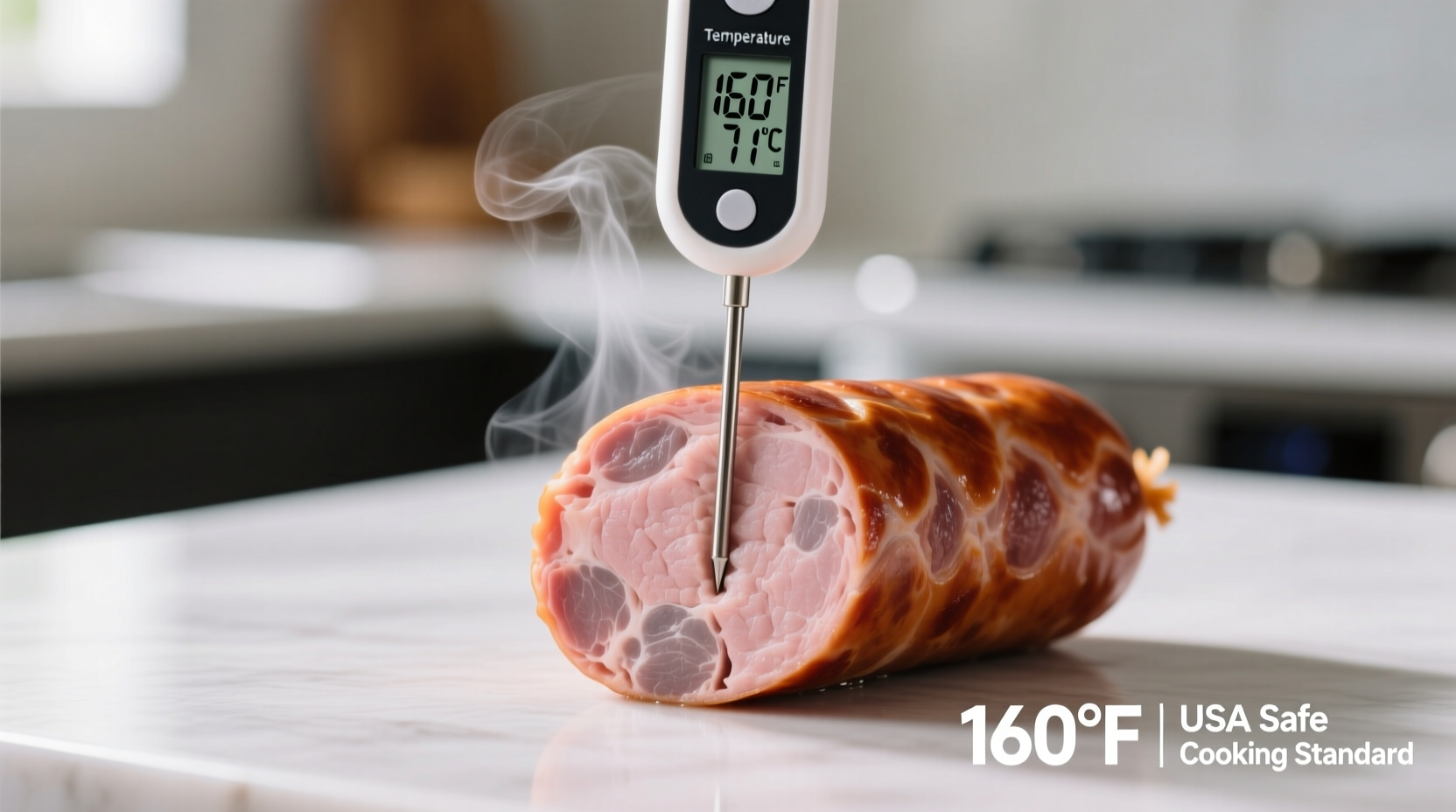
- Insert Properly: Insert the probe through the side of the sausage, aiming for the geometric center. Avoid touching the pan, grill grate, or casing directly, as this can give false readings.
- Test Multiple Sausages: Since heat distribution varies, check at least two or three sausages per batch, especially when cooking large quantities.
- Wait for Stability: Hold the probe in place until the reading stabilizes—usually 10–15 seconds for digital models.
- Clean Between Uses: Wipe the probe with a clean cloth or alcohol wipe between measurements to prevent cross-contamination.
Thermometer Recommendation: Look for a thermapen-style device with a thin probe and rapid response (under 3 seconds). These are ideal for small-diameter sausages where precision matters most.
Variants & Types of Pork Sausage and Their Cooking Needs
Not all pork sausages require cooking to 160°F. Understanding the type you’re working with determines whether cooking is needed and what target temperature to aim for.
| Type of Sausage | Raw or Pre-Cooked? | Safe Internal Temp | Cooking Method | Notes |
|---|---|---|---|---|
| Breakfast Links | Raw | 160°F | Pan-fry, bake, grill | High-fat content; cook gently to avoid bursting. |
| Italian Sausage (Sweet/Hot) | Raw | 160°F | Grill, sauté, simmer in sauce | Often removed from casing for use in pasta sauces. |
| Smoked Kielbasa (U.S. style) | Pre-cooked | Heating optional (~140°F) | Warm in liquid, grill lightly | Safe to eat cold but better warmed. |
| Chorizo (Mexican, fresh) | Raw | 160°F | Sauté, crumble, bake | Spicy, red chili-infused; never eat raw. |
| Salami (dry-cured) | Ready-to-eat | N/A | No cooking needed | Fermented and dried; served sliced. |
| Andouille (Louisiana-style) | Smoked, partially cooked | Reheat to 140°F+ | Simmer in gumbo or jambalaya | Used more for flavor than primary protein. |
Always read packaging labels carefully. In the U.S., products labeled “fully cooked” or “smoked and ready to eat” do not need to reach 160°F but should be heated thoroughly if added to hot dishes. Products marked “keep refrigerated” and “cook before eating” must always be brought to 160°F internally.
Comparison with Similar Ingredients
Pork sausages are often confused with other processed meats, leading to incorrect assumptions about cooking requirements. Below is a comparison highlighting key differences:
| Product | Base Meat | Needs Cooking? | Safe Temp | Distinguishing Features |
|---|---|---|---|---|
| Pork Sausage (Fresh) | Ground pork + seasonings | Yes | 160°F | Soft texture raw; sold in links or bulk. |
| Bacon | Cured pork belly | Yes (typically) | 145°F (but usually fried until crisp) | Thin slices; high salt and nitrite content. |
| Ham (Fresh) | Pork leg | Yes | 145°F + 3-min rest | Whole cut; lower risk than ground meat. |
| Pepperoni | Cured pork/beef mix | No | N/A | Dry-fermented; shelf-stable; eaten raw on pizza. |
| Chicken Sausage (Fresh) | Ground chicken + pork fat sometimes | Yes | 165°F | Higher poultry risk; requires higher temp. |
One common misconception is that “if it looks brown, it’s done.” However, some sausages—especially those containing nitrites or paprika—can appear browned well before reaching a safe temperature. Others may retain a pink hue even after proper cooking due to myoglobin reactions. Only a thermometer provides certainty.
Practical Usage: How to Cook Pork Sausages Safely and Deliciously
Reaching 160°F doesn’t mean sacrificing taste or texture. With proper technique, pork sausages can be juicy, flavorful, and perfectly cooked every time.
Pan-Frying (Most Common Method):
- Heat a skillet over medium heat. Add a small amount of oil if needed.
- Place sausages in the pan without overcrowding.
- Cook for 10–15 minutes, turning occasionally, until golden brown.
- Insert thermometer into the thickest part—target 160°F.
- Remove and let rest 2–3 minutes before serving.
Grilling:
- Preheat grill to medium (350–400°F).
- Place sausages on indirect heat first to cook through slowly.
- Move to direct heat last few minutes to sear and char lightly.
- Check temperature in the center—do not guess.
Baking:
- Preheat oven to 375°F.
- Arrange sausages on a parchment-lined baking sheet.
- Bake 20–25 minutes, flipping halfway.
- Verify doneness with a thermometer.
Simmering (Ideal for Italian Sausage in Sauce):
- Bring a pot of water, beer, or broth to a gentle simmer (not boil).
- Add sausages and cook 10–12 minutes to poach gently.
- Finish on the grill or in a pan to develop browning.
- Ensures even cooking without splitting casings.
Chef’s Note: Poaching sausages before grilling prevents the exterior from charring before the interior reaches 160°F—a common issue with thick links.
Storage, Handling, and Shelf Life
Proper storage is just as important as proper cooking. Follow these guidelines to maintain freshness and safety:
- Refrigeration: Store raw pork sausages at or below 40°F. Use within 1–2 days of purchase or opening.
- Freezing: Wrap tightly in freezer paper or vacuum-seal. Label with date. Use within 2–3 months for best quality.
- Thawing: Thaw frozen sausages in the refrigerator overnight. Never thaw at room temperature.
- Leftovers: Refrigerate cooked sausages within 2 hours. Consume within 3–4 days.
Discard any sausage that smells sour, feels slimy, or shows discoloration such as gray-green mold spots. When in doubt, throw it out.
FAQs About Cooking Pork Sausages
Can pork sausages be slightly pink inside and still be safe?
Yes, under certain conditions. The presence of nitrates, nitrites, or certain spices (like paprika) can cause cured or seasoned sausages to retain a pink color even after reaching 160°F. Color alone is not a reliable indicator. Always verify with a thermometer.
Is it safe to eat pork sausage at 150°F?
No. While some chefs advocate for lower temperatures for whole cuts, ground pork—including sausage—must reach 160°F to ensure destruction of pathogens distributed during grinding.
What happens if I eat undercooked pork sausage?
You risk foodborne illness. Symptoms of trichinosis include abdominal pain, diarrhea, fever, muscle aches, and facial swelling. Salmonellosis and E. coli infections can lead to severe gastrointestinal distress and, in vulnerable individuals, hospitalization.
Do I need to rest pork sausages after cooking?
While resting isn't as critical as with large roasts, letting sausages sit for 2–3 minutes allows juices to redistribute, improving texture and mouthfeel.
Can I cook frozen pork sausages?
Yes, but increase cooking time by at least 50%. Ensure the internal temperature still reaches 160°F. Do not cook large frozen sausages in a slow cooker, as they may remain in the danger zone (40–140°F) too long.
Expert Tips for Best Results
- Use a Timer + Thermometer Combo: Set a timer for approximate cook time, but always verify with a thermometer.
- Avoid Pricking Casings: Piercing releases juices and leads to dryness. Let pressure escape naturally.
- Cook Low and Slow: Especially for thick sausages, moderate heat ensures even cooking without burning the outside.
- Invest in a Leave-In Probe Thermometer: Ideal for grilling or smoking, allowing continuous monitoring without opening the lid.
- Know Your Labels: “Fully cooked” vs. “raw” makes all the difference. Read packaging carefully.
\"The single biggest mistake home cooks make is trusting color over science. A thermometer costs less than a doctor’s visit.\" — Shirley Corriher, Biochemist and Culinary Author
Summary & Key Takeaways
Cooking pork sausages safely hinges on one rule: reach an internal temperature of 160°F (71°C). This standard eliminates dangerous pathogens inherent in raw, ground pork. Regardless of cooking method—pan-frying, grilling, baking, or simmering—always use a calibrated instant-read thermometer to verify doneness. Visual cues are misleading; technology is reliable.
Understand the type of sausage you're using. Fresh sausages require full cooking, while smoked or cured varieties may only need reheating. Store raw sausages properly, handle them hygienically, and discard anything questionable.
With attention to temperature control and cooking technique, pork sausages can be both safe and spectacular—juicy, aromatic, and deeply satisfying. Make the thermometer your most trusted kitchen tool, and enjoy confidence in every bite.
Final Advice: Keep a log of your thermometer readings when trying new brands or cooking methods. Over time, you’ll build intuition—but never replace verification with assumption.