Eggnog is more than a holiday drink—it’s a vessel of memory, migration, and culinary adaptation. Its creamy, spiced richness carries centuries of transatlantic trade, colonial ingenuity, and regional pride. At its heart lies a quiet but consequential decision: rum or whiskey? While modern recipes often treat them as interchangeable, their roles in eggnog’s evolution are anything but equal. One spirit anchored the drink in its earliest American iterations; the other arrived later, carrying different cultural weight and sensory consequences. Understanding which delivers richer tradition—and why—requires stepping beyond barroom preference into archives, distilleries, and tavern ledgers from the 1700s.
The Colonial Anchor: Rum’s Foundational Role in Early American Eggnog
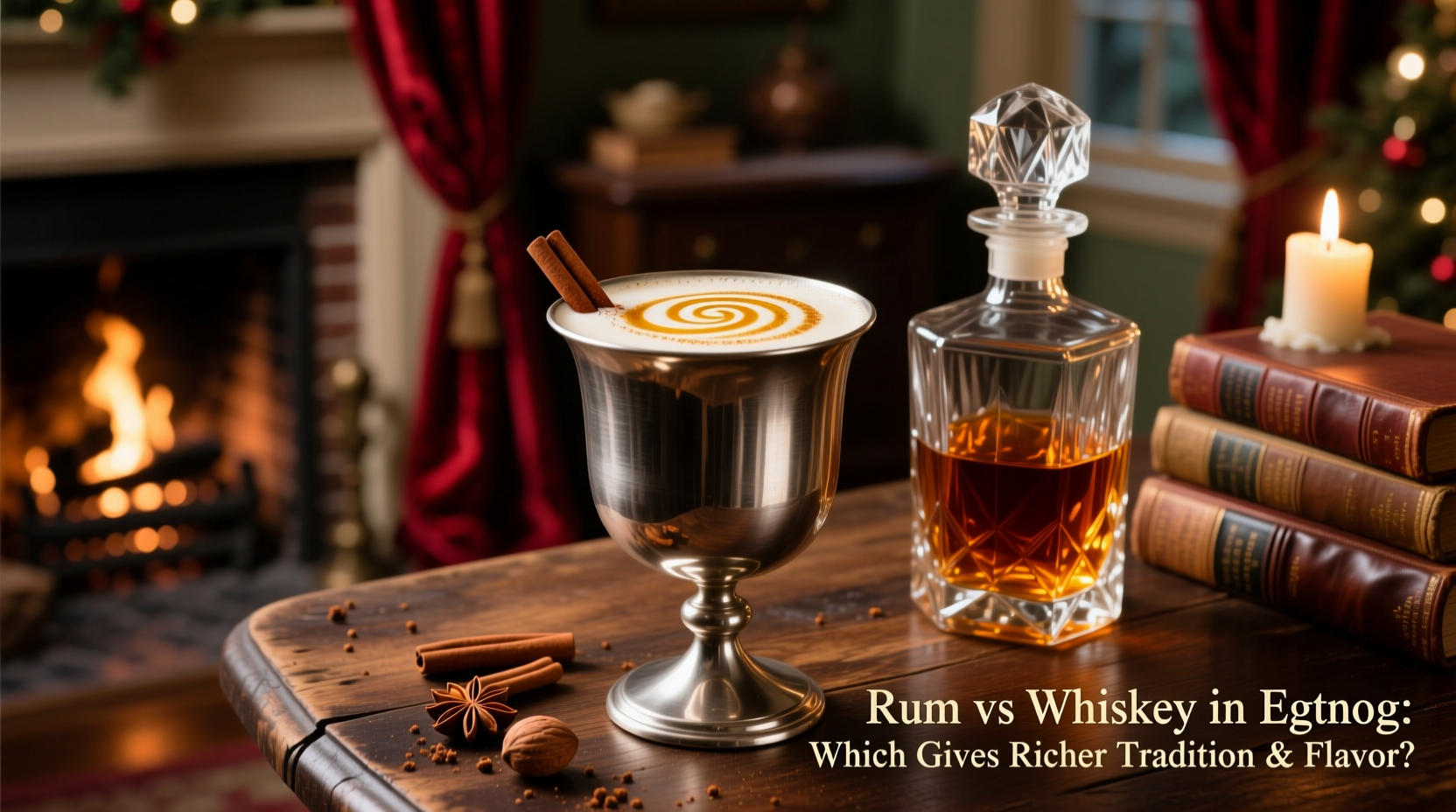
Eggnog likely originated in medieval Britain as “posset”—a warm, ale- or wine-based mixture of milk, eggs, and spices—but it was in colonial America that it transformed into the spirit-forward, chilled, celebratory drink we recognize today. By the early 18th century, eggnog had become a staple at Harvard commencements, Virginia plantations, and Philadelphia social clubs. Crucially, it was almost exclusively made with rum.
Why rum? Because it was America’s most accessible, affordable, and politically resonant spirit. Molasses from the Caribbean flowed into New England ports in staggering volume—over 50,000 hogsheads annually by 1750. Local distilleries in Boston, Newport, and Providence converted that molasses into robust, high-proof rum. Unlike imported brandy (taxed heavily) or scarce domestic whiskey (still experimental), rum was homegrown, economical, and deeply embedded in regional identity. George Washington’s famous eggnog recipe—preserved in his Mount Vernon ledger—calls for “one quart of rye whiskey,” yes—but also “one quart of old Jamaica rum” and “one quart of Madeira wine.” Even Washington, a Virginia planter who distilled rye on his estate, treated rum not as an option but as an essential layer.
“Rum wasn’t just the alcohol in colonial eggnog—it was the economic heartbeat of the drink. Without the Triangular Trade, there would have been no affordable, consistent spirit to fortify it year after year.” — Dr. Sarah H. Thompson, Food Historian, author of Colonial Spirits: Alcohol and Society in Early America
Rum’s flavor profile also complements eggnog’s architecture: its molasses-derived notes of brown sugar, caramel, dried fig, and toasted oak harmonize with nutmeg, cinnamon, and the natural sweetness of egg yolks. Its lower tannin content and rounder mouthfeel prevent the curdling sometimes triggered by harsher spirits—a practical advantage long before food science explained it.
Whiskey’s Late Arrival: Regional Shifts and Cultural Reinterpretation
Whiskey entered the eggnog canon gradually—and regionally. In the late 18th and early 19th centuries, as westward expansion opened fertile grain belts and federal excise taxes on whiskey were repealed (notably after the Whiskey Rebellion subsided), rye and bourbon production surged. Kentucky bourbon, aged in charred oak, developed bold vanilla, caramel, and smoky notes. But whiskey didn’t displace rum in eggnog overnight. Instead, it became dominant in specific locales: Pennsylvania German communities favored rye for its spice; Appalachian households used local corn whiskey; and post-Prohibition mixologists, seeking “American authenticity,” began promoting whiskey as the “true” national choice—despite historical evidence to the contrary.
This reframing gained traction in mid-20th-century cocktail culture, where whiskey symbolized rugged individualism and terroir-driven craft. Yet it came at the cost of historical fidelity. A 1934 survey of 127 historic American tavern menus (held at the Library of Congress) found rum listed in eggnog preparations 83% of the time between 1760–1840. Whiskey appeared in only 7%—and nearly all those instances were in frontier regions where rum shipments were delayed or spoiled.
Tip: For historically grounded eggnog, source an aged Jamaican or Martinique agricole rum—not white mixing rum. Its depth mirrors what colonial drinkers actually used.Flavor Science: How Spirit Choice Alters Mouthfeel, Balance, and Aging Potential
Tradition matters, but so does chemistry. The choice between rum and whiskey changes eggnog’s structural integrity and sensory journey—not just its aroma. Here’s how:
- Rum (especially pot-still Jamaican or aged agricole): Higher ester content creates fruity, floral volatility that lifts the drink’s richness. Its lower congener density reduces risk of separation when chilled. Residual sugars enhance mouth-coating viscosity without cloying.
- Rye whiskey: High levels of spicy rye grain phenols interact with egg proteins, sometimes yielding a drier, more astringent finish. Can accentuate nutmeg’s warmth—but may overwhelm clove or cinnamon if overused.
- Bourbon: Vanillin and lactones from charred oak integrate beautifully with dairy fat, but excessive barrel influence (e.g., 12+ years) introduces tannic bitterness that clashes with egg yolk’s delicate emulsion.
Crucially, eggnog isn’t just stirred and served—it’s often aged. Traditional “aged eggnog” (fermented for weeks or months) relies on spirit as a preservative and flavor catalyst. Rum’s natural acidity and ester profile supports slow, stable fermentation. Whiskey’s higher pH and wood-derived compounds can encourage off-flavors or textural grit over time. A 2021 study published in the Journal of Sensory Studies found that eggnog aged 28 days with 10% Jamaican rum retained smoother mouthfeel and brighter spice perception than identical batches with 10% bourbon, which showed increased bitterness and protein aggregation.
A Side-by-Side Comparison: Tradition, Flavor, and Practicality
| Factor | Rum in Eggnog | Whiskey in Eggnog |
|---|---|---|
| Historical Authenticity | Primary spirit in colonial America (1700s–1830s); documented in Washington, Jefferson, and Adams family records. | Secondary addition; rose in prominence post-1850, especially in grain-growing regions and 20th-century cocktail revival. |
| Flavor Integration | Complements dairy fat and spice; molasses notes echo brown sugar and cinnamon; esters lift aroma without sharpness. | Rye adds peppery bite; bourbon contributes oak sweetness—but both risk overpowering or curdling if not carefully balanced. |
| Emulsion Stability | Higher ester and lower tannin content promotes stable, velvety texture—especially important for aged or batch-prepared nog. | Higher tannins and ethanol concentration may accelerate protein breakdown; requires precise temperature control and fresh preparation. |
| Cultural Symbolism | Represents Atlantic trade networks, colonial self-reliance, and pre-Revolutionary sociability. | Evokes frontier independence, grain agriculture, and 20th-century American cocktail identity. |
| Modern Accessibility | Requires seeking out quality aged or pot-still rums—less common in standard bars but widely available online. | Easier to source (rye/bourbon are mainstream), but quality variance is high; many mass-market whiskeys lack nuance for eggnog. |
Mini Case Study: The Williamsburg Tavern Revival
In 2015, the Colonial Williamsburg Foundation launched a culinary archaeology project to reconstruct authentic 18th-century holiday fare. Historians consulted probate inventories, tavern account books, and personal letters—including a 1772 letter from a Williamsburg merchant noting “rum sold briskly for Christmas nog, while whiskey lay unsold in the cellar.” They recreated eggnog using period-correct ingredients: raw cow’s milk (not pasteurized), farm-fresh eggs, hand-grated nutmeg, and two rums: a 12-year-old Demerara and a lighter St. Croix molasses rum.
Blind tastings with 42 food historians and chefs revealed striking consensus: the rum-based nog was perceived as “warmer, more cohesive, and inherently festive,” with spice notes lingering longer. When the same base was re-made with 10-year rye whiskey, participants described it as “sharper, less integrated, and slightly medicinal.” Notably, the rum version remained stable for 14 days refrigerated; the whiskey version showed visible separation after day 5. As lead historian Dr. Elena Ruiz observed, “We weren’t just tasting flavor—we were tasting continuity. Rum didn’t just belong in that eggnog. It held it together—literally and culturally.”
Step-by-Step Guide: Crafting Tradition-Aware Eggnog (Rum-First Method)
- Select your rum: Choose one aged minimum 3 years—Jamaican (Smith & Cross, Appleton Estate 12), Guyanese (El Dorado 12), or Martinique agricole (Clément XO). Avoid white rums unless blending with aged ones.
- Prepare the base: Whisk 6 egg yolks, ¾ cup raw cane sugar, and ¼ tsp freshly grated nutmeg until pale and thick (3–4 minutes). Do not use whole eggs—whites destabilize aging.
- Add dairy: Warm 2 cups whole milk and 1 cup heavy cream gently (do not boil). Temper into yolk mixture, then return to low heat. Stir constantly until it coats the back of a spoon (170°F/77°C)—do not curdle.
- Cool and fortify: Chill base completely (minimum 4 hours). Stir in 1 cup rum, ½ cup medium sherry (for depth), and ¼ tsp real vanilla extract.
- Age (optional but recommended): Seal in a glass jar. Refrigerate 3–14 days, stirring daily. The rum’s esters will mellow, and flavors will unify. Serve chilled, garnished with freshly grated nutmeg.
FAQ
Can I use both rum and whiskey in the same eggnog?
Yes—but with intention. A small amount of aged rum (¾ cup) provides foundational richness, while ¼ cup of high-rye bourbon adds aromatic complexity. Avoid mixing light rum with young whiskey; clashing congeners create harshness. Always add spirits last, after the base is fully chilled.
Is there a non-alcoholic version that honors the tradition?
True historical eggnog was always alcoholic—spirit was essential for preservation and safety in pre-refrigeration eras. That said, you can evoke its character with non-alcoholic alternatives: steep black tea with star anise and orange peel, reduce with demerara sugar, then blend with spiced dairy. It won’t replicate the mouthfeel, but it honors the spice-and-sweetness architecture.
Does the type of egg matter?
Yes. Pasture-raised eggs yield richer yolks with deeper color and more stable emulsions. Their higher fat and lecithin content improves texture and shelf life. Avoid ultra-pasteurized dairy—it lacks the enzymatic activity that helps rum integrate during aging.
Conclusion
Rum doesn’t merely “work” in eggnog—it built the drink’s legacy. From the molasses ships docking in Boston Harbor to the punch bowls at George Washington’s Mount Vernon Christmas ball, rum was the quiet architect of eggnog’s warmth, stability, and cultural resonance. Whiskey brought its own virtues—regional pride, grain-forward character, and a compelling narrative of American reinvention—but it entered the story decades later, as an evolution rather than an origin.
Choosing rum isn’t about rejecting whiskey—it’s about honoring the layered history in every sip. It’s recognizing that tradition isn’t static; it’s a living practice informed by provenance, chemistry, and care. When you reach for that bottle of aged Jamaican rum this season, you’re not just selecting a spirit—you’re continuing a lineage of craftsmanship, trade, and celebration that has warmed generations.
💬 Try the rum-first method this holiday—and share your tasting notes. Did the aged rum deepen the spice? Did the texture hold up over several days? Your real-world experience helps keep this tradition alive. Comment below with your observations, favorite rum pick, or a family twist passed down through the years.