For those stepping into the world of specialty coffee at home, choosing between a French press and a pour over can feel overwhelming. Both methods promise rich flavor and full control over the brewing process, but they differ significantly in technique, equipment needs, and learning curve. While one emphasizes simplicity and robust body, the other rewards precision with clarity and brightness. For beginners, the real question isn’t just about taste—it’s about accessibility. Which method allows someone with little experience to consistently brew a satisfying cup without frustration or expensive trial and error?
The answer depends on what kind of beginner you are: someone who values consistency and minimal steps, or someone eager to learn the nuances of extraction, grind size, and water temperature. Understanding these differences is key to making an informed choice that fits your lifestyle, time constraints, and palate.
Understanding the Basics: How Each Method Works
The French press and pour over are both manual brewing methods, meaning they don’t rely on electric machines. However, their mechanics diverge sharply.
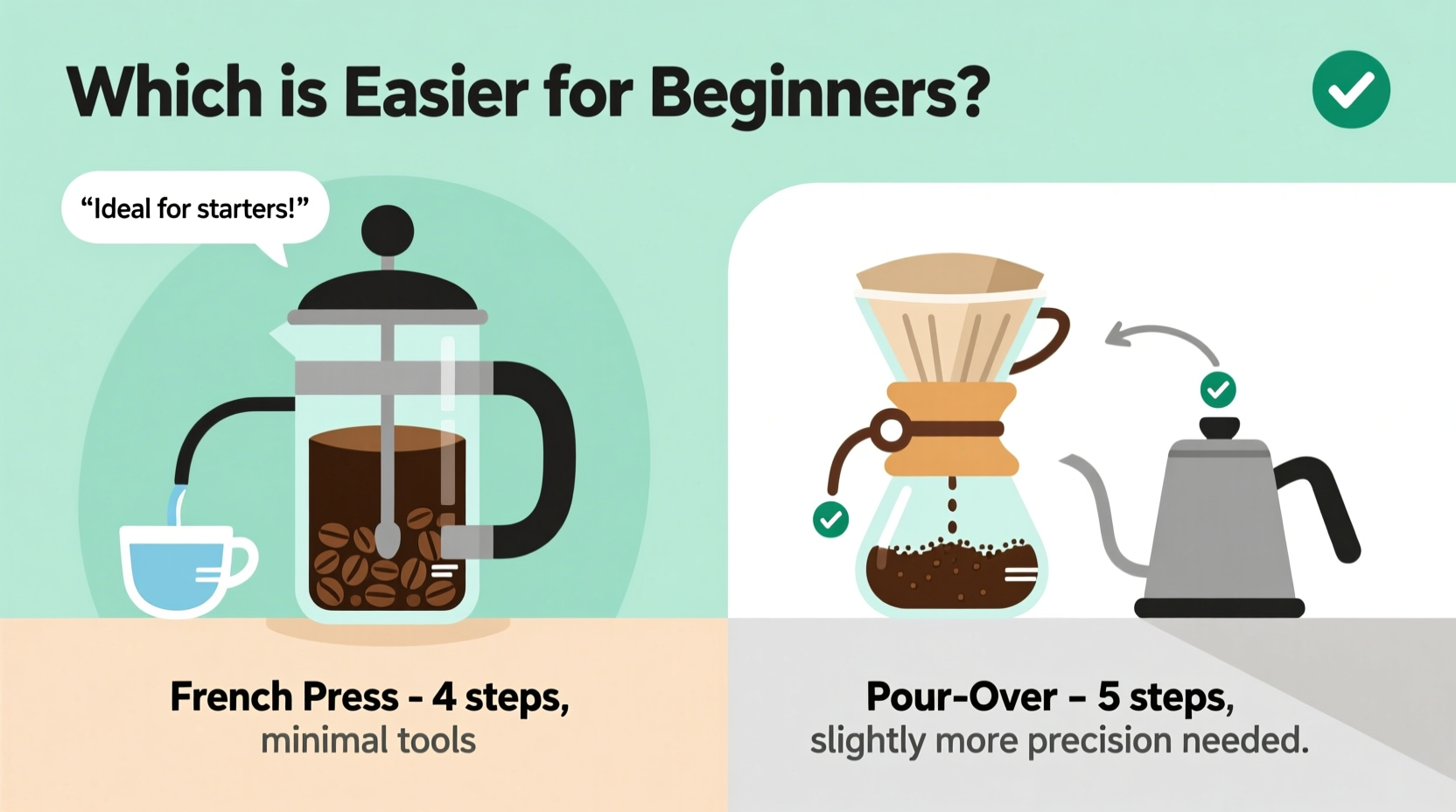
A French press operates on immersion brewing. Coarsely ground coffee is steeped in hot water for several minutes inside a cylindrical carafe equipped with a plunger and metal mesh filter. After the steeping period, the plunger is pressed down, separating the grounds from the liquid. This method traps fine particles and oils in the final cup, contributing to a heavier body and more pronounced mouthfeel.
In contrast, pour over coffee uses a drip method. Medium-fine ground coffee is placed in a paper (or reusable) filter set in a cone-shaped dripper. Hot water is poured in slow, controlled spirals over the grounds, allowing it to extract flavor as it passes through and collects in a vessel below. The paper filter removes most oils and sediment, resulting in a cleaner, brighter cup with distinct flavor notes.
While both require attention to water temperature and grind size, the French press is generally more forgiving due to its passive brewing style. Once the water is added, there’s little intervention needed. Pour over, however, demands active participation—timing, pouring speed, and even water distribution all influence the outcome.
Tip: If you're short on time or prefer a hands-off approach, the French press may suit your routine better. It requires less active involvement during brewing.Equipment and Setup: What You’ll Need to Get Started
Both methods are relatively affordable and space-efficient, but their equipment lists differ in complexity and maintenance.
- French Press: One device (the press itself), a kettle, coffee grinder (preferably burr), and whole bean coffee.
- Pour Over: Dripper (e.g., Hario V60, Chemex), filters, gooseneck kettle, scale, thermometer (optional), grinder, and beans.
The French press wins in simplicity. It’s a single piece of equipment—add coffee, add water, wait, plunge. No extra parts to lose or replace frequently. Cleanup involves rinsing out used grounds and washing the carafe and plunger.
Pour over setups, while elegant, come with more components. Filters must be purchased regularly unless using a reusable option. The gooseneck kettle—essential for precise pouring—is not something most kitchens already have. A digital scale improves consistency, especially for beginners still learning ratios. Without one, it's easy to use too much or too little coffee, leading to under- or over-extraction.
“Pour over is like playing an instrument—every variable affects the final note. French press is more like pressing play on a well-recorded track.” — Rafael Silva, Barista Trainer & Coffee Educator
Step-by-Step Comparison: Learning Curve for New Users
To understand which method is truly easier, let’s walk through each brewing process as a beginner would experience it.
French Press Brewing Steps
- Boil water and let it cool slightly (ideal: 195–205°F).
- Add coarse-ground coffee to the carafe (typically 1:15 coffee-to-water ratio).
- Pour hot water over the grounds, saturating evenly.
- Place the lid on with the plunger up and let steep for 4 minutes.
- Press the plunger down slowly and steadily.
- Pour and enjoy immediately to avoid over-extraction from residual contact.
Pour Over Brewing Steps
- Boil water and prepare gooseneck kettle.
- Place filter in dripper and rinse with hot water (removes paper taste and preheats vessel).
- Add medium-fine ground coffee (again, ~1:16 ratio).
- Start timer; pour just enough water to saturate grounds (bloom phase, ~30 seconds).
- Continue pouring in slow concentric circles, maintaining water level.
- Total brew time should be 2:30–3:30 minutes depending on dose.
- Remove dripper and serve.
The French press process is linear and largely self-contained. Mistakes like uneven pouring or inconsistent flow don’t apply. Even if the water temperature is slightly off, the immersion method buffers minor errors. In contrast, pour over punishes imprecision. Pouring too fast leads to channeling; too slow causes under-extraction. Skipping the bloom or using the wrong grind size dramatically alters flavor.
Tip: Beginners often struggle with grind size. Start with a medium-coarse setting for French press and medium-fine for pour over. Adjust based on taste—not timing.Taste, Consistency, and Long-Term Usability
Taste preference plays a major role in determining which method feels “easier” over time. Easier doesn’t just mean fewer steps—it means producing a cup you enjoy, consistently.
French press delivers a bold, full-bodied cup with noticeable sediment and retained oils. It highlights chocolatey, nutty, or earthy notes common in dark and medium roasts. Because of the metal filter, more lipids pass through, enhancing richness. However, this also means acidity and delicate floral or fruity notes are often muted.
Pour over, thanks to the paper filter, produces a tea-like clarity. Brightness, sweetness, and nuanced flavors shine, especially in light-roast single-origin coffees. But achieving this balance takes practice. Many beginners brew weak, sour coffee because they pour too quickly or use water that’s too cool.
| Factor | French Press | Pour Over |
|---|---|---|
| Brew Time | 4–5 minutes | 2:30–4 minutes |
| Grind Size | Coarse | Medium-fine |
| Active Involvement | Low | High |
| Learning Curve | Gentle | Steeper |
| Flavor Profile | Full-bodied, rich, heavy | Clean, bright, nuanced |
| Cleanup | Easy (discard grounds, rinse) | Moderate (rinse dripper, dispose of filter) |
| Equipment Cost | $20–$40 | $40–$80+ |
Consistency is where French press excels for beginners. Once you’ve dialed in your ratio and steep time, results remain stable across brews. Pour over, by contrast, varies with every subtle change in hand motion or water flow. This makes it harder to replicate success without meticulous notes and tools.
Real Example: A Beginner’s First Week with Each Method
Sophie, a college student new to brewing, decided to test both methods over seven days. She bought a $30 French press first. On day one, she followed a basic recipe: 30g coffee, 500ml water, 4-minute steep. The result was strong, slightly muddy, but satisfyingly rich. By day three, she adjusted her grind to coarser after noticing bitterness and achieved a smoother cup.
She then tried a Hario V60 setup. Despite watching tutorial videos, her first pour resulted in a thin, sour brew. She hadn’t rinsed the filter, used water that cooled too much, and poured too fast. On day five, with a scale and reheated water, she improved—but only after four attempts. By day seven, she could produce a decent cup, but admitted it felt “like homework.”
Her takeaway? “The French press gave me good coffee fast. The pour over gave me better coffee—but only after I stopped making so many mistakes.”
Checklist: Getting Started Successfully
Whether you choose French press or pour over, follow this checklist to avoid common pitfalls:
- ✅ Invest in a burr grinder—pre-ground coffee won’t yield consistent results.
- ✅ Use fresh, high-quality whole beans (roasted within the past 2–3 weeks).
- ✅ Boil filtered water and let it rest 30 seconds before brewing (target 195–205°F).
- ✅ Stick to standard ratios: start with 1:15 (coffee:water) for French press, 1:16 for pour over.
- ✅ Clean equipment after each use to prevent oil buildup or stale residue.
- ✅ Keep notes: record grind size, time, and taste to refine your process.
- ✅ Be patient—your first few cups may not be perfect, and that’s normal.
Frequently Asked Questions
Can I use regular ground coffee from the supermarket?
It’s possible, but not ideal. Pre-ground coffee loses freshness quickly and is often too fine for French press or too coarse for pour over. For best results, grind beans just before brewing using a burr grinder.
Which method makes stronger coffee?
Strength is subjective. French press produces a more intense, full-bodied cup due to suspended fines and oils. Pour over can be strong in flavor clarity but feels lighter on the palate. Caffeine levels are similar when using the same coffee-to-water ratio.
Do I need a gooseneck kettle for pour over?
Highly recommended. A gooseneck kettle gives you precise control over water flow, which is critical for even saturation and avoiding channeling. A regular kettle pours too forcefully and disrupts the bed of grounds.
Final Verdict: Which Is Easier for Beginners?
The French press is objectively easier for most beginners. It requires fewer tools, less technical skill, and offers more forgiveness in execution. You can brew a satisfying cup with minimal instruction and inconsistent technique. Its straightforward process aligns well with morning routines where speed and reliability matter.
Pour over, while capable of producing exceptional coffee, demands patience, additional gear, and a willingness to learn through repetition. It’s better suited for those who enjoy ritual, precision, and sensory exploration. For a beginner eager to dive deep into coffee craftsmanship, it’s a rewarding challenge—but not the easiest entry point.
If your goal is convenience, consistency, and a rich, hearty cup without fuss, start with the French press. Once you’re comfortable with fundamentals like grind size and water temperature, you can explore pour over with greater confidence and appreciation for its intricacies.
💬 Ready to brew better coffee at home? Start with a French press, master the basics, and let your taste guide your next step. Share your journey or ask questions in the comments—every expert barista was once a beginner.