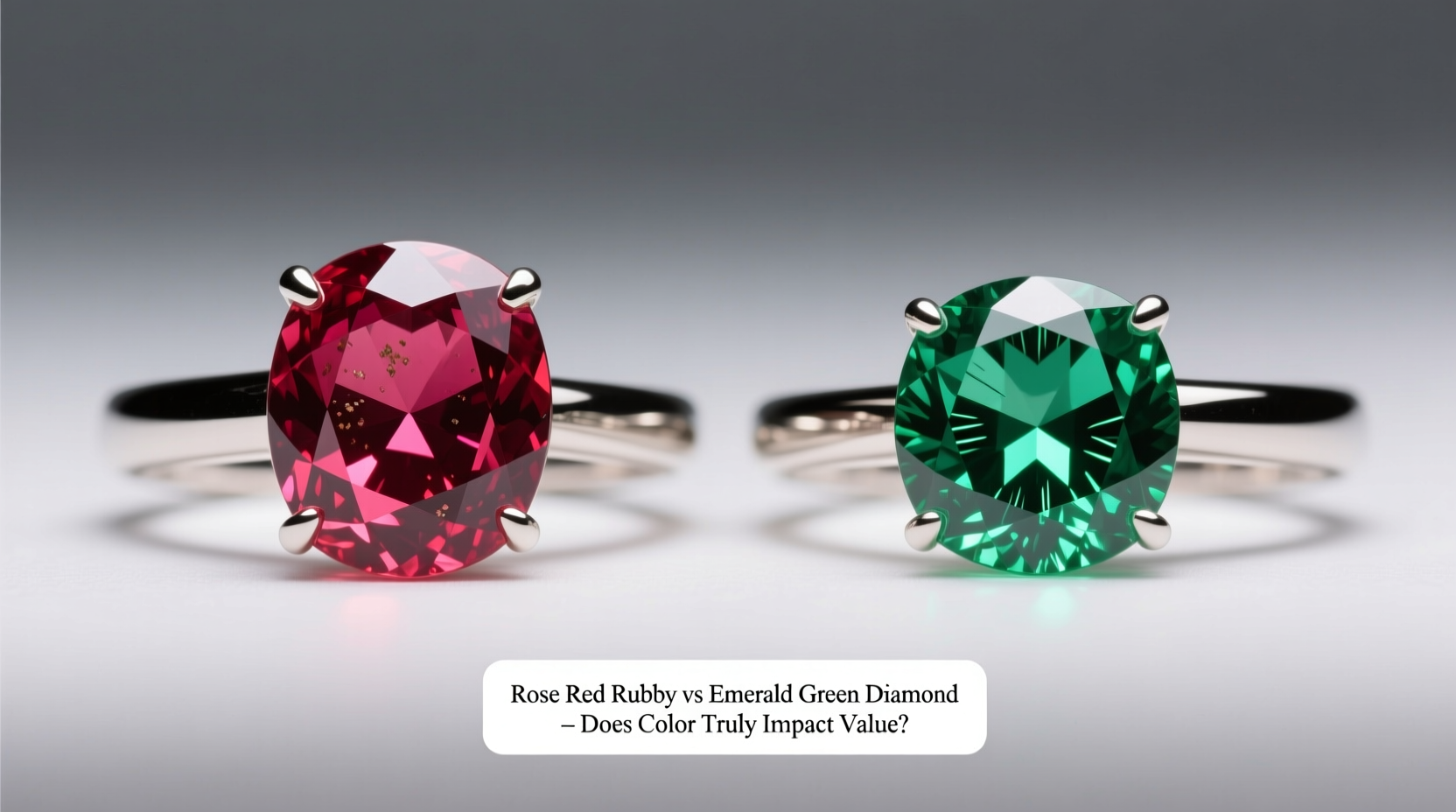
When it comes to precious gemstones, few debates are as enduring as whether color alone determines value. Among collectors and buyers, a persistent question arises: between a vivid rose red gem and a lush green emerald, does the difference in color directly translate into a significant difference in price? The answer isn’t as simple as comparing hues—it involves geology, rarity, cultural preference, and market dynamics. Understanding how color influences value requires looking beyond surface appearance and into the deeper factors that define a gem’s worth.
The Role of Color in Gemstone Valuation
In the world of colored gemstones, color is the single most important factor in determining value. It accounts for more than half of a stone’s overall appraisal, often outweighing cut, clarity, and carat weight combined. However, “color” itself is not a monolithic trait. Experts evaluate it using three components: hue, tone, and saturation.
- Hue: The dominant color—red, green, blue, etc.—and any secondary overtones (e.g., bluish-green or purplish-red).
- Tone: How light or dark the color appears, measured from 0% (colorless) to 100% (black).
- Saturation: The intensity or purity of the color, ranging from dull to vivid.
A gem with a pure, vibrant hue at an ideal tone and high saturation will command the highest prices. For example, a pigeon-blood red ruby—classified by its rich red hue with slight purple undertones and exceptional saturation—is among the most valuable colored stones in the world. Similarly, an emerald with a deep, bluish-green hue and strong saturation can rival diamonds in per-carat price.
Tip: When evaluating gem color, always view the stone under natural daylight. Artificial lighting can distort hue and mask true saturation.Rose Red Gems: Rarity and Cultural Prestige
“Rose red” typically refers to a soft to medium pinkish-red hue found in certain rubies, spinels, or garnets. While not as intense as pigeon-blood red, this delicate shade has gained popularity for its romantic appeal and versatility in jewelry design. However, in terms of valuation, rose red gems generally fall short of their deeper-hued counterparts.
Rubies with lighter tones or noticeable pink modifiers are often reclassified as pink sapphires if they lack sufficient chromium-induced redness. This distinction matters: a Burmese ruby weighing one carat with top color can exceed $30,000 per carat, while a similar-sized pink sapphire might sell for $1,500–$3,000 per carat.
Still, rose red spinels—especially those from Tajikistan or Tanzania—are gaining recognition. Historically mistaken for rubies (including the famed “Black Prince’s Ruby” in the British Crown Jewels), fine red spinels now attract connoisseurs seeking rare alternatives. Yet, despite their beauty, they remain significantly less expensive than rubies due to lower market demand and awareness.
“Color defines a gem’s soul, but reputation drives its price. A rose red spinel may be stunning, but without centuries of lore behind it, it won’t match the ruby’s premium.” — Dr. Lena Moreau, GIA Senior Gemologist
Green Emeralds: The Benchmark of Green Gemstones
Emeralds, a variety of beryl, are synonymous with green. Their color comes from trace amounts of chromium and vanadium, producing hues that range from light yellow-green to deep bluish-green. The most prized emeralds exhibit a pure, saturated green with minimal yellow or blue modifiers.
Unlike rubies, where clarity heavily impacts value, emeralds are expected to have inclusions—so-called “jardin” (French for garden). As long as these don’t impair transparency or durability, they are accepted. Thus, color becomes even more critical in emerald pricing.
Top-tier Colombian emeralds—particularly from the Muzo and Chivor mines—are revered for their velvety green hue and unmatched saturation. A 1-carat Colombian emerald with excellent color and moderate clarity can fetch $10,000–$20,000 per carat. In contrast, Zambian emeralds, though often cleaner and more affordable, tend to have a slightly bluer tone and sell at 30–50% lower prices for comparable sizes.
Emerald Origin and Price Comparison
| Origin | Typical Hue | Avg. Price per Carat (Fine Quality) |
|---|---|---|
| Colombia (Muzo) | Rich, warm green | $15,000–$25,000 |
| Zambia | Cooler, bluish-green | $7,000–$12,000 |
| Brazil | Lighter, yellowish-green | $2,000–$5,000 |
Does Color Alone Determine Value?
While color is paramount, it doesn’t act in isolation. A rose red gemstone, no matter how beautiful, will not surpass a fine emerald in price unless other factors align—specifically rarity, provenance, and demand.
Consider this: natural rubies over 1 carat are rarer than diamonds of the same size. Their scarcity, combined with historical prestige (especially from Burma), fuels high prices. Emeralds, though more commonly available, see extreme value spikes when they combine origin, color, and size. A 20-carat Colombian emerald with vivid color recently sold at auction for over $5 million.
In contrast, rose red stones—unless they are exceptional rubies or rare spinels—lack the same collector momentum. Market perception plays a powerful role. Green emeralds benefit from being one of the “big three” colored gemstones (alongside rubies and sapphires), giving them institutional credibility that lesser-known rose red varieties lack.
Tip: Always request a gemological certificate from a recognized lab (GIA, Gübelin, SSEF) to verify color grading and origin—key determinants of value.Real-World Example: Auction Outcomes
In 2022, Christie’s auctioned two notable pieces: a 5.2-carat rose red spinel from Tanzania and a 4.8-carat Colombian emerald. Despite similar size and cut quality, the results were starkly different.
The spinel, described as “vivid raspberry red” with excellent clarity, sold for $68,000 ($13,000 per carat). Meanwhile, the emerald, set in a vintage Cartier ring and noted for its “exceptional bluish-green saturation,” fetched $410,000 ($85,000 per carat). Both stones were beautiful, but the emerald’s combination of origin, brand association, and established market desirability drove its premium.
This case illustrates that while color is essential, context amplifies value. The emerald wasn’t just green—it was a historically significant, responsibly sourced Colombian gem in a designer setting. The spinel, though rarer geologically, lacked the narrative and brand equity to command a similar price.
How to Evaluate Color-Driven Value: A Practical Checklist
When comparing rose red gems to green emeralds—or any colored stones—use this checklist to assess true worth:
- Identify the exact species: Is it a ruby, spinel, garnet, or tourmaline? Misidentification leads to incorrect valuation.
- Assess hue accuracy: Use a master stone set or spectroscopic report to confirm primary and secondary hues.
- Evaluate saturation: Vivid, intense colors are more valuable than muted or grayish tones.
- Check origin documentation: Stones from renowned sources (Burmese rubies, Colombian emeralds) carry premiums.
- Review certification: Ensure the gem has been graded by a reputable lab with no undisclosed treatments.
- Consider market trends: Research recent auction results for similar stones to gauge realistic pricing.
Frequently Asked Questions
Is a rose red gemstone ever more valuable than an emerald?
Rarely, and only under specific conditions. A top-quality Burmese ruby with rose-red tones could exceed the price of a mid-grade emerald. However, when comparing finest examples, emeralds from Colombia typically maintain higher per-carat values due to sustained demand and limited supply.
Do synthetic gems follow the same color-value rules?
No. Lab-grown stones are priced based on production cost and market availability, not rarity. While color still affects aesthetics, it doesn’t drive value the way it does in natural gems. A synthetic rose red ruby may look identical to a natural one but sells for less than 10% of the price.
Can treatment affect how color influences price?
Absolutely. Many emeralds are oiled to improve clarity, which is accepted but lowers value compared to untreated stones. Similarly, heat-treated rubies are common, but unheated specimens with rich color can double or triple in price. Full disclosure of treatments is essential for accurate pricing.
Conclusion: Color Matters—But So Does Context
The color of a gemstone undeniably shapes its price, but it does not act alone. A rose red gem may captivate with its soft elegance, and a green emerald with its regal depth—but their market value is determined by a complex interplay of science, history, and human desire. While emeralds currently hold a stronger position in the luxury market due to their iconic status and consistent demand, rose red stones from exceptional sources can also command impressive prices, especially as collectors seek unique, undervalued alternatives.
Ultimately, understanding value means looking beyond the surface. Whether you’re investing, collecting, or simply appreciating beauty, take time to learn what makes each gem truly rare. Let color guide your eye, but let knowledge guide your decision.
💬 Have you encountered a rose red gem or emerald that surprised you with its price or beauty? Share your experience in the comments and help others appreciate the nuances of gemstone color and value.