Celery is often relegated to the role of background player—a mere mirepoix component or crudité platter staple—but when given center stage, it reveals a delicate, earthy sweetness capable of anchoring an extraordinary dish. A well-executed rich and creamy celery soup elevates this overlooked vegetable into a luxurious, silken preparation that balances depth and delicacy. Whether you're seeking comfort on a cold evening or aiming to impress guests with refined simplicity, this soup delivers both elegance and nourishment. Far from one-dimensional, celery soup can be layered with umami, enriched with dairy or plant-based alternatives, and finished with thoughtful garnishes that elevate its natural charm.
This recipe is not merely about blending cooked celery with cream; it’s a study in coaxing maximum flavor from minimal ingredients through proper technique. Understanding how to build flavor foundations, control texture, and enhance aroma ensures success every time. From selecting the freshest celery to mastering the final emulsification, this guide provides everything needed to create a restaurant-quality soup at home—one that celebrates celery not as filler, but as the star.
Definition & Overview
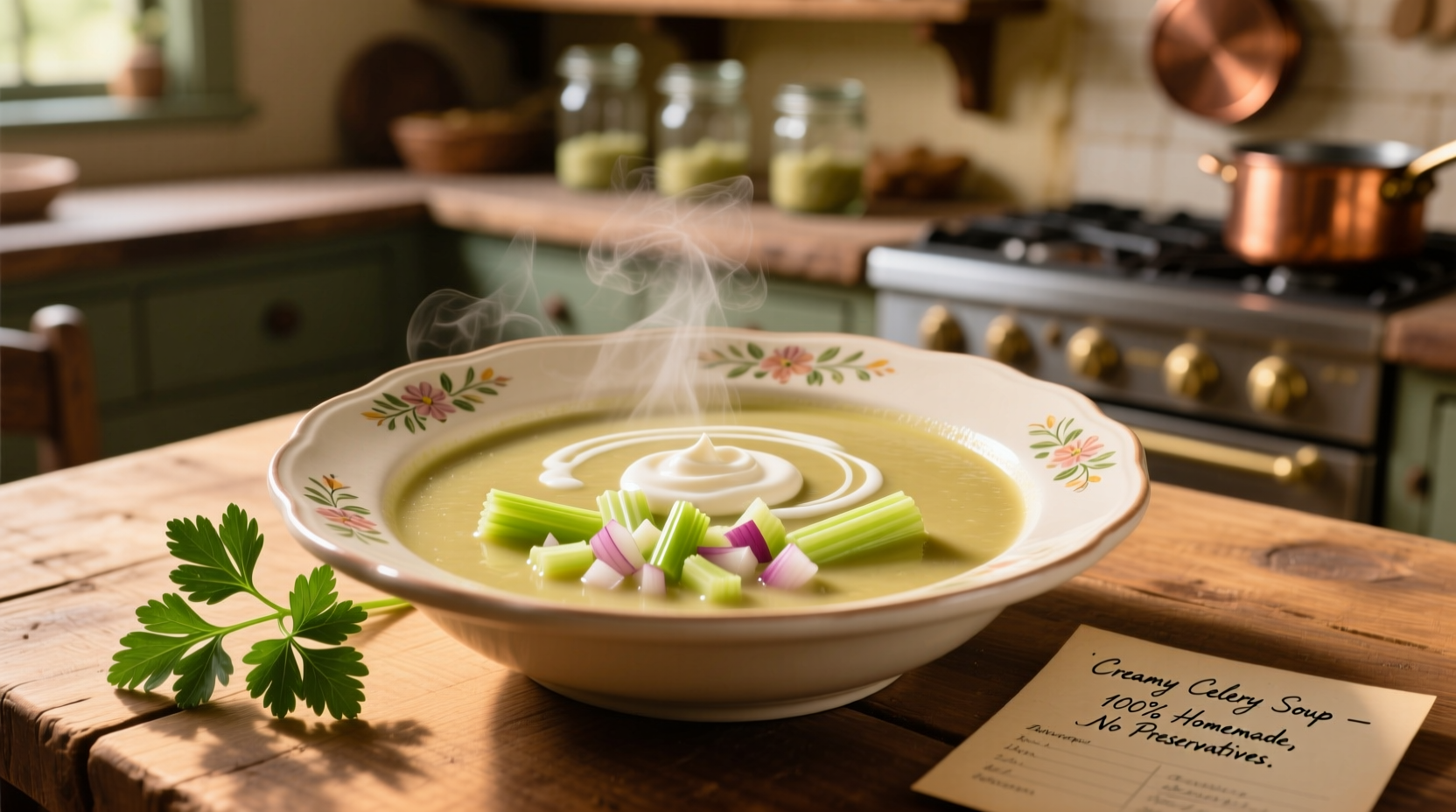
A rich and creamy celery soup is a smooth, warm purée made primarily from celery stalks, aromatics, liquid (typically broth), and a fat or emulsifier such as butter, cream, or olive oil. It belongs to the broader category of velouté-style soups, relying on gentle sautéing and slow simmering to develop complexity before being blended to a velvety consistency. Unlike chowders or chunky vegetable soups, this version emphasizes refinement and homogeneity, offering a palate-coating richness balanced by celery’s natural brightness.
The dish has roots in French provincial cuisine, where chefs traditionally used seasonal vegetables to craft elegant, economical soups. While less famous than vichyssoise (the chilled potato-leek classic), celery soup shares a similar ethos: transforming humble produce into something indulgent. Modern interpretations vary widely—some lean into dairy for opulence, others use cashew milk or white beans for vegan versions—yet all maintain fidelity to celery’s crisp, herbal character.
What distinguishes “rich and creamy” from basic celery soup is the intentional enhancement of mouthfeel and depth. This isn’t achieved solely through added fat, but through technique: sweating aromatics slowly, deglazing properly, reducing liquids, and finishing with a stable emulsion. The result should feel sumptuous without masking the primary ingredient’s identity.
Key Characteristics
| Characteristic | Description |
|---|---|
| Flavor Profile | Earthy, subtly sweet, with grassy and herbal notes; mild bitterness when overcooked. Develops savory depth when combined with mirepoix and reduced stock. |
| Aroma | Fresh, green, slightly peppery when raw; becomes rounded and nutty after cooking. Enhanced by thyme, bay leaf, or white pepper. |
| Color | Pale jade to soft sage green, depending on celery variety and cooking time. Browning of butter or onions may deepen hue slightly. |
| Texture | Smooth, silky, and cohesive—never grainy or watery. Should coat the back of a spoon evenly. |
| Heat Level | None inherently. Can be adjusted with white pepper or cayenne for subtle warmth, but not spicy. |
| Culinary Function | Appetizer, light main course, or base for more complex variations (e.g., with blue cheese or smoked trout). |
| Shelf Life | 3–4 days refrigerated; up to 3 months frozen if stored properly in airtight containers. |
Practical Usage: How to Make Rich and Creamy Celery Soup
Creating a truly exceptional celery soup hinges on three phases: building the flavor base, extracting vegetable essence, and refining texture. Follow these steps for consistent results:
- Select and Prepare Ingredients: Use 1.5 pounds (680g) of fresh celery—preferably with vibrant green stalks and crisp ribs. Remove leaves and reserve for garnish. Chop stalks uniformly (¼-inch pieces). Combine with 1 large onion (diced), 2 leeks (white and light green parts only, rinsed well), and 2 cloves garlic (minced).
- Sweat Aromatics Gently: In a heavy-bottomed pot, melt 4 tablespoons unsalted butter over medium-low heat. Add onions and leeks; cook 8–10 minutes until translucent but not browned. Add celery and a pinch of salt to draw out moisture. Cook another 10 minutes, stirring occasionally.
- Build Depth with Liquid: Pour in 4 cups (950ml) of low-sodium vegetable or chicken broth. Add 1 bay leaf, ½ teaspoon dried thyme (or 3 sprigs fresh), and season lightly with white pepper. Simmer uncovered for 25–30 minutes, until celery is very tender.
- Purée Until Smooth: Remove bay leaf and thyme stems. Transfer mixture to a high-speed blender in batches. Blend on high for 1–2 minutes per batch, allowing steam to escape via the lid’s vent (cover with a towel). For ultra-smooth texture, pass through a fine-mesh sieve.
- Enrich and Emulsify: Return purée to clean pot. Stir in ¾ cup (180ml) heavy cream or full-fat coconut milk. Warm gently over low heat—do not boil. For extra richness, whisk in 1 tablespoon cold butter at the end (monter au beurre technique).
- Season and Finish: Taste and adjust: a squeeze of lemon juice brightens flavors; a dash of fish sauce or soy adds umami. Garnish with toasted croutons, fried capers, or reserved celery leaves.
Pro Tip: To prevent oxidation and preserve color, add a few drops of lemon juice to the cooking liquid. Also, never rush the sweating phase—low and slow builds sweetness without caramelization, which would alter the soup’s intended profile.
Variants & Types
Celery soup adapts beautifully to dietary needs and creative experimentation. Below are common variants, each suited to different occasions:
- Classic French-Style: Based on mirepoix, enriched with heavy cream and butter. Served warm. Ideal for formal dining or holiday menus.
- Vegan/Cream-Free: Replace dairy with soaked and blended cashews, white beans, or oat milk. Nutritional yeast adds cheesy depth. Best for allergen-sensitive settings.
- Chilled Celery Vichyssoise: A cool adaptation inspired by the potato-leek original. Chill completely and serve with crème fraîche swirl and chives. Perfect for summer entertaining.
- Smoky Blue Cheese Version: Fold in crumbled Stilton or Gorgonzola dolce after blending. Add a hint of smoked paprika for contrast. Serve with walnut bread.
- Seafood-Infused: Use fish stock instead of vegetable/chicken broth. Finish with poached shrimp or scallops. Elevates the soup to entrée status.
| Variant Type | Dairy Content | Best Served | Pairing Suggestions |
|---|---|---|---|
| Classic Cream-Based | High (cream + butter) | Warm, immediately after finishing | Buttered brioche, green salad with mustard vinaigrette |
| Vegan Cashew | None | Warm or chilled | Toasted pumpkin seeds, sourdough croutons |
| Chilled Vichyssoise-Style | Moderate (crème fraîche garnish) | Cold, pre-chilled 4+ hours | Champagne, cucumber sandwiches |
| Blue Cheese & Smoked Paprika | Medium (cream base, cheese topping) | Warm | Arugula salad, crusty baguette |
Comparison with Similar Ingredients
Celery soup is sometimes confused with other pale, creamy vegetable soups. However, key distinctions exist in flavor, structure, and technique:
| Soup Type | Primary Ingredient | Flavor Difference | Texture Note |
|---|---|---|---|
| Celery Soup | Celery (≥70% volume) | Grassy, herbal, faintly bitter-sweet | Lighter body than potato; requires emulsification for creaminess |
| Vichyssoise (Potato-Leek) | Potatoes and leeks | Sweeter, starchier, milder | Naturally thicker due to potato pectin |
| Fennel Soup | Fennel bulbs | Anise-like licorice note | More aromatic; pairs well with citrus zest |
| Celeriac Soup | Celeriac (celery root) | Denser, earthier, nuttier | Higher starch content allows for self-thickening |
“Many assume celery lacks substance, but I’ve built entire tasting menus around it. When roasted first, its sugars caramelize into something almost meaty. As a soup? It’s a canvas.” — Chef Lila Moreau, *Bistro Vert*, Lyon
Practical Tips & FAQs
Can I make celery soup without cream?
Yes. Substitute cream with pureed white beans (cannellini or navy), cooked cauliflower, or blended cashews. These provide body while keeping the soup dairy-free. For every cup of cream omitted, blend ½ cup soaked raw cashews with ¾ cup broth and stir in at the end.
Why does my celery soup taste bitter?
Bitterness arises from overcooking or using older, fibrous stalks. Always trim ends thoroughly and avoid boiling rapidly. Adding a small grated potato during cooking helps neutralize harsh notes by balancing pH and adding starch.
How do I store and reheat celery soup?
Cool completely within two hours of cooking. Store in airtight glass containers for up to four days. Reheat gently over low heat, stirring frequently. If separation occurs, re-blend briefly or whisk in a teaspoon of cornstarch slurry (1:1 water-cornstarch).
Can I freeze creamy celery soup?
Dairy-based versions may separate upon thawing due to fat destabilization. For best results, freeze before adding cream. Thaw overnight, reheat, then stir in fresh cream. Vegan versions with cashews or beans freeze exceptionally well.
What herbs pair best with celery soup?
Thyme, parsley, tarragon, and chervil complement celery’s green notes. Avoid robust herbs like rosemary or oregano, which overpower. Fresh dill works well in chilled versions.
Is celery soup healthy?
Inherently low in calories and rich in vitamin K, potassium, and antioxidants, celery soup becomes nutritionally dense when prepared mindfully. Opt for olive oil over butter, limit sodium, and boost fiber with added leeks or leak. One cup contains approximately 180–220 kcal when made with cream; 110–140 kcal when vegan.
Storage Checklist:
- Cool soup quickly—place pot in ice bath before storing
- Label containers with date and contents
- Leave 1-inch headspace if freezing
- Refrigerate within 2 hours of cooking
- Discard if sour smell or mold appears
Summary & Key Takeaways
A rich and creamy celery soup is far more than a simple purée—it is a testament to culinary intelligence, transforming a modest vegetable into a dish of sophistication and comfort. Success lies not in extravagance, but in attention to detail: selecting fresh, crisp celery; sweating aromatics slowly; enriching with care; and finishing with precision.
Key points to remember:
- Celery must dominate the flavor profile—use at least 1.5 pounds per 4 servings.
- Never rush the sweat phase; low heat preserves sweetness and prevents bitterness.
- Cream enhances texture but isn't mandatory—cashews, beans, or potatoes offer excellent alternatives.
- Blending hot soup requires caution—vent the lid and cover with a towel to avoid burns.
- Garnishes matter: crispy shallots, lemon zest, or toasted seeds add contrast and visual appeal.
- Freeze wisely—omit cream if planning long-term storage.
This soup adapts effortlessly to dietary preferences and seasonal shifts. Serve it warm under candlelight in winter, or chilled with a rosé pairing in summer. With practice, it becomes a signature dish—one that surprises diners who once thought celery was only for crunch.
Ready to transform your perception of celery? Make this soup tonight—and rediscover what simplicity, done right, can achieve.








