Red wine spills on carpet are among the most common household accidents—and one of the most stressful. The deep crimson color sets quickly, and without immediate action, what starts as a minor mishap can become a permanent eyesore. But with the right techniques applied promptly, even large or older stains can be fully removed. This guide breaks down scientifically sound, expert-tested strategies that deliver real results. Whether you're dealing with a fresh spill or a dried-in blemish, these methods have been validated by professional cleaners and chemists alike.
Why Red Wine Stains Are So Persistent
Red wine contains tannins, pigments (anthocyanins), and alcohol—all of which contribute to its staining power. Tannins bind tightly to fibers, especially in synthetic carpets like nylon or olefin, while anthocyanins provide the intense color. Alcohol initially helps the wine spread but evaporates quickly, leaving behind concentrated residue. Once the liquid penetrates the carpet backing or padding, removal becomes significantly more difficult.
The key to success is speed. Within the first 5–10 minutes, intervention can prevent deep absorption. However, even older stains—up to several days old—can often be reversed using targeted treatments that break down the chemical bonds holding the stain in place.
Tip: Always blot, never rub. Rubbing pushes the stain deeper into the carpet fibers and can damage the pile.Immediate Response: The First 10 Minutes Matter Most
When a glass tips over, your instinct might be to panic—but staying calm and acting fast gives you the best chance at complete removal. Follow this timeline immediately after the spill:
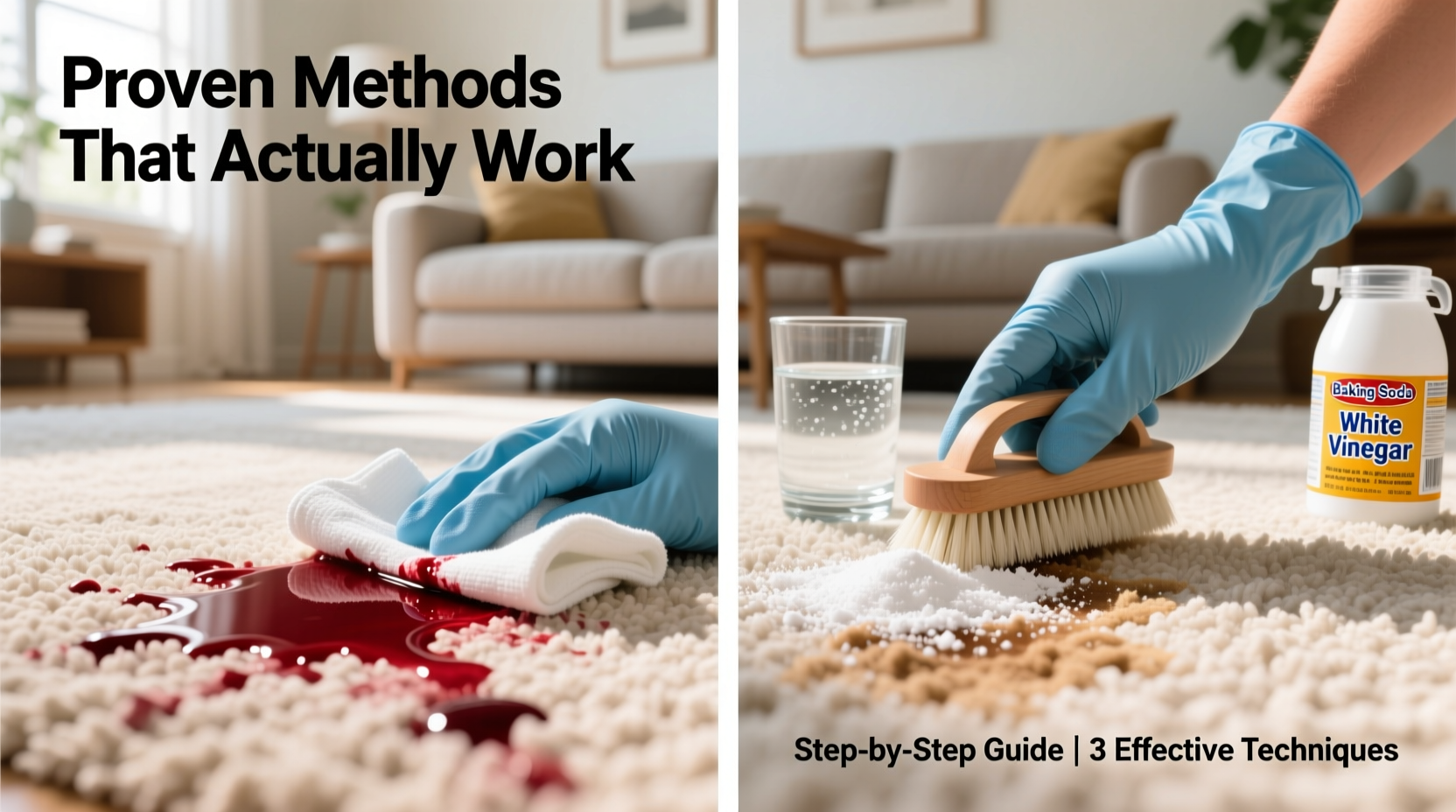
- Blot excess wine with a clean, absorbent white cloth or paper towel. Press down gently; do not wipe.
- Sprinkle table salt or baking soda liberally over the wet area. These act as moisture absorbers and help lift pigment to the surface.
- Wait 5–10 minutes for the granules to draw out liquid and begin breaking up the stain.
- Vacuum thoroughly to remove all dry residue before applying any liquid solution.
This preliminary step alone can eliminate up to 70% of the visible stain if done correctly. Salt works by osmosis, pulling liquid upward, while baking soda adds mild abrasion and deodorizing properties.
Step-by-Step Guide: Three Proven Cleaning Methods
After initial blotting and drying, choose one of the following treatments based on your carpet type and stain severity. All methods assume pre-vacuuming of salt or baking soda residue.
Method 1: Hydrogen Peroxide & Dish Soap (Best for Fresh Stains)
This combination leverages hydrogen peroxide’s oxidizing power to break down color molecules, while dish soap emulsifies oils and lifts residues.
- Mix 1 tablespoon of hydrogen peroxide (3%) with 1 teaspoon of clear liquid dish soap (e.g., Dawn).
- Apply the solution directly to the stained area using a spray bottle or cotton ball.
- Cover with a damp white cloth and let sit for 15–20 minutes. Avoid direct sunlight during this time.
- Blot aggressively with a clean towel until no more transfer occurs.
- Rinse with cold water using a sponge, then blot dry.
- Vacuum once completely dry to restore texture.
Note: Test on an inconspicuous area first. Hydrogen peroxide may lighten darker dyes. Not recommended for wool or silk-blend carpets.
Method 2: White Vinegar & Baking Soda Paste (Ideal for Set-In Stains)
Vinegar’s acidity helps dissolve tannin-based stains, while baking soda provides gentle scrubbing action without fiber damage.
- Create a paste using 2 tablespoons of baking soda and enough white vinegar to form a thick consistency.
- Spread evenly over the stain and allow it to fizz for 5–10 minutes.
- Gently agitate with a soft-bristled brush (like an old toothbrush) in circular motions.
- Let sit for 30 minutes, then rinse thoroughly with cold water.
- Blot dry and repeat if necessary.
This method is particularly effective on older stains where pigment has bonded deeply with fibers. Multiple applications may be needed for full restoration.
Method 3: Commercial Enzyme Cleaners (For Deep or Odorous Stains)
Enzyme-based cleaners contain biological agents that target organic compounds—ideal when wine has seeped into padding or left behind fermentation odors.
- Select a product labeled for organic stains (e.g., Nature’s Miracle, Biokleen Bac-Out).
- Follow manufacturer instructions precisely—most require saturation and extended dwell time (30+ minutes).
- Cover with plastic wrap to prevent evaporation and enhance penetration.
- After treatment, blot and rinse with water to remove enzyme residue.
These products work slowly but comprehensively, making them ideal for overnight treatment of stubborn cases.
Tip: Never mix vinegar with hydrogen peroxide or bleach—this creates peracetic acid, which is corrosive and hazardous.Carpet Type Considerations: What Works Where
Not all carpets respond equally to cleaning solutions. Using the wrong method can lead to discoloration, texture loss, or fiber degradation. Below is a comparison of recommended approaches by material.
| Carpet Type | Recommended Method(s) | Avoid |
|---|---|---|
| Nylon | Hydrogen peroxide + dish soap, vinegar paste | Bleach, undiluted acids |
| Polyester | Vinegar paste, enzyme cleaners | Hydrogen peroxide (can cause yellowing) |
| Olefin (Polypropylene) | Blotting + vinegar rinse only | Most chemicals—olefin resists stains but degrades easily |
| Wool | Enzyme cleaners, professional steam | Vinegar, peroxide, baking soda (can felt or fade) |
| Blend (Wool/Synthetic) | Test patch first; enzyme cleaners safest | Strong oxidizers or acidic mixes |
Always perform a spot test in a hidden area (e.g., closet or under furniture) before full application. Wait 24 hours to check for colorfastness and texture changes.
Expert Insight: What Professional Cleaners Recommend
Industry veterans emphasize prevention and precision over aggressive cleaning.
“Time is your biggest enemy with wine stains. The longer it sits, the more tannins polymerize and lock in. But even worse than delay is using too much water or harsh chemicals that push the stain down into the pad.” — Maria Thompson, Certified Carpet Technician (CCT), IICRC
Thompson advises homeowners to keep a small emergency kit: microfiber cloths, table salt, a travel-sized spray bottle with diluted dish soap, and disposable gloves. “Having supplies ready means you won’t waste time searching,” she says. “And always work from the outside inward to prevent spreading.”
Real-World Example: Recovering a Living Room Spill
Sarah K., a homeowner in Portland, OR, spilled an entire glass of Cabernet Sauvignon on her light gray nylon rug during dinner. She followed these steps:
- Immediately blotted with paper towels for two minutes.
- Applied kosher salt, waited 8 minutes, then vacuumed.
- Mixed hydrogen peroxide and Dawn, applied, covered with a damp cloth, and waited 20 minutes.
- Blotted and rinsed with cold water.
After one round, 90% of the stain was gone. A second, lighter application the next day removed the remainder. No discoloration occurred because she tested first in a corner. “I thought it was ruined,” she said. “But now you’d never know unless I told you.”
Common Mistakes That Make Stains Worse
Even well-intentioned efforts can backfire. Here are frequent errors to avoid:
- Using hot water – Sets protein and tannin stains permanently.
- Over-wetting the area – Can lead to mold growth beneath the carpet.
- Applying undiluted bleach – Destroys fibers and creates brownish discoloration.
- Skipping the blotting phase – Trying to clean without removing excess liquid first reduces effectiveness.
- Scrubbing aggressively – Damages carpet pile and spreads the stain laterally.
Also, resist the urge to use club soda beyond the initial blot. While popularized by TV, studies show it’s less effective than salt or vinegar and introduces sugar, which can attract pests or promote mildew.
Checklist: Emergency Red Wine Spill Response
Keep this list handy in your kitchen or cleaning caddy:
- ✅ Grab clean white cloths or paper towels
- ✅ Blot—don’t rub—the spill immediately
- ✅ Sprinkle salt or baking soda to absorb moisture
- ✅ Vacuum after 10 minutes
- ✅ Choose appropriate treatment based on carpet type
- ✅ Apply solution, wait, then blot again
- ✅ Rinse with cold water and blot dry
- ✅ Repeat if needed; allow 24 hours between attempts
- ✅ Call a professional if stain persists after two tries
Frequently Asked Questions
Can I use rubbing alcohol to remove red wine stains?
Rubbing alcohol is not recommended. While it dissolves some dyes, it can also set tannin stains and degrade synthetic fibers. It poses a flammability risk and leaves strong fumes. Stick to safer, proven alternatives like vinegar or enzyme cleaners.
What if the stain has already dried?
Dried stains can still be treated. Re-moisten the area slightly with cold water, then apply the vinegar-baking soda paste or an enzyme cleaner. Allow longer dwell times (up to 2 hours) and consider multiple applications. For best results, combine mechanical agitation (soft brush) with chemical action.
Should I hire a professional cleaner?
If DIY methods fail after two attempts, or if the spill reached the padding, professional steam extraction may be necessary. Technicians use truck-mounted systems that extract deeper contaminants and apply pH-balanced rinses to prevent re-soiling. Expect costs between $75–$150 depending on size and location.
Final Thoughts: Confidence Starts With Preparation
Red wine doesn’t have to mean ruined carpet. With knowledge of fiber types, access to basic household ingredients, and prompt action, most stains are entirely reversible. The methods outlined here are not home remedies passed down through folklore—they’re grounded in chemistry and endorsed by cleaning professionals. Keep your response kit ready, follow the steps carefully, and treat stains when they’re fresh. You’ll preserve both your flooring and your peace of mind.
💬 Have a wine stain success story or a tricky situation? Share your experience in the comments—your insight could help others save their carpets too!