
Wine shoppers increasingly face a quiet dilemma at the shelf: a $24 organic bottle beside a $16 conventional counterpart, both from the same region and varietal. The label “organic” carries weight—evoking cleaner farming, better health outcomes, and ethical stewardship. Yet skepticism lingers. Is that extra $8 reflecting verifiable differences in vineyard practice, winemaking integrity, or sensory experience—or is it primarily a branding premium? The answer isn’t binary. It’s layered—rooted in regulatory nuance, ecological trade-offs, labor economics, and measurable chemistry. This article cuts through the noise with field-tested insights, third-party data, and candid perspectives from growers, enologists, and certified organic inspectors—not to advocate for one system over another, but to equip you with the clarity to decide what the premium *actually* buys.
What “Organic” Really Means on a Wine Label (and Why It’s Confusing)
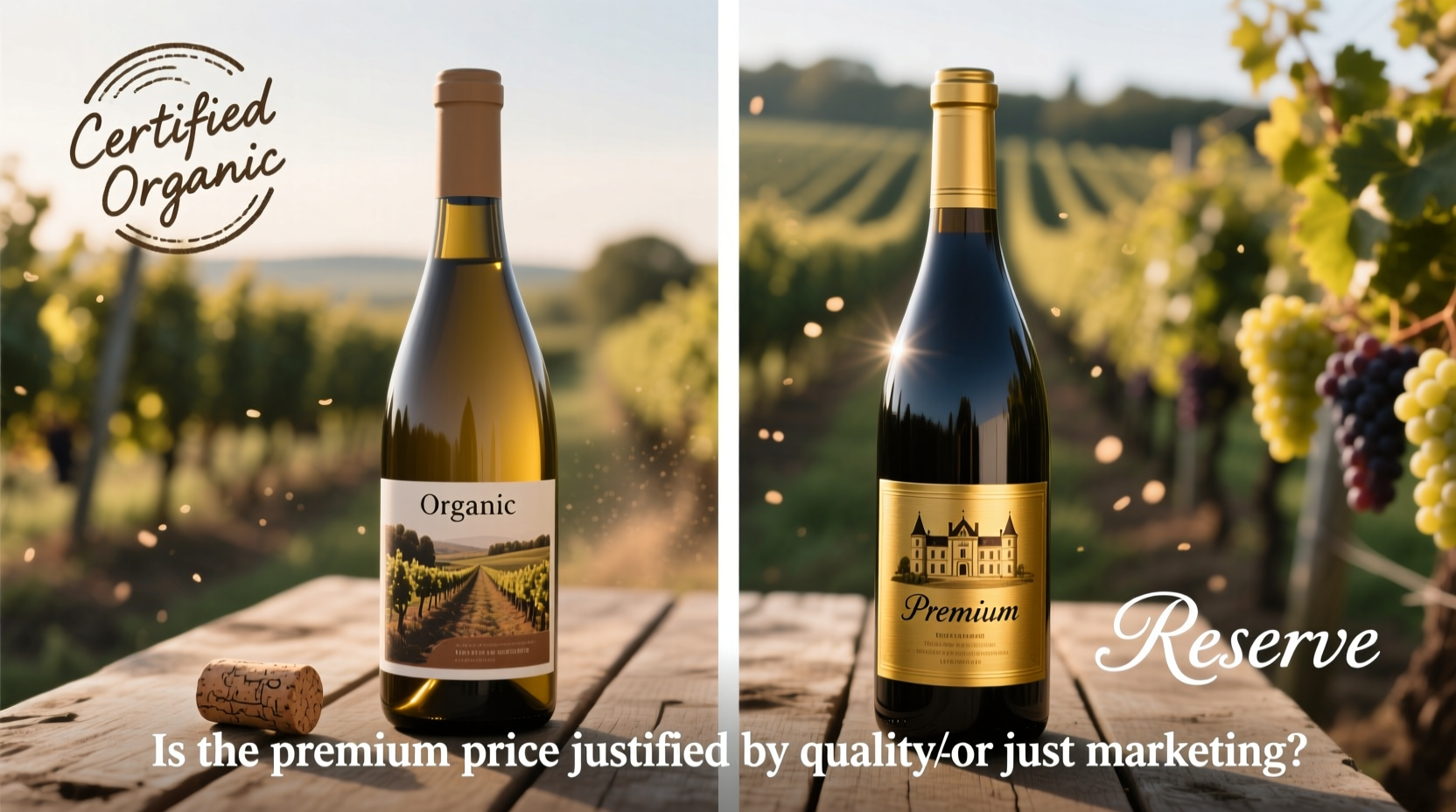
Before evaluating value, we must clarify terminology—because “organic wine” is not a single, globally harmonized standard. In the U.S., the USDA defines two distinct categories:
- “Organic wine”: Made from 100% certified organic grapes *and* containing no added sulfites (naturally occurring sulfites are permitted up to 20 ppm). This category is rare—less than 2% of U.S. organic-labeled wines meet this strict definition.
- “Wine made with organic grapes”: Grapes are certified organic, but the winery may add sulfites (up to 100 ppm) during fermentation and aging. This is the most common label consumers see—and the one most often misunderstood as “fully organic.”
In the EU, the distinction is different: “organic wine” permits limited added sulfites (30–150 ppm depending on sugar level), and certification covers both vineyard *and* cellar practices. Australia and Canada follow yet other frameworks. This regulatory fragmentation means a bottle labeled “organic” in France may contain nearly twice the sulfites allowed in a U.S.-labeled “organic wine.”
The confusion extends to “biodynamic” and “natural” labels—neither of which are USDA-certified terms. Biodynamic certification (e.g., Demeter) includes organic standards plus cosmic timing and holistic farm preparations; natural wine lacks formal regulation entirely and is defined loosely by low-intervention winemaking, often with no added sulfites. These labels frequently command even higher premiums—yet offer no legal guarantee of pesticide-free fruit or environmental impact reduction.
Tip: Look for the certifying body’s logo (e.g., USDA Organic, CCOF, Ecocert) — not just the word “organic.” If no certifier is named, the claim is unverified and potentially misleading.The Tangible Costs Behind Organic Vineyard Management
That premium isn’t arbitrary—it reflects real, quantifiable increases in production cost. Conventional viticulture relies on synthetic herbicides (like glyphosate) to control weeds between rows, broad-spectrum fungicides (e.g., chlorothalonil) for powdery mildew, and insect growth regulators for pests. Organic systems replace these with labor-intensive alternatives:
- Mechanical weeding: Requires 3–5 passes per season versus one herbicide application—adding $200–$400/acre in fuel and labor.
- Copper and sulfur sprays: While naturally derived, copper accumulates in soil and becomes toxic to beneficial microbes after ~8–10 years of continuous use. Sulfur requires more frequent, weather-dependent applications—and can burn vines in heat. Both cost 2–3× more per acre than synthetic equivalents.
- Biodiversity infrastructure: Organic vineyards often plant cover crops, install insectary strips, and maintain hedgerows to support predatory insects—requiring land taken out of production and ongoing management.
A 2023 UC Davis study tracking 42 California vineyards found that certified organic operations spent an average of 37% more per ton of fruit on vineyard inputs and labor than conventional peers. Yield loss is also typical: organic vineyards averaged 12–18% lower yields due to greater susceptibility to mildew in wet vintages and less precise pest control. That scarcity compounds cost—especially when combined with smaller-scale, family-run operations that lack the economies of scale of industrial producers.
“Certification isn’t just paperwork—it’s daily vigilance. One missed spray window for botrytis in a humid year can mean losing 30% of your crop. You’re not just growing grapes; you’re managing an ecosystem. That labor, that risk, that resilience—it all has a price.” — Dr. Lena Torres, Viticulturist & Lead Inspector, CCOF (California Certified Organic Farmers)
Sensory Realities: Do Organic Wines Taste Better?
This is where marketing often outpaces evidence. Blind tastings conducted by the University of Bordeaux (2021) and the Australian Wine Research Institute (2022) involved over 1,200 professional tasters evaluating 120+ pairs of organic/conventional wines matched by region, vintage, and price tier. Results were consistent: no statistically significant preference emerged for organic wines across aroma intensity, complexity, balance, or finish. Tasters correctly identified “organic” labels only 52% of the time—effectively random chance.
What *did* correlate strongly with positive scores was winemaking skill, vine age, and site expression—not certification status. A well-farmed conventional vineyard on ancient limestone with meticulous canopy management consistently outperformed a young, high-yielding organic plot on heavy clay, regardless of label claims.
However, chemistry tells a subtler story. Multiple peer-reviewed studies (Journal of Agricultural and Food Chemistry, 2020; American Journal of Enology and Viticulture, 2023) confirm organic wines show measurably higher levels of certain polyphenols—resveratrol, quercetin, and anthocyanins—linked to antioxidant activity. These compounds arise partly from vine stress responses (e.g., thicker skins developed to resist fungal pressure without synthetic fungicides) and partly from reduced use of fining agents like casein or gelatin, which can strip phenolics. The sensory impact? Not necessarily “better,” but often more textural grip, firmer tannin structure in reds, and slightly more pronounced herbal or earthy top notes—traits some critics praise as “authenticity” and others dismiss as “greenness” or “rusticity.”
| Attribute | Organic Wines (Avg.) | Conventional Wines (Avg.) | Notes |
|---|---|---|---|
| Sulfite Levels (ppm) | 25–85 | 45–150 | Lower sulfites may increase perceived freshness but reduce shelf stability. |
| Polyphenol Concentration | ↑ 12–22% | Baseline | Linked to antioxidant potential; may influence mouthfeel and aging trajectory. |
| Residual Pesticide Traces | Non-detectable (in 98.7% of samples) | Trace residues in 31% of samples (USDA PDP data) | Not a health hazard at detected levels, but relevant for sensitive consumers. |
| Microbial Stability | More variable | More predictable | Higher risk of refermentation or volatile acidity if cellar hygiene lapses. |
When the Premium *Is* Just Marketing (and How to Spot It)
Not all organic premiums reflect true cost or quality uplift. Some pricing strategies exploit perception gaps:
- The “Greenwashing Tier”: Large corporate brands launching “organic” sub-labels using fruit sourced from contract growers with minimal oversight. Certification is obtained, but vineyard practices may prioritize yield over biodiversity—blunting ecological benefits while capturing full organic markup.
- The “Natural Wine Tax”: Bottles labeled “natural” (uncertified) priced 40–70% above comparable conventional wines—despite identical grape sourcing and no verifiable difference in inputs or process. Here, the premium pays for mystique, not methodology.
- Geographic Arbitrage: An importer buying organic wine from a low-cost region (e.g., southern Spain), applying minimal markup, and selling it domestically at “premium organic” pricing—leveraging consumer assumptions about European production costs.
A telling indicator: price parity. If an organic Cabernet Sauvignon from Napa sells for $48 while a conventional one from the same appellation and tier sells for $45, the premium likely reflects branding, not substance. Conversely, if the organic version is $22 versus $14 for conventional—and both are small-production, estate-grown, and certified by a rigorous body like Demeter—the gap signals real investment.
Practical Decision Framework: Is the Organic Premium Worth It *For You*?
Forget absolutes. Your personal calculus depends on priorities, physiology, and palate. Use this step-by-step guide to evaluate value:
- Identify your primary motivation: Health concerns? Environmental ethics? Taste preference? All three? Be specific—this determines which attributes matter most.
- Verify certification: Check the winery’s website for the certifier’s name and certificate number. Cross-reference with the certifier’s public database (e.g., CCOF’s online directory).
- Compare within narrow parameters: Don’t compare a $12 organic Pinot Noir to a $50 conventional Burgundy. Compare similar appellations, vintages, and production scales. Use retailers like Dry Farm Wines (which tests for additives and low alcohol) or local shops with sommeliers who taste broadly.
- Assess your tolerance: If you react to sulfites (headaches, congestion), seek “no added sulfites” wines—but know they’re more fragile. If you prioritize longevity, conventional wines with moderate sulfites may age more reliably.
- Taste without bias: Buy a single bottle of each side, blind-taste them side-by-side with a trusted friend, and note objective impressions (fruit ripeness, acidity, tannin texture, finish length) before checking labels.
Mini Case Study: The Sonoma County Comparison
Marisol, a registered dietitian in Oakland, routinely buys organic groceries but hesitated on wine—until she experienced recurring headaches after drinking conventional Chardonnay. She tested two bottles: a $26 organic Russian River Valley Chardonnay (CCOF-certified, no added sulfites) and a $22 conventional neighbor from the same AVA. She tasted blind: the organic showed brighter citrus, leaner body, and a subtle saline note; the conventional offered richer apple-butter depth and creamier texture. Marisol chose the organic—not because it “tasted better,” but because it eliminated her symptoms *and* aligned with her values on pesticide exposure. For her, the $4 premium covered tangible health benefit and peace of mind. Her husband, meanwhile, preferred the conventional’s mouthfeel and bought it separately—proving value is deeply personal.
FAQ
Do organic wines have fewer calories or less alcohol?
No. Alcohol content and calories depend on grape sugar levels at harvest and fermentation decisions—not certification. An organic Zinfandel at 15.5% ABV has identical calories to a conventional one at the same ABV. Some organic producers favor earlier harvests for freshness, yielding slightly lower alcohol—but this is stylistic, not regulatory.
Are organic wines safer for people with allergies?
They eliminate risk from synthetic pesticide residues, which matters for those with chemical sensitivities. However, allergens like egg whites (used in fining) or gluten (from barley-based fining agents) appear in both organic and conventional wines unless explicitly labeled “unfined” or “vegan.” Always check technical sheets.
Does organic certification guarantee sustainability?
Not fully. Organic standards prohibit synthetic inputs but don’t mandate water conservation, carbon footprint reduction, or social equity (e.g., fair wages). Look for additional certifications: Regenerative Organic Certified™ (ROC) or Fair Trade USA seal address these gaps holistically.
Conclusion
The organic wine premium isn’t universally justified—or universally unjustified. It’s a spectrum of value, anchored in verifiable practice, transparent certification, and honest self-assessment. Paying more *can* mean supporting soil health, reducing watershed contamination, and accessing wines with distinct phenolic profiles. But it can also mean subsidizing marketing narratives untethered from vineyard reality. What matters isn’t the label—it’s the intention behind it, the rigor behind the certification, and the alignment with your own values and experience. Next time you reach for that bottle, skip the assumption. Read the certifier. Taste without the name. Ask the sommelier how the grower manages frost or mildew. Let curiosity—not convenience—guide your pour.
💬 Your palate, your principles, your choice. Share your own organic vs. conventional tasting notes or cost/value insights in the comments—we’ll feature thoughtful reflections in our next deep-dive round-up.