When your LG refrigerator stops making ice, it can disrupt daily routines—especially if you rely on a steady supply for drinks, entertaining, or medical needs. While this issue may seem minor, it often points to underlying mechanical, electrical, or environmental factors. The good news is that most causes are diagnosable and repairable without professional help. By understanding how your LG ice maker functions and what commonly goes wrong, you can restore ice production efficiently and avoid unnecessary service calls.
How LG Ice Makers Work: A Quick Overview
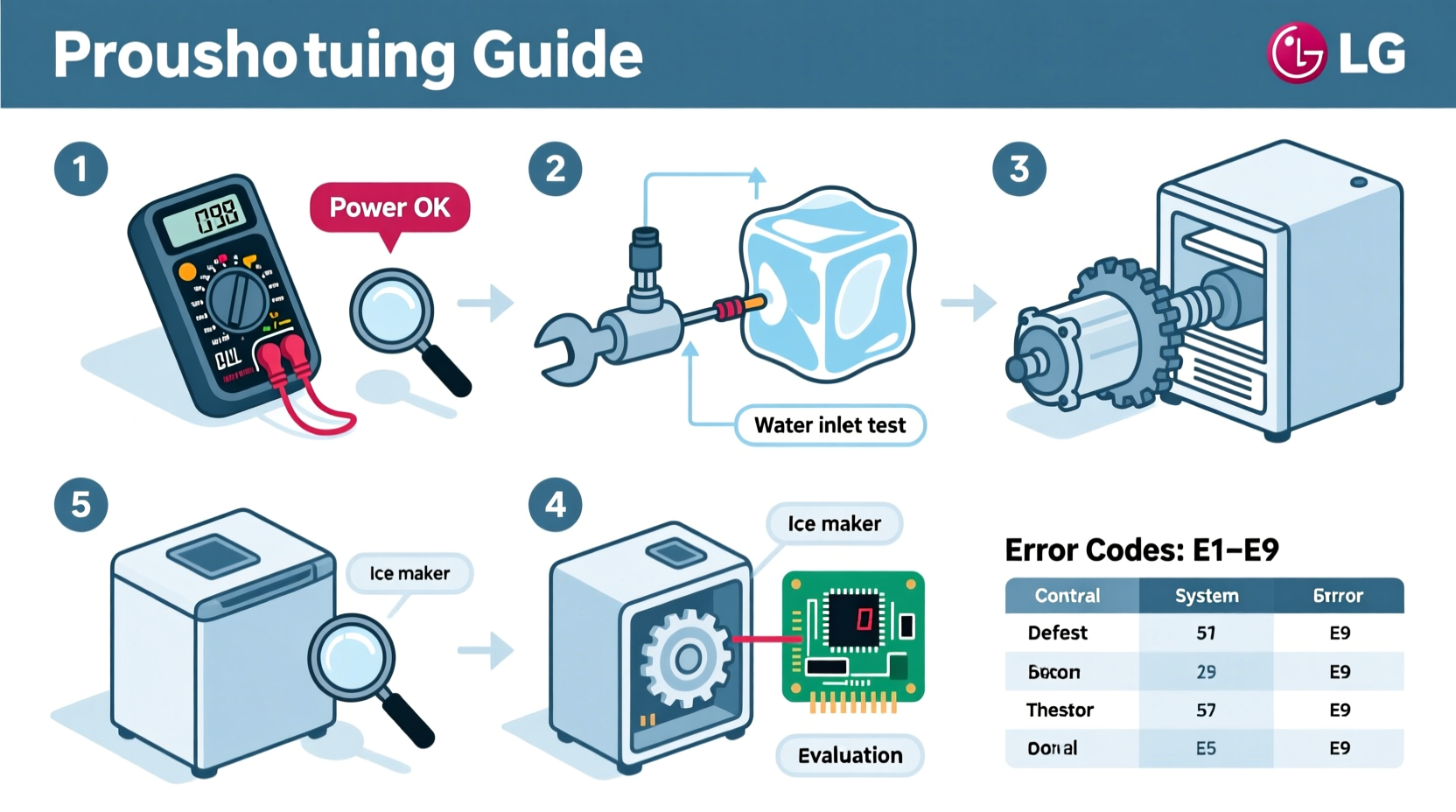
Most LG refrigerators use an automatic ice maker located in the freezer compartment. The system operates through a cycle: water flows from the home’s supply line into a fill cup, then into the ice mold. Once frozen (typically within 90 minutes), a heating element slightly warms the mold, allowing the ice cubes to release and drop into the bin. A sensor detects when the bin is full and signals the unit to pause production.
This process depends on several components working together:
- Water inlet valve
- Ice maker assembly
- Freezer temperature
- Water filter
- Supply line integrity
If any part fails or conditions aren’t optimal, ice production halts. Identifying which component is at fault requires systematic troubleshooting.
Step-by-Step Troubleshooting Guide
Follow this logical sequence to isolate and resolve the root cause of your LG refrigerator not making ice.
- Check if the ice maker is turned on. Locate the ice maker control—usually a wire bail arm or a digital button on models with internal dispensers. If the arm is down, the system thinks the bin is full. Lift it to disable, press it back down to enable. On electronic models, check the control panel for an “Ice Off” indicator and toggle it on.
- Verify freezer temperature. The freezer must be at or below 0°F (-18°C) for proper freezing. Use a standalone thermometer to confirm. If too warm, clean condenser coils, ensure vents aren’t blocked, and check door seals for leaks.
- Inspect the water supply line. Shut off the water valve behind the fridge or under the sink. Pull the refrigerator forward and examine the tube (usually plastic or copper) leading to the back. Look for kinks, cracks, or crushing—especially where it passes under the unit. Replace if damaged.
- Test water pressure. Low water pressure prevents the valve from opening fully. Disconnect the line at the fridge (with water off), place it in a bucket, turn the valve on briefly. A healthy stream should fill a cup in about 10 seconds. If weak, check household pressure or install a booster pump.
- Replace or flush the water filter. Clogged filters restrict flow. Even if not overdue, remove the old filter and run a few cycles without it (temporarily). If ice starts forming, the filter was the culprit. Install a new OEM-approved filter afterward.
- Examine the water inlet valve. This solenoid-controlled valve opens to let water into the ice maker. If defective, no water enters. Listen for a faint click during the fill cycle. No sound? Test continuity with a multimeter or replace the valve (part number typically starts with 5220JA).
- Inspect the ice maker assembly. Remove the front cover (if applicable) and look inside the mold. No water present after a cycle? The issue is upstream. If water fills but doesn’t freeze or eject, the heater or motor may be faulty. Consider replacing the entire module—it’s often more cost-effective than individual repairs.
Common Causes and Solutions Table
| Issue | Symptoms | Solution |
|---|---|---|
| Ice maker turned off | No activity, LED off | Lower wire arm or toggle “Ice On” via display |
| Low freezer temp | Slow or partial freezing | Adjust thermostat, clean coils, seal gaps |
| Clogged water filter | Dribbling water, small cubes | Replace filter every 6 months |
| Kinked water line | No water in mold | Reposition fridge, replace tubing |
| Failed inlet valve | No fill sound, dry mold | Replace valve (DIY or technician) |
| Defective ice maker unit | Water fills but no ejection | Replace assembly (LG part #MJF9577XX) |
Real-World Example: The Weekend Host’s Dilemma
Mark, a homeowner in Denver, noticed his LG LFX28968ST stopped producing ice two days before a dinner party. He checked the bin—empty. The freezer felt cold, but no new cubes were forming. He followed basic steps: confirmed the ice maker was on, verified the temperature was -2°F, and inspected the water filter, which looked discolored. He replaced it immediately. Still no ice. Next, he disconnected the water line and tested flow—only a trickle came out. Tracing the line, he found it pinched behind the fridge where it bent sharply against the wall. After re-routing the tube with a gentle arc, water pressure returned. Within three hours, ice began dropping into the bin. Mark avoided a service call and saved $150.
“Over half the ice maker issues we see are due to preventable problems like clogged filters or kinked lines. Most homeowners can fix them in under an hour.” — Carlos Mendez, Appliance Technician with 12 years of experience
Essential Checklist: Fix Your LG Ice Maker in 10 Minutes
Use this quick-reference checklist before calling a technician:
- ✅ Is the ice maker switched on? (Check arm position or display)
- ✅ Is the freezer at or below 0°F?
- ✅ Is the water filter recently replaced?
- ✅ Is the water supply valve fully open?
- ✅ Is the water line free of kinks or blockages?
- ✅ Do you hear a fill sound every 2–3 hours?
- ✅ Is there visible water in the ice mold?
- ✅ Has the refrigerator been recently moved or serviced?
Frequently Asked Questions
Why did my LG ice maker stop working after I changed the filter?
After replacing the filter, air can become trapped in the line, blocking water flow. Run 5–6 gallons of water through the dispenser to purge air. If using a bypass plug, ensure it’s seated correctly.
Can a power outage affect my ice maker?
Yes. Some LG models lose ice maker settings after a blackout. Check the control panel—re-enable ice production if needed. Also, the water valve may fail during surge events. Test or replace if unresponsive.
How long does it take for ice production to resume after a fix?
Once corrected, expect the first batch in 2–3 hours. Full bin capacity usually returns within 24 hours, depending on usage and ambient conditions.
Final Steps and When to Call a Pro
Most ice maker failures stem from simple oversights: a forgotten shutoff valve, expired filter, or misaligned component. With methodical checks, you can restore function quickly. However, if you’ve verified water flow, temperature, and electrical signals—and still see no results—the ice maker assembly or main control board may need replacement. These require precise part matching and wiring knowledge. In such cases, consult LG support or a certified technician.
Remember: Regular maintenance prevents most issues. Replace filters on schedule, inspect lines annually, and keep coils clean. A little attention ensures uninterrupted ice for years.
🚀 Don’t let a silent ice maker ruin your day. Start troubleshooting now using this guide—most fixes take less than an hour. Share your success story or ask questions in the comments below!