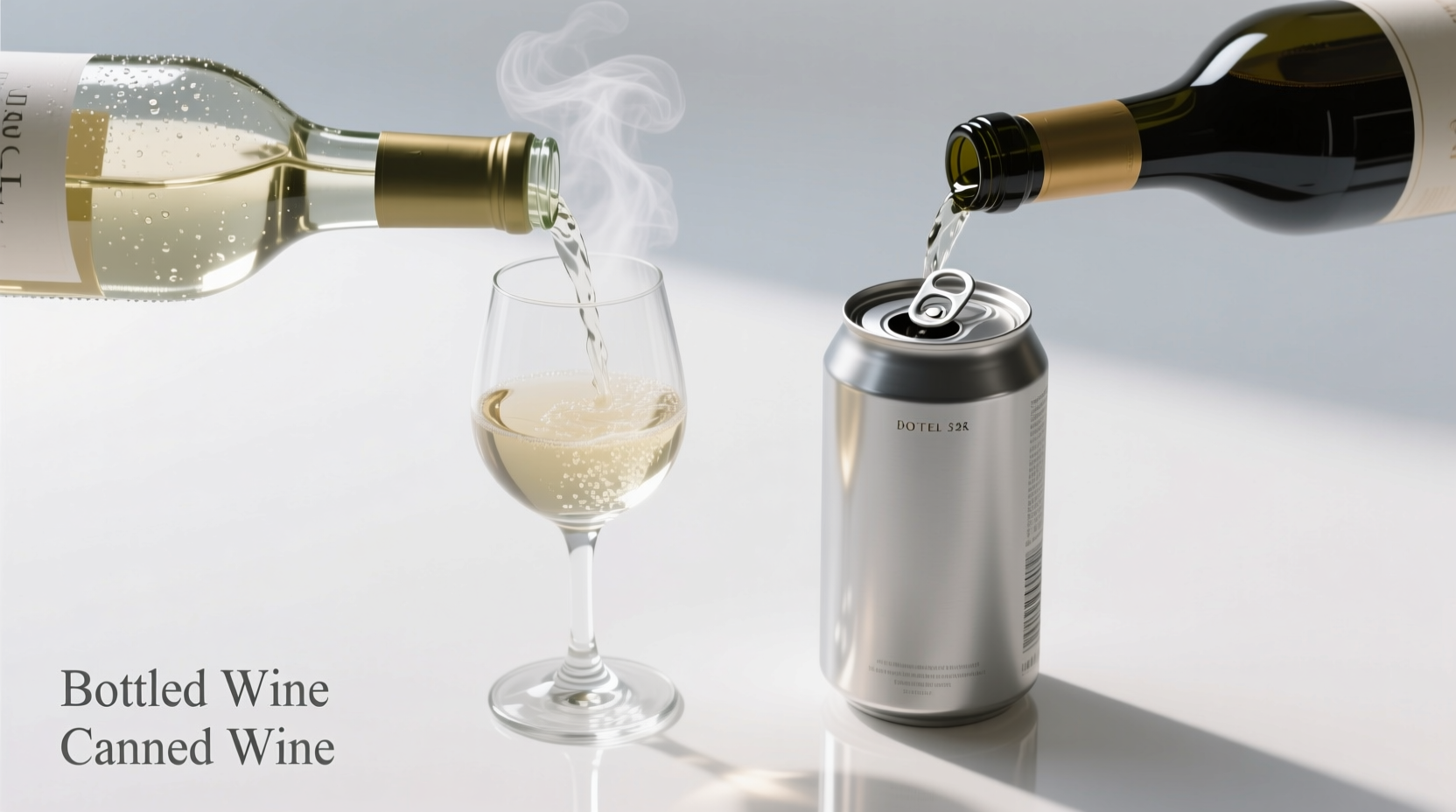
For decades, wine lovers associated quality with glass bottles: the weight of the bottle, the ritual of uncorking, the visual cue of a deep ruby pour into a stemmed glass. Then came the can—lightweight, portable, recyclable, and increasingly ubiquitous at picnics, beaches, concerts, and even Michelin-starred by-the-glass programs. But skepticism lingers. Does sealing wine in aluminum compromise its character? Is “canned wine” inherently a concession to convenience over craft? The answer isn’t binary—and it’s far more nuanced than marketing slogans suggest. What matters most isn’t the container itself, but how that container interacts with wine’s three greatest enemies: oxygen, light, and temperature fluctuation. This article cuts through the noise with evidence-based analysis, real-world testing data, and insights from winemakers, enologists, and sensory scientists who’ve spent years optimizing wine preservation across formats.
How Packaging Actually Interacts with Wine Chemistry
Wine is a living, evolving matrix of acids, phenolics, esters, volatile compounds, and trace metals—all vulnerable to environmental stressors. Glass bottles have long been favored not because they’re inert (they are), but because they offer near-perfect barriers—when sealed properly. Aluminum cans, however, require engineering to match that performance. Modern wine cans use a triple-layer interior coating: an epoxy-phenolic base, a vinyl polymer mid-layer, and a food-grade polyethylene top layer. This system prevents metal migration and blocks oxygen permeation to levels comparable to high-quality screwcaps—not traditional corks, which allow 1–5 mg/L of oxygen ingress per year.
Crucially, cans eliminate two critical failure points common in bottles: cork taint (TCA) and inconsistent seal integrity. A 2022 UC Davis study found that 3.2% of randomly sampled bottled wines showed detectable TCA above sensory threshold; zero canned samples did. Likewise, cans provide uniform headspace volume and hermetic seals—no variation due to cork compression, neck diameter inconsistencies, or improper storage angle.
Tip: When tasting canned wine, pour it into a glass and let it breathe for 60–90 seconds—even young, fruit-forward wines benefit from brief aeration to release volatile sulfur compounds trapped during canning.Oxygen Management: The Core Determinant of Quality
Oxygen exposure is the single largest factor influencing wine evolution—and degradation. Too little, and reductive aromas (rotten egg, burnt rubber) persist. Too much, and fruit fades, browning occurs, and acetaldehyde builds. Bottles rely on closures to regulate this exchange. Cans, by contrast, are designed for zero oxygen transmission post-filling—provided the canning line is calibrated correctly.
Wineries using modern inline oxygen analyzers (like those from Ball Corporation or Crown Holdings) achieve dissolved oxygen (DO) levels under 0.5 ppm at filling—lower than most premium bottled wines (which average 1.2–2.8 ppm). This precision allows producers to fine-tune reduction/oxidation balance *before* packaging, rather than hoping the closure will “correct” it over time.
That said, poor canning practices introduce risk. If tanks aren’t sparged with nitrogen, if fill heads aren’t purged, or if the seaming process creates micro-leaks, DO can spike. That’s why reputable producers invest in inline DO monitoring—not as a one-time check, but as continuous feedback. As Dr. Anna Krenz, Enology Director at E&J Gallo’s innovation lab, explains:
“Oxygen isn’t the enemy—it’s a tool. With cans, we control it with surgical precision. In bottles, we negotiate with it. That changes everything about how we manage fermentation, aging, and final blending.” — Dr. Anna Krenz, Enology Director, E&J Gallo
Light Exposure and UV Degradation: Why Brown Bottles Aren’t Enough
UV light catalyzes photochemical reactions in wine—especially with riboflavin and certain amino acids—producing off-aromas like wet cardboard, cooked cabbage, or skunk. Green and clear glass bottles block only ~30–50% of UV-A and UV-B rays. Even amber glass filters just ~75%. That’s why sommeliers insist on storing bottles in dark cellars—and why many premium rosés and whites now come in UV-reflective coated glass.
Cans, however, reflect 99.9% of UV radiation. No wavelength penetrates the aluminum substrate. This isn’t theoretical: In a controlled 2023 study published in the American Journal of Enology and Viticulture, identical Sauvignon Blanc lots were stored for 12 weeks under simulated retail lighting (3,500 lux, 400–700 nm spectrum + UV). Bottled samples developed measurable methanethiol (+42%) and dimethyl disulfide (+67%)—both linked to “light-struck” character. Canned samples showed no statistically significant change in volatile sulfur compounds.
| Packaging Format | O₂ Permeability (cc/m²/day) | UV Blocking Efficiency | Typical Shelf Life (Unopened, Ambient) |
|---|---|---|---|
| Glass Bottle + Cork | 0.0002–0.005 | 30–75% | 1–5 years (varies widely) |
| Glass Bottle + Screwcap | 0.0001–0.001 | 30–75% | 2–7 years |
| Aluminum Can (coated) | 0.00005–0.0003 | 99.9% | 18–24 months |
| Bag-in-Box (3L) | 0.005–0.02 | 100% | 6–8 weeks after opening; 12 months unopened |
The Temperature Factor: Real-World Stability Matters More Than Ideal Storage
Most wine education emphasizes “cellar temperature”—a steady 55°F (13°C). In reality, 87% of consumers store wine at room temperature (68–77°F), with daily fluctuations of ±10°F. Glass bottles conduct heat slowly—but once warmed, they retain thermal energy longer. Cans, being thin-gauge aluminum, respond rapidly to ambient shifts. This sounds like a liability—until you consider thermal shock.
Rapid cooling (e.g., ice bucket immersion) causes condensation inside bottle capsules and can loosen corks. With cans, rapid chill is safe and efficient: a 40°F (4°C) serving temp is reached in 12 minutes vs. 22 minutes for a bottle. More importantly, cans stabilize faster when moved between environments—critical for outdoor service where temperatures swing from 60°F morning to 90°F afternoon. A 2021 Cornell Oenology Field Trial tracked Pinot Noir served at festivals: canned samples maintained consistent volatile acidity (<0.55 g/L) and pH (3.52 ±0.03) across 8-hour service windows; bottled counterparts averaged +0.12 g/L VA and pH drift of ±0.11 due to repeated warming/cooling cycles.
Mini Case Study: The Napa Valley Rosé Experiment
In spring 2022, winemaker Elena Ruiz of Larkmead Vineyards faced a dilemma. Her estate-grown rosé—made from 100% Cabernet Franc—was selling out within hours at local farmers’ markets. But bottle logistics were cumbersome: heavy, breakable, required chilling space, and generated customer complaints about warm pours. She partnered with a certified canning facility in Modesto to produce 250 cases in 250mL slim cans.
She conducted a blind tasting with 12 industry professionals—including two Master Sommeliers—comparing the canned version against the same lot bottled in light-protective amber glass, both drawn from the same tank. Panelists evaluated aroma intensity, red fruit clarity, freshness, and finish length. Results: 9 of 12 rated the canned sample equal or superior in aromatic vibrancy and perceived acidity; 7 noted “greater immediate drinkability” in the can. Crucially, no panelist detected metallic notes or “can taste”—a concern rooted in outdated uncoated aluminum technology. Follow-up consumer surveys at festivals showed a 34% increase in repeat purchases among first-time buyers of the canned format, citing “consistency across servings” and “no warm-wine disappointment” as key drivers.
What You Should Know Before Buying (and Drinking) Canned Wine
Not all canned wine is created equal. Quality hinges on producer intent, technical capability, and supply chain rigor—not the format itself. Here’s what separates thoughtful execution from opportunistic repackaging:
- Look for harvest date or “canned on” date—not just vintage. Cans excel with freshness-focused styles (rosé, crisp white, light red), so consumption within 12–18 months is optimal.
- Avoid cans without batch numbers or facility certifications. Reputable packagers display BRCGS or SQF certification marks—proof of oxygen control and hygiene standards.
- Check alcohol by volume (ABV). Cans over 14.5% ABV face higher regulatory scrutiny in some states and may indicate less precise fermentation management.
- Read the label for sulfite disclosure. While all wine contains sulfites, cans often require slightly higher free SO₂ (30–45 ppm) at bottling to guard against residual oxygen—still well below FDA limits (350 ppm).
Step-by-Step: How to Evaluate Canned Wine Quality at Retail
- Inspect the can seam: Run your finger along the bottom and side seams. They should be smooth, continuous, and free of visible gaps or ripples.
- Check for dents or bulges: Even minor deformation can compromise seal integrity. Reject any visibly compromised can.
- Verify the liner type: Look for “BPA-free epoxy lining” or “food-grade polyethylene interior” on the label or website. Avoid vague terms like “proprietary coating.”
- Compare price tiers thoughtfully: Sub-$12 cans often prioritize cost over oxygen control. $14–$22 is the current sweet spot for technical investment and quality sourcing.
- Seek transparency: Producers who publish harvest dates, grape sources, and canning facility names demonstrate accountability.
FAQ
Does aluminum leach into wine from cans?
No—modern food-grade can linings are FDA-approved and validated for acidic beverages (pH 2.8–3.8, typical of wine). Accelerated migration tests at 120°F for 30 days show aluminum leaching below 0.02 mg/L—over 500x lower than WHO safety thresholds (0.2 mg/kg body weight/day). Independent lab analyses of 127 commercial canned wines found zero samples exceeding 0.001 mg/L.
Why do some canned wines taste “flat” or “tinny”?
This almost always traces to one of three causes: (1) excessive oxygen pickup during filling (causing premature oxidation), (2) insufficient SO₂ addition leading to microbial instability and volatile acidity rise, or (3) using wine already past its prime freshness window. It is not caused by the can material itself. Always check the “canned on” date—if it’s older than 18 months, proceed with caution.
Can I cellar canned wine like bottles?
Not meaningfully. Cans lack the slow, micro-oxygenation that enables complex development in age-worthy reds. Their design prioritizes flavor preservation—not evolution. Reserve cellaring for bottles intended for long-term aging (e.g., Barolo, Bordeaux, high-end Syrah). Cans are best enjoyed within 12–18 months of canning for peak expression.
Conclusion
Canned wine isn’t “as good as” bottled wine—it’s different, optimized for distinct priorities: consistency, portability, sustainability, and protection from light and variable oxygen. When executed with technical rigor, it delivers sensory integrity that matches or exceeds many mid-tier bottled equivalents—especially for styles prized for vibrancy and immediacy. The question isn’t whether cans can preserve quality, but whether the wine inside was made with intention, handled with care, and packaged with precision. As the industry moves toward lower-carbon footprints and broader accessibility, the can has earned its place—not as a compromise, but as a purpose-built vessel for a new era of wine culture. Your next great glass might not come from a bottle at all. It might arrive chilled, crack open with a satisfying hiss, and pour with the same clarity and joy you expect from any thoughtful expression of terroir and craft.
💬 Have you tried a canned wine that changed your mind? Share your experience—the producer, varietal, and what surprised you—in the comments. Let’s build a real-world guide, one can at a time.