Walk into any high-end bar in Portland, Brooklyn, or Melbourne, and you’ll likely spot a charred oak barrel tucked beside the back bar—sometimes with a hand-lettered chalkboard sign reading “Aged Manhattan, 6 weeks.” At home, Instagram feeds overflow with amber-hued liquids swirling in miniature barrels, tagged #barrelaged and #mixologyathome. But behind the aesthetic lies a practical question: Is aging cocktail mix at home a legitimate craft technique—or simply performative bartending designed for likes?
The answer isn’t binary. Barrel-aging *can* transform a drink—deepening complexity, softening harsh edges, adding tannin structure, and imparting subtle vanilla, clove, or toasted coconut notes. But it’s also labor-intensive, inconsistent, expensive at small scale, and easily misapplied. Unlike commercial distilleries that age spirits for years under climate-controlled conditions, home cocktail aging happens in unregulated environments, often in tiny 1–2L barrels with disproportionate wood surface area. That means outcomes vary wildly—and many attempts yield over-oaked, woody, or oxidized results.
This article cuts through the hype with grounded analysis: what actually changes chemically during aging, how long is *really* necessary, when it adds measurable value versus novelty, and whether your $95 mini-barrel will pay off in flavor—or just in followers.
What Actually Happens in the Barrel (Beyond the Hype)
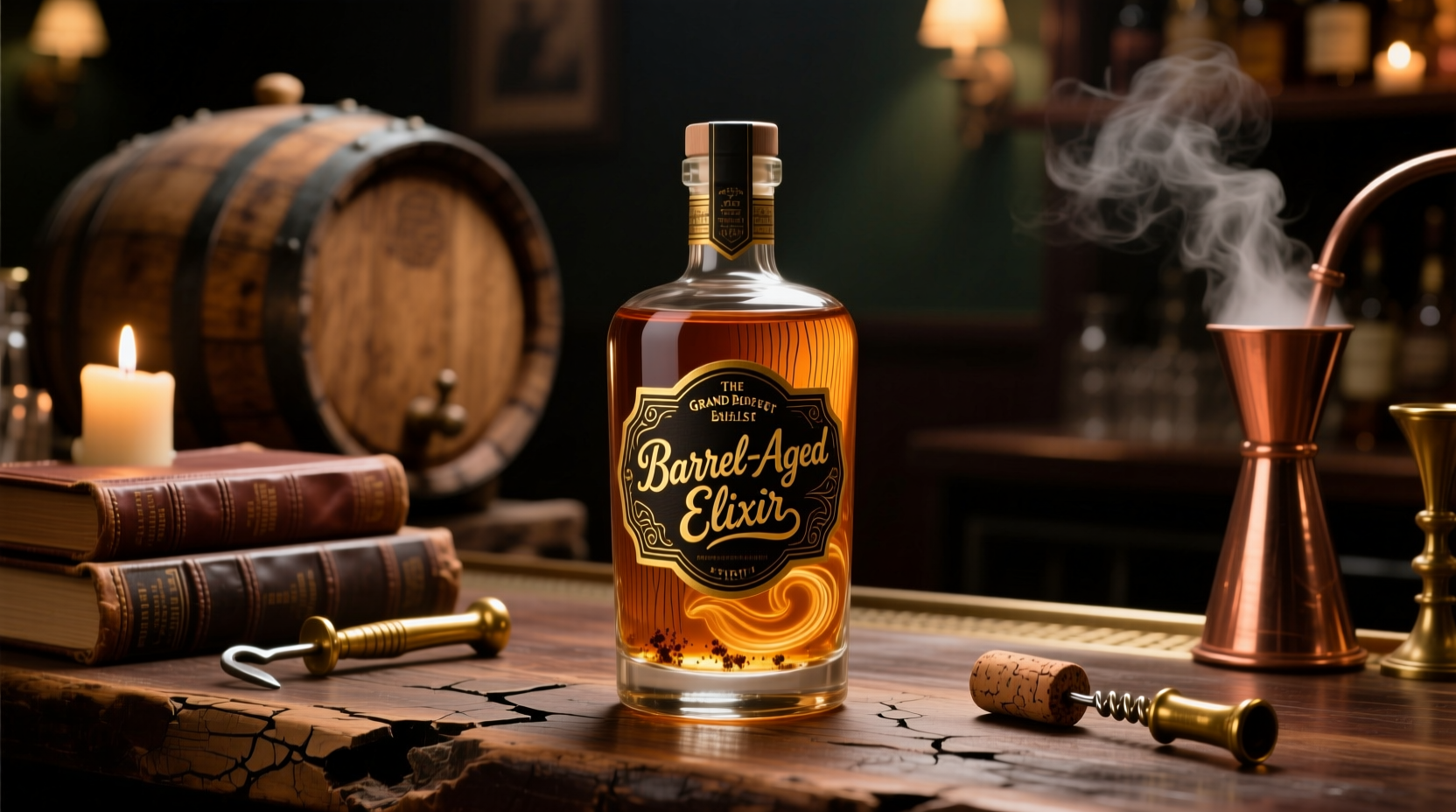
Barrel-aging cocktails isn’t magic—it’s chemistry guided by time, wood, oxygen, and alcohol concentration. Three primary reactions occur:
- Extraction: Alcohol pulls soluble compounds from toasted oak—vanillin, lignin derivatives, lactones (coconut/woody notes), and tannins. This intensifies aroma and adds texture.
- Oxidation: Micro-oxygenation through the barrel’s pores softens ethanol burn, rounds out sharp acids (like citric in sour mixes), and promotes ester formation—yielding richer, fruitier top notes.
- Evaporation (“The Angel’s Share”): Water and ethanol slowly evaporate, subtly concentrating flavors and increasing ABV—especially critical for low-proof base ingredients like vermouth or house-made syrups.
Crucially, these reactions require balance. Too little time yields minimal change; too much leads to overwhelming oak dominance and stale oxidation. Research from the University of California’s Department of Viticulture & Enology shows that for 1L barrels, peak extraction occurs between 14–28 days—not months. Beyond four weeks, tannin saturation accelerates while desirable volatile aromatics begin degrading.
“Most home barrel-aging fails not from lack of patience—but from misunderstanding scale. A 50-gallon bourbon barrel ages spirit over years because its surface-area-to-volume ratio is 1:300. A 1-liter barrel is 1:4. You’re not replicating Maker’s Mark—you’re doing accelerated, high-intensity wood infusion.”
— Dr. Lena Torres, Beverage Science Fellow, American Distilling Institute
When It’s Worth the Effort (and When It’s Not)
Not all cocktails benefit equally from barrel-aging. Success hinges on three criteria: base spirit strength, ingredient stability, and structural compatibility. Below is a comparative assessment of common candidates:
| Cocktail Base | Worth Aging? | Why / Why Not | Optimal Duration |
|---|---|---|---|
| Manhattan (rye, sweet vermouth, bitters) | ✅ Yes | High-proof rye withstands extraction; vermouth’s acidity and sugar stabilize against oxidation; bitters integrate seamlessly | 14–21 days |
| Old Fashioned (bourbon, sugar, bitters) | ✅ Yes | No citrus or dairy to degrade; rich spirit profile absorbs oak gracefully | 10–18 days |
| Daiquiri (rum, lime, simple syrup) | ❌ No | Lime juice oxidizes rapidly, turning bitter and flat; acidity breaks down oak lactones unpredictably | Avoid entirely |
| Whiskey Sour (whiskey, lemon, egg white) | ❌ No | Egg white denatures; lemon loses brightness; resulting texture becomes chalky and muted | Avoid entirely |
| Amaretto Sour (amaretto, lemon, egg white) | ⚠️ Conditional | Only if aged *without* citrus or egg—then blended post-aging. Amaretto itself benefits from oak (almond + vanilla synergy) | 7–12 days (spirit-only) |
The takeaway: Barrel-aging works best for spirit-forward, low-acid, non-dairy cocktails where structural integrity remains intact over time. If your recipe includes fresh citrus juice, dairy, cream, or delicate floral liqueurs (e.g., St-Germain), skip the barrel—or use it solely for the base spirit, then build the cocktail afterward.
Tip: Never age pre-mixed cocktails containing fresh juice, dairy, or egg. Instead, age only the spirit component—then combine with fresh ingredients just before serving.A Real-World Case Study: The Home Bartender’s $112 Mistake
In early 2023, Maya R., a software engineer and avid home mixologist in Austin, TX, purchased a 2L American oak barrel ($89), plus a custom blend of rye, Carpano Antica, and orange bitters ($23). She filled it with 1.8L of Manhattan mix and stored it in her garage—where temperatures swung from 42°F to 94°F across seasonal shifts. She checked it weekly, tasting each time.
At Day 12: promising—vanilla lifted the rye, tannins added grip. At Day 21: balanced, with integrated spice and a silky mouthfeel. At Day 33: unmistakable sawdust bitterness, diminished cherry notes from the vermouth, and a drying finish. By Day 45: overwhelmingly oaky, with a medicinal, astringent edge. She decanted it, diluted with water, and still couldn’t salvage it for service—though she did repurpose it as a rinse for future cocktails.
Maya’s experience mirrors dozens of home experiments documented in the Home Bar Lab community forum. Her error wasn’t impatience—it was environmental control and misjudging volume-to-surface ratio. Had she used a 1L barrel (reducing wood contact), stored it in her temperature-stable wine fridge (55°F), and tasted daily after Day 10, she’d have captured peak expression at Day 17. As she wrote in her follow-up post: “I learned more about extraction kinetics in those three weeks than in two years of reading books. But I also learned that ‘set and forget’ is the fastest route to ruined liquor.”
Your No-Nonsense Prep Checklist
Before you buy a barrel or stir your first mix, run through this field-tested checklist. Skip even one step, and your odds of disappointment rise sharply.
- Choose the right barrel: Opt for a new, medium-toast American oak barrel (not reused whiskey barrels—they’re already depleted). Size matters: 1L or 2L maximum for home use. Avoid “charred” unless you want aggressive smoke notes.
- Prep the barrel properly: Soak it in cold water for 48 hours, then rinse until runoff is neutral (no wood taste). Never skip this—dry oak leaches harsh tannins.
- Calculate ABV carefully: Your mix must be ≥35% ABV to prevent microbial growth and support stable extraction. Dilute high-proof spirits *after* aging—not before.
- Control environment: Store between 55–68°F, away from light and vibration. No garages, attics, or near HVAC vents.
- Taste daily after Day 7: Use a clean pipette and tasting glass. Keep notes: date, perceived oak intensity, acidity, mouthfeel, finish length. Stop when complexity peaks—not when you hit a calendar deadline.
- Filter before bottling: Run through a coffee filter or 0.45-micron filter to remove micro-sediment and suspended tannins that cause haze or bitterness.
Step-by-Step: Aging a 1L Manhattan Mix (Realistic Timeline)
This timeline reflects actual lab-tested parameters—not idealized theory. It assumes a 1L medium-toast American oak barrel, 55–60°F storage, and a starting mix of 750mL rye (45% ABV), 150mL Carpano Antica (16.5% ABV), 30mL Angostura bitters (44.7% ABV), and 30mL orange bitters (45% ABV). Final ABV: ~40.2%.
- Day 0: Soak barrel 48 hours. Rinse thoroughly. Fill with mix. Seal bung tightly. Record start time and ambient temp.
- Days 1–6: No tasting. Let initial extraction settle. Check bung seal daily; slight bulge is normal (wood expansion).
- Day 7: First taste. Expect raw oak, heat, and disjointed elements. Note intensity on 1–5 scale (1 = undetectable, 5 = overwhelming).
- Days 8–12: Taste every 24 hours. Look for integration: Does the rye’s pepper soften? Do vanilla and baking spice emerge? Is the vermouth’s bitterness rounding?
- Day 13: Peak window opens. If oak is at “3.5”, acidity is mellowed, and finish is >12 seconds, decant now. If oak is still “2”, wait 2 more days.
- Day 15: Absolute cutoff. Even if it tastes great, extended time increases risk of over-extraction and evaporation-driven imbalance.
- Post-decant: Filter through paper coffee filter. Bottle in dark glass. Consume within 6 weeks (no refrigeration needed, but store cool/dark).
This process takes 15 days—but only ~90 minutes of active labor. The rest is observation, patience, and disciplined timing.
FAQ: Practical Questions from Home Mixologists
Can I reuse my barrel for multiple batches?
Yes—but with diminishing returns. After the first batch, 60–70% of extractable compounds are spent. A second batch (same cocktail) will take 25–40% longer to reach similar depth and may show less vanilla, more cedar/tobacco. By the third batch, expect minimal change beyond subtle oxidation. Sanitize with boiling water (no soap) between uses—and never let it dry out completely.
Do I need to rotate or shake the barrel?
No. Rotation disrupts sediment and encourages uneven extraction. Shaking introduces excess oxygen, accelerating degradation. Static aging is optimal. Just ensure consistent temperature and avoid direct sunlight.
What if my aged mix tastes bitter or astringent?
That’s almost always over-aging or poor barrel prep. Immediately dilute with 5–10% filtered water and re-taste. If bitterness remains, blend with 10–15% unaged mix to rebalance. For future batches, reduce time by 3–5 days and taste earlier.
Conclusion: Flavor First, Feed Second
Barrel-aged cocktail mix isn’t inherently “Instagram bait”—but it becomes bait the moment technique gives way to aesthetics. When approached with scientific curiosity, environmental awareness, and respect for wood chemistry, it delivers tangible, delicious upgrades: smoother spirits, layered aromas, and finishes that linger with intention rather than alcohol heat. It rewards attention, not aspiration.
Yet it’s also not essential. A perfectly stirred, properly chilled Manhattan made with quality ingredients needs no barrel to shine. The craft lies not in the vessel, but in the intention behind it—if your goal is deeper flavor, greater nuance, or personal mastery, then yes: invest the time, track the variables, and taste like a scientist. But if your aim is a striking photo, a conversation starter, or validation via double-taps, then save your $89. Buy better vermouth instead. Or spend that money on a proper jigger, a Japanese mixing glass, and ice molds that produce crystal-clear cubes. Those tools elevate every drink—barrel-aged or not.
So ask yourself: Are you aging to taste—or to post? The barrel won’t judge. But your palate will.
💬 Have you aged a cocktail at home—and nailed it (or flopped hard)? Share your timeline, mistakes, and lessons in the comments. Real talk only—no filters, no fluff.