Choosing between an induction cooktop and a gas stove isn’t just about personal preference—it’s a decision that affects how efficiently you cook, what equipment you can use, and even your long-term energy costs. One of the most compelling arguments in favor of induction technology is its unmatched cooking speed. But this advantage comes with a caveat: strict pan compatibility requirements. So, is the blistering-fast boil time worth giving up your favorite cast iron skillet or grandmother’s copper pot? The answer depends on your cooking style, kitchen setup, and willingness to adapt.
How Induction and Gas Stoves Work Differently
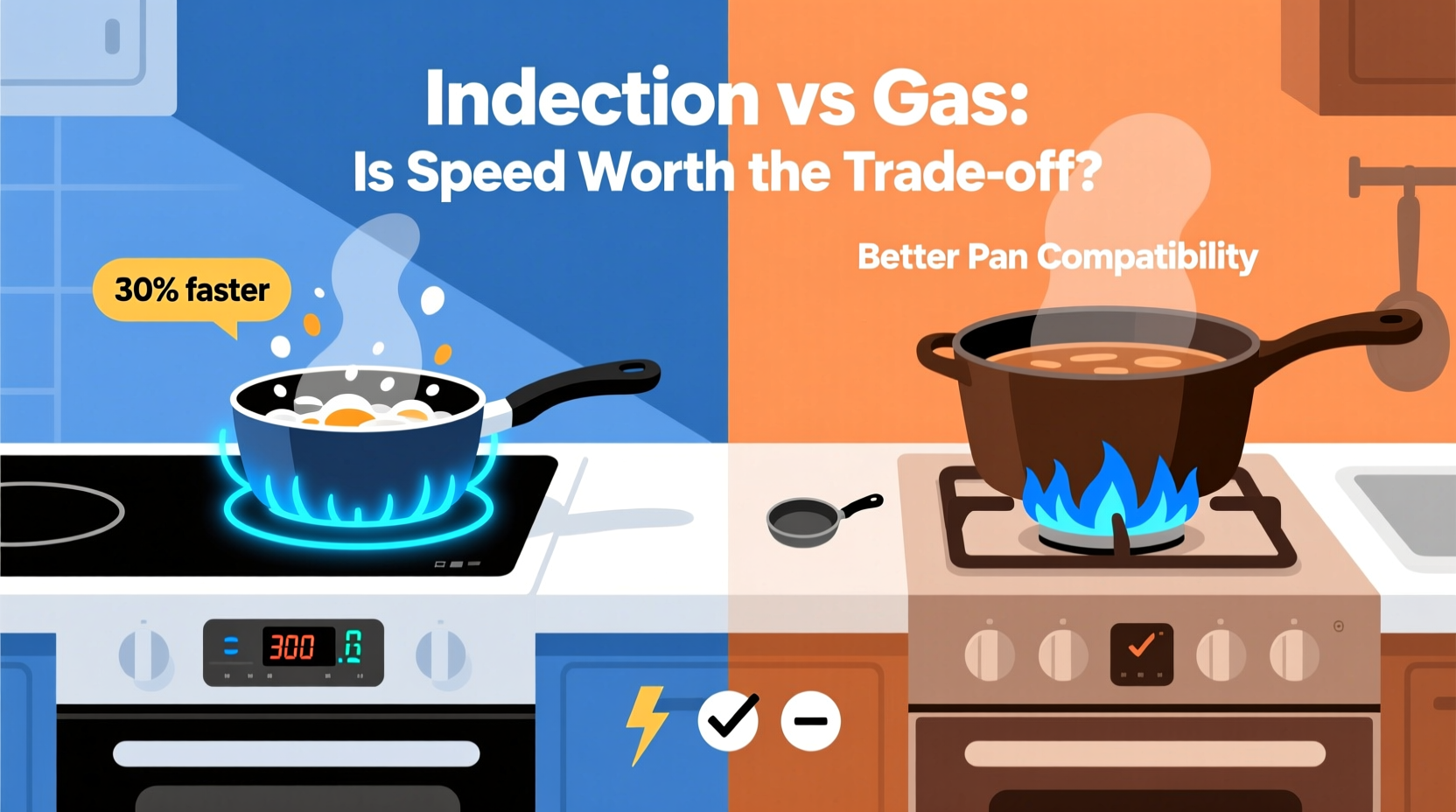
The core difference between induction and gas cooking lies in how heat is generated and transferred. Understanding this helps explain both the performance benefits and limitations of each system.
Gas stoves rely on open flames. Propane or natural gas burns beneath a grate, heating the bottom of the cookware through direct contact with fire and radiant heat. This method provides immediate visual feedback—chefs can see the flame size and adjust accordingly—and allows for precise control when done well. However, much of the heat escapes into the air, making gas less energy-efficient.
Induction cooktops operate on electromagnetic principles. Instead of generating heat, they create a magnetic field that induces electrical currents in ferromagnetic cookware—essentially turning the pan itself into the heat source. This means no flame, no glowing red elements, and nearly instant temperature changes. Because the energy transfer happens directly within the metal of the pan, very little heat is wasted.
“Induction doesn’t just heat faster—it heats smarter. You’re not warming the air around the pot; you’re heating the pot itself.” — Dr. Lena Patel, Energy Efficiency Researcher at MIT Sustainable Systems Lab
Cooking Speed: Where Induction Pulls Ahead
If speed is your priority, induction wins hands down. Independent tests consistently show induction bringing water to a boil 30–50% faster than gas, depending on wattage and pan type. For example, a standard 2-quart pot of water boils in about 4 minutes on induction versus 7–9 minutes on high-output gas.
This rapid response isn’t limited to boiling. Searing steaks, reducing sauces, or simmering delicate custards all benefit from induction’s near-instantaneous adjustments. Turn the knob from high to low, and the temperature drops within seconds—no waiting for a burner to cool down. In contrast, gas burners retain residual heat long after the flame is reduced, which can lead to overcooking if not monitored closely.
Tip: Use induction's rapid boil feature strategically—start pasta water first thing when cooking dinner to maximize time efficiency.Professional kitchens are increasingly adopting induction for these reasons. In busy environments where timing is critical, the ability to go from sear to simmer instantly improves consistency and reduces human error. Home cooks who value precision—especially those preparing complex meals or following exact recipes—can also gain real advantages.
Pan Compatibility: The Hidden Trade-Off
Despite its speed and efficiency, induction has one major limitation: it only works with magnetic cookware. Materials like aluminum, copper, glass, and ceramic won’t activate the electromagnetic field unless they have a magnetized base layer. Even some stainless steel pans aren’t compatible if they lack enough iron content.
This creates friction for home cooks who’ve invested in high-end, non-magnetic cookware. Copper-bottomed All-Clad pots, lightweight aluminum sauté pans, or heirloom pieces passed down through generations may sit unused if switching to induction. While many manufacturers now produce “induction-ready” versions, retrofitting an entire kitchen set can cost hundreds—or even thousands—of dollars.
To test whether a pan works on induction, simply hold a magnet to the bottom. If it sticks firmly, the pan should work. Some users report weak adhesion still causing issues, so full contact and flatness matter too. Warped or curved bases disrupt the magnetic field, leading to uneven heating or automatic shutoffs.
Common Cookware Materials and Induction Compatibility
| Material | Works on Induction? | Notes |
|---|---|---|
| Cast Iron | Yes | Excellent conductor; ideal for induction |
| Enameled Cast Iron (e.g., Le Creuset) | Yes | Most brands are compatible; check label |
| Stainless Steel | Sometimes | Must be magnetic; look for \"induction-ready\" marking |
| Aluminum | No (unless layered) | Needs ferromagnetic base layer |
| Copper | No (unless bonded) | High-end models add steel layer for induction use |
| Nonstick (generic) | Varies | Many newer models include induction bases |
Real-World Impact: A Mini Case Study
Sarah Kim, a home cook and recipe developer in Portland, OR, switched from gas to induction last year after renovating her kitchen. She loved the speed and safety features but quickly hit a snag: her prized French copper jam pan wouldn’t work. “I use that pan every summer for berry preserves,” she said. “When I realized it was incompatible, I felt stuck.”
She experimented with adapter discs—metal plates designed to sit between non-magnetic pans and the cooktop—but found them inefficient. “It took longer than gas to heat up, defeated the purpose of induction, and warped after two uses.” Eventually, she purchased a new stainless-clad copper pot labeled as induction-safe. It performed well but cost $240—more than triple her original jam pan.
Still, Sarah says the trade-off was worth it. “I save at least 15 minutes per meal prep now. My kids can’t turn the burner on accidentally because nothing heats without a pan present. And cleaning is so much easier since spills don’t bake onto grates.”
Her experience reflects a common pattern: initial frustration with pan limitations, followed by adaptation and eventual satisfaction once compatible tools are acquired.
Weighing the Pros and Cons
Both technologies have strengths and weaknesses beyond speed and compatibility. A balanced evaluation considers energy use, safety, maintenance, and long-term costs.
Advantages of Induction
- Speed: Boils water and heats food significantly faster than gas.
- Energy Efficiency: Up to 90% of energy goes directly into the food, compared to 40–55% for gas.
- Safety: Surface stays relatively cool; shuts off automatically when no pan is detected.
- Precision: Instant response to temperature changes enhances control.
- Cleanability: Smooth glass surface wipes clean easily.
Disadvantages of Induction
- Pan Restrictions: Requires magnetic cookware, limiting options.
- Upfront Cost: Higher purchase price for both cooktop and compatible cookware.
- No Power = No Cooking: Useless during power outages unless you have backup.
- No Visual Flame: Some chefs miss the visual cue of fire size for heat level.
Advantages of Gas
- Universal Compatibility: Works with any type of cookware, regardless of material.
- Reliability: Operates during power failures (if using natural gas).
- Tactile Feedback: Flame height gives intuitive sense of heat output.
- Lower Initial Investment: Typically cheaper to install and maintain.
Disadvantages of Gas
- Slower Heating: Takes longer to bring liquids to boil.
- Inefficiency: Significant heat loss to surrounding air.
- Fire Risk: Open flame poses higher hazard, especially with flammable materials nearby.
- Air Quality: Releases nitrogen dioxide and carbon monoxide, requiring good ventilation.
Step-by-Step Guide to Transitioning from Gas to Induction
If you're considering making the switch, follow this practical timeline to ensure a smooth transition:
- Assess Your Current Cookware (Week 1): Test each pan with a magnet. Label compatible ones and identify replacements needed.
- Research Induction Models (Week 2): Compare wattage, size, safety features, and user reviews. Look for models with boost settings and residual heat indicators.
- Replace Key Pans Gradually (Weeks 3–6): Start with essentials—stockpot, frying pan, saucepan. Prioritize multi-layer clad stainless steel or induction-rated nonstick.
- Install the Cooktop (Week 7): Hire a licensed electrician if required. Ensure circuit can handle 15–20 amps per unit.
- Test and Adjust (Week 8+): Cook familiar recipes to learn power levels. Note that lower wattages often suffice due to efficiency.
Frequently Asked Questions
Can I use my existing pots and pans on induction?
Only if they’re made of ferromagnetic material. Perform the magnet test: if a fridge magnet sticks strongly to the bottom, it will likely work. Many stainless steel pans are not magnetic, so check manufacturer labels for “induction-compatible” markings.
Is induction really faster than gas?
Yes, significantly. Independent lab tests show induction brings water to a boil up to 50% faster than even high-BTU gas burners. The difference is most noticeable when boiling large volumes or searing at high temperatures.
Are there health concerns with induction cooking?
No credible evidence suggests harmful exposure under normal use. While induction generates electromagnetic fields (EMFs), levels drop rapidly with distance and are well below international safety limits. Pregnant women and pacemaker users should consult their doctors, though most modern devices are shielded against interference.
Final Verdict: Is the Speed Worth the Pan Limitations?
For many modern kitchens, yes—the speed, safety, and efficiency of induction justify adapting to pan compatibility constraints. The fastest cooking times reduce overall meal prep duration, which matters in fast-paced households. Energy savings accumulate over time, especially in regions with high electricity efficiency standards. And the ease of cleaning and child-safe operation adds daily convenience.
However, the transition requires investment—not just financially, but mentally. Letting go of beloved cookware is emotionally difficult for some. Chefs who rely on charring over open flame or using specialty non-magnetic vessels may find gas irreplaceable. Outdoor cooking, camping, or areas prone to blackouts also tilt the balance toward gas reliability.
The best approach might be hybrid: installing a dual-fuel range with both induction and gas zones, or keeping a portable induction burner alongside a gas stove. This gives flexibility without sacrificing performance.
“The future of cooking isn’t about choosing one technology over another—it’s about matching the right tool to the task. Sometimes that’s fire. Sometimes it’s magnetism.” — Chef Marcus Tran, Culinary Instructor at San Francisco Cooking Academy
Take Action Today
Whether you're remodeling your kitchen or simply curious about upgrading, take stock of your current setup. Test your pans, calculate potential energy savings, and try cooking on induction at a showroom or friend’s home. Real-world experience beats speculation. The goal isn’t to chase trends, but to build a kitchen that makes your life easier—one fast-boiling pot at a time.
💬 Have you made the switch from gas to induction? Share your story, tips, or challenges in the comments below—your experience could help others decide what’s right for their kitchen.








