A truly exceptional garlic Parmesan sauce transcends the ordinary—it’s not just a topping but a transformative element that elevates simple ingredients into luxurious, restaurant-quality dishes. When executed properly, this sauce delivers a velvety mouthfeel, deep umami richness from aged cheese, and a balanced garlicky aroma that lingers without overwhelming. Whether drizzled over fettuccine, used as a dip for roasted vegetables, or served alongside grilled chicken, a well-crafted version of this classic emulsion brings comfort and sophistication in equal measure. This guide explores every facet of creating and using a rich garlic Parmesan sauce, including ingredient selection, technique refinement, culinary applications, and professional insights that ensure consistent results.
Definition & Overview
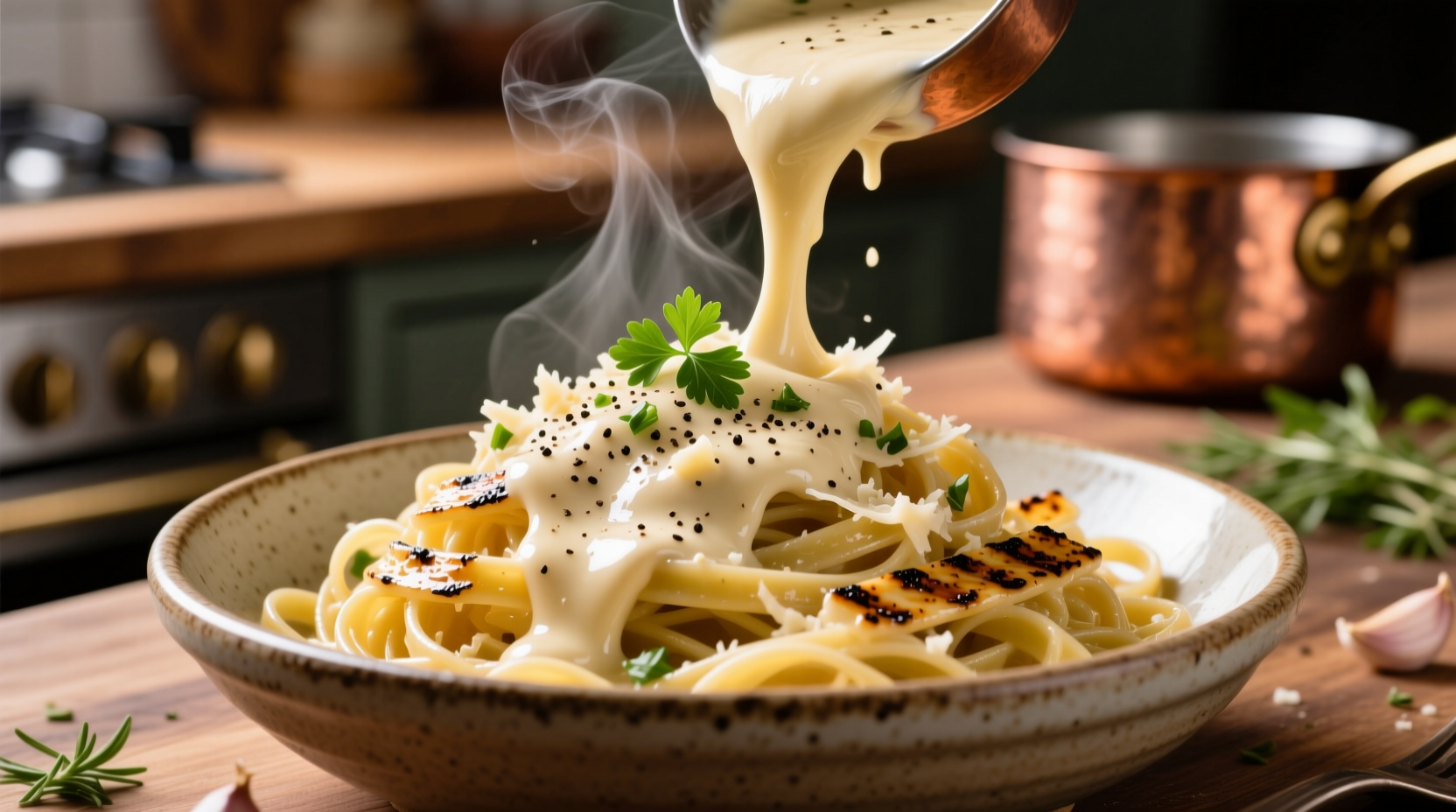
Garlic Parmesan sauce is a dairy-based emulsion primarily composed of heavy cream, butter, freshly grated Parmigiano-Reggiano (or high-quality Parmesan), and sautéed garlic. It belongs to the broader family of crema-style sauces common in Italian-American cuisine, though its roots trace back to northern Italy’s tradition of combining aged cheeses with warm fats and liquids to create smooth, flavorful dressings. Unlike Alfredo sauce—which traditionally contains only butter, Parmesan, and pasta water—this version incorporates cream for enhanced body and stability, making it ideal for both immediate use and reheating.
The hallmark of a superior garlic Parmesan sauce lies in its texture: silky, cohesive, and free of graininess or separation. The flavor should be savory and nutty from the cheese, aromatic from gently cooked garlic, and subtly sweet from the cream. Salt enhances depth, while white pepper preserves visual clarity without introducing dark specks. While often associated with pasta, particularly fettuccine or ravioli, its versatility extends far beyond, functioning equally well as a finishing sauce, base for casseroles, or dipping medium.
Key Characteristics
| Attribute | Description |
|---|---|
| Flavor Profile | Umami-rich, nutty, mildly salty, with aromatic garlic notes and a hint of sweetness from cream. |
| Aroma | Pronounced roasted garlic scent balanced by the toasted, caramelized notes of melted Parmesan. |
| Color/Form | Pale ivory to light gold; smooth, pourable liquid with a glossy sheen. |
| Texture | Creamy, velvety, and homogeneous—should coat the back of a spoon without breaking. |
| Heat Level | Mild; no inherent heat unless red pepper flakes are added. |
| Culinary Function | Serving as a finishing sauce, binder in baked dishes, or dipping base. |
| Shelf Life (Refrigerated) | Up to 5 days in an airtight container. Reheats well on low heat with stirring. |
Practical Usage: How to Use Rich Garlic Parmesan Sauce
The true value of this sauce lies in its adaptability across meal types and cooking styles. Its richness pairs naturally with starches and proteins alike, acting as both a highlight and a harmonizing agent.
Pasta Dishes
Toss freshly cooked fettuccine, pappardelle, or penne directly in a warmed skillet with the sauce. Reserve ¼ cup of starchy pasta water before draining—this helps loosen the sauce and encourages emulsification. For extra luxury, stir in a tablespoon of cold butter at the end for added shine. Classic combinations include:
- Fettuccine alfredo-style with grilled chicken breast
- Spinach and mushroom ravioli topped with crispy sage
- Broccoli-studded macaroni bake finished under the broiler
Protein Enhancer
Drizzle warm garlic Parmesan sauce over seared proteins such as:
- Grilled salmon fillets
- Pan-seared scallops
- Breaded chicken cutlets (a modern take on chicken Parmesan)
- Rack of lamb chops
Veggie Applications
Roasted vegetables like cauliflower, Brussels sprouts, or asparagus gain new dimension when tossed in garlic Parmesan sauce before serving. Alternatively, serve the sauce on the side as a warm dip for crudités or air-fried zucchini sticks. A thin layer can also act as a base for vegetable gratins, replacing béchamel in lighter preparations.
Restaurant Techniques at Home
Professional kitchens often stabilize garlic Parmesan sauce using small amounts of sodium citrate—a food-grade emulsifier that prevents oil separation during reheating. While optional, adding ⅛ teaspoon per cup of sauce allows for seamless freezing and reheating, crucial for batch cooking. Another pro tip: infuse the cream with smashed garlic cloves and fresh thyme over low heat for 10 minutes before straining and proceeding with the recipe. This method extracts maximum aroma without risking burnt garlic.
Expert Tip: Never boil garlic Parmesan sauce after adding cheese. High heat causes casein proteins in dairy to coagulate, leading to curdling. Always melt cheese off direct heat or on the lowest possible flame, stirring constantly.
Variants & Types
While the core formula remains consistent, several variations exist based on dietary needs, availability, and desired intensity. Understanding these forms enables customization without sacrificing quality.
Traditional Cream-Based Version
This is the standard preparation using heavy cream, butter, garlic, and Parmigiano-Reggiano. Offers the richest texture and longest shelf life due to fat content. Ideal for formal dinners and freezer storage.
Lighter Milk-Based Alternative
Substitute half-and-half or whole milk for heavy cream. Requires a thickening agent like cornstarch (1 tsp per cup) to maintain body. Best used immediately, as lower fat content increases risk of separation upon standing or reheating.
Dairy-Free / Vegan Adaptation
Uses cashew cream or blended silken tofu as a base, nutritional yeast for cheesy flavor, and miso paste for umami. Fresh garlic and lemon juice provide brightness. Though lacking the exact mouthfeel of dairy, this version satisfies plant-based diets while retaining key aromatics.
Extra-Rich “Ultimate” Version
Includes mascarpone or cream cheese (2–3 tbsp per cup of sauce) for additional silkiness. Often paired with truffle oil or white wine reduction for gourmet flair. Commonly featured in upscale steakhouses.
Spiked Variations
Additions like roasted red peppers (blended in), sun-dried tomatoes, or chipotle in adobo lend color and complexity. These transform the sauce into a fusion condiment suitable for tacos, nachos, or stuffed mushrooms.
| Variation Type | Best Used For | Storage Notes |
|---|---|---|
| Traditional Cream-Based | Pasta, proteins, entertaining | Lasts 5 days refrigerated; freezes well up to 3 months |
| Lighter Milk-Based | Everyday meals, calorie-conscious diets | Consume within 2 days; do not freeze |
| Dairy-Free/Vegan | Plant-based menus, allergies | Use within 3 days; may separate if frozen |
| Extra-Rich (Mascarpone-Included) | Special occasions, gourmet plating | 5 days refrigerated; stable when reheated slowly |
| Flavored/Spiked | Fusion dishes, appetizers | 3–4 days depending on added ingredients |
Comparison with Similar Ingredients
Garlic Parmesan sauce is frequently confused with other creamy, cheese-laden preparations. Clarifying distinctions ensures proper usage and expectation management.
| Feature | Garlic Parmesan Sauce | Alfredo Sauce | Béchamel | Mornay |
|---|---|---|---|---|
| Cheese Used | Parmigiano-Reggiano | Parmigiano-Reggiano | None | Gruyère or Cheddar |
| Thickener | Cream + cheese emulsion | Starchy pasta water + cheese | Roux (butter + flour) | Roux + cheese |
| Garlic? | Yes, essential | No (unless modern variation) | No | Optional |
| Cream Content | High | Low or none (authentic) | Moderate | Moderate |
| Origin | Italian-American | Italian (Lazio region) | French | French |
| Reheat Stability | Good (especially with emulsifiers) | Poor (prone to breaking) | Excellent | Very good |
“Many home cooks mistake Alfredo for garlic Parmesan, but the inclusion of cream and intentional garlic infusion makes all the difference in both texture and flavor longevity.” — Chef Elena Moretti, Culinary Instructor, Institute of Italian Gastronomy
Practical Tips & FAQs
How do I prevent my garlic Parmesan sauce from breaking?
Breakage occurs when temperature shifts too rapidly or fat separates from protein. To avoid this:
- Warm dairy ingredients gradually—do not add cold cream to a hot pan.
- Remove from heat before incorporating cheese.
- Stir constantly with a wooden spoon or silicone spatula.
- Use freshly grated cheese—pre-grated versions contain anti-caking agents that hinder melting.
Can I freeze garlic Parmesan sauce?
Yes, especially the traditional cream-based version. Transfer to an airtight container, leaving ½ inch headspace for expansion. Thaw overnight in the refrigerator and reheat slowly over low heat, stirring frequently. Sauces containing emulsifiers like sodium citrate maintain better texture after freezing.
What’s the best Parmesan to use?
Opt for authentic **Parmigiano-Reggiano** imported from Italy, identifiable by the dotted rind spelling out the name. It has deeper flavor and superior melting properties compared to domestic \"Parmesan,\" which may be drier and less complex. Avoid green-tinted shakers labeled simply “Parmesan”—they lack the nuance required for a premium sauce.
Is there a low-fat substitute that works?
Reducing fat significantly compromises texture and reheating performance. However, for occasional use, try substituting evaporated milk for heavy cream. It provides concentrated dairy flavor with about half the fat. Combine with 1 tbsp cornstarch per cup to mimic viscosity.
How much garlic should I use?
For balanced flavor, use **4–6 medium cloves per cup of sauce**, depending on freshness and size. Roasting the garlic first mellows sharpness and adds sweetness. Sautéing minced garlic in butter until fragrant but not browned preserves vibrancy without bitterness.
Can I make it ahead of time?
Absolutely. Prepare up to two days in advance and store covered in the refrigerator. Reheat gently in a double boiler or saucepan over low heat, adding a splash of milk or cream to restore fluidity. Stirring during reheating prevents scorching on the bottom.
Does it work with gluten-free pasta?
Yes, but adjust technique slightly. Gluten-free pastas release less starch and absorb more sauce. Cook al dente, drain carefully, and reserve any cooking liquid—even if minimal. Toss immediately with warm sauce to prevent drying.
Storage Checklist:
✓ Cool completely before storing
✓ Use glass or BPA-free plastic containers
✓ Label with date
✓ Consume within 5 days (3 days for vegan versions)
✓ Freeze only unflavored base versions for best results
Summary & Key Takeaways
A rich garlic Parmesan sauce with creamy texture stands as a cornerstone of modern comfort cooking—simple in concept, yet refined in execution. Mastery hinges on three pillars: ingredient quality, controlled heat application, and understanding emulsion science. The sauce thrives when made with real Parmigiano-Reggiano, fresh garlic, and full-fat dairy, delivering a luxurious finish to everything from weeknight pasta to holiday centerpieces.
Different variants accommodate diverse dietary preferences, though the traditional cream-based formulation remains unmatched in stability and sensory appeal. Compared to similar sauces like Alfredo or Mornay, it distinguishes itself through deliberate garlic integration and greater reliance on dairy richness rather than roux or starchy water.
With attention to detail—grating cheese fresh, avoiding boiling temperatures, and reheating with care—this sauce can be prepared in advance, frozen, and adapted creatively across cuisines. Whether used conservatively as a garnish or generously as a main component, its ability to enhance flavor and texture makes it indispensable in any serious cook’s repertoire.
Experiment with your next batch: infuse the cream with herbs, finish with lemon zest, or swirl in a bit of truffle butter. Once you master the fundamentals, the possibilities become limited only by imagination.