Most people glance at a bottle of whiskey, rum, or brandy, see “12 Years Old” or “100 Proof,” and assume they understand what it means. They don’t. Liquor labels are dense with legal requirements, marketing spin, and subtle craftsmanship cues—and misreading them can lead to overpaying for hype, misunderstanding quality, or missing a truly exceptional spirit. Sommeliers don’t taste first; they read first. They treat the label as a forensic document: a compressed archive of geography, regulation, production method, and intent. This isn’t about memorizing statutes—it’s about learning to spot the signals that separate intention from illusion.
Why Labels Lie (and Why That’s Legal)
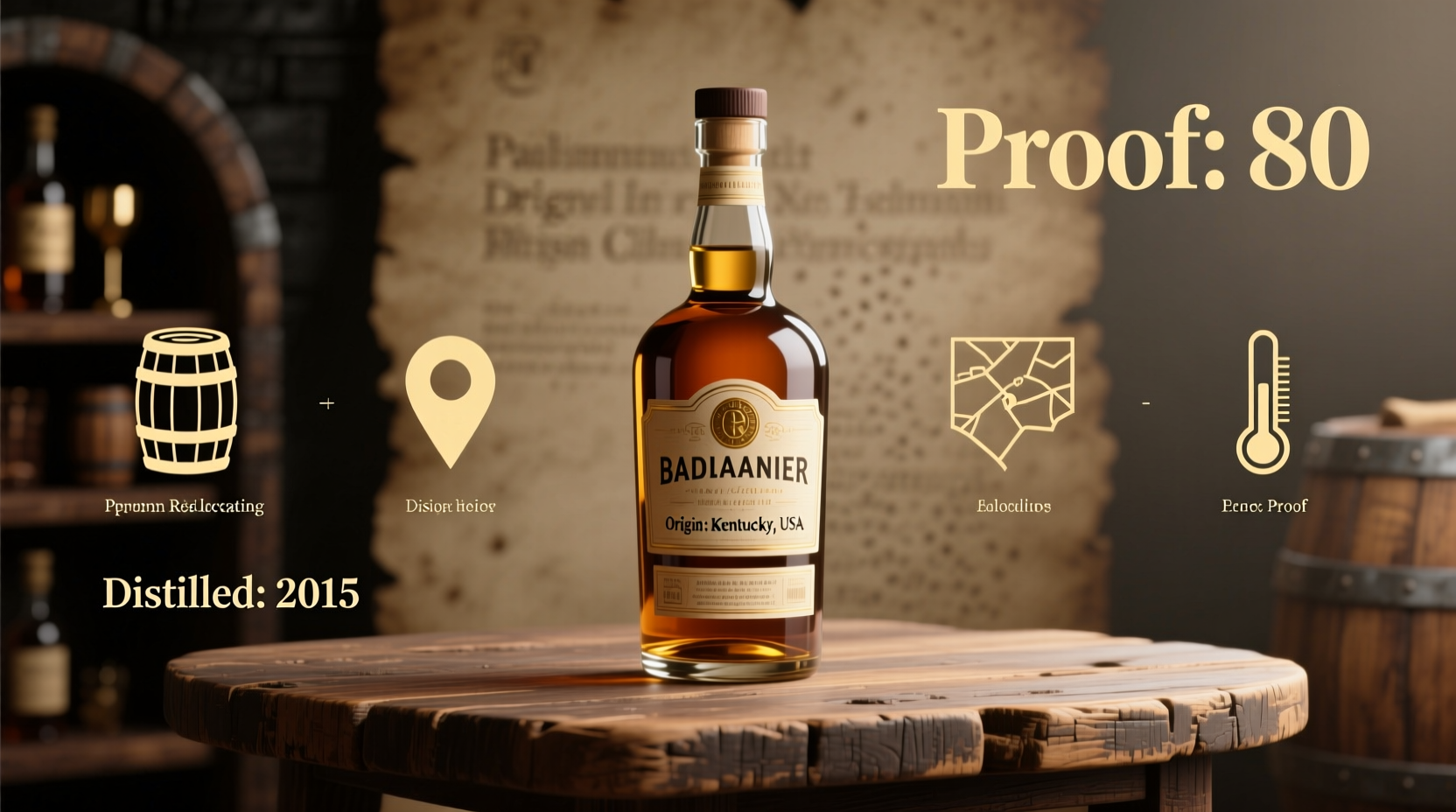
Liquor labeling in the U.S. is governed by the Alcohol and Tobacco Tax and Trade Bureau (TTB), whose rules prioritize consumer protection *and* industry flexibility. That duality creates intentional ambiguity. For example, “small batch” has no legal definition—distillers may use it for 50 barrels or 500. “Handcrafted” appears on mass-produced bottles. Even “single barrel” only certifies that the liquid came from one cask—not that it was selected for quality, balance, or character. The TTB approves labels based on factual accuracy, not truthfulness in spirit. As master distiller Becky Harris of Catoctin Creek puts it:
“Regulatory approval doesn’t mean the label tells the whole story—it means nothing on it is provably false. The real story lives between the lines: in what’s omitted, how terms are qualified, and where the fine print points.” — Becky Harris, Master Distiller & TTB Label Review Consultant
This isn’t deception—it’s context. Understanding the regulatory scaffolding lets you see past the slogans and into the substance.
Decoding Proof: Beyond the Math
Proof is simple arithmetic: in the U.S., proof = alcohol by volume (ABV) × 2. So 45% ABV = 90 proof. But that number alone reveals nothing about mouthfeel, integration, or balance—only concentration. What matters more is *when* and *how* that proof was achieved.
Consider these three scenarios for a bourbon labeled “110 Proof”: • Bottled-in-bond (BIB): Distilled and bottled in the same season, aged at least four years, and bottled at exactly 100 proof—unless it’s a BIB *barrel proof* release, which must state “barrel proof” and list the exact proof at bottling. • Cask strength: No water added post-barrel—proof reflects natural evaporation (“angel’s share”) and warehouse conditions. A 125-proof rye from Kentucky’s hot top floor behaves very differently than a 125-proof single malt aged cool in Scotland. • Proofed down: Water added to reduce proof. This isn’t inferior—it’s often essential for accessibility—but it changes texture and aromatic lift. A 92-proof bourbon diluted from 128 may retain more oak tannin than one naturally aged at 92.
Tip: Compare proof *with* age and climate. A 13-year Scotch at 46% ABV likely spent time in cooler, damper warehouses—preserving delicate esters. A 6-year bourbon at 122% ABV almost certainly matured in a hot, dry rickhouse, accelerating extraction and evaporation.Origin: More Than Just a State or Country
“Made in Kentucky” means little unless you know *what that means*. Federal law requires geographic designations to be truthful—but not precise. A bourbon labeled “Kentucky Straight Bourbon Whiskey” must be distilled and aged in Kentucky, but the grain may be sourced from Indiana, the yeast propagated in California, and the barrels coopered in Missouri. True origin intelligence comes from parsing layers:
- Distilled in: Where the fermentation-to-distillate transformation occurred. This is non-negotiable for terroir claims (e.g., “distilled in Islay”).
- Aged in: Where the maturation happened. Critical for climate impact—temperature swings drive expansion/contraction, pulling spirit into and out of wood. A bottle stating “aged in coastal Cornwall” implies salt air influence; “aged in humid New Orleans” suggests rapid oxidation and deeper color.
- Bottled in: Often overlooked. Bottling location rarely affects flavor—but if a Japanese whisky says “bottled in Scotland,” it’s almost certainly a blended import, not a domestic product.
- Appellation indicators: Look for protected terms: “Cognac” (must be from Cognac AOC, double-distilled in copper pot stills, aged ≥2 years in French oak); “Tequila” (must be made from blue Weber agave grown in designated Mexican states); “Armagnac” (distinct from Cognac in still type, aging minimums, and regional boundaries).
Real-world example: In 2022, a small-batch American rye gained attention for its “Mendocino County, CA” designation. Consumers assumed local grain—but the label quietly noted “grain sourced from North Dakota.” The true origin story? Coastal fog slowed maturation, yielding softer spice and brighter citrus than Kentucky ryes of similar age. The location mattered—but not for the reason most assumed.
Age Statements: What “12 Years” Really Hides
An age statement (e.g., “12 Years Old”) applies only to the *youngest* spirit in the bottle. A 12-year-old bourbon may contain 12-, 15-, and 22-year components—but legally, it’s “12.” No requirement exists to disclose the blend composition. Worse, many premium bottles omit age statements entirely—not because they’re young, but because the producer wants flexibility. A “No Age Statement” (NAS) Scotch may be 8 years old… or 28. It’s not inherently inferior; it’s a blending strategy.
What *is* revealing is what’s *not* said. If a label avoids “age” but highlights “vintage,” “solera,” or “cask finish,” it’s signaling complexity beyond chronological metrics. A rum labeled “Finished 18 Months in PX Sherry Casks” tells you more about flavor architecture than “Aged 7 Years.”
| Label Phrase | What It Legally Means | What It Suggests (Practically) |
|---|---|---|
| “Aged 10 Years” | Youngest component is 10 years old; all spirit aged in oak. | Predictable structure, likely balanced oak influence—unless over-oaked in aggressive casks. |
| “No Age Statement” | No minimum age claimed; could be 2 years or 30. | Producer prioritizes flavor consistency over vintage prestige; often relies on finishing or blending artistry. |
| “Vintage-Dated” | Entire batch distilled in a single year (common in Armagnac, some rums). | True terroir expression—weather, harvest quality, and fermentation conditions are unified. |
| “Barrel Strength” + no age | Un-diluted; age not disclosed. | Confidence in raw material and cask selection—producers avoid age statements when they want focus on intensity, not patience. |
The Step-by-Step Sommelier Label Scan
When you pick up a new bottle, follow this sequence—not chronologically, but hierarchically—to extract maximum insight in under 90 seconds:
- Identify the category first: Is it bourbon? Rye? Single malt? Agricole rum? Blended Scotch? This dictates legal aging minimums, grain rules, and distillation methods. (Example: “Straight Rye Whiskey” = ≥51% rye, aged ≥2 years in new charred oak.)
- Locate the mandatory disclosures: Find “distilled in,” “aged in,” “bottled in,” and alcohol percentage. Circle them. These are your anchor facts.
- Interrogate the age claim: Is there an age statement? If yes, note it. If no, check for vintage date, solera notation, or cask finish language—these are functional substitutes.
- Scan for regulatory badges: “Bottled in Bond,” “Cognac,” “Appellation d’Origine Contrôlée,” “Certified Sustainable”—each carries enforceable standards, not marketing fluff.
- Read the fine print backward: Start at the bottom—the government warning, TTB approval number (e.g., “TTB-XXXXX”), and importer/distributor info. A European bottler listed as “importer” often means the liquid was shipped in bulk and bottled abroad—a red flag for freshness in delicate spirits like gin or un-aged agave.
Common Misinterpretations—and How to Avoid Them
Even experienced drinkers stumble on these five traps:
- Mistaking “Small Batch” for artisanal: One major Kentucky distillery defines “small batch” as batches under 1,000 barrels—equivalent to ~30,000 bottles. Scale ≠ craft.
- Assuming “Single Malt” means superior: It only means 100% malted barley, distilled at one distillery. Quality depends on cask selection, not the term itself.
- Trusting “Craft” without verification: The TTB does not define “craft distillery.” A brand can self-apply the term regardless of output size or automation level.
- Overvaluing “Limited Edition”: Often signals surplus stock or experimental runs—not rarity. Check batch size (e.g., “Batch #42, 2,800 bottles”) for real scarcity.
- Ignoring the bottler: “Distilled by X, bottled by Y” means Y handled final filtration, dilution, and packaging. If Y is a contract bottler with no distilling capacity, the “distilled by” line is the only authentic origin cue.
FAQ: Real Questions from Real Drinkers
Does “Non-Chill Filtered” actually matter?
Yes—but not for purity. Chill filtration removes fatty acids and esters that cloud spirit when chilled or diluted. Skipping it preserves mouthfeel and aromatic compounds, especially in cask-strength whiskies and heavily sherry-finished malts. It’s a texture choice, not a quality guarantee—but if a brand highlights it, they’re likely prioritizing sensory integrity over visual uniformity.
Why do some bourbons say “Kentucky Straight Bourbon” while others just say “Straight Bourbon”?
“Straight Bourbon” only requires aging ≥2 years in new charred oak. “Kentucky Straight Bourbon” adds the geographic requirement: distilled *and* aged in Kentucky. The latter is a terroir claim; the former is a process claim. Neither implies superiority—but Kentucky’s climate and limestone-filtered water create consistent aging conditions unmatched elsewhere.
If a rum says “Aged 5 Years in the Caribbean,” does that mean it was aged there—or just bottled there?
Legally, “aged in the Caribbean” means the maturation occurred within the Caribbean region. However, the TTB allows “Caribbean Rum” designation for rums aged *anywhere*, as long as the base molasses or juice originated there. Always look for “aged in” prepositions—not just “Caribbean Rum.” Authentic aging location is the only reliable indicator of tropical influence.
Conclusion: Your Label Is a Conversation Starter, Not a Verdict
Reading a liquor label like a sommelier isn’t about gatekeeping—it’s about deepening engagement. That 100-proof rye isn’t just “strong”; it’s a record of warehouse placement, seasonal humidity, and the distiller’s confidence in raw grain. That NAS Japanese whisky isn’t hiding age; it’s inviting you to taste structure over chronology. Every approved phrase, every omitted detail, every regulatory badge is a deliberate choice—one that reflects philosophy as much as process.
You don’t need a cellar or certification to begin. Start tonight: pull three bottles from your shelf. Time yourself—90 seconds per label. Note the category, origin qualifiers, proof, age language, and one thing you’d never noticed before. Then taste with those facts in mind. You’ll taste wood, yes—but also latitude, legislation, and intention.
💬 Put your label literacy to the test. Share a photo of a bottle label you’ve decoded—or one that stumped you—in the comments. Let’s crowdsource the truth behind the typeface.