Sweet potatoes are among the most versatile and nutritionally dense root vegetables available to modern cooks. Their natural sweetness, creamy texture, and vibrant color make them a favorite across global cuisines—from roasted sides in American kitchens to spiced curries in Southeast Asia. Yet despite their popularity, many home cooks underutilize sweet potatoes or prepare them inconsistently, missing opportunities to maximize flavor, texture, and nutritional benefits. Understanding how to properly select, store, peel, cut, and cook sweet potatoes unlocks their full potential, whether you're making weeknight dinners, meal-prepping for the week, or crafting elegant dishes for guests. This guide provides a comprehensive, expert-level approach to preparing and cooking sweet potatoes using accessible techniques grounded in culinary science and real-world kitchen practice.
Definition & Overview
A sweet potato (Ipomoea batatas) is a dicotyledonous plant belonging to the morning glory family, Convolvulaceae. Unlike regular potatoes (which are tubers from the nightshade family), sweet potatoes are true storage roots, meaning they develop from root tissue rather than stem structures. Native to Central and South America, they have been cultivated for over 5,000 years and were among the first New World crops dispersed globally following European exploration.
Culinarily, sweet potatoes occupy a unique space: they offer inherent sweetness due to high concentrations of maltose—a sugar produced when starches break down during cooking—but retain enough structural integrity to hold shape in roasting, boiling, and grilling. They come in several varieties distinguished by skin and flesh color, moisture content, and sugar levels, all influencing their best uses in cooking.
In contrast to yams—often mislabeled as sweet potatoes in U.S. grocery stores—true sweet potatoes have thinner skin, tapered ends, and moister flesh. The confusion arises from historical marketing practices, but botanically and culinarily, they are distinct species with different textures and flavors.
Key Characteristics
| Characteristic | Description |
|---|---|
| Flavor Profile | Naturally sweet with earthy undertones; caramelizes well when roasted. Orange-fleshed types are sweeter; white and purple varieties are more neutral. |
| Aroma | Mildly vegetal when raw; develops nutty, toasted notes when cooked, especially at high heat. |
| Color & Form | Variable: orange, white, purple flesh; red, beige, or purple skin. Elongated, tapered shape with smooth to slightly rough skin. |
| Texture | Moist and creamy when cooked (especially orange types); firmer and drier in white-fleshed varieties. Holds structure better than pumpkin or squash. |
| Cooking Function | Thickener in soups, base for purees, standalone side dish, component in baked goods, or savory main element. |
| Shelf Life | 3–5 weeks in cool, dark, dry storage (not refrigerated). Degrades rapidly if exposed to moisture or cold temperatures below 50°F (10°C). |
Practical Usage: How to Use Sweet Potatoes in Cooking
The preparation and cooking method used on a sweet potato dramatically affects its final taste, texture, and culinary role. Proper technique ensures even cooking, optimal browning, and balanced flavor development.
Selecting the Right Sweet Potato
Choose firm specimens without soft spots, cracks, or signs of sprouting. Smaller to medium-sized sweet potatoes (6–8 inches long) tend to be more tender and consistent in texture. Avoid those stored near onions, which emit gases that accelerate spoilage.
Storage Guidelines
Store uncut sweet potatoes in a cool, dark, well-ventilated area—ideally between 55–60°F (13–16°C). Do not refrigerate, as cold temperatures trigger enzymatic changes that produce undesirable hard cores and off-flavors. Once cut, wrap tightly and refrigerate for up to two days before cooking.
Peeling and Cutting Techniques
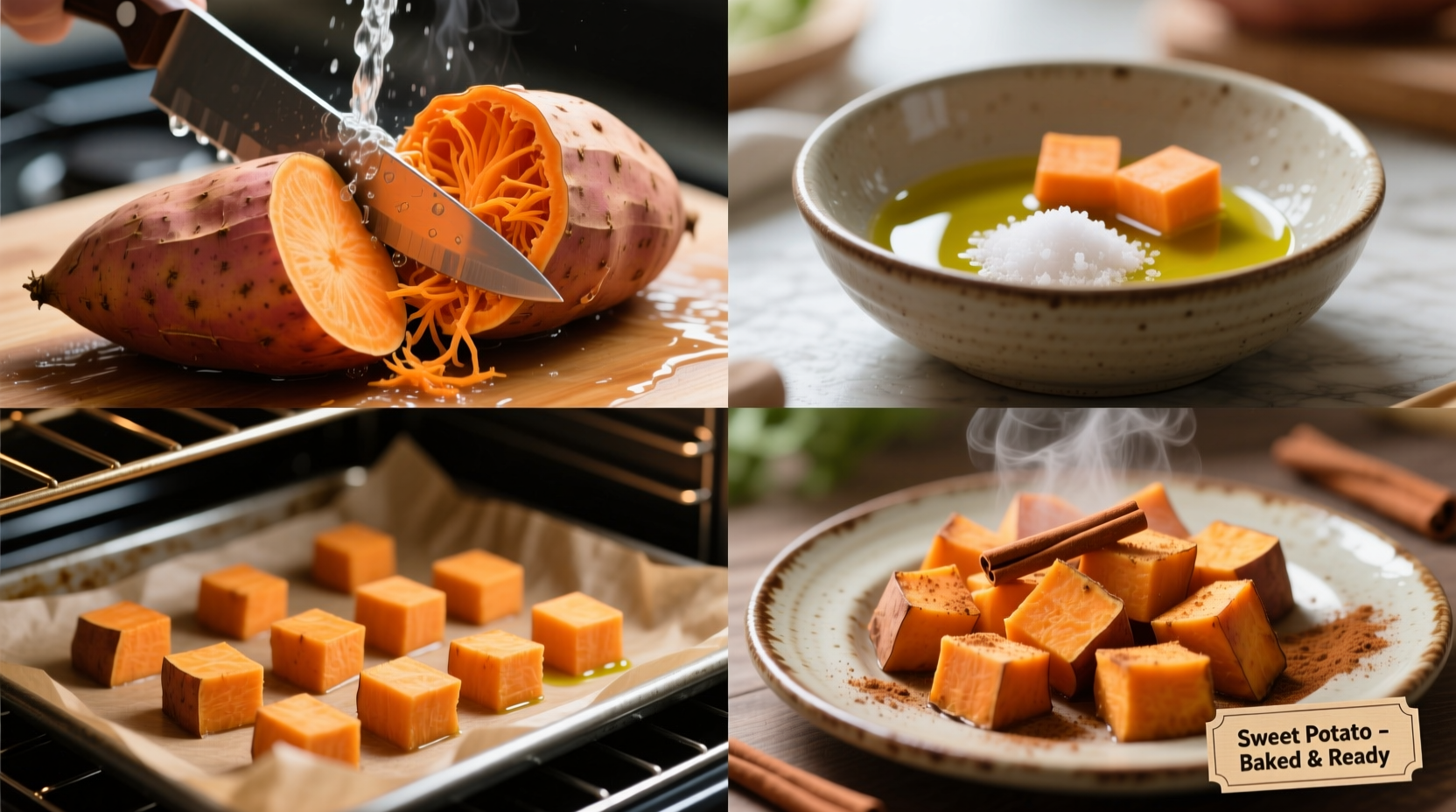
Peel only when necessary. While the skin is edible and rich in fiber and antioxidants, it can be tough in some preparations. Use a sharp vegetable peeler or paring knife. For even cooking, cut into uniform shapes:
- Cubes (½–¾ inch): Ideal for roasting, sautéing, or adding to grain bowls.
- Wedges: Cut lengthwise into 4–6 pieces for crispy roasted sides.
- Coins: Sliced crosswise for air frying or layering in gratins.
- Whole: Baked or steamed intact for maximum moisture retention.
After cutting, submerge in cold water if not cooking immediately to prevent oxidation and starch buildup on surfaces.
Cooking Methods Compared
Different techniques yield vastly different results. Choose based on desired outcome:
- Roasting (400–425°F / 200–220°C): Toss cubes or wedges with olive oil, salt, and optional spices (cinnamon, smoked paprika, cumin). Spread on a parchment-lined sheet pan. Roast 25–35 minutes, flipping halfway, until deeply caramelized and tender inside. High heat promotes Maillard browning and intensifies sweetness.
- Baking Whole: Prick whole sweet potatoes with a fork. Place directly on oven rack or baking sheet. Bake at 400°F (200°C) for 45–60 minutes depending on size. Skin becomes crisp; interior turns luxuriously soft. Best for eating plain, stuffing, or mashing.
- Steaming: Place chunks in a steamer basket over simmering water. Cover and steam 12–18 minutes until fork-tender. Preserves nutrients and yields a clean, sweet flavor ideal for baby food or smooth purees.
- Boiling: Submerge in salted water. Bring to a gentle boil and cook 15–20 minutes. Drain thoroughly. More water-soluble nutrients leach out compared to steaming, but this method works well for quick mash bases.
- Air Frying: Toss cut pieces with minimal oil. Cook at 380°F (190°C) for 18–22 minutes, shaking basket once. Achieves crisp exterior with moist interior—excellent alternative to deep frying.
- Grilling: Par-cook first (steam or boil briefly), then slice and grill over medium heat. Adds smoky complexity. Brush with glaze (e.g., maple-mustard) during final minutes.
Pro Tip: To enhance natural sweetness through enzymatic conversion, bake sweet potatoes at a low temperature (around 200–250°F / 95–120°C) for 2–3 hours. This slow process activates amylase enzymes that convert starch into maltose, resulting in a noticeably sweeter result.
Culinary Applications by Meal Type
Sweet potatoes function across courses and cuisines:
- Breakfast: Shredded raw into hash browns; cubed and roasted for breakfast bowls; mashed into pancake batter.
- Lunch: Cold-roasted cubes in salads; sliced in wraps; blended into creamy soups.
- Dinner: As a side dish glazed with herbs; stuffed with beans and grains; incorporated into stews and tagines.
- Baking & Desserts: Pureed into pies, puddings, muffins, and brownies—replaces up to half the fat in recipes while adding moisture and sweetness.
Variants & Types
Not all sweet potatoes behave the same way in cooking. Recognizing the differences ensures proper application.
| Type | Flesh Color | Texture | Sweetness | Best Uses |
|---|---|---|---|---|
| Garnet | Deep orange | Moist, soft when cooked | High | Roasting, mashing, baking, desserts |
| Jewel | Bright orange | Very moist | Very high | Similar to Garnet; excellent for purees |
| Beauregard | Orange-red | Moist, fast-cooking | High | Commercial standard; good all-purpose |
| Okinawan | Vibrant purple | Firm, less sweet | Moderate | Steaming, stir-fries, sushi rolls, visual appeal |
| Japanese (Satsuma-imo) | Creamy white/yellow | Dry, chestnut-like | Mild, nutty | Roasting, frying, tempura, savory dishes |
| White/Firmer | Pale cream | Dense, holds shape | Low to moderate | Casseroles, stews, rice dishes where texture matters |
When selecting, consider your end goal: high-moisture orange types excel in moist applications like mashes and pies, while drier, starchier white or Japanese varieties work better in dishes requiring structural stability.
Comparison with Similar Ingredients
Sweet potatoes are often confused with other root vegetables. Understanding distinctions prevents substitution errors.
| Ingredient | Family | Taste | Texture When Cooked | Substitution Notes |
|---|---|---|---|---|
| Yam (True) | Dioscoreaceae | Starchy, neutral | Very dry, fibrous | Rarely interchangeable; requires longer cooking |
| Regular Potato | Solanaceae (nightshade) | Earthy, mild | Varies (mealy/waxy) | Can substitute in savory dishes, but lacks sweetness |
| Parsnip | Apiaceae (carrot family) | Sweet, peppery | Firm, slightly woody | Good in roasts, but more pungent; lower sugar content |
| Pumpkin | Cucurbitaceae | Mildly sweet | Soft, watery | Can replace in purees, but higher moisture; needs thickening |
\"The biggest mistake I see is treating all orange roots the same. A Garnet sweet potato will collapse in a stew where a white-fleshed one holds up. Know your variety—it’s as important as knowing your onion.\"
—Chef Elena Torres, Culinary Instructor, National Root Vegetable Institute
Practical Tips & FAQs
Q: Should I peel sweet potatoes before cooking?
A: Not always. Leaving the skin on during roasting or baking adds texture and nutrients. Peel after cooking if preferred. For purees or fine-textured dishes, peel beforehand.
Q: Why did my roasted sweet potatoes turn out soggy?
A: Excess moisture is the culprit. Ensure pieces are dried after washing, avoid overcrowding the pan, and preheat the baking sheet. Toss with just enough oil to coat—too much steams instead of sears.
Q: Can I freeze cooked sweet potatoes?
A: Yes. Cool completely, then freeze in airtight containers for up to 6 months. Reheat in oven or microwave. Texture may soften slightly, making them ideal for mashes or soups.
Q: Are sweet potatoes healthier than white potatoes?
A: Both have nutritional strengths. Sweet potatoes contain significantly more vitamin A (from beta-carotene), vitamin C, and fiber. White potatoes offer more potassium and resistant starch when cooled. Neither is categorically \"healthier\"—context and preparation matter most.
Q: How do I prevent discoloration after cutting?
A: Submerge cut pieces in cold water until ready to cook. Add a splash of lemon juice or vinegar to inhibit oxidation, though this may slightly alter flavor.
Q: What seasonings pair best with sweet potatoes?
A: Balance sweetness with contrasting flavors:
- Warm spices: Cinnamon, nutmeg, ginger, allspice
- Savory herbs: Rosemary, thyme, sage
- Umami boosters: Soy sauce, miso, smoked paprika
- Acidic elements: Lime juice, apple cider vinegar, pickled onions
- Heat: Cayenne, chipotle, black pepper
Meal Prep Hack: Roast large batches on Sunday. Use throughout the week in grain bowls, tacos, scrambled eggs, or blended into soup. Keeps refrigerated for 5 days.
Substitutions in Recipes
In a pinch, substitutes depend on the dish:
- For mashing: Pumpkin, butternut squash (reduce liquid)
- For roasting: Carrots, parsnips, rutabaga
- For baking: Regular potato (add sugar/honey to compensate)
- For desserts: Canned pumpkin (use ¾ amount due to higher water)
Summary & Key Takeaways
Mastering how to prepare and cook a sweet potato elevates everyday meals with minimal effort. These nutrient-rich roots offer unmatched versatility, capable of transforming from humble side dish to centerpiece ingredient. Success lies in understanding variety differences, applying appropriate cooking methods, and balancing their natural sweetness with complementary flavors.
Key points to remember:
- Sweet potatoes are not yams—choose based on flesh color and moisture content.
- Orange-fleshed types (Garnet, Jewel) are moist and sweet; best for roasting and mashing.
- Drier, white or Japanese varieties hold shape better in stews and stir-fries.
- Roasting at high heat maximizes caramelization; slow baking increases sweetness enzymatically.
- Never refrigerate raw sweet potatoes—they degrade in cold storage.
- Pair with warm spices, herbs, acid, or umami to balance sweetness.
- Batch-cook for meal prep efficiency across breakfast, lunch, and dinner.
Final Thought: Treat sweet potatoes not as a seasonal novelty, but as a year-round staple. With thoughtful preparation, they deliver depth, nutrition, and satisfaction in countless forms—proving that one of the world’s oldest cultivated crops remains profoundly relevant in the modern kitchen.