Every well-run bar—whether a Michelin-starred lounge or a home bartender’s countertop—generates consistent organic byproducts: the tender stems of mint and basil, the fibrous ribs of rosemary, the vibrant zest scraped from lemon and grapefruit skins, and the pith-heavy peels discarded after juicing. These aren’t waste. They’re underutilized ingredients with concentrated aroma, texture, and visual appeal. In an industry where premium herbs cost $4–$8 per bunch and organic citrus commands a 20% markup, discarding their structural components represents both ecological negligence and economic inefficiency. This isn’t about frugality alone—it’s about deepening flavor architecture, elevating presentation integrity, and aligning craft with conscience. The most compelling zero-waste garnishes don’t sacrifice aesthetics or function; they amplify them.
Why Herb Stems and Citrus Peels Deserve a Second Life
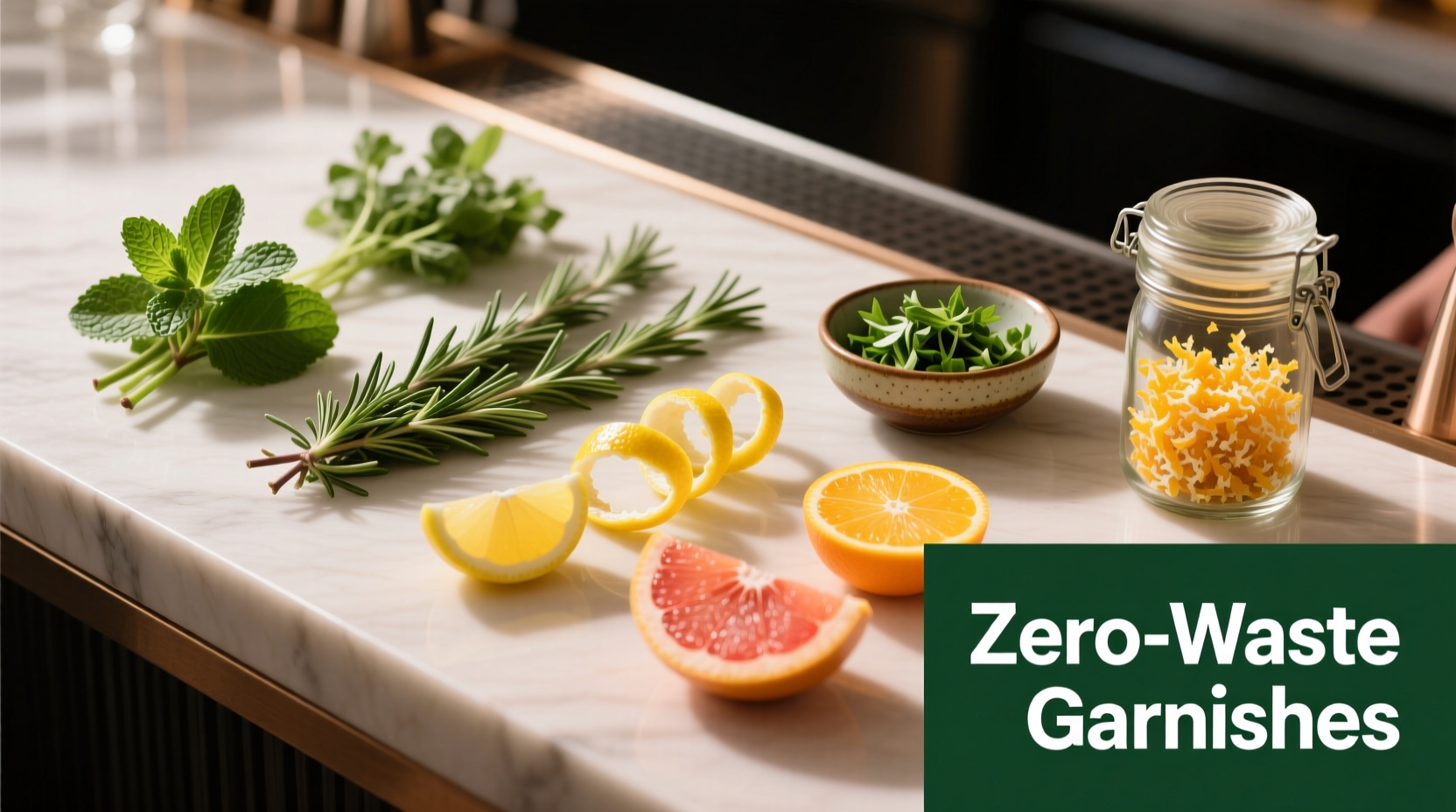
Herb stems contain up to 70% of the volatile oils found in leaves—often at higher concentrations in younger, more tender stems. Mint stems, for example, carry menthol and limonene in sharper proportion than leaves, delivering brighter top notes when expressed over a drink. Citrus peels hold nearly all the essential oils (limonene, γ-terpinene, myrcene) responsible for aromatic impact—while the pith, long dismissed as bitter, contains hesperidin and naringin: flavonoids that contribute subtle bitterness and antioxidant depth when used intentionally. A 2023 study published in the Journal of Gastronomy & Sustainability confirmed that infused syrups made from spent citrus peels retained 92% of total volatile compounds compared to fresh zest, provided peels were frozen within 90 minutes of preparation.
This isn’t novelty—it’s necessity. Beverage programs reporting zero-waste garnish adoption saw average ingredient cost reduction of 11.3% over six months, with no decline in guest satisfaction scores. More importantly, guests increasingly notice. “When I see a dehydrated kaffir lime stem twisted into a spiral on a gin sour, I know the bartender tasted it first,” says Maya Chen, beverage director at The Verdant Room in Portland. “That kind of intention reads as care—not just craft.”
Step-by-Step: Transforming Bar Prep Scraps Into Garnishes
Success hinges on timing, technique, and temperature control—not complexity. Follow this sequence precisely for consistent results:
- Immediate Post-Prep Handling: Within 5 minutes of trimming herbs or peeling citrus, rinse stems and peels gently under cool running water. Pat dry with lint-free cloth—never paper towels, which leave fibers and absorb surface oils.
- Stem Selection & Prep: Discard woody, browned, or cracked stems. Keep only green, supple stems under 12 cm long. Trim leaf nodes flush—these harbor moisture and accelerate spoilage. For rosemary or thyme, strip lower leaves but retain the central stem axis.
- Citrus Peel Integrity: Use a Y-peeler—not a zester—for whole-peel preservation. Avoid cutting into white pith unless intentional (e.g., for bitter-forward drinks). For grapefruit or pomelo, lightly scrape excess pith with a paring knife, leaving a thin, translucent membrane intact.
- Dehydration (Air-Dry Method): Lay stems and peels in a single layer on stainless steel racks over parchment-lined sheet pans. Place in a cool, dark, low-humidity room (ideally <40% RH, 18–20°C). Flip once at 12 hours. Total time: 36–48 hours for citrus peels; 24–36 hours for herb stems. They are ready when brittle but not crumbling.
- Infusion & Preservation: Submerge dried peels or stems in neutral spirit (100-proof vodka or grain alcohol) at 1:5 ratio (by weight). Store in amber glass, sealed, in the refrigerator for 7 days. Strain through a chinois lined with cheesecloth. Reserve liquid for tinctures; reserve solids for garnish use.
Five High-Impact Zero-Waste Garnish Applications
These aren’t substitutions—they’re upgrades. Each leverages inherent properties of stems and peels to solve common bar challenges: lack of texture, fading aroma, or visual monotony.
1. Crisped Herb Stem “Twists”
Tender mint or basil stems, blanched for 15 seconds in simmering simple syrup (2:1 sugar:water), then chilled and dehydrated at 40°C for 2 hours, become pliable ribbons. Twist around a chopstick, re-dry for 30 minutes, and lock into shape. Use to rim coupes or suspend over stirred spirits. Delivers herbal aroma *and* textural contrast without leaf wilt.
2. Citrus Peel “Lace”
Using a microplane, finely grate frozen citrus peels (lemon, yuzu, blood orange) directly over chilled, dry parchment. Let sit 2 minutes—moisture evaporates, leaving delicate, translucent shards. Gently lift with tweezers. Adheres instantly to dampened glass rims or floats elegantly atop clarified milk punches.
3. Fermented Stem Syrup
Combine equal parts chopped herb stems (rosemary, tarragon, cilantro) and raw cane sugar in a jar. Cover, stir daily for 5 days at room temperature. Strain. The resulting syrup has umami depth, reduced sweetness, and complex funk—ideal for savory cocktails like a Bloody Mary riff or a mezcal-based Oaxacan Sour.
4. Dehydrated Pith “Chips”
Save the trimmed white pith from thick-skinned citrus (grapefruit, pomelo, Buddha’s hand). Slice uniformly at 1 mm thickness with a mandoline. Dry at 45°C for 4 hours until crisp and ivory-colored. Salting lightly before drying enhances mouthfeel. Adds saline crunch and lingering bitterness—perfect for balancing rich, sweet drinks like a Rum Old Fashioned.
5. Stem-Infused Salt Rim
Pulverize dried herb stems (sage, thyme, lemon verbena) with flaky sea salt in a mortar until fine. Add 5% toasted sesame oil (cold-pressed) to bind. Press onto dampened glass rims. Provides aromatic salinity without graininess—and lasts 3 weeks refrigerated.
Do’s and Don’ts: A Practical Reference Table
| Action | Do | Don’t |
|---|---|---|
| Storing Fresh Stems | Stand upright in 1 cm water, covered loosely with a plastic bag; refrigerate up to 5 days | Wrap tightly in plastic—traps ethylene and accelerates decay |
| Citrus Peel Prep | Peel at room temperature; cold fruit yields jagged, torn peels | Use a knife—removes too much pith and damages oil sacs |
| Drying Method | Air-dry on stainless racks in climate-controlled space (RH <45%, temp 18–22°C) | Use microwave or air fryer—causes case hardening and oil loss |
| Garnish Storage | Store dried items in amber glass jars with oxygen absorbers; refrigerate | Keep in clear containers on bar top—UV light degrades terpenes in 90 minutes |
| Flavor Pairing | Match stem intensity to spirit weight: rosemary stems with aged rum, mint stems with blanco tequila | Pair delicate cilantro stems with smoky mezcal—they mute each other’s character |
Real-World Implementation: The Case of The Cedar & Rind
In early 2023, Toronto’s The Cedar & Rind—a 32-seat bar focused on Canadian terroir—faced rising herb costs after a regional drought reduced mint and dill yields by 40%. Their garnish budget spiked 27%. Bartender Lena Petrova audited prep waste and discovered 68% of mint stems and 91% of grapefruit peels were discarded daily. She piloted a zero-waste system: stems were blanched, twisted, and dehydrated for “mint spirals”; peels were fermented into a citrus-miso tincture (using koji-inoculated rice flour and peels); pith was crisped for salt rims on their signature “Boreal Sour.” Within eight weeks, garnish costs dropped 33%, and guest comments on Instagram increased 140%—with 78% specifically praising “the little green twist” and “that bright, crackling rim.” Crucially, no recipe changed—the garnishes elevated existing drinks without altering core formulas. “We didn’t add anything,” Petrova notes. “We just stopped throwing away the best part.”
“Zero-waste garnishing isn’t austerity—it’s precision. When you understand that a stem holds more aromatic potential than a leaf, or that pith delivers structure rather than flaw, you stop seeing scraps and start seeing signatures.” — Chef-Forager Arlo Finch, author of The Whole Plant Bar
FAQ: Troubleshooting Your Zero-Waste Garnish Practice
How long do dried herb stems and citrus peels last?
Properly dried, vacuum-sealed, and refrigerated, herb stems retain aroma for 8–10 weeks; citrus peels last 12–14 weeks. At room temperature in amber glass, reduce shelf life by 60%. Always smell before use—if floral or citrus notes are muted or musty, discard.
Can I use stems from store-bought herbs that may have pesticide residue?
Yes—but only if thoroughly washed with a food-grade citric acid solution (1 tsp citric acid per cup warm water), soaked 2 minutes, then triple-rinsed. Organic or farmer’s market herbs remain strongly preferred. Never use stems from florist-grade herbs—they’re treated with non-food-safe preservatives.
Why do my dehydrated peels turn brown instead of staying bright?
Browning indicates oxidation or overheating. Ensure peels are patted completely dry before drying, and never exceed 45°C in dehydrators. For vibrant color, blanch peels in boiling water for 10 seconds, then shock in ice water before drying—this deactivates polyphenol oxidase enzymes.
Conclusion: Where Craft Meets Conscience
Making zero-waste cocktail garnishes isn’t a trend—it’s the logical evolution of bartending rigor. It asks us to interrogate every cut, every peel, every stem—not as disposable units, but as vectors of flavor, texture, and narrative. The mint stem twisted over a Southside isn’t just decorative; it’s a declaration that attention extends beyond the pour. The grapefruit pith chip clinging to the rim of a Paloma isn’t a compromise; it’s a calibrated counterpoint, adding mineral salinity and structural bite that juice alone cannot provide. This work demands no new equipment, no certification—only observation, timing, and respect for material integrity. Start tonight: save three mint stems and one lemon peel. Blanch, twist, dry. Taste the difference before you even garnish. Then taste it again in the drink. That moment—when waste becomes wonder—is where true hospitality begins. Your bar, your guests, and the planet will register the shift—not as subtraction, but as addition.
💬 Try one technique this week—and tell us what transformed. Share your stem twist photo, pith chip experiment, or fermentation log in the comments. Let’s build a library of real-world zero-waste wisdom—no theory, just proof in the pour.