Popcorn is more than a snack—it’s a ritual. Whether you're settling in for a movie night or need a quick, satisfying bite, few things beat the crisp crackle of perfectly popped corn. But if your batches often end with half-popped kernels or stubborn duds at the bottom of the bowl, you’re not alone. The key isn’t luck; it’s understanding the science of popping and applying precise techniques. With the right method, moisture control, heat management, and equipment, you can achieve near-perfect popping rates—every time.
The Science Behind a Perfect Pop
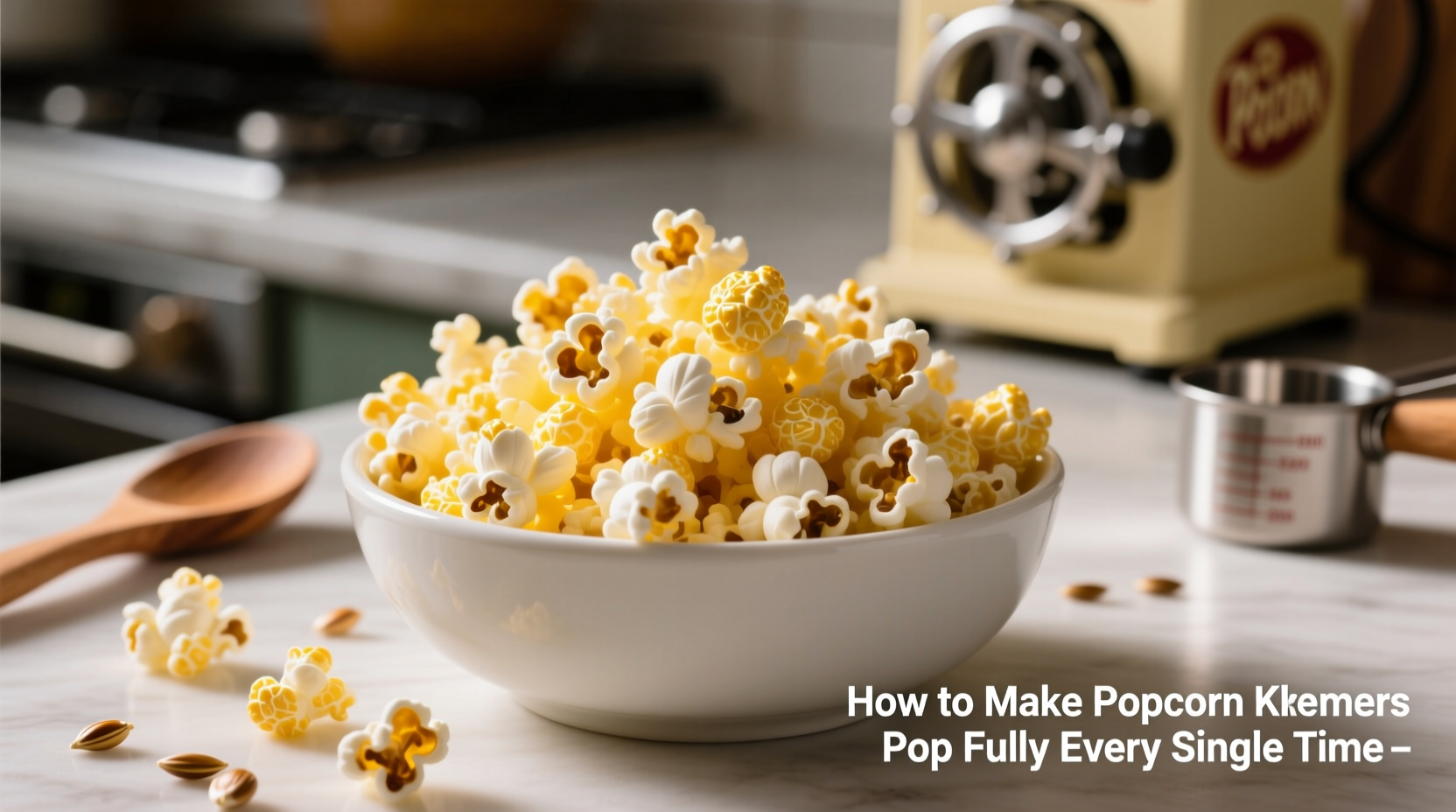
Popcorn isn’t just heated corn—it’s a mini pressure chamber. Each kernel contains a small amount of water stored inside a circle of dense starch. When heated, that moisture turns to steam, building pressure until the hull ruptures explosively. The starch expands and cools instantly, forming the fluffy white structure we recognize as popcorn.
For this process to work flawlessly, three conditions must be met:
- Moisture content between 13–14%: Too dry, and the kernel won’t generate enough steam. Too wet, and the heat dissipates before pressure builds.
- Even, controlled heating: Rapid or uneven heat causes some kernels to burst too soon while others lag behind.
- Strong, intact hulls: Cracked or damaged shells leak steam, preventing full expansion.
American food scientist Dr. Bruce Hamaker, who has studied starch behavior in grains, explains:
“Popcorn is one of the few foods where internal moisture and structural integrity are equally critical. It’s not just about heat—it’s about timing and balance.” — Dr. Bruce Hamaker, Purdue University Department of Food Science
This delicate equilibrium means that even minor deviations in storage, temperature, or method can sabotage your results.
Step-by-Step Guide to Fully Popped Kernels
Follow this detailed process to maximize your popping success rate. This method works whether you're using a stovetop, pot, or electric popper.
- Select high-quality, fresh popcorn kernels
Purchase from reputable brands or suppliers that rotate stock frequently. Avoid pre-packaged microwave bags if your goal is full popping control. Look for kernels labeled “gourmet” or “theater-style,” which are often sorted for uniform size and moisture. - Test kernel freshness (optional but effective)
Take 10 random kernels and pop them in a dry pan over medium heat. If fewer than 7 pop completely, the batch is likely too old or dried out. - Preheat your oil to the ideal temperature
Use oils with high smoke points like coconut, avocado, or refined sunflower oil. Heat 2–3 tablespoons in a heavy-bottomed pot over medium heat. To test readiness, drop in two kernels. When both pop, the oil is ready—typically around 400–460°F (204–238°C). - Add kernels in a single layer
Pour in enough kernels to cover the bottom of the pot with one layer—about ½ cup for a 3-quart pot. Overcrowding leads to uneven heating and unpopped centers. - Cover with a lid and shake frequently
Use a well-fitting lid to trap steam. Shake the pot gently every 15–20 seconds to move kernels from the hot bottom to cooler areas, ensuring even exposure. - Remove from heat at the right moment
Once pops slow to 2–3 seconds between bursts, remove the pot from the burner. Leaving it on risks burning already-popped corn while trying to force the last few kernels. - Wait 30 seconds before opening
Let residual heat finish any stragglers. Opening too early releases steam needed for final pops.
Storage and Moisture Control: The Hidden Factor
Even the best technique fails with poorly stored kernels. Popcorn loses moisture over time, especially when exposed to air, light, or temperature swings. After six months, home-stored kernels may drop below the 13% moisture threshold needed for reliable popping.
To restore older kernels, rehydration can help—but only if the hulls are intact. Here’s how:
- Place stale kernels in a clean mason jar.
- Add 1 tablespoon of water per ½ cup of kernels.
- Seal tightly and shake gently.
- Let sit for 1–2 days, shaking once daily.
- Test-pop a few after 48 hours.
Note: Do not attempt this with already cracked or dusty kernels. Water will seep in and cause sogginess, not steam.
For long-term storage:
- Keep kernels in an airtight glass or metal container.
- Store in a cool, dark cupboard—never above the stove or near appliances that generate heat.
- Avoid refrigeration, which introduces condensation.
Do’s and Don’ts of Popcorn Kernel Care
| Do | Don’t |
|---|---|
| Buy kernels in sealed, opaque containers | Buy bulk kernels displayed in open bins under lights |
| Use within 6 months of purchase | Assume kernels last indefinitely |
| Rehydrate old kernels carefully | Soak kernels before every use |
| Store in airtight containers away from sunlight | Leave kernels in paper bags or thin plastic |
| Shake the pot during popping | Let kernels sit still on a hot surface |
Real Example: From 60% to 98% Popping Rate
Sarah, a home cook from Portland, had long struggled with inconsistent popcorn. Her batches averaged 60% full pops, with dozens of hard, yellow beads sinking to the bowl’s base. She blamed her stovetop until she began tracking variables.
She switched from generic grocery-store kernels to a specialty brand sold in vacuum-sealed bags. She also started preheating her oil with test kernels and upgraded to a heavy-bottomed Dutch oven. Finally, she began storing her supply in a stainless steel container instead of the original bag.
Within two weeks, her failure rate dropped dramatically. A count of 100 kernels revealed only two unpopped—achieving a 98% success rate. “I didn’t realize how much difference storage and oil temp made,” she said. “Now my kids fight over who gets the last bite instead of picking out the rocks.”
Equipment Comparison and Optimization
Different tools deliver different results. While personal preference plays a role, some methods offer better control for maximizing pops.
Stovetop (Best for Control)
Allows precise temperature regulation and physical agitation. Heavy pots distribute heat evenly, reducing hot spots. Ideal for achieving consistent, full pops.
Electric Hot Air Popper (Good, but Limited)
Uses forced hot air instead of oil, producing lighter popcorn. However, airflow can be uneven, and older models struggle with moisture distribution. Newer models with adjustable heat settings perform better.
Whirley Pop (Excellent for Enthusiasts)
A hand-cranked stovetop popper with a rotating paddle that continuously mixes kernels. Prevents scorching and ensures even heating. Frequently cited by popcorn aficionados for near-total popping efficiency.
Microwave Bags (Least Reliable)
Convenience comes at a cost. Pre-packaged bags often contain aged kernels, excess oil, and chemical liners. Popping rates average 70–80%, with many duds due to uneven microwave energy distribution.
Tip: If using a microwave, place the bag flat and centered. Rotate halfway through for more even exposure.Checklist: Achieve Full Pop Every Time
Before your next batch, run through this checklist:
- ✅ Kernels are no older than 6 months
- ✅ Stored in an airtight, opaque container
- ✅ Oil is preheated (test with 2 kernels)
- ✅ Pot is heavy-bottomed and clean
- ✅ Kernels are in a single layer, not stacked
- ✅ Lid is on, and pot is shaken every 15–20 seconds
- ✅ Removed from heat when pops slow to 2–3 seconds apart
- ✅ Left undisturbed for 30 seconds before opening
Frequently Asked Questions
Why do some kernels never pop?
Kernels fail to pop primarily due to low moisture content or cracks in the hull. If steam escapes before pressure builds, the kernel cannot expand. Age, poor storage, and physical damage are common causes.
Can I reuse unpopped kernels?
No. “Old maids” (unpopped kernels) have already lost most of their moisture. Re-popping them will not work and risks burning the new batch. Discard them.
Does adding more oil increase popping?
No. Oil conducts heat but doesn’t penetrate the kernel. Excess oil makes popcorn greasy and can lower the effective temperature by absorbing heat. Use just enough to coat the pot bottom.
Final Thoughts and Call to Action
Perfect popcorn isn’t magic—it’s method. By respecting the physics of steam pressure, managing moisture, and refining your technique, you can turn a hit-or-miss snack into a predictable delight. The difference between a bowl full of duds and one of cloud-like flakes lies in attention to detail: fresh ingredients, proper storage, steady heat, and timely action.
Start with one change—upgrade your kernels, invest in a better pot, or fine-tune your timing. Track your results. Soon, you’ll develop an instinct for the exact moment to lift the pot from the flame, greeted each time by the satisfying silence that follows a perfect pop.
💬 Did you try the rehydration trick or upgrade your gear? Share your results, tips, or favorite seasoning blends in the comments—let’s build the ultimate popcorn playbook together.