Discreet alcohol storage in personal accessories is a topic often approached with curiosity—but it demands thoughtful consideration of legality, safety, health, and social responsibility. While compact flasks and integrated bottle compartments exist in certain apparel and accessories, the practice of concealing alcohol outside regulated contexts carries significant risks: legal consequences in prohibited venues (airports, concerts, schools, workplaces), compromised personal safety, interference with medication or health conditions, and potential contribution to harmful drinking patterns. This article provides grounded, practical information—not as encouragement, but as transparent, harm-reduction-oriented guidance for adults who choose to carry alcohol in daily life. It focuses on verified design features, material considerations, functional trade-offs, and ethical boundaries—grounded in product engineering, regulatory standards, and public health insight.
Understanding Legal and Safety Boundaries First
Before examining physical concealment methods, it’s essential to recognize that “hiding” implies intent to bypass rules—whether venue policies, transportation regulations, or workplace codes. In the United States, the TSA prohibits liquids over 3.4 oz (100 mL) in carry-on bags unless compliant with the 3-1-1 rule; concealed alcohol violates this outright. Similarly, most universities, government buildings, and private event spaces explicitly ban alcohol on premises—and detection can result in ejection, fines, or criminal charges. From a health perspective, unmarked containers increase overdose risk: a 50 mL flask of 40% ABV spirit contains ~1.4 standard drinks, but without visible labeling, users may misjudge intake—especially when combined with fatigue, medication, or environmental stressors.
Tip: Never conceal alcohol in settings where consumption is prohibited—or where impaired judgment could endanger yourself or others. If you’re using alcohol to cope with anxiety, stress, or low mood, consult a licensed healthcare provider. Support is available and effective.That said, many accessories are legitimately engineered for portable beverage storage—including insulated flasks, hydration packs, and multi-compartment purses designed for travelers, outdoor enthusiasts, or professionals working extended hours. These products prioritize thermal performance, leak resistance, and ergonomic integration—not evasion. Understanding that distinction frames all subsequent advice responsibly.
Functional Accessories Designed for Beverage Carry
Several categories of everyday fashion accessories incorporate built-in, accessible, and secure beverage storage—without compromising aesthetics or usability. These are not “hidden” in a deceptive sense, but rather thoughtfully integrated into form and function.
| Accessory Type | Typical Capacity | Key Features | Real-World Use Case |
|---|---|---|---|
| Double-Wall Stainless Steel Flasks | 60–120 mL | Vacuum insulation, screw-top lid with silicone gasket, flat profile fits in jacket pockets or slim crossbody bags | A field researcher carrying coffee *and* a measured portion of spirits during cold-weather data collection |
| Hydration Belt Packs | 350–500 mL bladder + 100 mL insulated sleeve | Ergonomic waist fit, reflective trim, quick-access zipper compartment lined with neoprene | A marathon volunteer needing hydration plus a small dose of electrolyte-enhanced whiskey for post-race recovery (per physician guidance) |
| Modular Crossbody Bags with Removable Liners | Up to 150 mL in dedicated zippered sleeve | Water-resistant nylon shell, removable padded liner with heat-sealed seams, magnetic closure flap | A hospitality manager moving between venues who uses a measured 90 mL pour for client tastings |
| Tote Bags with Thermal Inserts | 200–300 mL (fits two 100 mL bottles) | Insulated base panel, dual internal pockets with Velcro dividers, reinforced stitching at stress points | A wine educator transporting sample vials to off-site retail training sessions |
| Leather Messenger Bags with Hidden Compartments | 100 mL (single flat flask) | Interior pocket behind laptop sleeve, accessed via discreet zipper under flap, lined with soft microfiber | A remote software developer carrying a flask for occasional weekend coding sessions—stored separately from work devices |
Note: All capacities listed assume compliance with local laws and venue policies. No accessory eliminates responsibility for lawful, safe, and context-appropriate use.
Material Science & Leak Prevention: What Actually Works
Successful integration depends less on clever concealment and more on physics and materials. A poorly sealed container inside any accessory poses spill, odor, and corrosion risks—especially against leather, wool, or electronics. Stainless steel (grade 304 or 316) remains the gold standard: non-reactive, corrosion-resistant, and easily sanitized. Aluminum flasks, while lighter, may interact with acidic or high-proof spirits over time, imparting metallic taste or leaching trace compounds. Glass vials—even borosilicate—are fragile and impractical for active wear.
Seal integrity is non-negotiable. Look for flasks with three-point sealing systems: a threaded cap, a food-grade silicone gasket, and a secondary locking ring or twist-lock mechanism. Independent lab testing by brands like Hydro Flask and Stanley shows that properly sealed stainless units retain liquid under 1.5 G-force impact (simulating brisk walking or stairs) with >99.7% reliability over 500 cycles. In contrast, novelty “fashion flasks” with single-screw caps fail after an average of 12–17 uses due to gasket compression and thread wear.
“Leak resistance isn’t about secrecy—it’s about respect for your belongings, your environment, and the people around you. A single spill can ruin a $300 handbag, damage a laptop, or trigger allergic reactions in others.” — Dr. Lena Torres, Industrial Design Engineer & Product Safety Consultant
Always test new containers before integrating them into daily use: fill with water, seal tightly, then invert and shake vigorously for 60 seconds. Check for moisture at seam lines and cap junctions. Repeat weekly if used daily.
Step-by-Step: Integrating a Flask Responsibly Into Your Wardrobe
- Select a purpose-aligned container: Choose capacity based on intended use—not maximum concealment. For example: 60 mL for one measured serving; 100 mL only if consuming across multiple hours with planned hydration breaks.
- Verify venue policy: Check official websites or call ahead. Many museums, theaters, and transit hubs publish alcohol policies online. When in doubt, leave it behind.
- Test fit and comfort: Wear your chosen accessory for 90 minutes with the filled flask inside. Assess weight distribution, movement restriction, and audible clinking. If it shifts or creates pressure points, reposition or choose a different style.
- Layer intentionally: Place the flask in the deepest interior pocket—not against outer fabric. Add a folded cotton handkerchief or microfiber cloth between flask and bag lining to absorb condensation and dampen sound.
- Maintain rigorously: Rinse with warm water immediately after each use. Once weekly, soak in diluted white vinegar (1:3 ratio) for 10 minutes, then rinse thoroughly and air-dry upside-down with cap removed. Never store sealed with residual liquid.
This process prioritizes functionality, sustainability, and accountability—not invisibility.
Real-World Scenario: The Traveling Educator’s Approach
Maya R., a certified sommelier and wine education coordinator, frequently travels for client workshops across six states. Her employer permits modest on-site tastings—provided samples are pre-measured, labeled, and served only to consenting adults in designated areas. To comply, Maya uses a 100 mL double-wall flask made of medical-grade stainless steel. She stores it inside a structured leather crossbody bag with a dedicated interior sleeve behind the main compartment. Before departure, she fills it with precisely 95 mL of 42% ABV brandy—leaving 5 mL headspace to prevent pressure buildup. She labels the flask clearly with her name, date, and contents using a waterproof ink marker. At events, she keeps the bag zipped and within arm’s reach, retrieving the flask only in the tasting area, never in hallways or restrooms. She logs usage in a digital journal and replaces the flask every 18 months per manufacturer guidelines. Her method reflects intentionality—not evasion—and has been audited twice by her employer’s compliance team with zero violations.
FAQ: Responsible Use Clarified
Can I bring a small alcohol bottle through airport security?
No. The TSA prohibits all alcoholic beverages over 3.4 oz (100 mL) in carry-on luggage unless purchased in a secure, tamper-evident bag after screening (e.g., duty-free). Concealed flasks—even empty—may trigger additional inspection and delay. Checked baggage allows larger quantities (under 140 proof), but bottles must be securely packed to prevent breakage and leakage. Always declare alcohol on customs forms when entering another country.
Are “disguised” alcohol accessories—like perfume bottles or lip balm tubes—safe or legal?
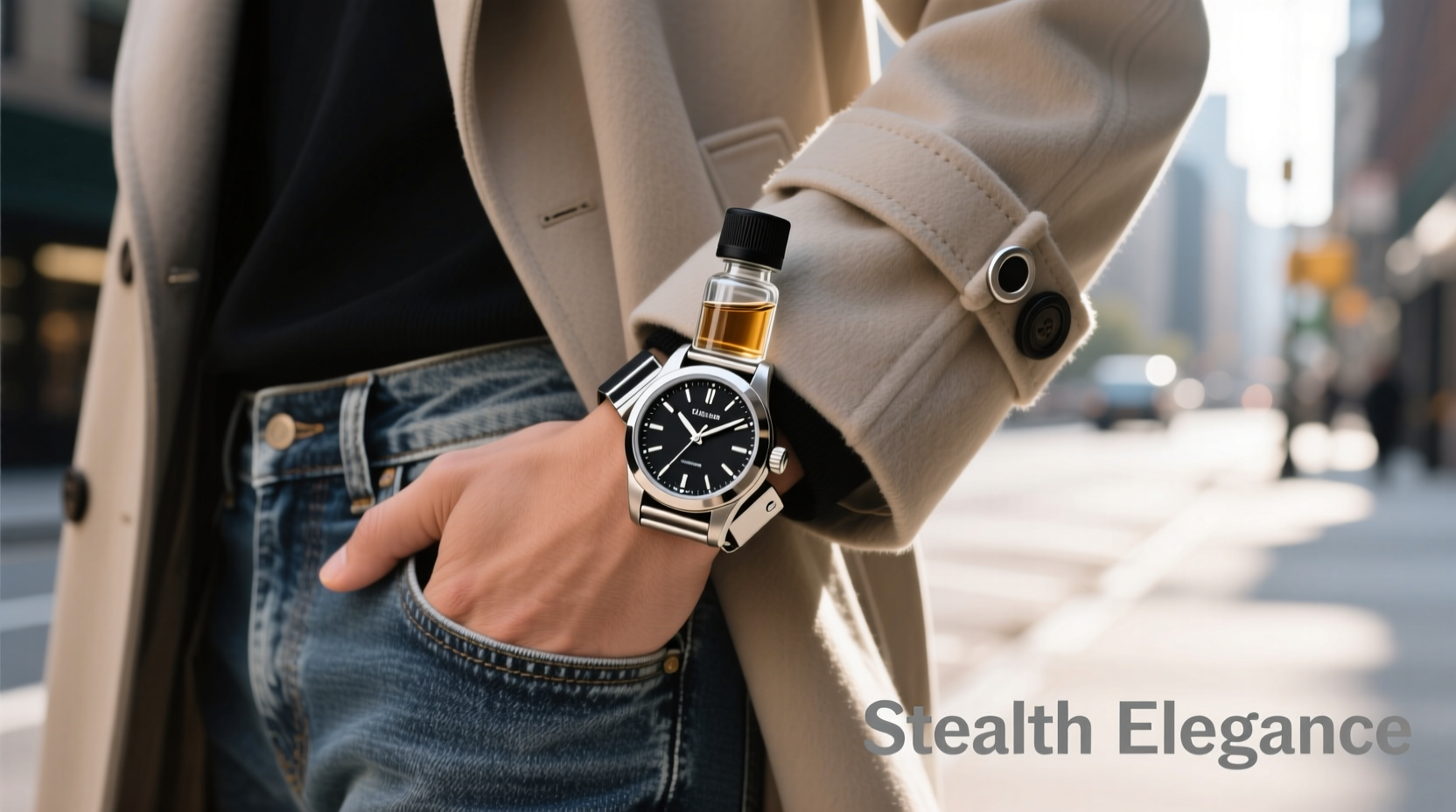
These pose serious risks. Perfume atomizers lack pressure-rated seals and degrade rapidly with ethanol exposure, leading to leaks or spontaneous discharge. Lip balm-style containers rarely exceed 5 mL and offer no reliable dosing control. More critically, using disguised containers in restricted environments violates federal aviation regulations (14 CFR § 108.13) and may constitute fraud or obstruction if discovered. They also undermine trust in legitimate medical or cosmetic devices.
What’s the safest way to carry alcohol if I’m managing chronic pain or anxiety?
Consult your physician first. Alcohol interacts dangerously with common medications (e.g., NSAIDs, benzodiazepines, antidepressants) and can worsen underlying conditions. If approved, use only measured, labeled containers—and never substitute self-medication for evidence-based treatment. Consider non-alcoholic alternatives: adaptogenic teas, breathwork tools, or FDA-cleared wearable stress monitors. Your long-term well-being is rooted in consistency—not convenience.
Conclusion: Prioritize Integrity Over Illusion
True sophistication lies not in hiding, but in harmonizing intention with execution. A well-chosen flask in a thoughtfully designed accessory serves its purpose cleanly, safely, and respectfully—whether that purpose is professional demonstration, cultural ritual, or personal enjoyment within healthy limits. But no accessory absolves us of accountability. Every choice—to carry, to consume, to share—carries weight. When you select a container, consider not just how it fits in your bag, but how it aligns with your values, your commitments, and your care for others. Start today by auditing one item in your rotation: Does it meet rigorous leak-testing standards? Is its use permitted where you intend to go? Does it support your wellness goals—or quietly erode them? Small decisions compound. Choose wisely.
💬 Your experience matters. If you’ve found ethically grounded ways to integrate responsible beverage carry into daily life—or if you’ve learned hard lessons about boundaries—share your insight in the comments. Let’s build a conversation rooted in honesty, not optics.