It’s a headline that’s appeared with increasing frequency: “Step into a Bordeaux château from your living room.” “Tour Napa Valley without booking a flight.” “Taste Barolo while wearing sweatpants.” Virtual reality wine tours have surged in visibility since 2020—and with good reason. They offer unprecedented accessibility, immersive storytelling, and scalable education. But to claim they are *replacing* real-world wine tourism is both inaccurate and misleading. The truth is more nuanced: VR wine experiences are evolving as powerful supplements—not successors—to physical vineyard visits. They expand who can engage with wine culture, deepen pre-trip preparation, support remote learning for trade professionals, and preserve access during global disruptions. Yet they cannot replicate the multisensory alchemy of standing in a sun-warmed vineyard at harvest, smelling petrichor and crushed grapes, feeling gravel underfoot, or sharing a spontaneous toast with a winemaker whose hands bear the marks of decades of labor.
What VR Wine Tours Actually Deliver (and Where They Fall Short)
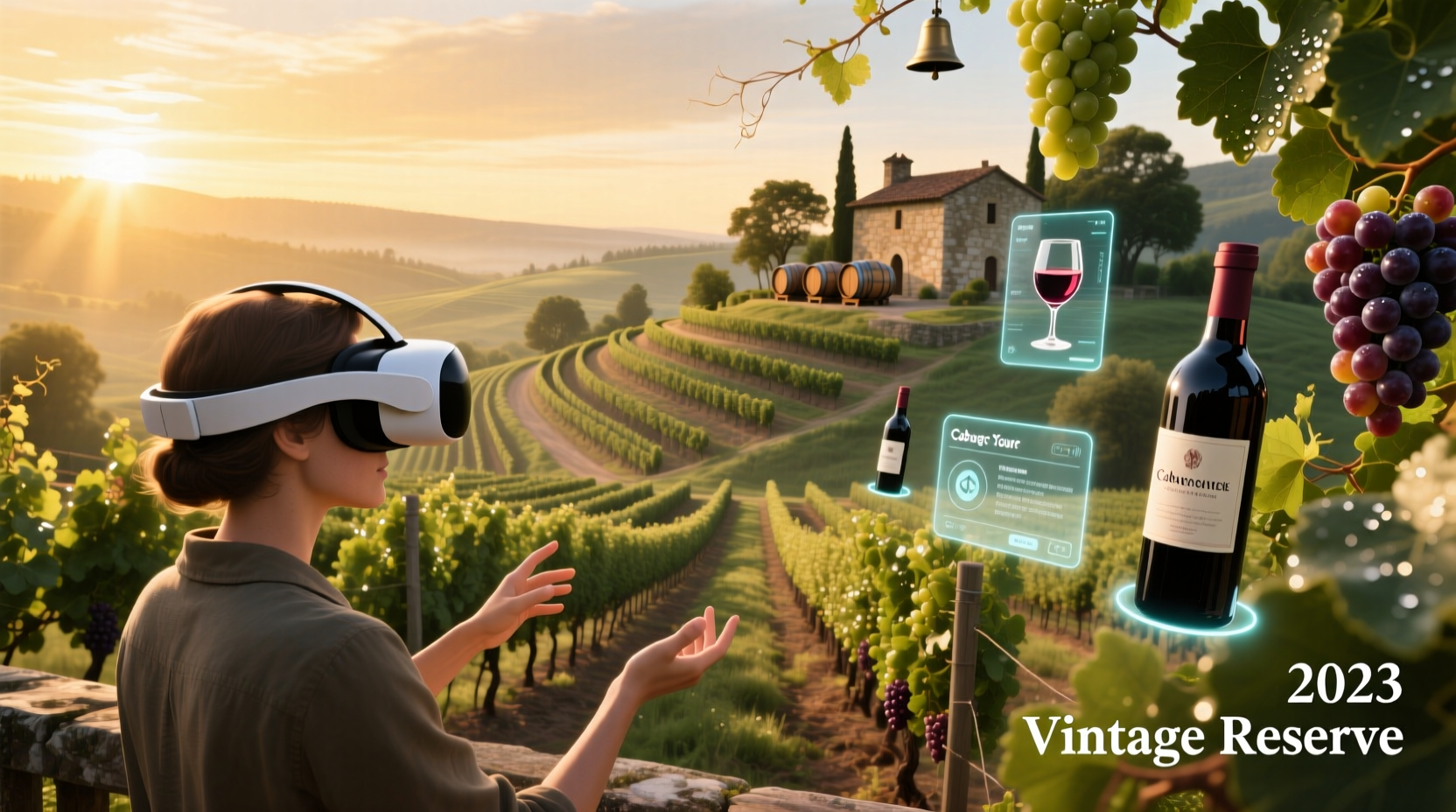
Modern VR wine tours leverage 360° video, photogrammetry, spatial audio, and interactive hotspots to simulate presence in iconic locations—from the steep slate slopes of Germany’s Mosel to the volcanic soils of Sicily’s Mount Etna. Users navigate via headset or web browser, click on barrels to hear fermentation science, zoom into leaf clusters to identify canopy management techniques, or “pour” a virtual glass while listening to sommelier commentary. These tools excel at conveying context, scale, and narrative structure. A well-designed tour can clarify why a specific slope orientation matters for ripening, how soil composition influences tannin structure, or how climate change is reshaping harvest calendars across regions.
But sensory fidelity remains limited. While high-end headsets deliver convincing visuals and directional sound, they cannot reproduce the tactile feedback of touching weathered oak, the subtle temperature shift entering a cool cellar, the complex volatility of a just-opened bottle of aged Rioja, or the social resonance of tasting alongside strangers who become friends over shared curiosity. Neurological studies confirm that memory encoding strengthens when multiple senses fire simultaneously—a phenomenon VR cannot yet replicate authentically. As Dr. Lena Moreau, cognitive neuroscientist and wine education researcher at the University of Burgundy, observes:
“VR activates visual and auditory pathways powerfully—but the olfactory bulb, gustatory cortex, and somatosensory inputs remain offline. That gap isn’t technical limitation alone; it’s biological. We don’t ‘taste’ wine with our tongues alone—we taste it with our entire nervous system. Until VR interfaces can safely and precisely stimulate chemoreceptors, it will remain an exceptional teaching tool—not a sensory replacement.” — Dr. Lena Moreau, Cognitive Neuroscientist & Wine Education Researcher
The Five Real-World Scenarios Where VR Wine Tours Add Tangible Value
VR wine tours thrive not as substitutes but as strategic enhancements. Their greatest utility emerges in five distinct contexts—each solving a concrete barrier that has historically excluded people from wine knowledge and appreciation.
Tip: Use VR tours *before* planning a physical trip—take notes on vineyard layouts, winemaking philosophies, and staff names. This transforms your on-site visit from passive observation into informed dialogue.- Accessibility for Mobility-Limited Enthusiasts: A retired oenophile with chronic arthritis may no longer climb the steep terraces of the Douro Valley—but can explore Quinta do Noval’s vineyards in granular detail, hear the winemaker describe vintage challenges, and virtually “walk” through aging rooms with voice-guided narration.
- Trade Education Without Travel Budgets: Independent sommeliers in regional U.S. markets often lack employer-funded travel. VR modules from institutions like WSET or the Court of Master Sommeliers now include immersive regional studies—letting candidates study Alsace’s microclimates or South African terroir without airfare or visa applications.
- Pre-Trip Preparation for First-Time Visitors: Knowing where to focus attention—e.g., identifying rootstock grafting points in a Chablis vineyard or spotting biodynamic preparations in a Loire estate—turns a generic tour into a personalized learning experience.
- Crisis Continuity for Wine Schools: During pandemic lockdowns, programs like the Bordeaux Wine School pivoted to VR-enabled curricula. Students completed “vineyard assessment” exercises using geotagged drone footage, submitted analyses of virtual soil samples, and participated in live-tasted sessions coordinated via synchronized tasting kits shipped globally.
- Historical & Environmental Preservation: VR captures vineyards threatened by wildfire, erosion, or urban development. The 2023 California Wildfire Archive includes photogrammetric scans of historic Zinfandel blocks in Sonoma’s Dry Creek Valley—preserving their layout, trellising, and biodiversity data for future viticultural study.
VR vs. Reality: A Practical Comparison Table
| Feature | Physical Vineyard Visit | VR Wine Tour |
|---|---|---|
| Sensory Input | Full spectrum: sight, sound, smell, taste, touch, temperature, motion, social presence | Visual + spatial audio dominant; haptics limited to controller vibration; zero olfaction/gustation |
| Time Flexibility | Fixed hours, seasonal closures, harvest interruptions, travel logistics | Available 24/7; pause, replay, zoom, skip sections |
| Cost Per Experience | $150–$600+ (transport, lodging, tasting fees, guide) | $0–$25 (most free; premium tiers include expert Q&As or paired tasting kits) |
| Educational Depth | Contextual, anecdotal, relationship-driven—but rarely standardized or repeatable | Consistent, modular, data-rich (soil maps, yield stats, clone info), easily updated |
| Environmental Impact | High carbon footprint per visitor (flights, ground transport, accommodation) | Near-zero direct emissions (server energy use is minimal per session) |
A Mini Case Study: How VR Transformed a Community Wine Club
The “Vine & Verse” club in Portland, Oregon, serves 82 members—mostly retirees and remote workers with limited travel capacity. Pre-2021, their annual “wine region focus” relied on imported bottles and guest speakers. Attendance averaged 12 per meeting. In early 2022, they piloted a six-month VR immersion series developed with VR platform VinoVerse, featuring guided tours of Priorat (Spain), Central Otago (New Zealand), and Finger Lakes (USA), each paired with local producer interviews and downloadable tasting sheets.
Participation jumped to 68 members per session. More significantly, members began requesting *specific* bottles featured in the tours—driving a 300% increase in orders from those regions at their partner wine shop. When the club finally organized its first post-pandemic physical trip—to Sonoma in fall 2023—members arrived with annotated VR screenshots, questions about specific vineyard blocks, and familiarity with winemaker Miguel Krasniewicz’s approach to whole-cluster fermentation. The winery reported it was the most engaged, prepared group they’d hosted all year. As club co-founder Arlene Cho noted: “VR didn’t replace our trip—it made it exponentially richer. It turned curiosity into competence.”
Your Action Plan: Integrating VR Into a Meaningful Wine Journey
Don’t choose between virtual and physical. Design a hybrid journey that leverages both intelligently. Follow this step-by-step framework:
- Identify Your Goal: Are you preparing for a trip? Studying for certification? Exploring a region unfamiliar to you? Or seeking accessible engagement due to physical constraints? Your goal determines VR’s role.
- Select Verified Experiences: Prioritize tours built with winery collaboration—not stock footage. Look for platforms listing winemakers or viticulturists as content advisors (e.g., VinoVerse, WineVR, or university-backed projects like UC Davis’ Viticulture Immersion Lab).
- Pair with Physical Anchors: Order a bottle from the featured region. Print the vineyard map. Sketch the soil profile. Taste alongside the VR tour—even if you’re sipping a $15 Cabernet instead of a $150 reserve.
- Document Insights for Real-World Use: Note three questions you’d ask the winemaker in person. Save two vineyard photos to reference later. Bookmark one technical term (e.g., “green harvesting”) to research further.
- Transition Intentionally: After completing a VR tour, schedule a follow-up action within 72 hours—email the winery with your question, join their newsletter, or book a physical visit using your newly refined criteria.
FAQ: Addressing Common Misconceptions
Do VR wine tours help me develop my palate?
No—they cannot train your taste buds. Palate development requires repeated, mindful exposure to real wines, ideally with comparative tasting (e.g., same grape, different regions). VR tours *can*, however, sharpen your ability to *describe* what you taste by teaching aroma wheel vocabulary, linking sensory cues to viticultural practices, and contextualizing flavor origins—making your real-world tastings more analytical and less subjective.
Are wineries actually using VR—or is this just marketing hype?
Yes—seriously. Over 47% of top-tier estates in Bordeaux, Tuscany, and Napa now offer VR experiences, according to the 2024 Global Wine Tourism Report. Château Margaux launched its “Cellar 360” tour in 2022, used internally for staff training and externally for VIP clients unable to travel. Cloudy Bay in New Zealand integrates VR into its sustainability reporting—showing virtual replanting simulations of climate-resilient rootstocks.
Can I really “taste” in VR?
Not yet. Some experimental devices pair VR with scent diffusers or electric tongue stimulators, but these remain lab prototypes with low fidelity and inconsistent results. Current commercial VR wine tours explicitly avoid claiming taste simulation. Ethical guidelines from the International Wine Tourism Association prohibit any representation suggesting sensory equivalence.
Conclusion: The Future Is Hybrid, Not Hierarchical
Wine has always been rooted in place—terroir, community, history, labor. That essence cannot be digitized. But access to understanding that essence *can* be democratized. VR wine tours are not erasing vineyards; they’re mapping them with new precision, translating their language for broader audiences, and preserving their stories for generations who may never walk those rows. They lower the barrier to entry—not to replace pilgrimage, but to ensure more people arrive at the gate already speaking the dialect of the land. The most compelling wine journeys of the next decade won’t be defined by choosing VR *or* reality. They’ll be defined by knowing when to don the headset to study soil strata—and when to set it aside, step outside, breathe deeply, and let the earth speak directly.
💬 Your turn: Have you used a VR wine tour? Did it change how you approached a physical visit—or inspire you to explore a new region? Share your experience in the comments. Let’s build a smarter, more inclusive wine world—together.