A gaming den is more than a room—it’s a curated ecosystem of personality, performance, and play. Where ergonomics meet ambiance, and where every object tells part of the story: the retro joystick on the shelf, the LED-lit console cabinet, the framed poster from your favorite RPG. Themed liquor bottles—whether vintage sci-fi apothecary flasks, hand-labeled fantasy mead jars, or limited-edition anime-inspired saké decanters—offer a uniquely expressive, tactile, and conversation-starting layer of decor. But unlike generic barware or mass-produced figurines, these bottles demand intentionality: they carry weight (literal and symbolic), require thoughtful placement, and must harmonize with both the functional demands of a gaming space and the visual language of fandom. Done well, they elevate immersion without distracting from gameplay; done poorly, they risk clutter, safety hazards, or thematic whiplash. This guide distills real-world experience—from interior stylists who specialize in hobbyist spaces to veteran streamers who’ve refined their setups over hundreds of hours—to help you integrate themed liquor bottles with purpose, polish, and personality.
Why Themed Liquor Bottles Belong in a Gaming Den (and Why Most Fail at It)
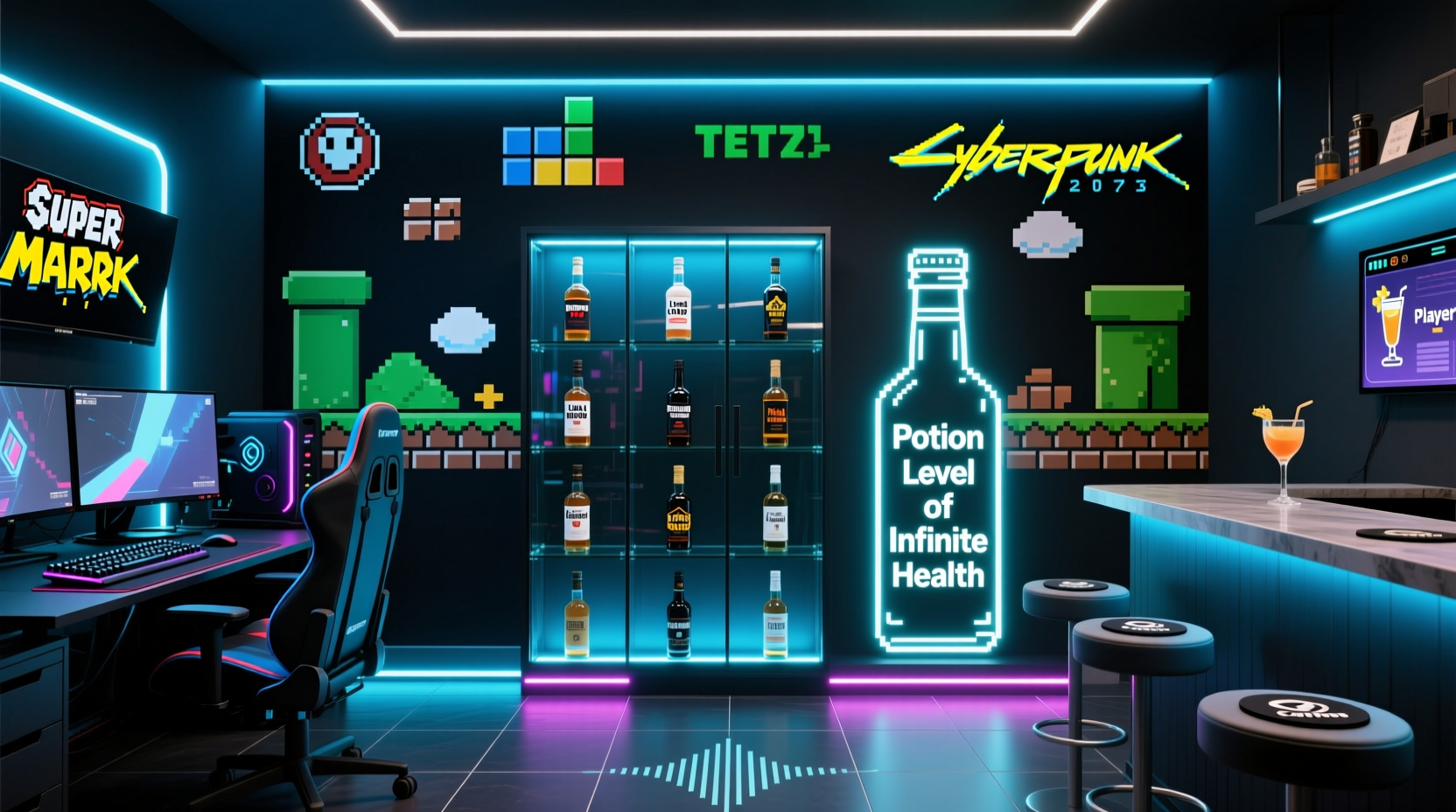
Themed liquor bottles succeed as decor not because they’re alcoholic, but because they’re *narrative objects*. A bottle labeled “Dragonfire Whiskey” with embossed scales isn’t just spirit—it’s worldbuilding made physical. A “Cybernetic Gin” bottle with circuit-board etching reinforces a near-future aesthetic. Unlike static posters or backlit logos, bottles offer dimension, texture, material contrast (glass, ceramic, metal), and subtle light-refracting qualities that animate a space under ambient lighting. They also scale naturally: a single 750ml bottle commands presence on a floating shelf; a cluster of miniatures (50ml “potion vials”) fits neatly beside a controller dock.
Yet most attempts fall short—not due to lack of enthusiasm, but misalignment. Common pitfalls include treating bottles as afterthoughts (“I’ll just shove these behind the monitor”), ignoring safety (placing breakables within arm’s reach of high-energy sessions), or forcing mismatched themes (a steampunk absinthe bottle next to a neon-drenched cyberpunk rig). As interior designer and streaming-space consultant Lena Ruiz observes:
“The strongest gaming dens don’t ‘add’ decor—they extend the narrative logic of the space. If your setup says ‘Neo-Tokyo 2077,’ then every object should feel like it could plausibly exist in that world—even your drinkware.”
Curating Your Themed Bottle Collection: From Impulse Buy to Intentional Archive
Start not with bottles—but with your den’s core theme. Is it high-fantasy (D&D, Elden Ring)? Retro-futurist (Blade Runner, Fallout)? Indie-game minimalist (Stardew Valley, Celeste)? Each calls for distinct bottle typologies, materials, and presentation strategies.
Step-by-step curation process:
- Define your anchor theme — Write it in one phrase: e.g., “Cozy cottagecore tavern meets modern PC rig.”
- Identify 3–5 visual motifs — For cottagecore: wood grain, herb illustrations, parchment labels, muted earth tones.
- Source bottles matching at least two motifs — Look beyond alcohol: non-alcoholic craft sodas (e.g., “Potion Press” ginger beer), artisanal shrubs, or even empty, cleaned vintage bottles you can relabel.
- Limit your palette — Stick to 2–3 dominant bottle colors (e.g., amber glass, matte black ceramic, frosted clear) to avoid visual noise.
- Verify practicality — Check height clearance around monitors, shelf depth, and weight limits before purchasing.
Strategic Placement: Where Bottles Enhance (Not Disrupt) Gameplay
Placement determines whether bottles feel integrated or intrusive. The goal is visibility without vulnerability—accessible enough to admire, secure enough to ignore during intense matches.
| Location | Ideal Use Case | Design Considerations | Risk Mitigation |
|---|---|---|---|
| Wall-mounted display shelves (above desk, out of arm’s reach) | Primary showcase zone for 3–5 statement bottles | Use recessed LED strip lighting; align bottles by height or label orientation; leave 2” breathing space between each | Mount shelves into wall studs; use museum putty or clear acrylic brackets for anti-tip security |
| Dedicated beverage cart or side table (adjacent to seating) | Functional access for drinks during long sessions | Choose a cart with tiered shelves or built-in bottle holders; match material (e.g., blackened steel for cyberpunk, reclaimed oak for fantasy) | Add rubberized tray liners; keep only 1–2 bottles per tier; store backups in closed cabinetry |
| Integrated into media console (within enclosed glass cabinets) | Secure, dust-free display for delicate or valuable bottles | Use adjustable shelving; add subtle backlighting; group by theme or color family | Ensure cabinet doors close fully and latch; avoid placing near heat-generating AV equipment |
| Under-monitor riser base (if riser has hollow design) | Subtle, space-saving accent | Only use squat, wide-base bottles (≤6” tall); ensure riser has ventilation to prevent condensation buildup | Secure bottles with silicone grip pads; never place near cable ports or cooling vents |
Crucially, avoid these zones entirely: directly behind monitors (obscures cables and creates glare), on keyboard trays (vibration risk), inside open desk drawers (clutter + accidental spills), or suspended from ceiling mounts (structural and safety liability).
Thematic Cohesion & Customization: Beyond the Label
A bottle’s label is its first impression—but true cohesion lives in consistency of form, finish, and function. A “Wizard’s Elixir” bottle looks authentic not because of its font, but because its glass thickness, cap style, and label texture echo apothecary conventions.
Customization that deepens immersion (no DIY skills required):
- Label overlays: Print transparent vinyl stickers with thematic icons (e.g., a dragon crest, circuit pattern) that sit atop existing labels—preserving legality while adding character.
- Caps and closures: Swap standard caps for thematic alternatives: cork stoppers with wax seals for fantasy, brushed aluminum screw-tops for sci-fi, bamboo lids for zen/indie themes.
- Light integration: Insert battery-powered micro-LEDs (warm white or color-matched to theme) into empty bottles for soft ambient glow—ideal for night-time streaming.
- Grouping logic: Arrange bottles by “in-universe origin”: e.g., all “Tavern of the Lost” brand together, or separate “Alchemical Distilleries” from “Starfleet Rations” to reinforce world structure.
Real-world example: Streamer Maya Chen transformed her 8x10 ft den into a “Neo-San Francisco Rooftop Bar” inspired by Ghost in the Shell. She sourced three Japanese whisky bottles with minimalist kanji labels, replaced their caps with matte black magnetic closures, and mounted them on a vertical steel rail above her monitor. She added custom acrylic stands etched with tiny holographic cityscapes—and used programmable LEDs to pulse softly blue during streams. “It’s not about drinking,” she notes. “It’s about making the space feel like a place I’d actually visit in that world. When viewers comment on the ‘bar rail,’ they’re engaging with the setting—not just my game.”
Safety, Legality, and Long-Term Care: Non-Negotiable Foundations
Gaming dens are dynamic environments—prone to vibration, temperature shifts, and spontaneous movement. Themed bottles introduce unique liabilities: glass breakage, liquid leakage, label degradation, and regulatory concerns (especially if streaming publicly).
Essential safety & care checklist:
- ✅ Verify local laws: Some jurisdictions restrict visible alcohol advertising in home-based businesses (including streams). When in doubt, use non-alcoholic alternatives for on-camera displays.
- ✅ Secure all bottles: Use museum putty, adhesive-backed rubber feet, or weighted acrylic bases—never rely on friction alone.
- ✅ Maintain climate control: Keep bottles away from direct sunlight (fades labels, heats contents) and HVAC vents (causes condensation and label curling).
- ✅ Clean regularly: Wipe glass with microfiber and isopropyl alcohol (not vinegar or citrus cleaners, which degrade adhesives). Dust ceramic/metal bottles with dry brush.
- ✅ Rotate stock: If storing opened bottles, consume within manufacturer guidelines (e.g., vermouth within 2 months refrigerated) to prevent off-flavors or sediment.
For collectors: Vintage or limited-edition bottles deserve archival treatment. Store upright (prevents cork drying), in acid-free boxes lined with inert foam, and log acquisition dates and provenance. As spirits historian Dr. Arjun Mehta states:
“A bottle’s value isn’t just in its contents—it’s in its intact narrative. A faded label or warped cap breaks the illusion. Preservation is part of the storytelling.”
FAQ
Can I use empty liquor bottles for decor if I don’t drink?
Absolutely—and often more effectively. Empty bottles eliminate spill risk, allow full customization (painting, etching, internal lighting), and sidestep legal concerns. Just ensure thorough cleaning: soak in warm water + baking soda to remove residue, rinse with vinegar solution to neutralize odors, then air-dry upside-down on a clean rack for 48 hours.
How do I choose bottles that won’t clash with RGB lighting?
Opt for bottles with matte finishes (ceramic, frosted glass, stone) or deep-toned transparent glass (amber, cobalt, emerald). Avoid clear glass with glossy labels—they’ll reflect and scatter RGB light, creating visual noise. Test bottles under your actual setup: if the label glares or the glass creates distracting hotspots, reposition or swap.
What’s the safest way to mount bottles on a wall without drilling?
Adhesive solutions are risky for anything heavier than 250g. Instead, use heavy-duty tension rods inside shallow bookshelves or floating ledges (rated for 30+ lbs), then place bottles on the rod-supported surface. For true no-drill mounting, invest in a freestanding metal display tower with weighted base—designed for stability, not wall attachment.
Conclusion
Your gaming den is a declaration of identity—a space where passion, personality, and play converge. Themed liquor bottles, when chosen with narrative intent, placed with spatial intelligence, and maintained with care, become more than decor: they’re anchors of atmosphere, quiet storytellers in the periphery of your focus, and subtle affirmations of the worlds you love. They reward patience—curating takes time, placement requires measurement, and cohesion emerges through iteration. But the payoff is tangible: a space that feels authentically yours, visually rich without being chaotic, and immersive without sacrificing usability. Don’t rush the process. Start with one bottle that resonates. Place it deliberately. Observe how it changes the energy of the corner. Then build outward—layer by layer, theme by theme, intention by intention.
💬 Your turn. Share your most unexpected themed bottle find—or the one placement that transformed your den—in the comments. Let’s build a library of real-world inspiration, bottle by bottle.