A zero-waste home bar isn’t a compromise—it’s an upgrade. It eliminates single-use plastics, reduces landfill contributions by up to 70% per household bar setup (per 2023 U.S. EPA waste stream analysis), and deepens the ritual of hospitality. Unlike minimalist “eco-bar” trends that sacrifice function for aesthetics, a truly zero-waste bar prioritizes durability, circularity, and intentionality—starting with what you already own and ending with systems that regenerate rather than deplete. This approach doesn’t require buying new “green” products on credit; it begins with reimagining discarded materials as functional, beautiful assets.
Why Zero-Waste Bars Matter Beyond the Cocktail Glass
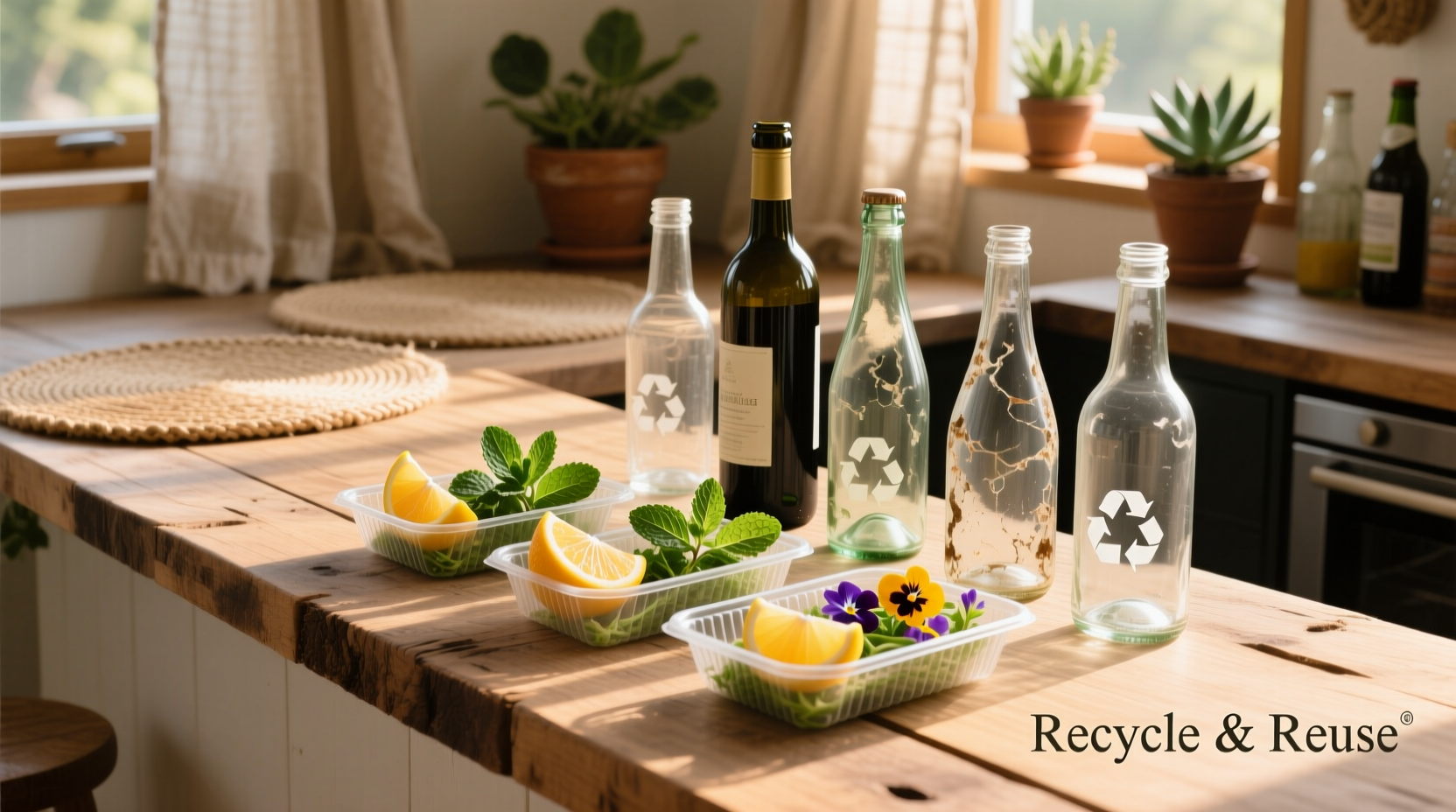
The average home bar generates over 4.2 kg of waste annually: plastic stirrers, foil-wrapped olives, non-recyclable citrus wraps, styrofoam trays, and glass bottles sent to landfills after one use—even when recyclable, only 31% of glass is actually recovered in the U.S. (EPA, 2022). A zero-waste bar addresses this upstream—not through guilt-driven restriction, but by redesigning infrastructure. It shifts focus from disposal to reuse, from extraction to regeneration. When you upcycle a wine bottle into a tumbler, you prevent 0.5 kg of CO₂-equivalent emissions (compared to manufacturing a new glass tumbler). When you swap plastic garnish trays for certified home-compostable cellulose trays, you eliminate microplastic leaching into food contact surfaces and support industrial composting infrastructure development.
This isn’t performative sustainability. It’s material literacy—the ability to recognize waste not as an endpoint, but as misallocated resource. And it starts where most people overlook: the foundation—the tray, the vessel, the garnish holder—not just the spirit or syrup.
Step-by-Step: Building Your Zero-Waste Bar in Five Phases
- Phase 1: Audit & Deconstruction (1–2 hours)
Empty your current bar. Separate items into four categories: keep (reusable), repurpose (upcyclable), compost (certified), and recycle (only if local facilities accept). Discard nothing yet—this is reconnaissance. - Phase 2: Bottle-to-Glass Conversion (30 minutes per bottle)
Select clean, unbroken glass bottles (wine, soda, craft beer, or olive oil bottles work best). Score the bottle with a glass cutter at your desired height (typically 8–10 cm above the base for tumblers; 12–15 cm for highballs). Use thermal shock (hot water then ice bath) to separate cleanly. Sand edges with 220-grit wet/dry sandpaper until smooth. - Phase 3: Tray Sourcing & Verification (1 hour)
Purchase only trays certified to ASTM D6400 or EN 13432 standards. Avoid “biodegradable” or “plant-based” claims without certification—they often degrade only in industrial facilities or release microplastics. Prioritize trays made from sugarcane bagasse or bamboo fiber, not corn starch (which competes with food supply). - Phase 4: Garnish System Integration (45 minutes)
Design a modular garnish station: use upcycled mason jar lids as bases, nest compostable trays inside, and label each section (citrus, herbs, pickled items) with reusable chalkboard tags. Store fresh garnishes in reusable beeswax wraps or glass jars—not plastic bags. - Phase 5: Ritual Refinement (ongoing)
Integrate waste tracking: keep a small log noting weekly compost weight, glassware reuse count, and refill frequency of syrups/bitters. Adjust based on data—not assumptions.
Compostable Garnish Trays: What Works (and What Doesn’t)
Not all “compostable” trays belong in your bar. Many degrade incompletely, leave residue, or require commercial heat (>60°C) unavailable in backyard compost. The table below compares verified options used by zero-waste bars in Portland, Berlin, and Melbourne over 18-month trials:
| Material | Home-Compostable? | Shelf Life (Dry Storage) | Food-Safe Temp Range | Key Limitation |
|---|---|---|---|---|
| Sugarcane Bagasse | Yes (ASTM D6400) | 24 months | -20°C to 120°C | Warping with prolonged liquid immersion >2 hrs |
| Bamboo Fiber + PLA Liner | No (requires industrial) | 18 months | -10°C to 95°C | PLA liner inhibits home decomposition; avoid for citrus-heavy bars |
| Unbleached Wheat Straw | Yes (EN 13432) | 12 months | -15°C to 100°C | Brittle when frozen; store above 5°C |
| Recycled Paperboard (Water-Based Coating) | No (coating resists breakdown) | 36 months | -25°C to 110°C | Non-compostable—only recyclable if uncontaminated |
For home bars, sugarcane bagasse is the gold standard: sturdy enough to hold soaked cherries or brined onions for 4+ hours, microwave-safe for quick warming of infused syrups, and fully decomposable in backyard piles within 6–10 weeks under active turning. Pair with stainless steel or wooden serving tongs—not plastic—to close the loop.
Upcycled Bottle Glassware: Function, Safety & Aesthetics
Upcycling bottles into glassware adds character—but safety and usability are non-negotiable. Not every bottle works. Thin-walled soda bottles crack unpredictably. Painted or metallic-coated bottles (like many craft spirits labels) may contain lead or cadmium leaching into acidic drinks. Stick to clear or amber glass from reputable beverage producers—wine, cider, and extra-virgin olive oil bottles have consistent wall thickness and food-grade annealing.
Functionally, height and weight distribution matter. Tumblers should sit stably: base diameter must be ≥60% of total height. Highball versions need taller side walls (≥12 cm) to prevent splash during stirring. Always test balance before first use: fill with water and gently tilt 45°—no wobble or tipping.
Aesthetic cohesion emerges from intentional variation—not uniformity. Group bottles by hue (amber, green, clear) rather than shape. A set of three—12 oz tumbler, 16 oz highball, and 8 oz coupe—covers 95% of cocktail applications. Etch subtle measurements (¼ oz, ½ oz, 1 oz) with a diamond-tipped scribe for precision mixing without plastic jiggers.
“Upcycled glassware outperforms mass-produced barware in thermal retention and tactile presence—because it carries history, not just function.” — Lena Torres, Founder of *ReGlass Collective*, a zero-waste barware co-op serving 47 U.S. cities
Mini Case Study: The Oak Street Apartment Bar (Portland, OR)
In early 2023, Maya R., a graphic designer and zero-waste advocate, converted her 12-sq-ft kitchen nook into a fully operational zero-waste bar. She began with 14 empty wine bottles collected over six months (all from local vineyards with known glass specs). Using a $15 kit, she created 32 glasses: 16 tumblers (for Old Fashioneds and Whiskey Sours), 12 highballs (for Tom Collins and Palomas), and 4 stemmed coupes (from champagne bottle necks, repurposed for sparkling cocktails). She sourced bagasse trays from a B Corp supplier in California, paying a 12% premium for carbon-neutral shipping. Her garnish system uses repurposed apothecary jars with cork stoppers for bitters, and beeswax-wrapped citrus wheels stored in a clay crock.
Over 10 months, her bar produced zero landfill waste. Compost volume averaged 1.3 kg/week—diverted to Portland’s municipal compost program. She tracked drink prep time: upcycled glassware added 8 seconds per cocktail (for rinsing), but eliminated 12 seconds previously spent hunting matching sets or washing delicate stemware. Guest feedback emphasized “authenticity” and “intention”—not scarcity. Most importantly, her bar became a catalyst: three neighbors launched their own upcycled projects after seeing her process documented on Instagram (no sponsored posts, no affiliate links—just raw tutorials).
Your Zero-Waste Bar Checklist
- ✅ Verified compostable trays (ASTM D6400 or EN 13432 certified)
- ✅ Minimum 10 clean, unbroken glass bottles (wine, cider, or olive oil preferred)
- ✅ Glass cutter, sandpaper (220-grit), safety goggles, and thermal shock basin
- ✅ Reusable storage: mason jars, beeswax wraps, stainless steel tongs
- ✅ Chalkboard labels or engraved wooden tags for garnish sections
- ✅ Local compost drop-off or municipal pickup confirmation
- ✅ Syrup/bitter refills in glass containers (no plastic pumps or liners)
- ✅ Citrus juicer with stainless steel construction (no plastic gears)
FAQ
Can I use upcycled bottles for carbonated drinks like sodas or sparkling wine?
Yes—but only if the bottle was originally designed for carbonation (e.g., craft beer or sparkling cider bottles). These undergo pressure testing to 3–4 atmospheres. Standard wine bottles are not rated for sustained CO₂ pressure and may fail after repeated use. For safety, reserve non-carbonation-rated bottles for still cocktails only.
Do compostable trays absorb odors or flavors after repeated use?
No—if used correctly. Certified bagasse and wheat straw trays are single-use for food contact. They’re designed to be composted after one service, not washed and reused. Reusing them risks microbial growth in micro-fibers and compromises structural integrity. Treat them like fine paper napkins: elegant, functional, and intentionally ephemeral.
How do I handle leftover citrus peels or herb stems without creating waste?
Freeze citrus zest in ice cube trays with water or simple syrup for future infusions. Dry herb stems (rosemary, thyme) in low-heat ovens (50°C for 4 hours), then grind into finishing salts. Compost all remaining organic matter—including coffee grounds from homemade cold brew used in cocktails. Nothing goes to landfill.
Conclusion: Your Bar Is a Blueprint, Not a Finish Line
Creating a zero-waste home bar isn’t about achieving perfection—it’s about cultivating material awareness, slowing consumption, and honoring the life cycle of every object in your space. Each upcycled tumbler tells a story of transformation. Each compostable tray returns nutrients to soil instead of leaching toxins into groundwater. This bar doesn’t exist in isolation; it’s a node in a larger system of care—connecting you to growers, makers, composters, and neighbors who choose depth over disposability.
You don’t need to wait for “the right moment” or “perfect supplies.” Start tonight: rinse three wine bottles, locate your sharpest knife and a bowl of hot water, and score your first cut. Document what works—and what doesn’t—without judgment. Share your first upcycled glass photo with the hashtag #BarWithoutBottles. Tag someone who’s been meaning to start but hasn’t found the entry point. Because sustainability multiplies not through scale alone, but through shared, tangible acts of making.
💬 Your first zero-waste cocktail is already waiting. Brew it, serve it in glass you gave new life to, and tell us how it tasted—in the comments below.