Ice is not filler—it’s a functional ingredient in whiskey service. The shape, density, and surface area of your ice directly govern temperature drop, dilution speed, mouthfeel, and even perceived aroma intensity. A single large sphere cools slowly with minimal water release; finely crushed ice chills instantly but overwhelms delicate notes; a dense 2-inch cube strikes balance for sipping neat pours. Yet most drinkers select molds based on aesthetics alone—or worse, default to freezer trays that produce brittle, cloudy, fast-melting cubes. Choosing wisely means understanding how physics, material science, and sensory experience intersect in a single frozen form.
Why Ice Shape Matters More Than You Think
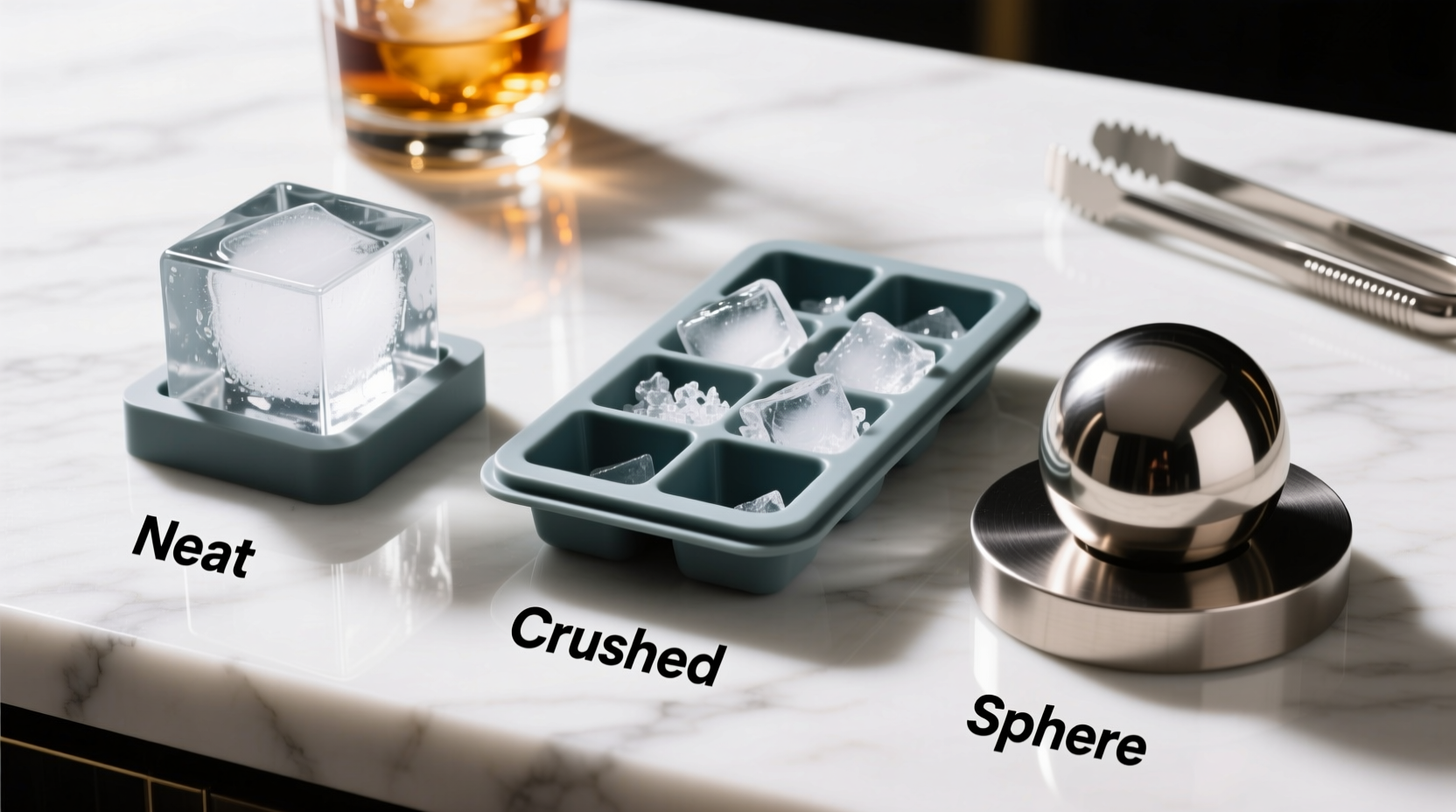
Whiskey served “neat” (undiluted, at room temperature) benefits from controlled chilling—not freezing. Rapid temperature shock numbs volatile esters and phenols; excessive dilution washes out spice, smoke, or honeyed complexity. The ideal ice delivers *just enough* cooling to open aromas while preserving structural integrity for 8–12 minutes—the typical duration of an intentional pour. That window is dictated by three interlocking variables: surface-area-to-volume ratio, ice density, and thermal conductivity.
A sphere has the lowest possible surface-area-to-volume ratio—meaning less contact with warm liquid per gram of ice. It melts ~30% slower than a standard 1-inch cube of equal mass. Crushed ice, by contrast, may have 5–7× more surface area, accelerating both heat transfer and dilution. But it also creates texture: a slurry that coats the palate and softens ethanol burn—ideal for high-proof rye or cask-strength bourbons served over a generous pour.
Material matters too. Plastic molds often trap air bubbles and impurities, creating cloudy, porous ice that melts faster and absorbs freezer odors. Stainless steel or food-grade silicone molds paired with boiled, cooled water yield denser, clearer, slower-melting results. Clarity isn’t just visual appeal—it signals fewer internal fractures and uniform crystalline structure.
Tip: Always use distilled or previously boiled and cooled water for molds. Dissolved minerals and gases nucleate crystal defects—cloudiness equals faster melt and inconsistent chilling.Comparing Core Mold Types: Neat, Crushed, and Sphere
Each serving style demands distinct physical properties from its ice. Below is a functional comparison—not just of shape, but of performance, usability, and context.
| Mold Type | Ideal For | Melt Rate (vs. Standard Cube) | Key Advantages | Practical Limitations |
|---|---|---|---|---|
| Sphere (2.5\" diameter) | Single-serve neat pours (1.5–2 oz), premium sipping | ~35% slower | Minimal dilution, elegant presentation, stable in wide-mouth glasses | Requires dedicated sphere mold; longer freeze time (4–6 hrs); doesn’t fit narrow highballs |
| Dense Cube (1.5–2\") | Neat or rocks service, versatility across glassware | ~15% slower | Balanced chill/dilution; stacks well; fits most tumblers and lowballs; easy to handle | Less dramatic than spheres; requires thicker-walled molds for density |
| Crushed / Pebble Ice | Cocktails (Old Fashioned, Whiskey Sour), high-proof pours, quick-chill needs | ~3–5× faster | Rapid temperature drop; enhances mouthfeel; integrates seamlessly into stirred/shaken drinks | Over-dilutes neat pours; requires manual crushing or specialized electric crusher; short working window |
| Collins Tube (long cylinder) | Tall whiskey drinks (Highball, Buck), layered presentations | ~20% slower than cube | Maximizes vertical surface area without excess melt; fits narrow glasses; visually striking | Niche use case; limited availability; fragile if thin-walled |
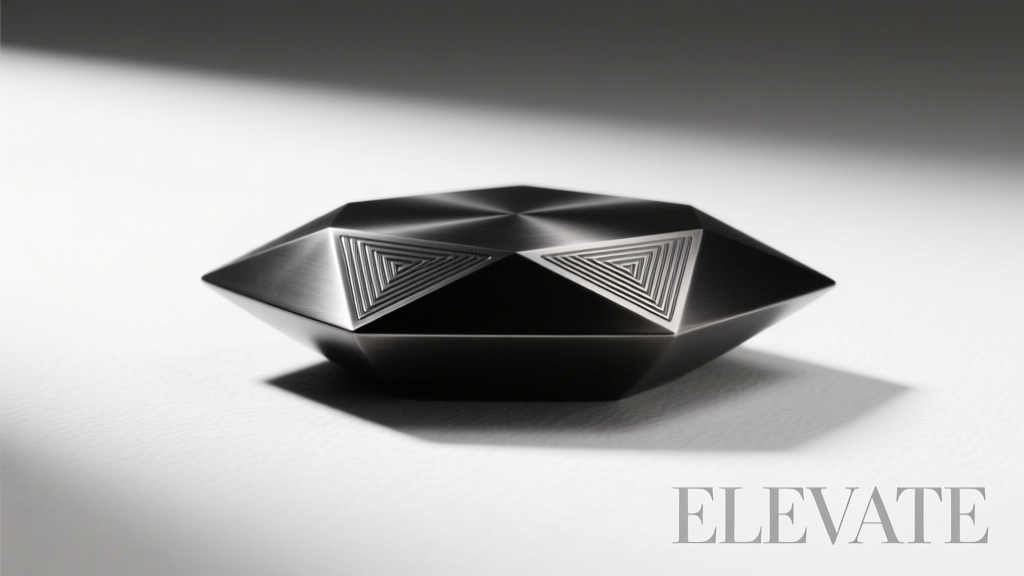
| Geometric (diamond, pyramid, torus) | Experiential service, bar programs, gift sets | Variable (sphere-like to cube-like) | Brand differentiation; conversation starter; some shapes improve stability (e.g., torus resists rolling) | Often harder to remove; inconsistent freezing; higher price point |
The Step-by-Step Process to Select Your Ideal Mold
Selecting isn’t about preference alone—it’s a deliberate calibration of purpose, tools, and habits. Follow this sequence to eliminate guesswork.
- Define your primary use case. Are you serving 90% neat pours? Do you mix cocktails weekly? Is this for home use or a hospitality setting? If >70% of your whiskey is consumed neat in a Glencairn or rocks glass, prioritize sphere or dense cube molds—not crushed.
- Evaluate your freezer space and workflow. Sphere molds require flat, stable placement and 4+ hours to freeze solid. If you frequently forget to prep ice, a rapid-freeze silicone cube tray (with thick walls) offers reliability without planning.
- Assess mold material and construction. Avoid thin plastic that warps or leaks. Look for BPA-free silicone rated to -40°F or stainless steel with tight-fitting lids. Seamless interiors prevent cracking and ease release.
- Test water quality and freezing method. Boil tap water for 5 minutes, cool to room temp, then pour into molds. Place trays level in the coldest part of your freezer (usually bottom back). Avoid opening the door during first 90 minutes.
- Validate performance over three sessions. Time melt rate in 2 oz of 100-proof whiskey at 72°F. Note when dilution becomes perceptible (e.g., loss of spice, emergence of watery flatness). Adjust mold size or shape accordingly.
Real-World Case Study: The Home Bartender’s Pivot
Maya R., a software engineer and avid bourbon collector in Portland, used generic plastic cube trays for two years. She noticed her favorite 110-proof rye lost vibrancy within 4 minutes—“like drinking lukewarm tea,” she said. After reading about surface-area physics, she invested in a stainless steel 2.5\" sphere mold and began using boiled water. Her first test: two identical pours of Four Roses Single Barrel—one with a sphere, one with three standard cubes. She timed melt and noted flavor evolution every 90 seconds.
With the sphere, the whiskey remained vibrant and integrated for 11 minutes. The cubes diluted noticeably by minute 5, muting cinnamon and clove. Maya switched entirely to spheres for neat pours—but kept a small batch of crushed ice (made with a Lewis bag and mallet) for summer Old Fashioneds. “It wasn’t about luxury,” she explained. “It was about respecting what the distiller built—and giving the whiskey space to speak.”
Expert Insight: What Master Distillers and Mixologists Prioritize
Ice selection isn’t barroom trivia—it’s foundational to craft service. We spoke with James O’Connell, Head Blender at a Kentucky distillery with 30+ years of sensory evaluation experience, and Lena Torres, award-winning bartender and co-founder of The Oak & Ember Bar Lab in Chicago.
“The first thing I teach new staff isn’t stirring technique—it’s ice geometry. A sphere isn’t ‘fancy ice.’ It’s a tool that preserves the balance the still created. If your whiskey tastes thin or sharp after two minutes, your ice is working against you—not with you.” — James O’Connell, Master Blender
“I’ve blind-tasted the same 12-year Scotch with five ice formats. Only the 2-inch dense cube and 2.5-inch sphere retained full body and finish beyond 8 minutes. Everything else flattened the mid-palate. That’s not opinion—that’s thermodynamics you can taste.” — Lena Torres, Bar Lab Director
What to Avoid: The 5 Most Common Ice Mold Mistakes
- Using tap water straight from the faucet. Minerals and chlorine create cloudiness, weak crystals, and off-flavors. Even filtered water retains dissolved solids that accelerate melt.
- Overfilling molds. Water expands ~9% when frozen. Overfilled trays crack, leak, or produce misshapen ice that melts unevenly.
- Storing ice long-term in open containers. Freezer odors (from coffee, garlic, or fish) absorb rapidly into porous ice. Always store finished ice in airtight, odor-proof containers—even overnight.
- Choosing mold size without testing glass compatibility. A 2.5\" sphere looks stunning in a double rocks glass—but sinks awkwardly in a narrow Glencairn. Measure your most-used glass interior before buying.
- Assuming “clear ice” means “better ice.” Clarity indicates purity and slow freezing—but density matters more. A clear, thin-walled sphere melts faster than a slightly cloudy, ultra-dense cube. Prioritize wall thickness over optical perfection.
Frequently Asked Questions
Can I use the same mold for both whiskey and cocktails?
Yes—with caveats. A 2-inch dense cube works well for both neat pours and stirred cocktails like Manhattans. However, avoid using sphere molds for shaken drinks (e.g., Whiskey Sours): the large mass won’t integrate smoothly and may fracture unevenly. Reserve spheres strictly for still-service contexts.
Do silicone molds really make better ice than plastic?
Not inherently—but high-quality, platinum-cure silicone molds offer superior flexibility for clean release, withstand thermal shock without cracking, and are easier to clean thoroughly. Cheap plastic molds often leach odors, warp over time, and produce inconsistent freeze patterns due to poor insulation. Look for FDA-compliant, freezer-safe silicone with reinforced edges.
How do I clean and maintain my ice molds?
Wash by hand with warm water and mild dish soap immediately after use—never soak. Dry completely before storing to prevent mineral deposits or mold. For stubborn residue, soak 10 minutes in 1:1 white vinegar/water, rinse thoroughly, and air-dry upside-down. Avoid dishwasher use unless explicitly labeled dishwasher-safe; high heat degrades silicone elasticity over time.
Conclusion: Ice as Intentional Craft
Choosing the right ice mold isn’t about chasing trends or upgrading kitchen gadgets. It’s about aligning your tools with your values as a whiskey drinker: respect for the spirit’s complexity, patience with its evolution in the glass, and precision in service. A sphere isn’t “better” than a cube—it’s *different*, calibrated for a specific interaction between liquid, temperature, and time. Crushed ice isn’t inferior—it’s expressive, textural, and essential for certain traditions. The right choice emerges only when you ask yourself: What do I want this whiskey to reveal—and how long do I want it to last in the glass?
Start small. Pick one mold type aligned with your dominant drinking habit. Use boiled water. Track melt and flavor shift. Adjust. Refine. In doing so, you’re not just cooling whiskey—you’re deepening your dialogue with it.
💬 Your turn: Which mold transformed your whiskey experience? Share your real-world results—what worked, what surprised you, and what you’d tell your past self—in the comments below. Let’s build a smarter, more intentional whiskey community—together.