
In an age of fast food and fleeting culinary trends, few dishes offer the deep, soul-satisfying comfort of a well-made potato soup crafted in the spirit of rural kitchens. Hearty Homemade Potato Soup from the Countryside is not merely a meal—it’s a culinary heirloom, born from necessity, refined by generations, and cherished for its ability to nourish both body and memory. This soup embodies simplicity at its most profound: humble ingredients transformed through slow cooking into something luxuriously creamy, deeply savory, and profoundly warming.
More than just a winter warmer, this soup reflects a global tradition of resourceful cooking—where root vegetables, dairy (or plant-based alternatives), onions, and herbs are simmered into a cohesive, satisfying whole. Whether served in a chipped ceramic bowl on a rainy afternoon or garnished with chives for a Sunday brunch, it remains one of the most universally beloved dishes across North America, Northern Europe, and beyond. For home cooks seeking authenticity and depth, mastering this soup means understanding not only technique but also the cultural context that shapes its character.
Definition & Overview
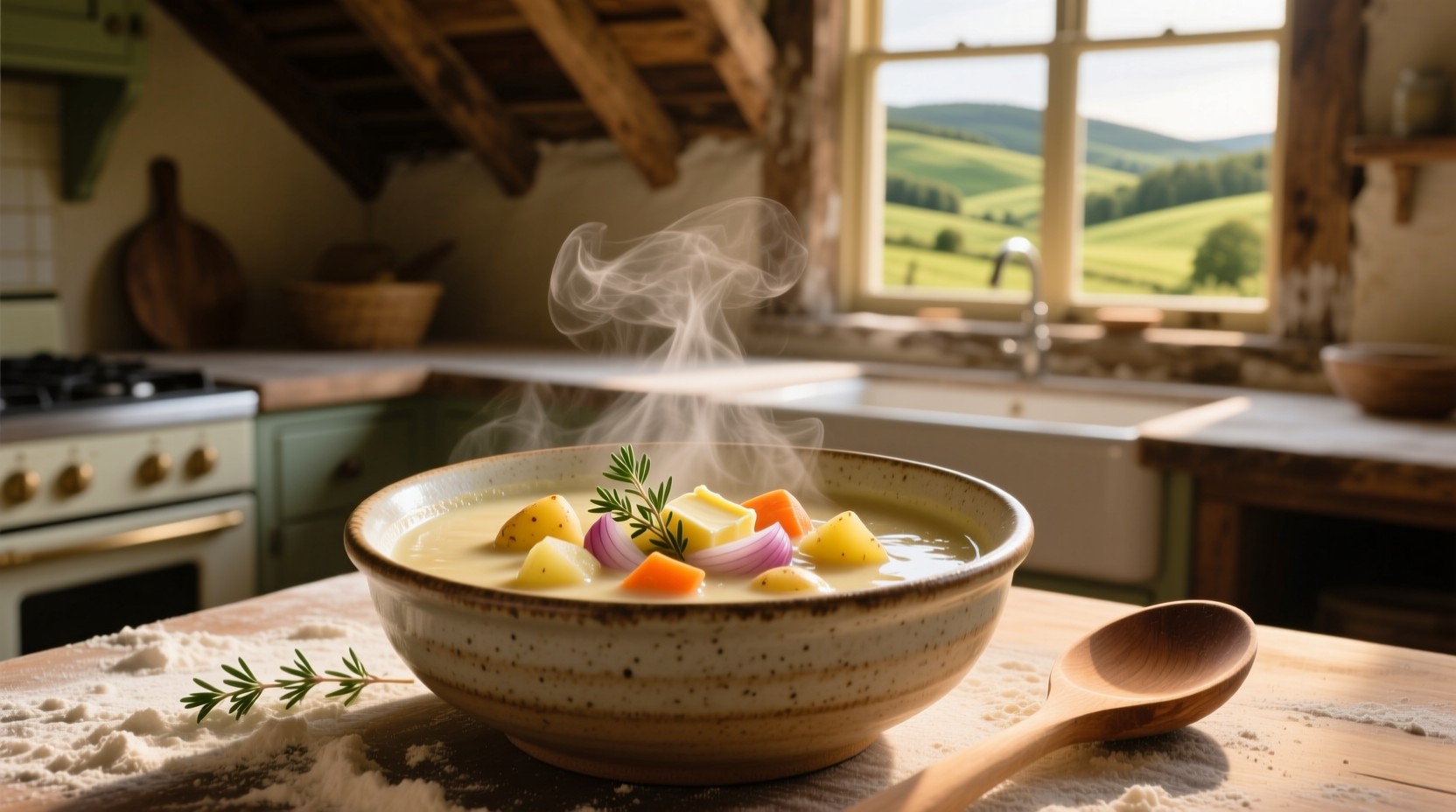
Hearty Homemade Potato Soup from the Countryside refers to a thick, creamy, and robustly flavored soup made primarily from potatoes, aromatics, liquid (such as broth or milk), and often enriched with cream, butter, or cheese. Unlike commercial versions loaded with stabilizers and artificial flavors, the homemade countryside iteration relies on natural thickening from mashed or broken-down potatoes and layering flavors through careful sautéing and simmering.
This dish belongs to the broader category of cream soups, though its roots lie in peasant cuisine where cream was a luxury. Historically, early versions were little more than boiled potatoes seasoned with salt and wild herbs. Over time, with increased access to dairy and onions, the soup evolved into the richer form now associated with farmhouse tables across Ireland, Germany, Poland, Canada, and the American Midwest.
The defining qualities of true countryside-style potato soup include:
- A velvety yet slightly textured consistency—never gluey or overly smooth.
- Balanced seasoning that highlights the earthiness of potatoes without masking them.
- Use of fresh, seasonal ingredients when possible, especially herbs and vegetables.
- Flexibility: adaptable to available ingredients, dietary needs, and regional preferences.
While variations exist—from leek-and-potato bisques in France to dill-infused renditions in Scandinavia—the core principle remains unchanged: transform simple staples into a nourishing centerpiece.
Key Characteristics
The appeal of countryside potato soup lies in its sensory harmony. Below is a breakdown of its essential attributes:
| Characteristic | Description |
|---|---|
| Flavor Profile | Earthy, mildly sweet from potatoes; savory base from onions and garlic; richness from dairy or fat; herbal notes from thyme, parsley, or dill. |
| Aroma | Warm, buttery, and slightly roasted from sautéed aromatics; enhanced by fresh herbs added at the end. |
| Color & Appearance | Creamy off-white to pale golden, depending on broth type and whether skins are left on. Garnishes add contrast—green chives, red paprika, or browned bacon bits. |
| Texture | Thick and luscious, with a partial mash providing body while retaining some small chunks for mouthfeel. Not puréed unless specified. |
| Culinary Function | Served as a main course or starter. Often paired with crusty bread or salad. Ideal for using leftover roasted or boiled potatoes. |
| Shelf Life | Refrigerated: up to 4 days. Freezes well for up to 3 months if dairy-free or frozen quickly after cooling. Reheats gently to avoid separation. |
Practical Usage: How to Make Authentic Countryside Potato Soup
Creating an authentic version of this soup requires attention to ingredient quality, cooking sequence, and temperature control. The goal is to build layers of flavor gradually, avoiding shortcuts that compromise texture or taste.
- Sauté Aromatics Gently: Begin with diced onions, leeks, or shallots in butter or olive oil over medium-low heat. Cook until translucent but not browned—about 8–10 minutes. Add minced garlic during the last minute to prevent bitterness.
- Add Potatoes and Liquid: Use starchy or all-purpose potatoes like Russets or Yukon Golds. Peel or leave skins on based on desired texture (skins add fiber and rustic charm). Cut into uniform ½-inch cubes. Add to the pot along with enough cold broth (chicken, vegetable, or bone) to cover by about an inch. Bring to a gentle simmer—do not boil rapidly, which can break down potatoes too much.
- Simmer Until Tender: Cook uncovered for 15–20 minutes, stirring occasionally, until potatoes are fork-tender. Avoid over-stirring to maintain some structure.
- Create Body Without a Blender: Use a potato masher directly in the pot to crush about one-third of the potatoes. This releases starch naturally, thickening the soup without flour or cornstarch.
- Incorporate Dairy Carefully: Warm cream, half-and-half, or whole milk separately before adding to prevent curdling. Stir in slowly over low heat. Never allow the soup to boil once dairy is added.
- Season Thoughtfully: Salt in stages—once when sautéing onions, again after potatoes soften, and finally at the end. Add freshly ground black pepper, dried thyme (¼ tsp), or a bay leaf during simmering. Remove bay leaf before serving.
- Garnish for Contrast: Top with crispy bacon, shredded sharp cheddar, snipped chives, sour cream, or toasted croutons. Fresh dill or parsley brightens heavier versions.
Pro Tip: For extra depth without meat, use mushroom trimmings or a Parmesan rind while simmering. Remove before blending or serving. This adds umami richness akin to what bacon provides, making it ideal for vegetarian adaptations.
Professional Technique: The Two-Stage Simmer
In high-end rustic cooking, chefs often employ a two-stage method:
- Stage One: Simmer potatoes with aromatics and broth until very soft. Remove 1 cup of solids, blend until smooth, then return to the pot. This ensures silkiness without losing all texture.
- Stage Two: Fold in reserved al dente potato pieces or freshly sautéed diced potatoes for contrast. Finish with warm cream and herbs.
This approach balances refinement with heartiness—a hallmark of elevated farmhouse cuisine.
Variants & Types
While the basic formula remains consistent, regional and dietary interpretations yield distinct variants. Understanding these helps tailor the soup to occasion, palate, or pantry constraints.
1. Traditional Cream-Based (American Midwest / Canadian Farmhouse)
- Dairy: Heavy cream, whole milk, butter
- Add-ins: Bacon, cheddar, green onions
- Best for: Cold weather meals, family dinners
2. Leek & Potato (Vichyssoise-Style, French Origin)
- Dairy: Cream-heavy, often served chilled
- Herbs: Thyme, parsley
- Best for: Elegant starters, summer service (when chilled)
3. Eastern European Sour Cream Version (Polish, Ukrainian)
- Dairy substitute: Smetana (sour cream) swirled in at the end
- Flavor boosters: Dill, marjoram, smoked paprika
- Best for: Holiday tables, pairing with dark rye bread
4. Vegan / Plant-Based (Modern Adaptation)
- Dairy substitutes: Coconut milk, cashew cream, oat cream
- Umami sources: Nutritional yeast, miso paste, sautéed mushrooms
- Best for: Dairy-free diets, allergy-conscious households
5. Loaded Baked Potato Style (Contemporary American)
- Toppings: Crumbled bacon, cheddar, sour cream, chives—all added generously
- Texture: Chunkier, less creamy
- Best for: Game day spreads, casual entertaining
| Variant | Dairy Base | Signature Ingredient | Texture | Serving Temp |
|---|---|---|---|---|
| Traditional Cream-Based | Cream + milk | Bacon, cheddar | Smooth with chunks | Hot |
| Leek & Potato (Vichyssoise) | Heavy cream | Leeks, thyme | Silky, fully blended | Chilled or hot |
| Eastern European | Sour cream finish | Fresh dill, paprika | Rustic, chunky | |
| Vegan | Coconut/cashew cream | Nutritional yeast | Rich, slightly grainy | Hot |
| Loaded Baked Potato | Cream or none | All toppings featured | Very chunky | Hot |
Comparison with Similar Ingredients/Dishes
Potato soup is sometimes confused with other creamy or starchy soups. Clarifying distinctions ensures proper technique and expectations.
- Potato Soup vs. Mashed Potatoes: While both use potatoes and dairy, mashed potatoes are a solid side dish whipped with butter and milk. Potato soup is a fluid entrée thickened by starch release and partial mashing.
- Potato Soup vs. Chowder: Chowders (like clam or corn) typically contain additional starch (crackers, flour roux), more varied proteins, and a thicker, heartier profile. Potato soup focuses on potato as the star.
- Potato Soup vs. Gnocchi Soup: Gnocchi soup uses dumplings made from potato dough. It includes broth and vegetables but differs fundamentally in texture and preparation.
- Potato Soup vs. Colcannon (Irish Dish): Colcannon is a mashed potato dish mixed with cabbage or kale—served as a side, not a soup.
“The best potato soup tastes like memory—of kitchens filled with steam, of mothers tasting from a wooden spoon, of silence broken only by the clink of a ladle. It shouldn’t be fancy. It should be true.”
— Margaret Ellingham, Culinary Historian & Author of *Rooted Kitchens*
Practical Tips & FAQs
How do I prevent my potato soup from becoming gluey?
Over-blending or boiling too vigorously breaks down potato cells excessively, releasing too much starch. To avoid this, simmer gently, mash partially by hand, and avoid blenders unless making a bisque. If the soup thickens overnight, thin with warm broth when reheating.
Can I make potato soup without dairy?
Yes. Use unsweetened coconut milk for richness, blended silken tofu or cashews for creaminess, and olive oil instead of butter. Add a teaspoon of white miso or soy sauce for depth. These substitutions work especially well in vegan versions.
What kind of potatoes should I use?
Yukon Golds are ideal—they’re waxy enough to hold shape but starchy enough to thicken. Russets break down easily, great for creamy textures. Avoid red or new potatoes in creamy soups; they stay firm and may leave the soup watery.
How long does homemade potato soup last?
In the refrigerator: 3–4 days in a sealed container. In the freezer: up to 3 months if made without dairy. Dairy-based soups can separate when thawed; reheat slowly and stir frequently. Freeze in portion-sized containers for convenience.
Can I use leftover mashed potatoes?
Absolutely. One cup of mashed potatoes equals about two medium boiled potatoes. Whisk into warm broth gradually until desired thickness is reached. Add sautéed onions, herbs, and a splash of cream to refresh flavor.
Is flour necessary to thicken potato soup?
No. Relying on natural potato starch eliminates the need for a roux. However, if you prefer a traditional thickener, make a slurry: mix 1 tbsp flour with 2 tbsp cold water, stir into simmering soup, and cook 3 minutes to remove raw taste.
What herbs pair best with potato soup?
Fresh thyme, rosemary, parsley, dill, and chives are top choices. Dried herbs should be added early; fresh herbs are stirred in at the end. Avoid strong spices like cumin or chili unless crafting a fusion version.
Quick Checklist: Perfect Potato Soup Every Time
- ✅ Sauté onions slowly in fat (butter/oil)
- ✅ Use starchy or all-purpose potatoes, cut evenly
- ✅ Simmer gently—no rolling boil
- ✅ Mash partially in pot for natural thickness
- ✅ Warm dairy before adding
- ✅ Season in layers, finish with fresh herbs
- ✅ Garnish thoughtfully—texture and color matter
Summary & Key Takeaways
Hearty Homemade Potato Soup from the Countryside transcends mere sustenance. It is a testament to culinary wisdom passed down through generations—simple ingredients elevated by patience, care, and respect for process. At its best, this soup delivers a harmonious balance of creaminess, savoriness, and subtle sweetness, grounded in the earthy essence of the potato.
Key points to remember:
- The foundation lies in slow-cooked aromatics and properly chosen potatoes.
- Natural thickening via mashed potatoes outperforms flour-based roux in flavor and texture.
- Dairy must be warmed and incorporated carefully to prevent curdling.
- Variations abound—regional, dietary, seasonal—but the core principles remain constant.
- Storage and reheating require attention, especially with dairy-rich versions.
This soup invites adaptation. Try adding roasted garlic, caramelized leeks, or even a hint of truffle oil for special occasions. Yet its enduring charm lies in its accessibility: anyone with a pot, a knife, and a handful of ingredients can create a bowl that feels like home.
Cook it tonight. Use what you have. Taste as you go. Share it generously. That’s the real recipe.