For many coffee lovers, the morning ritual begins with a rich shot of espresso. But when it comes to choosing how that shot is made—traditional espresso machine or Nespresso pod system—the decision often hinges on more than just convenience. A central question arises: Can the average person actually taste the difference? While baristas and coffee connoisseurs may wax poetic about crema consistency and extraction profiles, most home users simply want a satisfying cup without the fuss. The truth is, the flavor gap exists—but its significance depends heavily on brewing method, bean quality, and individual sensitivity.
This article examines whether non-expert drinkers can detect meaningful taste differences between espresso from traditional machines and Nespresso systems. We’ll explore brewing science, sensory perception, real-world experiences, and practical considerations that shape daily coffee choices.
The Brewing Difference: How Each System Works
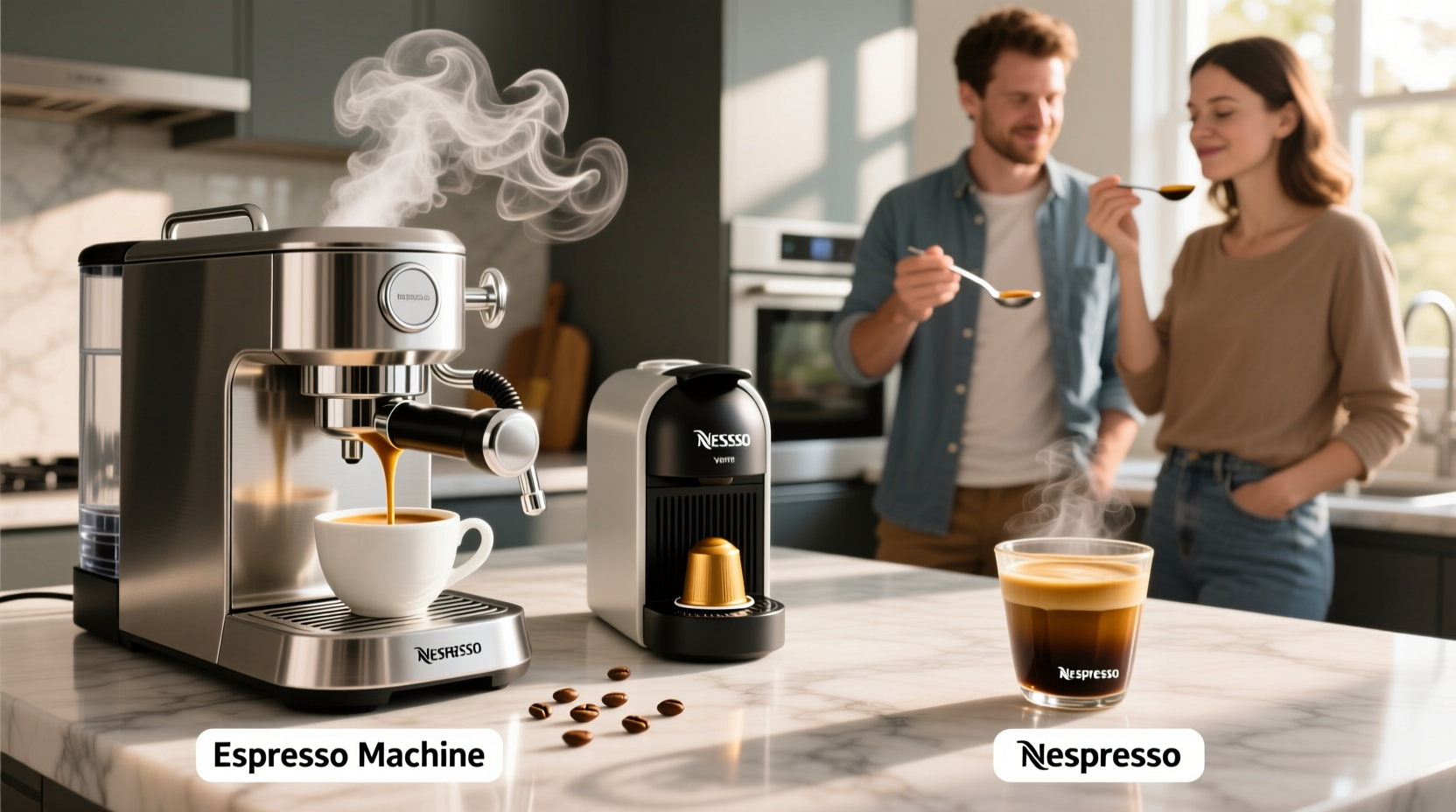
Understanding the mechanics behind each brewing method is essential to evaluating flavor outcomes. Traditional espresso machines use high pressure (typically 9 bars) to force hot water through finely ground, densely packed coffee. This process extracts oils, sugars, and caffeine rapidly, producing a concentrated shot topped with a golden crema—a hallmark of well-pulled espresso.
In contrast, Nespresso machines are capsule-based systems that automate nearly every variable. The user inserts a pre-measured aluminum pod containing roasted and ground coffee. When activated, the machine punctures the capsule and forces hot water through under controlled pressure (also around 9 bars). The result is consistent, quick, and clean—but with less room for customization.
Because Nespresso controls grind size, dose, tamping pressure, and water volume, variability is minimized. That consistency appeals to casual users but removes the artisanal variables that define traditional espresso. As a result, even if the technical specs appear similar, the sensory experience diverges in subtle yet measurable ways.
Tip: If you're using a traditional machine, invest in a good burr grinder—consistent grind size is the single biggest factor in balanced extraction.Sensory Perception: Can Non-Experts Taste the Difference?
The human palate varies widely. Some people detect nuanced notes like citrus, chocolate, or floral undertones in coffee; others perceive only “bitter” or “strong.” Studies in sensory science suggest that while all adults can distinguish basic tastes (sweet, sour, bitter, salty, umami), identifying complex flavor profiles requires training and attention.
A 2020 blind tasting study conducted by the Specialty Coffee Association found that among untrained participants, only 58% could reliably differentiate between espresso made from a commercial machine and a capsule system. However, when asked which they *preferred*, 73% chose the traditionally brewed shot—even if they couldn’t articulate why.
This suggests that while not everyone can pinpoint specific differences—such as brighter acidity, fuller body, or longer finish—many still respond intuitively to overall balance and depth. Factors like aftertaste, mouthfeel, and aroma contribute to an impression of quality, even when not consciously analyzed.
“Most people don’t need to be experts to know what tastes better. They might say ‘this one feels smoother’ or ‘the other one tastes flat.’ That’s their palate recognizing complexity.” — Dr. Lena Torres, Sensory Scientist at Coffee Research Institute
Side-by-Side Comparison: Flavor, Consistency, and Experience
To clarify the distinctions, here's a direct comparison of key aspects between traditional espresso machines and Nespresso systems, particularly as they affect taste perception for non-experts.
| Factor | Traditional Espresso Machine | Nespresso System |
|---|---|---|
| Flavor Complexity | High—depends on bean quality, roast profile, grind, and technique. Allows for layered notes and dynamic profiles. | Moderate—limited by pre-packaged blends. Flavors are consistent but often simplified for mass appeal. |
| Creama Quality | Typically thicker, richer, and longer-lasting due to proper emulsification of oils. | Present but thinner; some users describe it as “foamy” rather than velvety. |
| Bitterness & Balance | Can be adjusted via grind and dose. Well-made shots are balanced, not harsh. | Some capsules lean toward bitterness or flatness, especially in darker roasts. |
| Aftertaste | Often clean, sweet, or lingering in a pleasant way when extraction is correct. | Sometimes metallic or artificial, likely due to capsule materials or aging coffee. |
| Consistency | Varies with user skill. Requires practice to achieve repeatable results. | Extremely consistent—same output every time, ideal for predictability. |
| User Involvement | Hands-on: grinding, dosing, tamping, timing. Engages the senses throughout. | Minimal: insert capsule, press button. Less connection to the process. |
The table highlights a trade-off: traditional machines offer superior flavor potential but demand effort and learning. Nespresso sacrifices nuance for speed and reliability. For non-experts, the choice often boils down to whether they value control and richness over convenience.
Real-World Example: A Home User’s Journey
Consider Mark, a software developer in Chicago who drinks two espressos daily. He started with a Nespresso Vertuo for its simplicity and sleek design. For months, he was satisfied—his coffee tasted “like coffee,” and cleanup took seconds. But after visiting a local café and trying a single-origin ristretto pulled from a La Marzocco, something shifted.
“I couldn’t tell you what changed,” he said. “But it felt more alive. There was a sweetness I hadn’t noticed before. I went home and tried my usual pod—it tasted thin, almost stale in comparison.”
Mark didn’t immediately switch machines. Instead, he experimented: he bought higher-end Nespresso-compatible pods, then a manual espresso maker, and eventually invested in a semi-automatic machine. Over time, his palate adapted. He began noticing off-notes in old capsules and appreciated the ritual of dialing in a new bean.
His experience reflects a common arc: initial satisfaction with convenience, followed by growing awareness of quality differences once exposed to better brews. It wasn’t expertise that changed his perception—it was repeated exposure and willingness to pay attention.
Practical Tips for Maximizing Taste, Regardless of System
You don’t need barista certification to enjoy better-tasting espresso. Whether you use a $500 machine or a countertop pod system, small adjustments can elevate your daily cup.
Tip: Run a rinse shot before brewing to heat the portafilter or capsule chamber—this stabilizes temperature and improves extraction.- Use fresh beans: Even the best machine can’t rescue stale coffee. Buy whole beans in small batches and use within 2–4 weeks of roasting.
- Store coffee properly: Keep beans in an airtight container away from light, heat, and moisture. Never store in the fridge or freezer.
- Clean your machine regularly: Oils and residue build up over time, creating rancid flavors. Descale monthly and wipe group heads or capsule chambers after use.
- Experiment with water: Hard water can mute flavors and cause scaling. Use filtered water for cleaner, brighter espresso.
- Try third-party capsules: Brands like Lavazza or Peet’s offer compatible pods with higher-quality beans than standard Nespresso options.
Step-by-Step Guide: Training Your Palate at Home
You don’t have to be born with a refined sense of taste. Like any skill, flavor recognition improves with practice. Follow this simple five-step routine over two weeks to sharpen your ability to detect differences.
- Choose two brews: Prepare espresso using your current method (e.g., Nespresso) and another (e.g., stovetop Moka pot, manual press, or borrowed machine).
- Blind taste test: Have someone else pour both into identical cups without telling you which is which.
- Smell first: Before sipping, inhale deeply. Note if one smells fruitier, nuttier, or burnt.
- Sip slowly: Let the coffee coat your tongue. Ask: Is one smoother? More acidic? Does one leave a pleasant aftertaste?
- Journal your findings: Write down observations daily. Patterns will emerge over time.
By day 14, most participants in informal palate-training groups report being able to distinguish texture and finish more clearly—even if they still prefer the convenience of pods.
Frequently Asked Questions
Can you make real espresso with a Nespresso machine?
Yes, Nespresso machines meet the technical definition of espresso: they brew under high pressure (around 19 bar in OriginalLine models) and produce a concentrated shot with crema. However, the coffee inside the capsules is often pre-ground and roasted for shelf stability, which can limit freshness and complexity compared to freshly ground beans used in traditional machines.
Why does my Nespresso taste burnt sometimes?
Burnt flavors usually stem from old capsules, overheated machines, or dark roast blends designed to mimic “strong” coffee. Try rotating your capsules more quickly, descaling your machine, or switching to medium-roast compatible pods. Running a quick water flush before brewing can also prevent residual heat from scorching the shot.
Do expensive espresso machines always make better-tasting coffee?
Not necessarily. A high-end machine provides tools for quality—consistent temperature, pressure, and build—but the final result depends on bean quality, grind, and user technique. A skilled home barista can outperform an expensive machine in untrained hands. Conversely, a budget machine with fresh beans and care can produce excellent espresso.
Final Verdict: Is the Taste Difference Noticeable?
The answer is yes—but with nuance. Most non-experts may not identify specific flavor notes like “caramelized sugar” or “red apple acidity.” However, they can often sense when a coffee feels richer, smoother, or more satisfying. These impressions matter. They influence enjoyment, habit formation, and long-term satisfaction with a brewing system.
The gap between Nespresso and traditional espresso isn’t always dramatic, but it’s persistent. It shows up in aftertaste, body, and aromatic depth. For someone who drinks coffee purely for caffeine, the difference may not justify the extra effort. But for those who savor the experience—even casually—the upgrade in sensory quality can be quietly transformative.
Ultimately, taste is personal. What matters isn’t whether a difference exists in absolute terms, but whether it exists for you. And the only way to know is to slow down, pay attention, and taste deliberately.
💬 Have you noticed a taste difference between your espresso machine and Nespresso? Share your experience in the comments—your insight could help others decide what’s right for their kitchen.