For centuries, wine has held a revered place at the dinner table—not just as a beverage of pleasure or ceremony, but as a presumed digestive aid. In France, it’s “le vin aide à la digestion”; in Italy, amaro digestifs follow meals; in Spain, a small glass of Rioja is often sipped alongside roasted meats. But does this cultural ritual hold up under scientific scrutiny? Or is it a comforting myth sustained by tradition, expectation, and selective observation?
This question matters more than ever. With rising rates of functional gastrointestinal disorders—like bloating, reflux, and irritable bowel syndrome (IBS)—many people turn to familiar habits hoping for relief. Yet alcohol, including wine, interacts complexly with gastric motility, enzyme activity, gut microbiota, and mucosal integrity. Understanding what’s real—and what’s merely anecdotal—is essential for making informed, health-forward choices.
The Digestive Process: A Quick Refresher
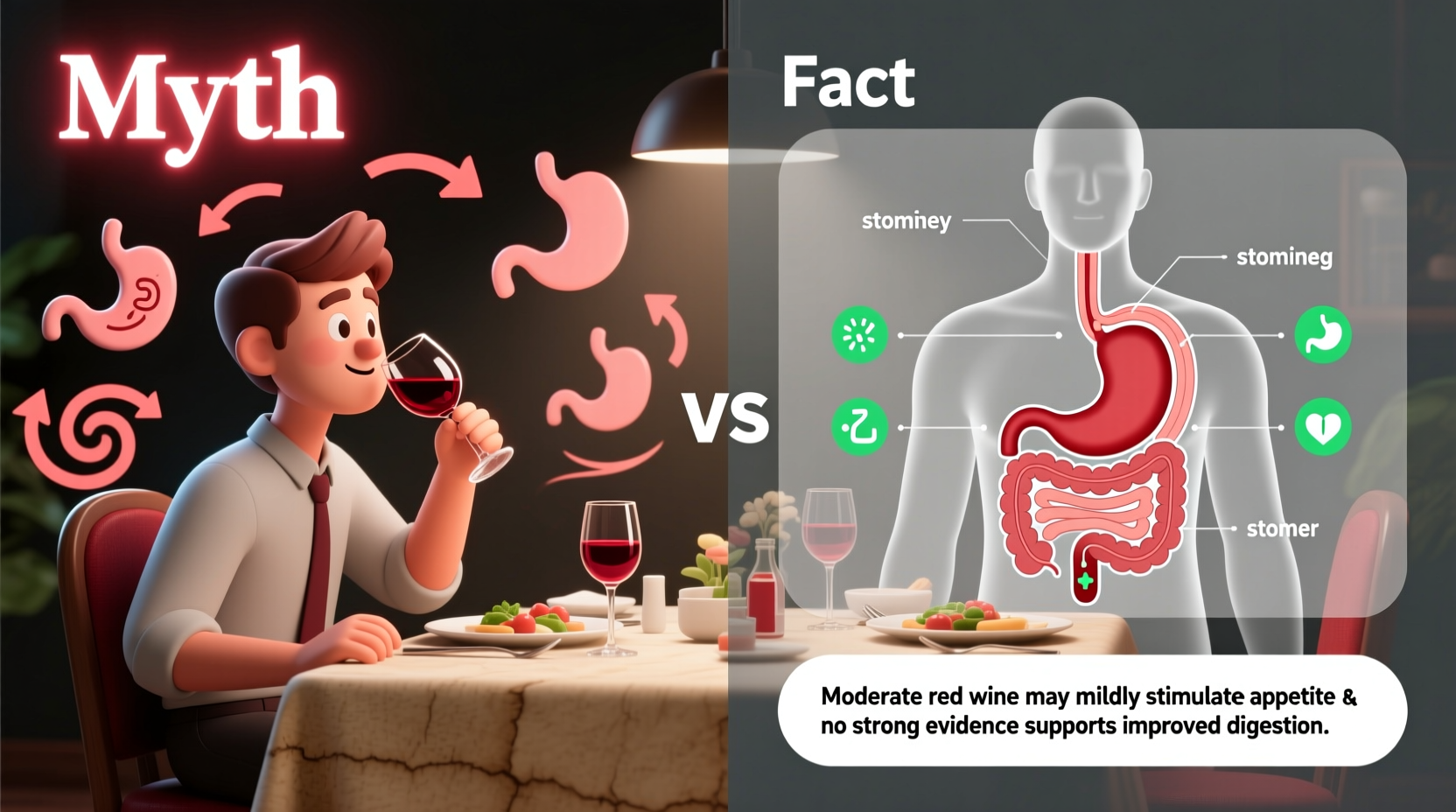
To assess wine’s role, we must first understand what digestion actually entails. It’s not a single event but a coordinated sequence: salivary amylase begins starch breakdown; gastric acid and pepsin denature proteins in the stomach; bile emulsifies fats in the duodenum; pancreatic enzymes (lipase, amylase, proteases) complete macronutrient hydrolysis; and finally, nutrients are absorbed across the intestinal epithelium.
Critical to this process is gastric emptying time—the rate at which food leaves the stomach—and lower esophageal sphincter (LES) tone, which prevents acid reflux. Gut motilin, gastrin, cholecystokinin (CCK), and serotonin all regulate these functions. Any substance that modulates these signals—or damages the mucosa—can meaningfully influence digestive comfort.
Myth #1: “Wine Stimulates Digestive Enzymes”
A commonly repeated claim is that red wine “activates” stomach acid or pancreatic enzymes, thereby speeding digestion. While moderate alcohol can transiently increase gastric acid secretion—especially when consumed *before* a meal—the effect is inconsistent and dose-dependent.
Research published in Gastroenterology (2021) found that 100 mL of red wine consumed 30 minutes prior to a high-fat meal increased gastric acid output by ~18% in healthy volunteers—but only among those with baseline-normal acid production. In participants with pre-existing hypochlorhydria (low stomach acid), no significant change occurred. More critically, the same study observed delayed gastric emptying by an average of 27 minutes—suggesting slower, not faster, transit.
Moreover, alcohol inhibits pancreatic enzyme synthesis at the cellular level. Chronic intake reduces pancreatic acinar cell responsiveness to CCK, and even acute doses (>20 g ethanol) blunt lipase release during fat digestion. This undermines the idea that wine “helps break down food.”
Tip: If you experience post-meal fullness or bloating, avoid wine *before* or *with* heavy, fatty meals—it may slow gastric emptying and worsen discomfort.Myth #2: “Red Wine’s Polyphenols Soothe the Gut”
This myth leans on real chemistry—but misapplies it. Red wine contains resveratrol, quercetin, and proanthocyanidins—compounds with documented anti-inflammatory and antioxidant properties in vitro and in rodent models. However, human bioavailability is extremely low: less than 1% of ingested resveratrol reaches systemic circulation in active form. What’s more, wine’s ethanol content counteracts many polyphenol benefits by increasing intestinal permeability (“leaky gut”) and promoting oxidative stress in enterocytes.
A landmark 2022 randomized crossover trial in The American Journal of Clinical Nutrition tracked 42 adults with mild IBS over six weeks. Participants consumed either 150 mL of organic Pinot Noir daily with dinner or an isocaloric grape juice placebo (polyphenol-matched, alcohol-free). While both groups reported modest subjective improvements in “meal satisfaction,” only the alcohol group showed statistically significant increases in fecal calprotectin—a biomarker of gut inflammation—and higher incidence of nocturnal heartburn (+34% vs. placebo).
In short: polyphenols are beneficial—but not when delivered via ethanol. Their potential is drowned out by alcohol’s irritant effects on the GI tract.
Facts: Where Wine *Does* Interact with Digestion—And What That Means
Wine doesn’t act as a digestive “aid” in the pharmacological sense—but it does exert measurable, dose-sensitive effects:
- Low doses (≤10 g ethanol, ~75 mL red wine) may mildly relax gastric smooth muscle via nitric oxide pathways—potentially easing spasms in some individuals with functional dyspepsia.
- Moderate doses (10–14 g) consistently reduce LES pressure by 15–30%, increasing reflux risk—especially when lying down or bending after eating.
- Acetaldehyde, wine’s primary metabolite, directly irritates gastric mucosa and inhibits mitochondrial function in enterocytes, impairing nutrient absorption efficiency.
- Tannins (abundant in young reds like Cabernet Sauvignon) bind dietary iron and plant-based zinc, reducing their bioavailability—relevant for those with marginal micronutrient status.
Crucially, individual response varies widely. Genetics play a major role: ALDH2*2 carriers (common in East Asian populations) accumulate acetaldehyde rapidly, experiencing facial flushing, nausea, and profound gastric distress—even after one glass. For them, wine is unequivocally counter-digestive.
Real-World Example: Maria’s Experience
Maria, 58, a retired schoolteacher in Portland, Oregon, had enjoyed a glass of Chianti with dinner for 40 years. She believed it “settled her stomach” after rich pasta dishes. Over two years, however, she developed persistent mid-abdominal burning, especially at night, and frequent bloating after meals—even light ones. Her gastroenterologist ordered an upper endoscopy, revealing non-erosive reflux disease (NERD) and mild chronic gastritis.
Under guidance, Maria eliminated wine for four weeks while keeping all other habits identical. Within 10 days, her nighttime burning ceased. By week three, post-meal bloating dropped by 70%. When she reintroduced wine (same brand, same portion), symptoms returned within 48 hours. A pH-impedance study confirmed prolonged acid exposure correlating precisely with wine consumption—not meal composition.
Maria’s case illustrates a key truth: perceived benefit can mask subtle harm. What felt like “digestive support” was likely a transient relaxation masking progressive mucosal irritation—until thresholds were crossed.
What the Experts Say
“Alcohol is a direct mucosal toxin. No amount is ‘good’ for the gut lining—and the notion that wine aids digestion confuses cultural ritual with physiology. If someone feels better after wine, it’s more likely due to slowed gastric motility (reducing urgency) or placebo-mediated vagal modulation—not enhanced enzymatic activity.”
— Dr. Lena Torres, MD, FACG, Director of Neurogastroenterology at Northwestern Medicine
“We see consistent data: even moderate wine intake correlates with reduced microbial diversity, increased gram-negative bacteria (linked to endotoxin leakage), and decreased butyrate-producing species. These changes precede symptoms—and they’re reversible upon abstinence.”
— Dr. Rajiv Mehta, PhD, Microbiome Research Lead, Stanford Gut Microbiome Program
Practical Guidance: A Step-by-Step Approach to Dinner & Wine
If you enjoy wine with meals but want to minimize digestive impact, follow this evidence-informed sequence:
- Assess your baseline: Track symptoms for one week without wine—note timing, severity, and triggers (e.g., “bloating 90 min after salmon + wine” vs. “none after salmon alone”).
- Choose wisely: Opt for low-tannin, low-alcohol wines (e.g., Pinot Noir, Gamay, or dry Riesling at ≤12.5% ABV). Avoid high-sulfite, heavily filtered wines if sensitive.
- Time it right: Drink wine after finishing your meal—not during—and wait at least 30 minutes before reclining or sleeping.
- Portion strictly: Measure 125 mL (5 oz) using a marked glass. Avoid “top-ups”—most people pour 30–50% more than standard.
- Pair intentionally: Never pair wine with foods already known to trigger you (e.g., chocolate, citrus, fried foods). Instead, choose lean protein and steamed vegetables as your anchor.
- Hydrate: Follow each glass with 150 mL of room-temperature water to dilute gastric ethanol concentration and support mucosal hydration.
Do’s and Don’ts: Wine & Digestion at a Glance
| Action | Do | Don’t |
|---|---|---|
| Timing | Drink wine 15–20 minutes after finishing your main course | Sip wine throughout the meal or immediately before eating |
| Quantity | Stick to ≤125 mL (5 oz) per sitting | Pour “by eye” or refill without measuring |
| Food Pairing | Pair with grilled fish, roasted vegetables, or legume-based dishes | Pair with spicy sauces, cured meats, or tomato-heavy pastas |
| Post-Meal Behavior | Remain upright for ≥2 hours; take a gentle 10-min walk | Lie down, bend over, or wear tight waistbands within 90 minutes |
FAQ: Clear Answers to Common Questions
Can wine help with constipation?
No—wine does not reliably relieve constipation. While ethanol has mild laxative effects at high doses (≥30 g), this is due to osmotic diarrhea and fluid loss—not improved motilin signaling or colonic peristalsis. In fact, dehydration from alcohol worsens constipation in most people. Better options: adequate fiber (25–30 g/day), magnesium-rich foods (spinach, almonds), and consistent hydration.
Is sparkling wine easier on digestion than still wine?
Not necessarily. Carbonation increases gastric distension and LES pressure variability, raising reflux risk. Additionally, many sparkling wines contain higher residual sugar and sulfites—both associated with bloating in sensitive individuals. Traditional method sparklers (Champagne, Cava) tend to be lower in added sugar than Prosecco, making them marginally gentler—but still not “digestive.”
What’s a better alternative to wine for digestive support?
Evidence-backed alternatives include: warm ginger tea (shown to accelerate gastric emptying by 25% in clinical trials), fennel seed infusion (reduces intestinal spasms), or a 5-minute mindful breathing routine before eating (enhances parasympathetic tone). Fermented foods like unsweetened kefir or sauerkraut—consumed earlier in the day—also support long-term microbiome resilience.
Conclusion: Rethinking Ritual with Respect for Physiology
Wine’s place at the table need not be abandoned—but its role should be redefined. It is not a digestive tool. It is a cultural artifact, a sensory experience, and, in moderation, a socially meaningful practice. To conflate enjoyment with therapeutic function is to misunderstand both gastronomy and gastroenterology.
True digestive wellness emerges from consistency—not cocktails: regular meal timing, thorough chewing, mindful pacing, appropriate fiber intake, and sufficient sleep. When wine complements those foundations, it enhances life. When it substitutes for them—or masks emerging dysfunction—it becomes a liability.
Start tonight. Serve your favorite dish. Savor its aromas and textures. Then decide—consciously—whether wine deepens the experience or distracts from it. Your gut will tell you, quietly and clearly, which choice serves you best.
💬 Your experience matters. Have you noticed how wine affects your digestion? Share your observations—and what changed when you adjusted timing, type, or portion—in the comments below. Real stories help others navigate this nuanced balance.