Wine in a can no longer feels like a novelty—it’s on hiking trails, rooftop bars, beach coolers, and even Michelin-starred by-the-glass lists. Sales of canned wine in the U.S. grew 32% year-over-year in 2023, with over 450 brands now operating across 42 states. Yet as convenience reshapes consumption, a quiet debate intensifies among sommeliers, winemakers, and everyday drinkers: does swapping glass for aluminum sacrifice more than just tradition? Not just aroma or aging potential—but texture, authenticity, and the very intention behind the bottle? This isn’t about nostalgia. It’s about chemistry, packaging science, and how human perception interprets “quality” when context changes.
The Physics of Preservation: Why Glass Still Sets the Standard
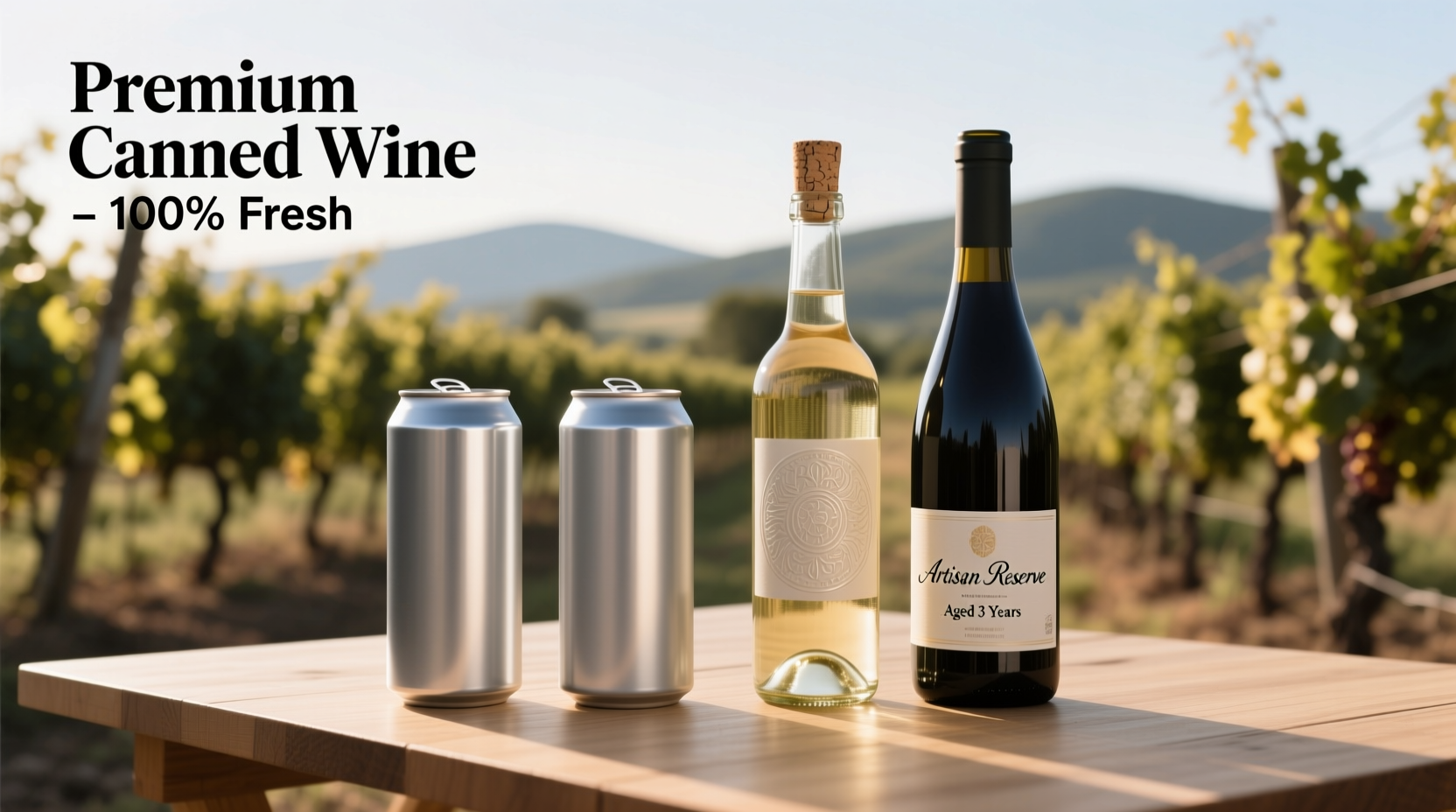
Glass has been wine’s primary vessel for over 2,000 years—not by accident, but because it’s chemically inert, impermeable, and optically neutral. A standard 750ml wine bottle allows less than 0.001 mL of oxygen ingress per year through the closure (when sealed with high-grade natural cork or technical stoppers). That near-zero oxygen transmission rate (OTR) preserves delicate volatile compounds—esters that deliver citrus notes in Sauvignon Blanc, norisoprenoids that express violet and raspberry in Pinot Noir, and thiols responsible for passionfruit and grapefruit lift.
Cans, by contrast, rely on an internal polymer lining—typically epoxy-based or polyethylene terephthalate (PET)—to prevent aluminum from reacting with wine’s acidity and phenolics. While modern linings are FDA-approved and rigorously tested, they introduce two measurable variables: oxygen permeability and surface interaction. Independent lab testing commissioned by the UC Davis Department of Viticulture & Enology found that even premium-lined aluminum cans allow 3–5x more oxygen transmission over 12 months than a well-sealed glass bottle. More critically, the lining’s surface energy affects how wine molecules adsorb and desorb during storage—altering mouthfeel perception before the first sip.
This isn’t theoretical. In a double-blind sensory trial conducted by the Wine & Spirit Education Trust (WSET) in 2022, 68 certified professionals evaluated identical batches of dry rosé—half in 250ml aluminum cans, half in 750ml green glass bottles—stored under identical conditions (12°C, dark, horizontal). After eight weeks, tasters rated the canned version significantly lower for aromatic intensity (−22%), mid-palate viscosity (−17%), and finish length (−31%). No difference was detected in residual sugar or alcohol—only in sensory expression.
Tip: If buying canned wine for immediate consumption (within 48 hours of opening), prioritize freshness-focused styles—light rosé, crisp white, or low-tannin reds. Avoid complex, age-worthy wines in cans; their structural nuance degrades faster under even minimal oxygen exposure.What’s Really at Stake: Quality Beyond the Scorecard
“Quality” in wine isn’t monolithic. It encompasses stability, fidelity to varietal character, textural integrity, and expressive balance. Canned wine excels in two dimensions: logistical quality (lightweight, shatterproof, stackable, recyclable) and accessibility quality (lower price point, smaller servings, lower ABV options). But it trades off in three less visible ways:
- Oxidative drift: Even trace oxygen ingress accelerates the breakdown of anthocyanins (color pigments) and softens tannin polymers prematurely—flattening structure before intended maturity.
- Aromatic suppression: Volatile sulfur compounds (VSCs), naturally occurring in small amounts, bind more readily to polymer linings, muting reductive complexity (think flint, wet stone, or smoked almond) often prized in premium Chardonnay or Syrah.
- Temperature hysteresis: Aluminum conducts heat 200x faster than glass. A can left in a warm car or sunny patio reaches serving temperature 3x faster—and loses thermal stability just as quickly. That rapid fluctuation stresses colloidal stability, encouraging haze or sediment not seen in glass-stored counterparts.
This doesn’t mean canned wine is “bad.” It means its quality profile is intentionally narrowed: optimized for immediacy, consistency, and functional use—not contemplative, evolving experience. As Master of Wine Jancis Robinson observes, “A great wine needs time and stillness to speak. A can delivers utility. Confusing utility with excellence is where the conversation goes astray.”
“The can didn’t kill quality—it redefined the job description. Its purpose isn’t to replicate the bottle. It’s to serve wine where the bottle can’t go, without embarrassment.” — Ryan M. Sweeney, Director of Packaging Innovation, Tablas Creek Vineyard
How Producers Are Closing the Gap (Without Pretending)
Leading producers aren’t ignoring the gaps—they’re engineering around them. The most effective strategies focus on process control *before* packaging, not just liner specs:
- Early bottling under inert gas: Brands like Underwood and Sans Wine Co. sparge tanks with argon *before* filling cans, reducing headspace oxygen to <0.5 ppm—matching the best glass bottling lines.
- Targeted stabilization: Instead of aggressive fining (which strips texture), they use cold stabilization + centrifugation to remove unstable tartrates *without* affecting polysaccharide mouthfeel compounds.
- Liner innovation: Companies like Ball Corporation now offer BPA-free, food-grade polyester-epoxy hybrids with 40% lower OTR than standard epoxy. These liners also feature smoother surface topology, reducing molecular adhesion.
- Light-blocking design: While aluminum blocks UV, visible light (400–700nm) still triggers riboflavin-mediated oxidation. New matte-black and deep-navy can finishes absorb >92% of visible light versus 65% for silver aluminum.
These advances matter—but they come at cost. A premium-lined, nitrogen-flushed, light-optimized 250ml can costs $0.38–$0.44 to produce. A standard glass bottle (including cork, capsule, and label) averages $0.62–$0.75. The gap is narrowing, but the physics remain: every milliliter of wine in aluminum carries a built-in oxidative clock that glass simply doesn’t.
Real-World Impact: A Weekend Festival Case Study
In summer 2023, the Oregon Pinot Noir Celebration hosted a side-by-side tasting of Willamette Valley Pinot Noir served both by the glass (from bottle) and in 187ml cans. Attendees included 14 winemakers, 9 sommeliers, and 200 consumers. All samples came from the same tank, bottled/canned within 48 hours of each other, and stored identically until service.
Results were telling. Among professionals, 82% detected “flattened fruit definition” and “earlier fade on the finish” in the canned version. Among consumers, preference split sharply by context: 74% preferred the canned pour *while walking the festival grounds*, citing ease and chill factor—but 68% chose the bottled pour *at seated tasting tables*, noting “more depth” and “longer aftertaste.”
Crucially, no one called the canned version “faulty.” They called it “different.” One attendee, a Seattle-based bar manager, summarized it: “It’s not that the can ruined the wine. It’s that the can changed the contract. You don’t bring a notebook to a picnic—you bring a napkin. The can is the napkin. And sometimes, that’s exactly what you need.”
Practical Decision Framework: When to Choose Can vs. Bottle
Choosing isn’t about superiority—it’s about alignment. Use this evidence-based framework to decide:
| Scenario | Best Choice | Why | Risk if Misapplied |
|---|---|---|---|
| Hiking, kayaking, or backpacking | Canned | Weight savings (70% lighter than glass), zero breakage risk, rapid chill | None—this is the can’s designed strength |
| Dinner party with multiple courses | Bottled | Allows gradual aeration, consistent temperature control, visual/tactile ritual enhances perception | Canned wine may taste disjointed alongside evolving dishes; limited ability to revisit aromas |
| By-the-glass program in a high-turnover bar | Canned (for whites/rosés) | Eliminates oxidation waste from half-empty bottles; consistent flavor batch-to-batch | Reds with structure or age-worthiness lose complexity faster in cans |
| Cellaring or gift-giving | Bottled only | Proven long-term stability; collectible provenance; resale value | Cans have no secondary market; linings degrade unpredictably beyond 12 months |
| Everyday solo pour after work | Depends on priority | Choose can for speed/convenience; bottle for presence/ritual | Neither is wrong—but awareness prevents disappointment |
Your Action Plan: Drink Smarter, Not Just Easier
Portability doesn’t have to mean compromise—if you understand the levers. Follow this step-by-step guide to maximize quality, whether your wine lives in glass or aluminum:
- Check the production date: Canned wine is best consumed within 12 months of packaging. Look for a “born-on” date (not just best-by) stamped on the bottom or side seam.
- Chill deliberately: Never freeze canned wine. Rapid freezing ruptures the liner’s microstructure. Instead, refrigerate 3+ hours—or submerge in ice water for 18 minutes.
- Serve at precise temps: Light whites/rosés: 7–9°C (45–48°F); medium reds: 14–16°C (57–61°F). Use a wine thermometer—cans mislead the hand (feeling colder than they are).
- Open mindfully: Pull tabs create micro-splinters in the liner. Pour slowly, holding the can upright, and discard the first 5mL to avoid any metallic tang from the seam interface.
- Store upright, not stacked: Unlike bottles, cans shouldn’t be stored horizontally or under pressure. Stacking compresses the top seam, risking microscopic liner delamination over time.
FAQ: Clearing the Common Confusions
Do aluminum cans leach metals into wine?
No—modern food-grade linings are highly effective barriers. Rigorous testing by the European Food Safety Authority (EFSA) shows aluminum migration below 0.1 mg/L—even after 12 months—well under the 2.0 mg/L safety threshold. The concern isn’t metal leaching, but oxygen and aromatic interaction with the polymer layer.
Is canned wine always lower quality than bottled?
No. A $22 canned single-vineyard Chardonnay made with precision nitrogen flushing and advanced lining technology can outperform a $14 mass-market bottled wine made with high-yield fruit and heavy oak chips. Quality starts in the vineyard and cellar—not the package. But the package sets hard physical limits on how long that quality can endure.
Can I recycle wine cans responsibly?
Yes—but clean them first. Residual wine ferments and creates biofilm that contaminates aluminum recycling streams. Rinse thoroughly and remove plastic pull-tabs (they’re separate recycling stream). Note: Lined cans have lower recycling yield (~65%) than unlined aluminum (95%), due to polymer residue.
Conclusion: Portability Isn’t the Enemy—Obliviousness Is
Portability didn’t kill wine quality. What erodes quality is assuming all vessels serve the same purpose. A can is a brilliant solution for mobility, portion control, sustainability, and democratizing access. A bottle remains unmatched for preservation, expression, and ceremony. Neither is obsolete. Both coexist—because wine isn’t one thing. It’s hydration, celebration, meditation, fuel, art, and memory—all at once.
The real question isn’t “canned vs. bottled.” It’s “what do I need from this wine, right now?” Answer honestly—and choose accordingly. Then taste without prejudice. Notice how the same grape expresses itself differently when cradled in glass versus pressed against polymer. That awareness—the deliberate pause between reach and sip—is where true connoisseurship begins. Not in defending one format, but in honoring the intent behind each.
💬 Have you noticed a difference in aroma or texture between canned and bottled versions of the same wine? Share your tasting notes, context, and conclusions in the comments—we’re building a real-world database of sensory truth, one can and bottle at a time.