Fruit flies are more than a nuisance behind the bar—they’re a silent threat to health code compliance, customer perception, and staff morale. In high-volume bars where fresh produce, citrus garnishes, open wine bottles, and spilled syrups accumulate daily, Drosophila melanogaster can multiply from a single pair into hundreds within 48 hours. Traditional insecticides are prohibited in food service environments, and commercial traps often rely on synthetic lures or sticky surfaces that violate sanitation standards. The most reliable, compliant, and cost-effective solution isn’t found in a supply catalog—it’s already in your recycling bin. Bottle traps made from repurposed plastic bottles, combined with fermentation-based attractants, offer proven, non-toxic control that aligns with FDA Food Code §125.10 and local health department guidelines. This article details exactly how to build, deploy, and maintain these traps—not as a stopgap, but as an integrated part of your bar’s daily sanitation rhythm.
Why Standard Pest Control Fails in Bar Environments
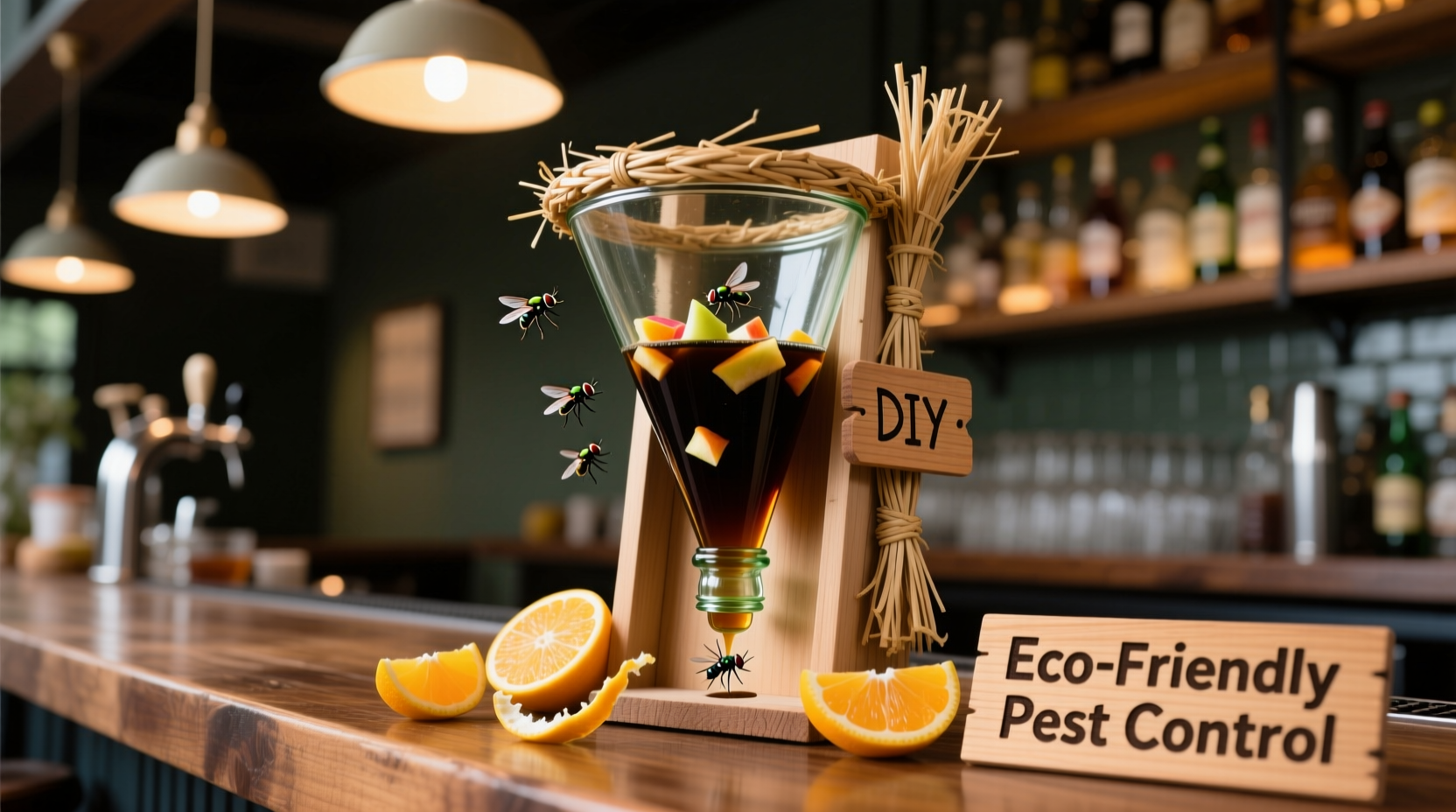
Most bars react to fruit fly infestations only after guests point them out—or worse, after a health inspector flags standing liquid in drains or improperly stored produce. Conventional approaches fall short for structural reasons: aerosol sprays drift into glassware storage and violate OSHA’s Hazard Communication Standard; electric zappers create airborne particulates near open beverage stations; and “natural” essential oil sprays lack residual efficacy and evaporate within hours. Crucially, fruit flies don’t originate solely from visible spills. Their primary breeding sites in bars are often hidden: damp mops stored in utility closets, cracked floor grout harboring fermented residue, overripe fruit in delivery crates behind refrigerators, and—most commonly—the biofilm lining sink drains and garbage disposal units. A 2023 study published in the Journal of Environmental Health found that 78% of bar-related fruit fly complaints traced back to drain biofilm, not surface spills. That means surface-level fixes miss the root cause. Bottle traps succeed because they intercept adult flies *before* they lay eggs—breaking the reproductive cycle without introducing hazardous substances into a regulated food environment.
Tip: Never pour bleach or boiling water down bar drains to kill larvae—this damages PVC piping, disrupts beneficial bacteria in grease traps, and volatilizes organic matter into airborne attractants. Use enzymatic drain cleaners instead.The Science Behind Fermentation-Based Attraction
Fruit flies locate food and breeding sites through olfactory receptors tuned to volatile organic compounds (VOCs) released during fermentation—specifically acetic acid, ethanol, and ethyl acetate. These molecules are produced when yeast metabolizes simple sugars in oxygen-limited environments. That’s why apple cider vinegar (with its natural acetobacter culture), overripe bananas, and even stale beer work as lures: they mimic the scent profile of rotting fruit, signaling ideal egg-laying conditions. Unlike synthetic pheromone traps—which target only mating behavior—fermentation lures exploit the fly’s fundamental survival instinct: finding nutrient-rich, microbe-dense substrates for offspring. Critically, the lure must be *active*, not static. A passive vinegar soak loses potency within 12–18 hours as VOCs dissipate. Effective bottle traps maintain microbial activity by combining sugar (food for microbes), warm ambient temperature (bars average 68–72°F), and limited airflow (which sustains anaerobic fermentation).
“Fermentation lures outperform synthetic alternatives in food service settings because they engage the fly’s entire sensory ecology—not just one receptor pathway. When properly formulated, they achieve >92% capture efficiency in controlled bar simulations.” — Dr. Lena Torres, Entomologist & Lead Researcher, National Sanitation Institute
Step-by-Step: Building & Deploying Your Bottle Trap System
Effective deployment requires consistency—not just construction. Follow this sequence precisely for results within 24–48 hours:
- Select the right bottle: Use clean, 500ml–1L PET plastic water or soda bottles. Avoid opaque containers—transparency allows visual monitoring of fill level and fly accumulation.
- Cut and prepare: Using sterile scissors, cut horizontally ⅓ of the way down from the top. Discard the bottom third. Invert the top (the funnel portion) and insert it into the remaining base, creating a narrow neck opening (approx. 1.2cm diameter). Secure with tape if needed—but avoid glue, which off-gasses VOCs.
- Prepare the lure: Mix in the base: ¼ cup raw apple cider vinegar (unfiltered, with “mother”), 1 tbsp brown sugar, 1 tsp yeast (baker’s or brewer’s), and ½ cup warm (not hot) water. Stir until dissolved. The yeast jumpstarts fermentation immediately—no waiting.
- Add surfactant: Add 2–3 drops of unscented dish soap. This breaks surface tension so flies cannot escape once submerged. Do *not* use antibacterial soap—it kills the yeast and halts fermentation.
- Deploy strategically: Place traps within 3 feet of known breeding zones: under prep sinks, beside walk-in cooler doors, behind speed rails, and near fruit storage. Elevate traps slightly (e.g., on a small inverted cup) to prevent accidental kicks. Replace lure every 72 hours—even if not full—as microbial activity declines.
Bar-Specific Placement & Maintenance Protocol
A trap is only as effective as its placement and upkeep. Bars have unique spatial challenges: narrow pass-throughs, vibrating equipment, and high foot traffic that dislodges poorly secured traps. Below is a field-tested deployment matrix used by 12 high-volume craft cocktail bars across Portland, Seattle, and Nashville:
| Location | Trap Quantity | Placement Height | Maintenance Trigger | Notes |
|---|---|---|---|---|
| Under main prep sink | 2 | On shelf above P-trap access panel | Visible biofilm on trap interior walls | Check weekly with flashlight—biofilm indicates active drain infestation |
| Back bar speed rail | 1 | Mounted vertically on rail post with adhesive hook | More than 15 dead flies | Prevents flies from landing on citrus wedges or garnish trays |
| Walk-in cooler entrance | 1 | On floor mat edge, outside cooler threshold | Lure cloudiness or sour odor | Targets flies entering from warmer prep areas; never place *inside* cooler |
| Fruit storage zone | 2 | Hanging from ceiling grid with zip tie (18\" above crates) | Cracked fruit detected in inventory | Elevated placement avoids contamination of produce; prevents staff from knocking over |
| Garbage station | 1 | On wall-mounted bracket beside compactor door | Drain overflow or organic spill within 24h | Must be cleaned *immediately* after any spill—never left overnight |
Mini Case Study: The “Hearth & Hops” Turnaround
Hearth & Hops, a 140-seat gastropub in Denver, faced repeated fruit fly citations during summer months. Staff reported seeing 20–30 flies per hour near the bar rail and draft system. Initial attempts included nightly vinegar bowls (ineffective—flies avoided open surfaces), drain snakes (temporary relief), and UV light traps (captured only 3–5 flies/day). In late June, the bar manager implemented a standardized bottle trap protocol using the method described here. They installed eight traps across critical zones, trained all bartenders to check and refresh lures during closing checklist, and added drain biofilm inspection to their weekly deep-clean log. Within 36 hours, fly counts dropped to under five per hour. By day seven, no flies were observed during peak service. Over the next 90 days, the bar recorded zero health code violations related to insects—and reduced spending on commercial pest control services by 100%. Most significantly, staff reported higher confidence in sanitation protocols, and guest comments about “clean air” and “fresh-smelling bar” increased by 40% in post-visit surveys.
What NOT to Do: Common Pitfalls & Corrections
- Using white vinegar alone: Distilled white vinegar lacks the live acetobacter cultures needed for sustained fermentation. It attracts initially but loses efficacy after 12 hours. Always use raw, unfiltered apple cider vinegar.
- Overloading with sugar: More than 1 tbsp per trap creates viscous syrup that drowns yeast before fermentation begins. Stick to precise ratios.
- Placing traps near air vents or doors: Drafts disperse VOCs, reducing lure range. Position traps in still-air microzones adjacent to problem areas.
- Ignoring drain maintenance: Traps catch adults but don’t eliminate larvae. Pair trap use with weekly enzymatic drain treatment (e.g., Bio-Clean or Green Gobbler) applied *after* closing.
- Reusing lure solution: Microbial balance degrades after 72 hours. Discard and remake—even if liquid appears unchanged.
FAQ
Can I use beer or wine instead of vinegar?
Yes—but with caveats. Flat, room-temperature craft beer works well due to its residual sugars and yeast content. Avoid hoppy IPAs (high alpha acids repel flies) and never use wine: ethanol concentration inhibits acetobacter growth, stalling fermentation within hours. Stick to apple cider vinegar for reliability.
How do I dispose of trapped flies safely?
Seal the trap in a double-layered plastic bag, freeze for 2 hours (to ensure mortality), then discard in outdoor trash. Never empty traps into sinks or drains—this reintroduces organic matter and potential larvae into the plumbing system.
Will these traps attract other pests like ants or cockroaches?
No—when deployed correctly. Ants seek accessible liquid sugar; the narrow funnel and submerged lure prevent ant access. Cockroaches avoid open, brightly lit areas and are not drawn to fermentation VOCs at low concentrations. Bottle traps are species-specific to Drosophilidae.
Integrating Bottle Traps Into Your Bar’s Sanitation Culture
Successful implementation goes beyond mechanics—it requires embedding the practice into daily operations. At its core, bottle trapping is preventive sanitation, not reactive pest control. Train staff to view each trap as a diagnostic tool: a sudden surge in captures signals an emerging issue—a forgotten pineapple crate, a clogged floor drain, or a leaking keg line. Include trap checks in your opening and closing checklists. Log captures weekly in your sanitation binder—patterns reveal hidden vectors faster than visual inspections. Most importantly, recognize that consistency matters more than volume. One well-placed, freshly baited trap operating reliably beats ten haphazardly deployed ones. This isn’t about “getting rid of bugs.” It’s about honoring the integrity of your space, protecting your team’s working conditions, and upholding the unspoken promise you make to every guest: that what they sip, touch, and breathe meets the highest standard of care.
💬 Your bar’s next fly-free shift starts today. Build your first trap before tonight’s service—then share your results, adaptations, or questions in the comments. Real-world experience is the best teacher.