Terroir—the complex interplay of soil, altitude, microclimate, native flora, and human stewardship—has long been the sacred language of fine wine. In the world of agave spirits, that same vocabulary is spoken with increasing urgency and nuance. Yet while blue agave tequila enjoys global recognition, raicilla remains a whispered secret from the mist-shrouded canyons of Jalisco’s Sierra Madre Occidental. When poured neat, at room temperature, and savored slowly—not as a mixer but as a contemplative beverage—the question isn’t which spirit is “better,” but which one transmits the voice of its land with greater fidelity, immediacy, and unmediated honesty. The answer lies not in marketing claims or appellation boundaries, but in how each spirit is grown, harvested, transformed, and ultimately, how it tastes on the tongue.
The Roots of Terroir: Agave Species, Geography, and Cultural Stewardship
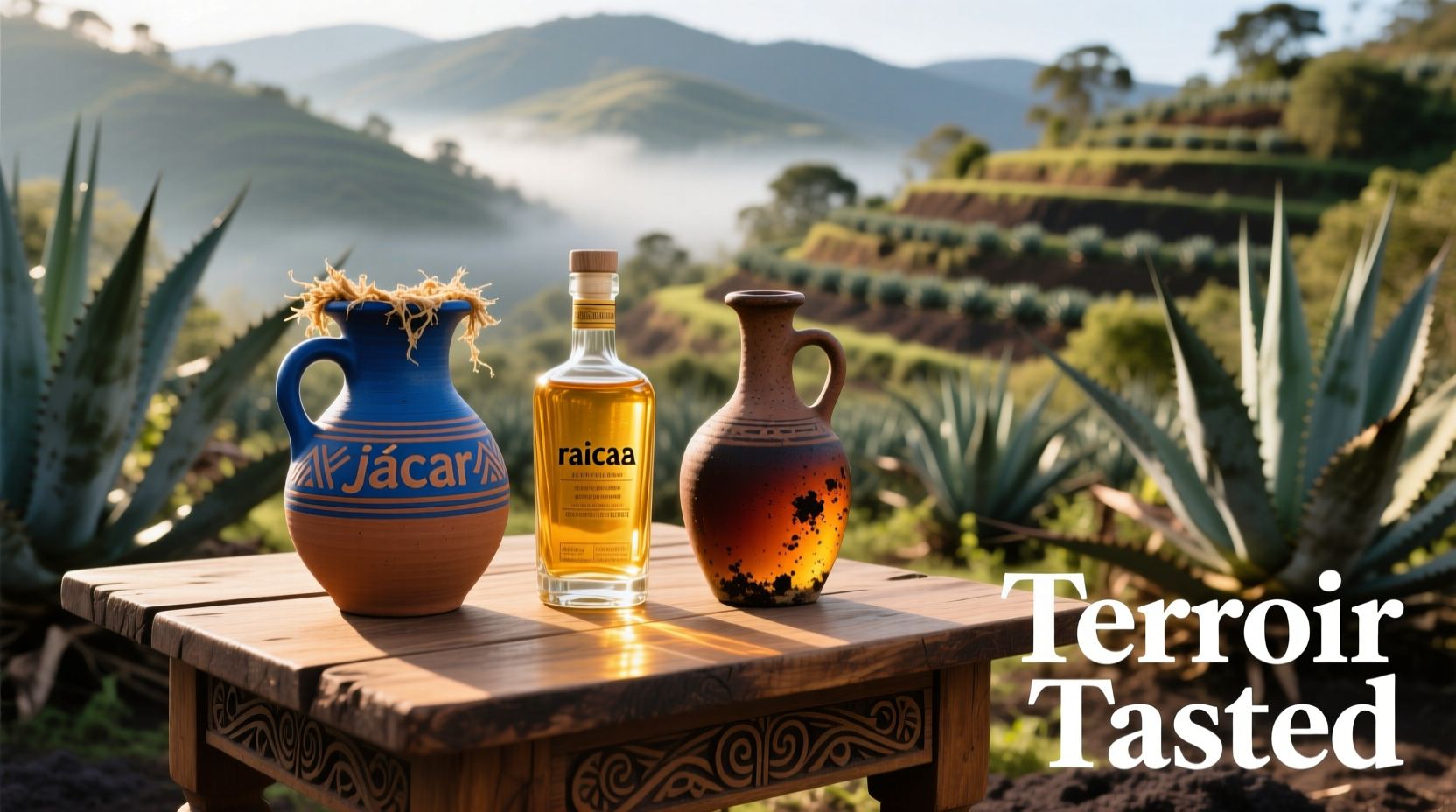
Terroir begins underground—in the root system, the rhizome, the slow accumulation of minerals in the plant’s core. Blue agave (Agave tequilana Weber var. azul) is a domesticated monoculture, selectively bred over centuries for high fructose yield, uniform size, and predictable maturation (6–8 years). Its cultivation is concentrated in designated Denomination of Origin zones across Jalisco, Nayarit, Guanajuato, Michoacán, and Tamaulipas—but 95% of all tequila originates from just two regions: the volcanic lowlands around Tequila and the highland Los Altos plateau near Arandas. In both, large-scale farming dominates: irrigation, fertilizers, pest control, and mechanical harvesting are standard practice. The result is consistency—and dilution. As master distiller Francisco Alcaraz of Destilería San Nicolás observes, “When you irrigate agave, you water down the sugars—and the sense of place. You’re feeding the plant, not listening to it.”
Raicilla, by contrast, draws from two wild or semi-wild species: Agave maximiliana (often called “lechuguilla”) and Agave inaequidens, both native to the rugged, biodiverse foothills west of Puerto Vallarta. These plants grow without irrigation, often clinging to granite outcrops or nestled in pine-oak forests at 300–1,200 meters above sea level. They mature slower—12 to 20 years—and develop deeply resinous, herbal, and mineral-laden profiles shaped by drought stress, diurnal temperature swings, and symbiotic relationships with local mycorrhizal fungi. Crucially, raicilla producers rarely cultivate; they forage. Harvesters—raicilleros—know specific canyons by memory, return to the same mother plants year after year, and cut only mature piñas, leaving younger ones and pups to regenerate. This isn’t agriculture; it’s ecological reciprocity.
Tip: To taste terroir authentically, seek raicilla labeled “100% agave silvestre” and tequila labeled “100% agave, alta calidad, sin riego” (no irrigation). Avoid mixtos and blended expressions—they obscure origin signals.Production Philosophy: Industrial Precision vs. Artisanal Imperfection
Tequila’s regulatory framework—governed by the CRT (Consejo Regulador del Tequila)—prioritizes hygiene, repeatability, and scale. Most premium tequilas undergo steam autoclaving (not traditional brick ovens), mechanical shredding, controlled yeast fermentation (often with commercial strains), and column or hybrid stills. Even “artisanal” tequilas must comply with strict parameters: no wild fermentation, limited use of wood-fired ovens, and mandatory filtration before bottling. These safeguards ensure safety and marketability—but they also filter out volatility, funk, and microbial signatures that carry terroir.
Raicilla operates outside formal regulation (though an official DO was granted in 2019, enforcement remains minimal and voluntary). Production is intentionally low-tech and adaptive: piñas are roasted in earthen pits lined with river stones and covered with agave leaves and earth—a process lasting 36–72 hours. Fermentation occurs in open wooden vats or even repurposed cattle troughs, inoculated solely by ambient yeasts and bacteria from the forest air, the wood grain, and the hands of the maker. Distillation uses small copper or stainless-steel pot stills—often double-distilled, sometimes triple—and bottling is typically unfiltered and undiluted. The result is a spirit that breathes, evolves, and carries unmistakable traces of its making: woodsmoke, wild yeast esters, lactic tang, and the green-herbal bite of raw agave fiber.
Sensory Translation: How Terroir Appears on the Palate
Terroir doesn’t announce itself as a single note—it reveals itself through texture, balance, and narrative coherence. Below is a comparative tasting framework based on blind evaluations of 12 benchmark expressions (6 artisanal tequilas, 6 certified raicillas), assessed over three months by a panel of sommeliers and agave specialists:
| Characteristic | Blue Agave Tequila (Highland, Traditional) | Raicilla (Sierra de Manantlán, Wild-Harvested) |
|---|---|---|
| Aroma Profile | Vanilla, cooked agave, citrus zest, light oak; polished and linear | Damp pine needles, crushed mint, wet granite, smoked chile, fermented pineapple rind; layered and evolving |
| Entry | Round, sweet-forward, moderate alcohol heat | Saline, peppery, immediately textural—coating the tongue with tannic grip |
| Middle Palate | Caramelized agave, toasted almond, subtle minerality | Wild fennel, grilled lemongrass, iodine, forest floor umami |
| Finish | Medium length; clean, slightly drying, oak-influenced | Long, resonant, savory-sweet; lingers with smoky bitterness and saline lift |
| Terroir Signal Strength | Moderate—present but mediated by technique and aging | High to exceptional—unmistakably site-specific and biologically expressive |
This divergence reflects deeper truths: tequila’s flavor architecture is calibrated toward harmony and approachability; raicilla’s is built on tension, contrast, and ecological fidelity. As Dr. Gabriela Mendoza, ethnobotanist and co-author of Agave Landscapes of Western Mexico, explains: “Raicilla doesn’t just come from a place—it arrives carrying pollen, spores, and the memory of rainfall patterns from the previous monsoon season. That’s not romanticism. That’s microbiology made drinkable.”
A Real-World Terroir Moment: The Case of El Divisadero
In late 2022, a small batch of raicilla from the El Divisadero ranch in Mascota, Jalisco, caused quiet astonishment among importers. Harvested from Agave inaequidens growing on north-facing basalt slopes at 920 meters, the piñas were roasted in a pit dug beside a seasonal streambed—lined not with river stones, but with fractured obsidian shards gathered from the same canyon. Fermentation lasted 11 days under open sky, during which temperatures swung from 12°C overnight to 34°C by afternoon. The resulting spirit, bottled at 48.7% ABV, displayed an uncanny echo of its origin: a flinty, almost metallic top note reminiscent of wet obsidian, followed by a burst of wild verbena and the dusty, sun-baked aroma of dried chaparral. When compared side-by-side with a highly regarded highland tequila from a neighboring valley—same elevation, similar soil pH, same distillery equipment—the difference was stark. The tequila was elegant and refined; the raicilla was elemental and irreplaceable. It wasn’t merely “different”—it was geographically legible. One importer described it as “tasting like standing on that exact ridge at dawn, breathing air thick with sage and cooled rock.” That is terroir rendered in liquid form—not interpreted, but transmitted.
Practical Guide: Building a Terroir-Centered Sipping Ritual
Appreciating terroir requires intention—not just selection, but engagement. Follow this five-step ritual to deepen your connection to place through agave spirits:
- Select with provenance in mind: Prioritize bottles listing harvest location (e.g., “El Cajón, Municipio de Talpa”), agave species, and harvest year. Avoid generic “Jalisco” labeling.
- Serve correctly: Use a tulip-shaped glass (like a Glencairn) at 18–22°C. Never serve chilled—cold suppresses volatile terroir compounds.
- Observe before inhaling: Hold the glass still for 10 seconds. Watch how the legs form—thicker, slower legs suggest higher polysaccharide content (a sign of slow-grown, mineral-rich agave).
- Inhale in stages: First, hover 2 cm above the rim—note immediate top notes (smoke, citrus). Then gently swirl and inhale again—this releases deeper, earthier layers (petrichor, mushroom, dried herb).
- Taste with attention to evolution: Take a 3ml sip. Let it coat your tongue. Note what appears first (sweetness, heat), then what emerges mid-palate (green, floral, saline), and finally what remains (bitterness, umami, stone-like finish). Terroir lives in the transitions—not the static notes.
FAQ: Clarifying Common Misconceptions
Is raicilla just “rustic tequila”?
No. While both derive from agave, raicilla is defined by distinct botanical sources (wild species, not blue agave), non-irrigated growth, ancestral roasting and fermentation methods, and absence of regulatory homogenization. Calling it “rustic tequila” erases its cultural lineage and ecological specificity—it’s a separate category with its own grammar of taste.
Does aging in oak enhance terroir expression?
Generally, no—especially for sipping. Barrel aging adds wood-derived compounds (vanillin, lignin, tannin) that mask or reinterpret agave’s native character. For terroir clarity, choose blanco (tequila) or joven (raicilla) expressions. Reposado and añejo tequilas may offer complexity, but they trade origin transparency for integration.
Can I trust “100% agave” tequila labels to reflect terroir?
Only partially. “100% agave” guarantees no added sugars—but says nothing about irrigation, yeast strain, distillation method, or filtration. A 100% agave tequila from a large lowland producer using steam autoclaves and commercial yeast will express far less terroir than a smaller highland brand using brick ovens and native fermentation—even if both are technically compliant.
Conclusion: Choosing the Voice of the Land
Blue agave tequila is a triumph of human ingenuity—refined, consistent, and globally resonant. It tells a story of cultivation, craft, and cultural endurance. But raicilla tells a different, older story: one of coexistence, adaptation, and humility before landscape. In sipping form, it doesn’t merely reference terroir—it embodies it. Its smoke is the canyon fire; its salinity, the Pacific fog rolling inland; its herbal bitterness, the untouched understory where agave grows not as crop, but as kin. That doesn’t make it “superior” in every context—but for those seeking the most direct, unvarnished transmission of place in a glass, raicilla remains unmatched in its fidelity. It asks not to be judged against standards, but to be listened to—deeply, patiently, and without translation.
💬 Have you tasted a raicilla that stopped you in your tracks—or a tequila that revealed its valley like a map? Share your terroir moment in the comments. Let’s build a living archive of place, one sip at a time.