Alcohol is a diuretic—it increases urine production, depletes electrolytes, and accelerates fluid loss. Yet most people underestimate how quickly dehydration sets in during social drinking. By the time you feel thirsty, you’re already 1–2% dehydrated—a level that impairs cognitive function, worsens hangover severity, and elevates cardiovascular strain. While “hydration tracking” wearables are increasingly marketed as solutions, the reality is far more nuanced: no FDA-cleared wearable today can directly measure real-time serum osmolality, blood alcohol concentration (BAC), or interstitial sodium levels—the gold-standard biomarkers of alcohol-induced dehydration.
What does exist—and what actually works—are devices that provide indirect, contextual, and behaviorally actionable signals: heart rate variability shifts, skin temperature trends, nocturnal rest disruption patterns, and activity-based fluid intake estimation. When combined with deliberate habits and validated protocols, these tools become powerful allies—not magic sensors. This article cuts through marketing hype to evaluate what’s scientifically plausible, clinically relevant, and practically usable. We’ll examine device capabilities, interpret limitations honestly, outline a realistic integration framework, and share evidence-backed strategies used by sports medicine clinicians, harm-reduction specialists, and sober-curious technologists.
Why Direct Hydration Tracking During Alcohol Consumption Is Still Science Fiction
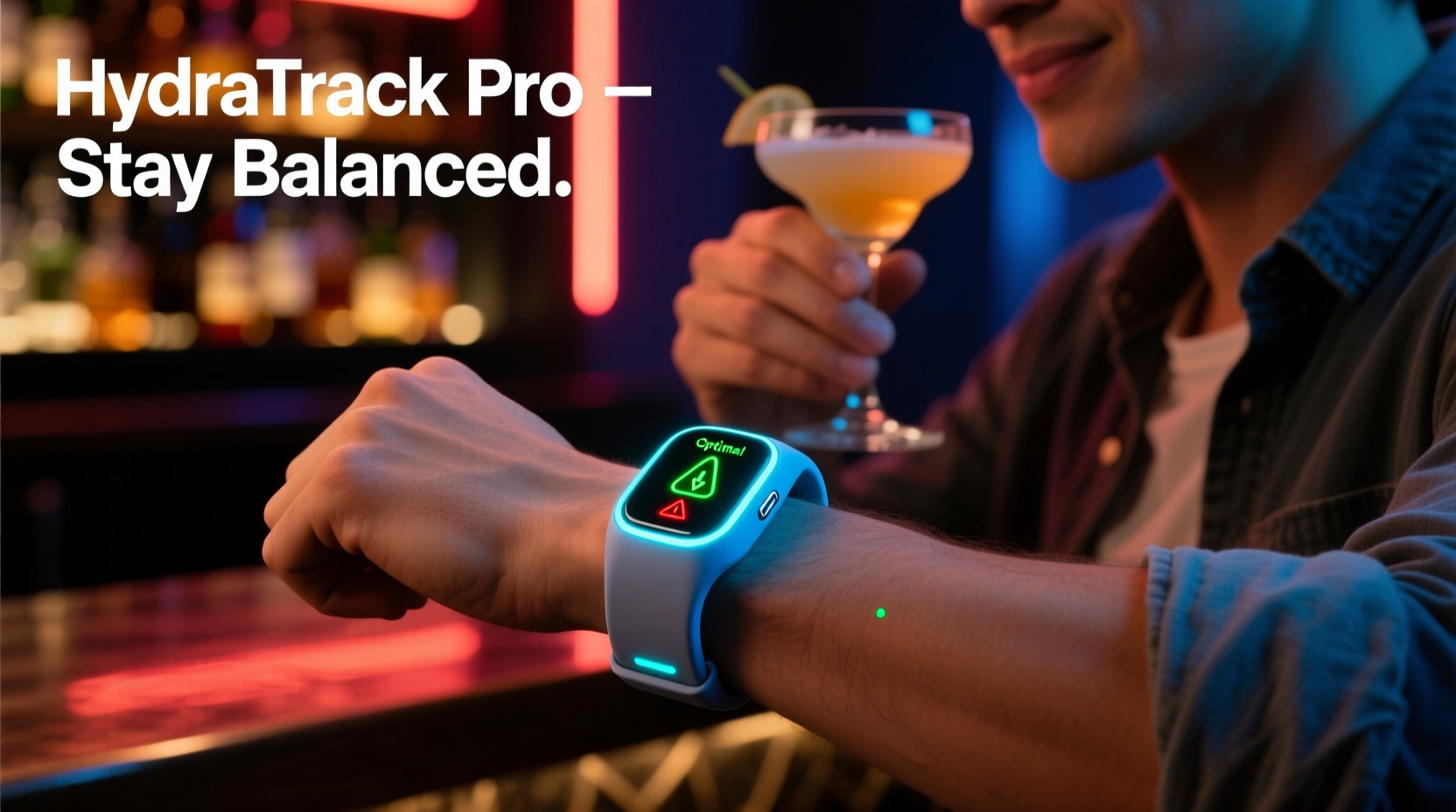
True hydration status depends on dynamic physiological variables: plasma sodium, hematocrit, antidiuretic hormone (ADH) activity, renal concentrating ability, and extracellular fluid volume—all of which shift rapidly under alcohol’s influence. Current consumer wearables lack the biocompatibility, regulatory clearance, and analytical specificity to sample or infer these parameters noninvasively. Optical sensors (PPG) in smartwatches detect blood flow changes—not electrolyte balance. Skin impedance sensors (used in some fitness bands) estimate total body water but cannot distinguish between intracellular, extracellular, or plasma volume—nor do they account for alcohol’s acute vasodilatory and natriuretic effects.
A 2023 review in Journal of Medical Internet Research concluded: “No commercially available wearable demonstrates sensitivity or specificity >65% for detecting mild-to-moderate dehydration in adults consuming ethanol, even when calibrated against gold-standard deuterium dilution.” In plain terms: if your watch tells you “you’re dehydrated,” it’s likely inferring from elevated resting heart rate or reduced HRV—not measuring actual fluid deficit.
“Wearables excel at tracking *behavioral proxies*, not physiological truth. A 12% drop in overnight HRV after two drinks isn’t ‘dehydration’—it’s autonomic stress. That stress correlates strongly with fluid loss, but conflating correlation with causation leads to poor decisions.” — Dr. Lena Torres, MD, Sports Medicine & Addiction Specialist, Stanford Health Care
Five Wearables With Highest Practical Utility (and Their Real-World Limits)
The following devices don’t “track hydration” per se—but they deliver data streams that, when interpreted correctly, support smarter hydration decisions before, during, and after alcohol consumption. Each is evaluated for clinical relevance, consistency, and ease of behavioral integration.
| Device | Key Relevant Metrics | Strengths | Critical Limitations |
|---|---|---|---|
| Oura Ring Gen 3 | Nocturnal HRV, skin temperature deviation, respiratory rate, sleep staging | Highly sensitive to autonomic shifts; detects subtle thermal dysregulation hours before symptoms; excellent baseline tracking over time | No real-time alerts; requires ≥7-day baseline to interpret deviations; cannot distinguish alcohol-induced vs. infection-induced stress |
| Whoop Strap 4.0 | Recovery Score (HRV + RHR + Sleep), strain coach, respiratory rate trends | Strong algorithmic modeling of cumulative physiological load; “Hydration Reminder” feature ties to user-input drink logs; robust longitudinal analytics | Hydration prompts are behaviorally triggered—not physiologically detected; Recovery Score drops significantly with even one standard drink, reducing specificity |
| Garmin Venu 3 | Pulse Ox (SpO₂), all-day stress tracking, hydration logging (manual), heat acclimation metrics | SpO₂ monitoring reveals oxygen desaturation common in alcohol-sedated sleep; manual hydration log creates accountability loop; integrates with Garmin Connect nutrition dashboard | Pulse ox accuracy drops during motion or low perfusion (common post-alcohol); manual logging relies entirely on user discipline |
| Fitbit Charge 6 | Resting Heart Rate (RHR), sleep score, skin temperature variation, “Water Intake” logging | Low barrier to entry; intuitive hydration logging with reminder system; RHR elevation (>5 bpm above 7-day avg) is a validated early sign of volume depletion | No HRV measurement; skin temp sensor lacks clinical-grade calibration; hydration logging has no physiological feedback loop |
| Apple Watch Series 9 (with ECG) | ECG-detected arrhythmias, HRV via third-party apps (e.g., HRV4Training), irregular rhythm notifications | ECG can identify alcohol-induced atrial fibrillation (a red flag for severe dehydration/stress); HRV4Training app allows daily guided breathing to mitigate autonomic dysregulation | No native hydration metrics; requires technical setup; ECG only captures snapshots—not continuous rhythm analysis |
How to Build a Realistic Hydration Protocol Using Wearables
Technology alone fails without intention. The most effective approach treats wearables as feedback instruments within a three-phase behavioral protocol: Preparation, Real-Time Awareness, and Recovery Calibration. Below is a step-by-step guide grounded in clinical guidelines from the American College of Sports Medicine and the National Institute on Alcohol Abuse and Alcoholism.
- Establish Your Baseline (Days 1–7): Wear your chosen device continuously. Log all alcohol intake manually (type, volume, time). Note subjective symptoms (thirst, dry mouth, fatigue, headache) in a notes app or journal. Do not consume alcohol during this phase.
- Identify Your Personal Threshold (Day 8–10): Consume 1–2 standard drinks. Compare device metrics (e.g., HRV drop, RHR increase, sleep fragmentation %) to your baseline. Note at what point objective metrics diverge meaningfully from normal—and correlate with subjective symptoms.
- Set Behavioral Triggers (Ongoing): Program alerts based on your personal thresholds—not generic defaults. Example: “If my HRV drops >25% below baseline at 10 p.m., pause drinking and drink 250 mL electrolyte solution.”
- Integrate Electrolyte Timing: Use wearable sleep data to time rehydration. Oura data shows peak nocturnal sodium loss occurs 3–5 hours into sleep. Set an alarm for 2 a.m. to sip 150 mL oral rehydration solution (ORS)—not plain water—to restore electrolyte balance.
- Post-Event Audit (Next Morning): Review device recovery metrics (Whoop Recovery Score, Oura Readiness) alongside symptom log. Ask: Did my hydration strategy reduce next-day fatigue? Did SpO₂ remain >94% during deep sleep? Refine thresholds weekly.
Mini Case Study: How a Clinical Research Coordinator Optimized Her Social Drinking
Sarah M., 34, works in addiction research and attends frequent evening conferences where wine is served. For years, she experienced debilitating fatigue and brain fog the next day—even after just two glasses. She began using her Whoop Strap 4.0 with strict baseline discipline: wearing it 24/7 for 10 days, logging food, sleep, and activity. Her baseline average HRV was 68 ms; RHR was 58 bpm. On nights she drank two 5-oz glasses of pinot noir starting at 7:30 p.m., her HRV dropped to 42 ms by midnight—a 38% decline. Her Recovery Score fell from 86% to 51%. Crucially, her sleep staging showed 42% less deep sleep and frequent micro-arousals.
She tested interventions: drinking 250 mL of WHO-formulated ORS (with 75 mmol/L sodium) before her first glass, then another 250 mL at 10 p.m. Result: HRV drop reduced to 19%, Recovery Score held at 73%, and deep sleep increased by 28%. She now uses Whoop’s “Strain Coach” to cap her evening activity strain at 12—preventing overexertion that compounds dehydration stress. “The device didn’t tell me *when* to drink water,” she says. “It told me *how much physiological cost* each drink carried—and that let me negotiate with myself honestly.”
Do’s and Don’ts: Evidence-Based Hydration Practices With Alcohol
- DO pre-hydrate: Drink 500 mL of water with electrolytes 30 minutes before your first drink.
- DO use a 1:1 ratio: One 250 mL glass of water (or ORS) for every standard alcoholic drink consumed.
- DO prioritize sodium-potassium balance: Avoid plain water-only rehydration. Opt for oral rehydration solutions (e.g., DripDrop, Liquid IV) or homemade mixes (½ tsp salt + 1 tbsp honey + 1 cup orange juice + 1 cup water).
- DON’T rely on “hydration apps” that calculate needs solely from weight and activity—they ignore alcohol’s pharmacokinetics.
- DON’T assume dark urine = dehydration. Alcohol metabolites (urobilinogen) darken urine independently of hydration status.
- DON’T use caffeine to “counteract” alcohol. Caffeine exacerbates diuresis and masks fatigue, increasing risk of overconsumption.
FAQ
Can any wearable detect blood alcohol level (BAC) noninvasively?
No consumer wearable currently approved by the FDA or CE can measure BAC accurately. Transdermal alcohol sensors (like those in the BACtrack Skyn) measure ethanol in sweat—not blood—and lag behind true BAC by 30–90 minutes. Accuracy varies widely with skin temperature, hydration, and individual metabolism. They are not suitable for safety-critical decisions like driving.
Does wearing a smartwatch make me drink less alcohol?
Not directly—but studies show behavioral accountability does. A 2022 RCT in Addiction found participants using wearables with manual alcohol logging reduced weekly intake by 22% over 12 weeks versus controls, primarily due to increased self-monitoring and immediate feedback loops—not physiological sensing.
Are there risks to over-hydrating while drinking alcohol?
Yes. Excessive plain water intake without electrolytes can cause hyponatremia—dangerously low blood sodium. Symptoms include headache, nausea, confusion, and seizures. This is rare but documented in binge-drinking scenarios where individuals consume >4 L of water in 2–3 hours. Always pair water with sodium-containing fluids.
Conclusion: Tools Are Only as Good as the Intent Behind Them
There is no wearable that replaces judgment, preparation, or physiological literacy. The best technology for tracking hydration while drinking alcohol isn’t found in a wristband or ring—it’s in your ability to recognize early signs of strain, honor your body’s signals, and act with compassion rather than convenience. What wearables do offer is objectivity: a mirror reflecting how your choices resonate in your nervous system, your sleep architecture, and your recovery capacity. They turn intuition into data, and data into agency.
Start small. Pick one device you already own—or one you trust—and commit to the 10-day baseline protocol. Observe without judgment. Correlate metrics with how you feel—not how you think you “should” feel. Then build your own rules: your personal HRV threshold, your optimal electrolyte timing, your non-negotiable pre-bed ritual. That’s where real empowerment begins—not in chasing perfect metrics, but in cultivating resilient, responsive self-awareness.
💬 Your experience matters. Have you used wearables to manage alcohol-related hydration? What worked—or didn’t? Share your insights in the comments to help others navigate this with more clarity and care.