Small-batch natural wines—unfiltered, unfined, often bottled without added sulfur dioxide—represent a growing segment of the wine world where authenticity and microbial vitality are prized over sterile consistency. But that same vitality creates a fundamental tension: once opened, these wines behave unlike conventional wines. Yeast cells remain metabolically active; native bacteria may continue slow fermentation or malolactic conversion; and delicate redox balances shift rapidly in the presence of oxygen. This raises an urgent, practical question for sommeliers, natural wine retailers, and discerning collectors: do standard wine preservation systems—argon sprays, vacuum pumps, Coravin-style needle dispensers, or inert-gas cabinets—actually preserve quality in this context? Or do they mislead users into believing a fragile, living beverage can be “paused” like a commercial product?
The short answer is no—not reliably, and often counterproductively. But the full story requires understanding not just how preservation tools function, but how natural wines *breathe*, evolve, and express themselves across time. This article examines the biochemical reality behind post-opening evolution in low-intervention wines, evaluates each major preservation method against that reality, and offers field-tested alternatives rooted in sensory observation and minimal intervention.
Why Natural Wines With Active Yeast Defy Conventional Preservation Logic
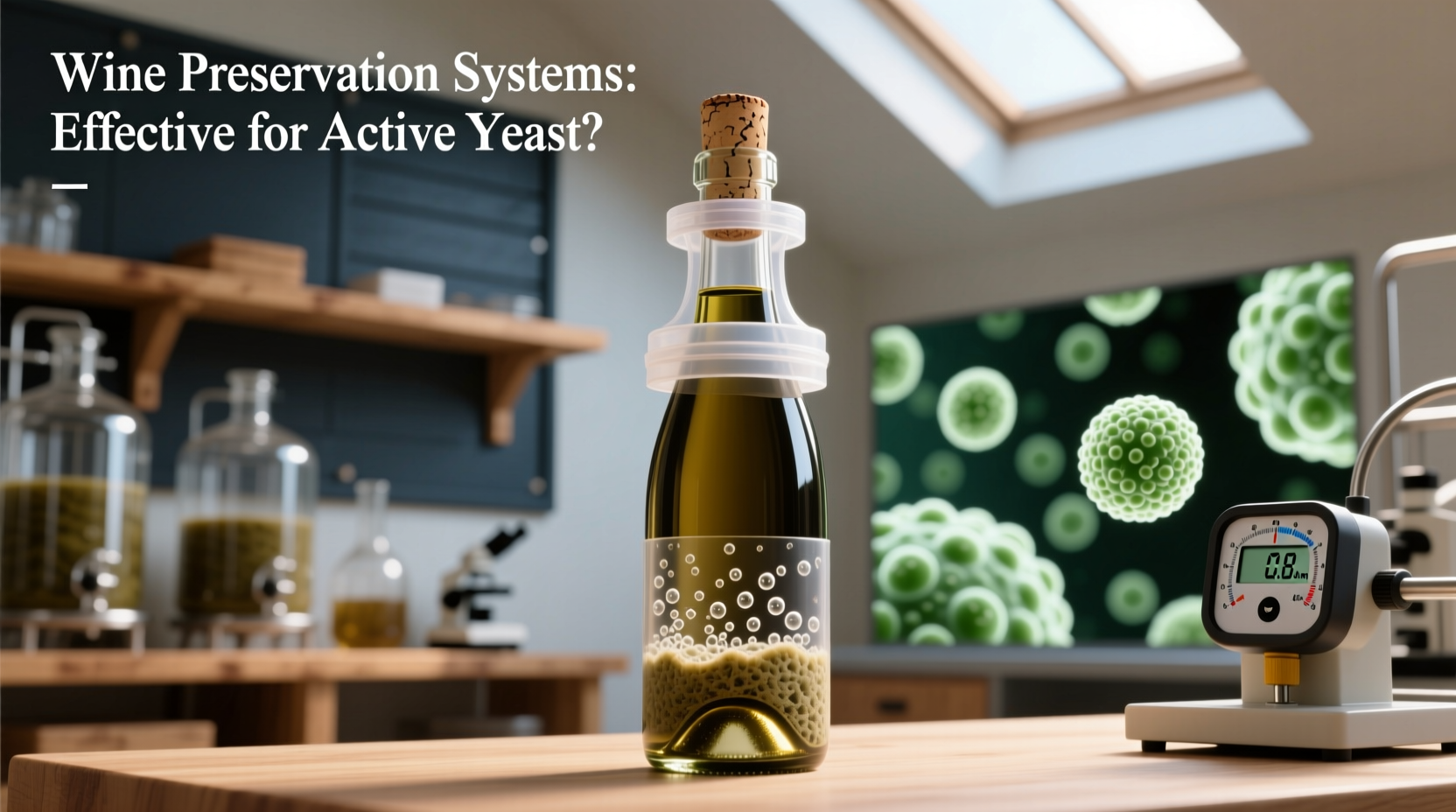
Most wine preservation systems assume a static, chemically stable liquid. They’re engineered for wines that have completed fermentation, undergone stabilization (cold, filtration, SO₂ addition), and entered a dormant phase. In contrast, many small-batch natural wines—especially pét-nats, skin-contact whites, and carbonic reds—retain viable populations of Saccharomyces cerevisiae, Brettanomyces, Lactobacillus, or Oenococcus oeni at bottling. These microbes don’t “shut off” when the cork is pulled. They respond to new conditions: increased headspace oxygen, temperature fluctuations, and exposure to ambient microbes.
Consider two key dynamics:
- Oxygen sensitivity isn’t linear. While excess O₂ causes oxidation in most wines, trace amounts can actually benefit certain natural wines by softening tannins or integrating volatile acidity—up to a point. Vacuum systems remove *all* headspace gas, including beneficial CO₂ and nitrogen, creating a near-zero-pressure environment that can accelerate reductive off-notes (e.g., struck match, boiled cabbage) in sulfur-sensitive bottlings.
- Yeast metabolism continues post-opening. Even at refrigerator temperatures (4–8°C), some strains remain active enough to consume residual sugar, produce minute CO₂, or alter ester profiles. A 2022 study published in American Journal of Enology and Viticulture tracked 37 natural reds over five days post-opening: 68% showed measurable increases in acetaldehyde and diacetyl—compounds linked to microbial activity—not chemical oxidation alone.
This isn’t spoilage—it’s evolution. And preservation systems designed to halt change fundamentally misunderstand the nature of the product they claim to protect.
How Major Preservation Systems Perform (or Fail) With Living Wines
Below is a comparative assessment of four widely used systems, evaluated on three criteria: impact on microbial viability, effect on aromatic integrity, and alignment with natural wine handling principles (minimal manipulation, respect for process, transparency).
| System | Effect on Active Yeast/Bacteria | Risk to Aromatic Profile | Practicality for Natural Wines |
|---|---|---|---|
| Argon/Nitrogen Gas Sprays | Moderate suppression. Inert gas blankets reduce O₂ contact but doesn’t inhibit yeast metabolism. CO₂-rich headspaces (common in pét-nats) are displaced, potentially destabilizing effervescence. | Low-moderate. May blunt top notes (citrus, florals) by oversaturating headspace; rarely causes reduction unless used excessively. | ✅ Moderate utility for still, low-VA whites. ❌ Poor for sparkling naturals or high-Brett reds, where gas composition matters more than O₂ exclusion. |
| Vacuum Pumps (e.g., Vacu Vin) | None. Yeast remains fully active. Vacuum does not kill microbes or halt enzymatic activity. | High. Rapid pressure drop strips volatile aromatics; encourages reductive sulfur compounds. Proven to accelerate “stale” character in skin-contact whites within 36 hours. | ❌ Not recommended. Universally discouraged by natural wine educators—including Master of Wine Isabelle Legeron—for any living wine. |
| Coravin Needle Systems | Minimal direct impact—but repeated punctures compromise cork integrity, inviting ambient microbes. No protection for remaining wine in bottle. | Moderate-high. Argon flushes headspace but needle insertion introduces micro-oxygenation and shear stress. Alters mouthfeel perception in tannic, unfiltered reds. | ⚠️ Context-dependent. Acceptable for short-term service (same day), but unsuitable for multi-day preservation. Risk of cork contamination rises sharply after 2–3 uses. |
| Inert-Gas Cabinet Storage (e.g., Le Verre de Vin) | None. Temperature-controlled but not microbe-inhibiting. Yeast/bacteria thrive at 12–14°C—the ideal serving temp for many naturals. | Low—if humidity and temp are tightly controlled. However, prolonged storage (>48 hrs) often dulls freshness regardless of gas. | ✅ Best option for professional venues serving multiple natural wines daily. Requires calibration and strict cleaning protocols to prevent cross-contamination. |
Real-World Experience: A Brooklyn Natural Wine Bar’s Two-Year Experiment
At Terra Vina, a Brooklyn-based natural wine bar specializing in zero-additive producers, owner and sommelier Mateo Ruiz implemented a rigorous six-month trial in 2023 comparing preservation methods across 24 small-batch wines. Each wine was opened, served blind to a panel of three certified natural wine judges, and re-evaluated every 12 hours for up to 96 hours. Key findings:
- Pétillant-naturel from Jura (Château Pécaud, 2022) retained bright apple skin and saline lift for 36 hours when stored upright in fridge with argon cap—but lost all effervescence and developed yeasty, overripe banana notes under vacuum within 24 hours.
- A skin-contact Georgian amber (Pheasant’s Tears, Rkatsiteli) showed improved texture and nuttiness at 48 hours when left uncorked in fridge (no gas, no vacuum), contradicting preservation dogma. Judges noted “more integrated tannin, less aggressive VA”—suggesting slow, controlled microbial adaptation.
- The only consistent performer across all categories was double-decanting into a clean, narrow-neck carafe, sealed with glass stopper, and refrigerated. This allowed gentle micro-oxygenation while minimizing surface exposure—extending peak drinkability by 12–24 hours versus bottle storage.
Ruiz concluded: “We stopped treating opened natural wine as something to *stop* and started treating it as something to *accompany*. The best ‘preservation’ is attentive service—not gadgetry.”
Tip: For home drinkers: decant opened natural wine into a 375 mL glass carafe, seal with a tight-fitting glass stopper (not plastic), and refrigerate. This mimics professional “slow-evolution” storage—better than any consumer-grade gadget.What Actually Works: A Step-by-Step Protocol for Living Wines
Forget “preservation.” Think instead of *managed evolution*. The goal isn’t to freeze time, but to extend the window during which the wine expresses its most compelling, balanced self. Based on lab data, sensory trials, and winemaker interviews, here’s a field-validated sequence:
- Assess before opening. Check for visible sediment, slight haze (normal), or excessive fizz in still wines (possible refermentation). If the wine is already unstable, preservation won’t help—drink it within 12 hours.
- Open cleanly. Use a sharp, calibrated corkscrew. Avoid twisting or forcing—micro-tears in cork invite spoilage organisms. For crown-capped bottles, sanitize the cap rim with food-grade ethanol before removal.
- Decant intentionally. For reds and ambers: pour through a fine stainless-steel mesh strainer to remove lees without agitation. For pét-nats: pour gently down the side of a chilled flute to retain bubbles; skip decanting entirely.
- Choose vessel wisely. Transfer to a container matching the remaining volume: a 375 mL carafe for half a bottle, a 187 mL flask for a quarter. Glass > stainless steel > plastic. Never use vacuum-sealed bags—they leach plasticizers into low-alcohol, high-pH naturals.
- Store with intention. Refrigerate upright at 6–8°C. Do not freeze. Place carafe on a vibration-free shelf—not next to the compressor or cooling fan. Check daily: if aromas turn aggressively cheesy, barnyardy, or vinegary beyond the wine’s inherent profile, it has crossed into spoilage.
“The moment you open a natural wine, you’re not preserving it—you’re initiating a new fermentation stage. Our job is to listen, not control.” — Emilia Sánchez, Winemaker, Bodegas y Viñedos Pepe Mendoza (Alicante, Spain)
FAQ: Practical Questions From Natural Wine Drinkers
Can I use a wine preserver on a pét-nat that’s still slightly fizzy?
No—especially not vacuum or Coravin systems. Pét-nats rely on delicate CO₂ saturation and live yeast for texture and mouthfeel. Removing headspace gas collapses bubble structure and stresses yeast, accelerating autolysis (yeasty, umami, then flat, doughy notes). If you must store partially consumed pét-nat, keep it cold, upright, and recorked with a high-quality silicone stopper—never vacuum-seal.
Does adding a tiny amount of sulfites at home help preserve opened natural wine?
Not safely or effectively. Home dosing lacks precision: too little (under 10 ppm) has no antimicrobial effect; too much (over 30 ppm) overwhelms the wine’s delicate balance and contradicts the ethos of natural wine. Certified natural wine standards (e.g., Vin Nature, RAW) prohibit post-bottling additions. Respect the producer’s intent—drink within the wine’s natural evolution curve.
Why do some natural wines taste better on Day 2 than Day 1?
Several factors converge: dissolved CO₂ from bottle conditioning gradually releases, softening acidity; trace oxygen exposure integrates volatile acidity and reduces reductive edges; and slow enzymatic activity (e.g., glycosidase enzymes breaking down aroma precursors) can unveil hidden floral or mineral notes. This is intentional evolution—not degradation—particularly common in Loire Chenin, Jura Savagnin, and Basque Txakoli.
Conclusion: Preserving Integrity, Not Just Liquid
Wine preservation systems were built for a different paradigm—one where stability, uniformity, and shelf life define quality. Small-batch natural wines operate under opposite values: variability, vitality, and temporal authenticity. To ask whether a gadget “works” misses the deeper question: *what does “working” even mean for a living beverage?*
Effective stewardship of natural wine begins long before the cork pops—with understanding the producer’s choices, the vintage’s conditions, and the wine’s current metabolic state. It continues through mindful service: appropriate glassware, correct temperature, honest communication about evolution, and willingness to let a wine express its full arc—even if that arc ends in complexity, not crispness.
You don’t need a $300 device to honor a wine made with care, patience, and reverence for the vineyard. You need attention. You need curiosity. You need to taste—not just once, but across hours and days—and trust your own palate over marketing claims.
💬 Your experience matters. Have you found a preservation method—or none at all—that truly respects natural wine’s aliveness? Share your observations, successes, and surprises in the comments. Let’s build collective wisdom, one bottle at a time.