
Human identity is rarely formed in isolation. From the moment we are born, our sense of self begins to take shape through interactions—with caregivers, peers, communities, and cultural environments. While many assume identity is an internal, fixed construct, psychological and sociological research consistently shows that it is dynamically shaped by the people around us. Social connections do more than influence preferences or behaviors; they actively mold how we see ourselves, what we value, and where we belong. Understanding this interdependence reveals not a weakness, but a fundamental truth about human nature: we are relational beings, and our identities emerge through connection.
The Social Mirror: How Others Reflect Our Identity
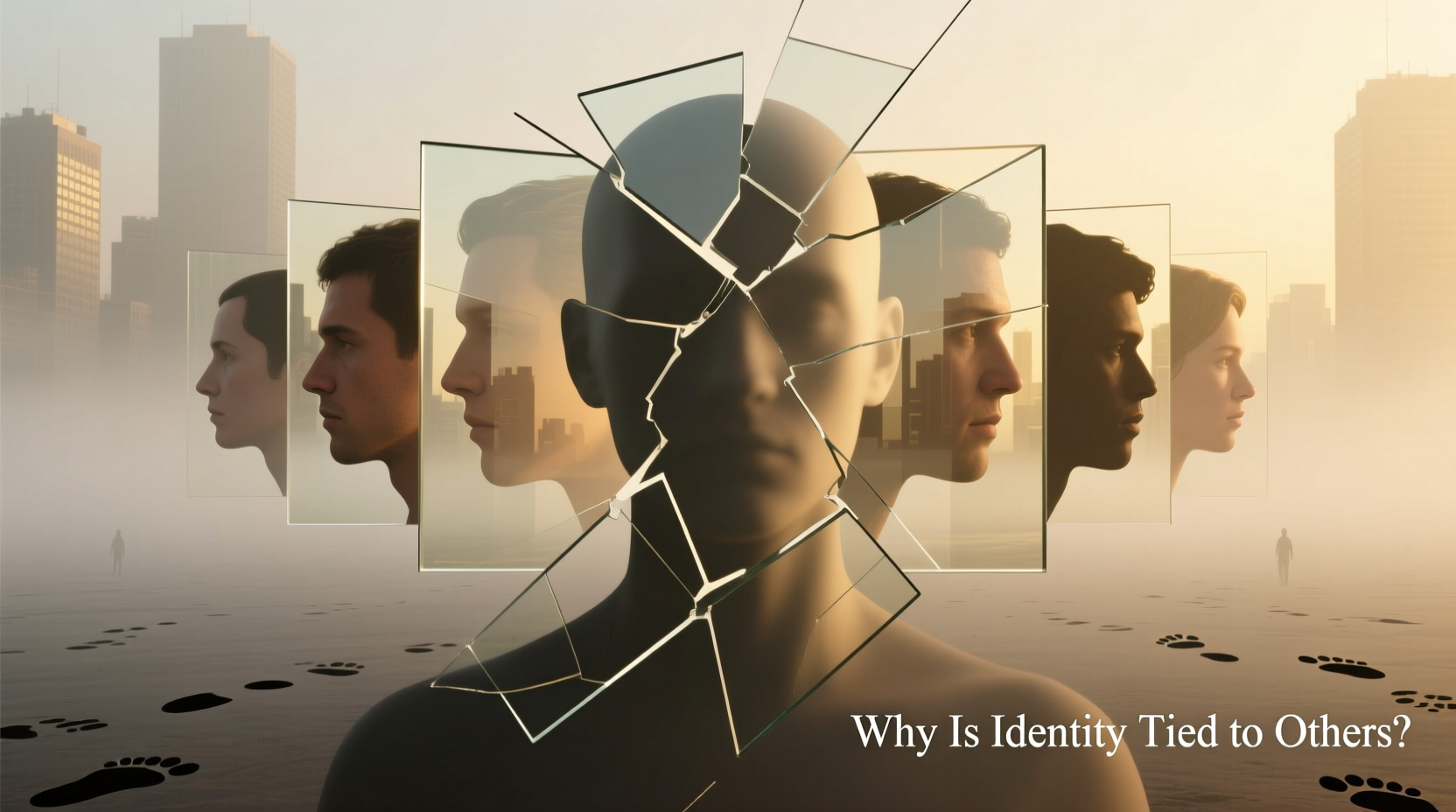
One of the earliest theories explaining the social construction of identity comes from Charles Horton Cooley’s concept of the \"looking-glass self.\" According to Cooley, we form our self-image based on how we believe others perceive us. This process unfolds in three stages: imagining how we appear to others, interpreting their reactions, and developing feelings about ourselves as a result. For example, a child who receives consistent praise for kindness may come to identify as a compassionate person, while someone repeatedly dismissed in group settings might internalize feelings of irrelevance.
This reflective mechanism doesn’t disappear with age. In adulthood, feedback from colleagues, partners, and friends continues to inform self-concept. A manager’s recognition can reinforce professional identity, just as a partner’s criticism might trigger self-doubt. These micro-interactions accumulate over time, subtly shaping core beliefs about competence, worth, and belonging.
“We do not see ourselves as we are, but as we think others see us. And that perception becomes our reality.” — Dr. Lisa Feldman Barrett, Neuroscientist and Psychologist
Belonging and the Need for Social Validation
Beyond reflection, humans have an innate need to belong. Evolutionary psychology suggests that social inclusion was essential for survival—early humans who formed strong bonds had better access to resources, protection, and reproductive opportunities. Today, while physical survival is less dependent on tribe membership, the emotional need for acceptance remains powerful.
When individuals align themselves with particular groups—whether based on profession, culture, religion, or interests—they often adopt aspects of that group’s identity. A software developer may begin to value logic and precision not only because of skill but because these traits are celebrated within their professional community. Similarly, joining a fitness group may lead someone to embrace discipline and health-consciousness as part of their self-narrative.
This alignment serves both social and cognitive functions. It reduces uncertainty about who we are by providing clear roles and expectations. It also offers emotional security—knowing you are accepted by a group reinforces a stable sense of self.
Tip: Pay attention to the groups you spend time with—your values and self-perception may be shifting in subtle ways to match theirs.Identity Formation Through Key Relationships
Certain relationships act as anchors in identity development. Parents and caregivers lay the foundation during childhood, instilling early beliefs about worth, ability, and morality. Romantic partners often become mirrors of desirability and emotional availability, influencing how one views intimacy and vulnerability. Mentors and peers provide comparative benchmarks—seeing someone similar succeed can expand one’s sense of possibility.
A real-world example illustrates this powerfully: Maria, a first-generation college student, initially struggled with imposter syndrome. Despite academic talent, she doubted her intelligence because no one in her family had attended university. Her turning point came when a professor acknowledged her analytical skills and encouraged her to pursue research. That validation didn’t just boost confidence—it reshaped her identity from “someone pretending” to “a scholar in the making.” The relationship provided not only support but a new narrative framework for self-understanding.
Stages of Identity Development Influenced by Relationships
- Childhood: Identity shaped by parental feedback, family roles, and early peer interactions.
- Adolescence: Peer approval becomes central; experimentation with different social identities increases.
- Early Adulthood: Romantic relationships and career mentors help solidify professional and personal identity.
- Middle Age: Re-evaluation often occurs through parenting, leadership roles, or community involvement.
- Late Life: Legacy, contribution, and lifelong relationships define reflective identity.
The Role of Culture and Social Context
Identity is not only shaped by individual relationships but also by broader cultural narratives. In collectivist cultures—such as those in East Asia or parts of Africa—identity is often defined in terms of family, community, and social harmony. Personal goals are framed within group well-being, and self-worth is closely tied to fulfilling relational duties.
In contrast, individualistic societies—like the United States or Western Europe—emphasize autonomy, self-expression, and personal achievement. Yet even in these contexts, identity is not truly independent. Social media, workplace culture, and political affiliations create new forms of collective identity. People curate online personas to gain likes and comments, effectively outsourcing parts of identity validation to digital audiences.
| Context | Primary Identity Influence | Example |
|---|---|---|
| Family | Values, emotional patterns, role expectations | A child raised in a medical family may feel pressure to become a doctor |
| School/Peers | Social competence, intellectual identity | Being labeled “smart” may lead to prioritizing academics |
| Workplace | Professional identity, self-efficacy | An employee praised for leadership may pursue management |
| Digital Communities | Interest-based identity, public persona | A hobbyist gains confidence by contributing to forums |
Navigating Identity in a Connected World
While social connections are essential for identity formation, they also pose risks. Over-reliance on external validation can lead to identity instability—shifting self-concept based on who is present or what feedback is received. Some individuals struggle with authenticity, performing different versions of themselves across social contexts without a grounded core.
To maintain balance, it’s crucial to cultivate self-awareness alongside relational engagement. This means reflecting on which parts of your identity come from genuine personal values versus social expectation. Journaling, therapy, and meaningful conversations can help distinguish borrowed beliefs from authentic ones.
Tip: Regularly ask yourself: “Is this belief truly mine, or did I absorb it from someone important to me?”Checklist: Building a Healthy, Relationally-Informed Identity
- Identify key people who have influenced your self-perception.
- Reflect on whether your current values align with your deepest beliefs.
- Seek diverse perspectives to avoid echo chambers that limit growth.
- Set boundaries with relationships that distort your self-worth.
- Engage in activities that allow self-expression beyond social roles.
Frequently Asked Questions
Can you have a strong identity without close relationships?
While solitude can foster introspection, long-term identity development typically requires some form of social feedback. Even hermits or isolated artists often define themselves in reaction to society. Complete disconnection may lead to identity diffusion or existential uncertainty.
What happens when social connections conflict with personal identity?
This tension is common and often productive. It can prompt re-evaluation of either the relationship or the self-concept. Healthy resolution involves dialogue, boundary-setting, and sometimes distancing from toxic influences that suppress authenticity.
How does social media affect identity formation?
Social media amplifies the looking-glass self effect. Curated feeds encourage performance over authenticity, and metrics like likes reinforce identity based on popularity rather than depth. However, it can also connect people with niche communities that affirm marginalized identities.
Conclusion: Embracing the Relational Self
Identity is not a solitary invention but a co-authored story shaped through countless interactions. Recognizing this doesn’t diminish individuality—it enriches it. By understanding how relationships inform who we are, we gain the power to choose connections that nurture growth, challenge limiting narratives, and affirm our evolving selves. The goal isn’t independence from others, but discernment in how we let them shape us.
💬 Your identity has been shaped by the people around you—past and present. Who helped you become who you are? Share a name, a memory, or a moment of recognition that changed how you saw yourself.