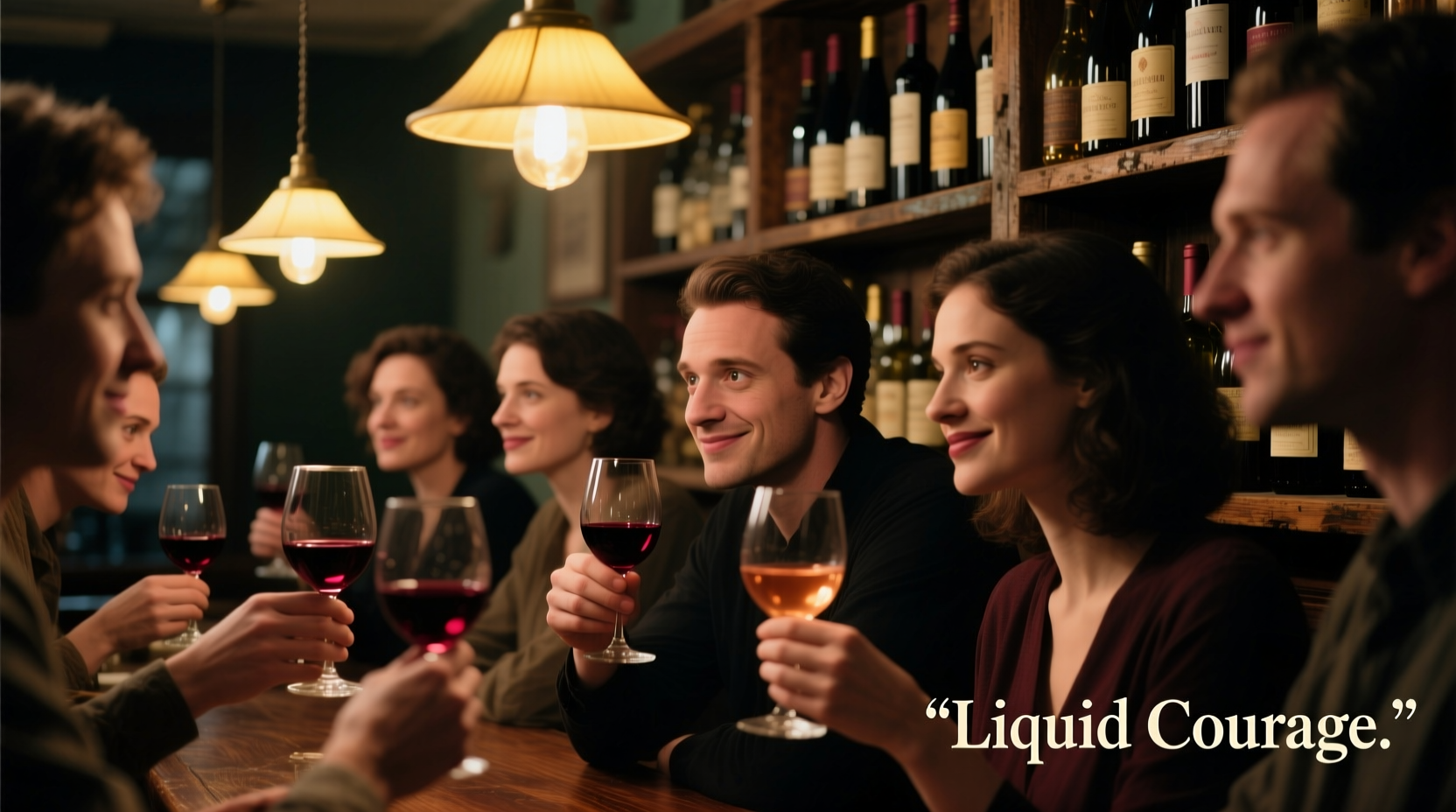
It’s a familiar ritual: the first sip of wine at a dinner party, the shared bottle before a presentation, the glass poured before a difficult conversation. Within minutes, shoulders relax, laughter comes easier, and self-consciousness seems to recede. This phenomenon—often called “liquid courage”—is widely experienced but rarely examined with scientific rigor or practical honesty. The confidence boost isn’t magic; it’s neurochemistry intersecting with expectation, context, and physiology. Yet what begins as relief can quickly blur into misjudgment, regret, or even social vulnerability. Understanding *why* wine temporarily reshapes our sense of self—not just the “how”—empowers us to use it intentionally rather than reactively.
The Neurochemical Shift: GABA, Dopamine, and the Quietening of the Watchdog
Wine’s primary psychoactive ingredient is ethanol—a small, fat-soluble molecule that crosses the blood-brain barrier within minutes. Its most immediate effect is on gamma-aminobutyric acid (GABA), the brain’s chief inhibitory neurotransmitter. Ethanol binds to GABAA receptors, amplifying their calming signal. Think of GABA as the brain’s internal regulator: it slows neural firing, dampens amygdala reactivity (the fear center), and reduces the “noise” of self-monitoring. When GABA activity increases, the mental chatter—“What will they think?”, “Did I sound awkward?”, “Am I taking up too much space?”—softens. That quieting creates perceptual space for action.
Simultaneously, ethanol triggers a modest, transient rise in dopamine in the nucleus accumbens—the brain’s reward hub. This isn’t the sustained surge seen with stimulants, but a gentle lift that reinforces behaviors occurring *while* intoxicated: making eye contact, initiating conversation, dancing without overthinking. Crucially, this dopamine release is amplified by context: the warmth of candlelight, the presence of trusted friends, the anticipation of connection. The brain doesn’t isolate the chemical—it weaves it into the narrative of the moment.
However, this shift is dose-dependent and nonlinear. At low doses (roughly one 5-ounce glass for most adults), GABA enhancement dominates, producing relaxation and mild disinhibition. At moderate doses (two to three glasses), dopamine effects intensify, but so does suppression of the prefrontal cortex—the region responsible for judgment, impulse control, and long-term consequence assessment. This is where “confidence” begins its slide toward “overconfidence.” As neuroscientist Dr. Anika Rao explains:
“Ethanol doesn’t grant competence—it temporarily suspends the brain’s error-detection systems. What feels like newfound boldness is often just reduced access to your own internal feedback loop. You don’t become more skilled at conversation; you become less aware of your stumbles.” — Dr. Anika Rao, Cognitive Neuropharmacologist, Stanford University
The Expectancy Effect: How Belief Shapes Biology
Neurochemistry alone doesn’t explain why the same person might feel “braver” with a glass of pinot noir at a rooftop bar but not with an identical dose of vodka in a lab setting. Context matters profoundly—and so does belief. Decades of research on the expectancy effect demonstrate that anticipated outcomes shape physiological responses. If you’ve learned—through culture, past experience, or social cues—that wine “loosens you up,” your brain begins preparing for that state *before* the first sip. Heart rate may ease, breathing deepens, and attention shifts away from threat signals—all before ethanol has meaningfully altered receptor function.
This is especially potent with wine because of its cultural scripting: associated with leisure, sophistication, romance, and conviviality—not aggression or recklessness (as spirits sometimes are). A 2022 study published in Psychopharmacology found participants who believed they’d consumed wine (but were given a non-alcoholic placebo) reported significantly higher subjective confidence and lower social anxiety than those told they’d consumed a “functional beverage,” even though no ethanol was present. Their cortisol levels dropped measurably. Expectation, in other words, primes the nervous system for the outcome it anticipates.
Tip: Notice your internal script before drinking. Ask: “What am I hoping this glass will help me do—or avoid?” Naming the intention makes it easier to assess whether wine is truly serving it.The Social Architecture: Why Wine Works Better in Some Settings Than Others
Confidence isn’t generated in isolation—it emerges through interaction. Wine’s social efficacy depends heavily on environmental scaffolding. In settings with clear, low-stakes social scripts (e.g., sharing appetizers, toasting, passing a bottle), alcohol lubricates existing rhythms. It eases transitions between topics, softens pauses, and provides a shared, nonverbal cue for connection (“Let’s refill glasses—this conversation is going well”). The ritual itself carries weight: uncorking, swirling, savoring—these actions slow pace and signal presence.
Contrast that with high-stakes, ambiguous, or unstructured environments: networking events where roles are unclear, first dates with heavy emotional investment, or confrontational family gatherings. Here, wine’s prefrontal suppression becomes a liability. Without strong external structure, the reduction in self-monitoring doesn’t yield freedom—it yields disorientation. You may speak faster, interrupt more, misread cues, or fixate on minor slights, mistaking cognitive fog for clarity.
| Setting Type | Why Wine Often Enhances Confidence | Risk Factors |
|---|---|---|
| Structured & Ritualized (e.g., dinner party, wine tasting) |
Shared activities provide behavioral anchors; predictable pacing reduces cognitive load; sensory focus (aroma, taste) grounds attention. | Overconsumption if rituals encourage repeated refills without pause. |
| Unstructured & High-Stakes (e.g., job interview prep, conflict resolution) |
May briefly reduce anticipatory anxiety—but undermines recall, strategic thinking, and emotional regulation needed for success. | Impaired judgment leads to inappropriate disclosures, tone-deaf remarks, or missed nonverbal signals. |
| Intimate & Trust-Based (e.g., close friends, long-term partner) |
Lower baseline anxiety means GABA enhancement deepens relaxation without eroding authenticity; mutual understanding buffers missteps. | Lowered inhibition may surface unresolved tensions if emotional safety isn’t already established. |
The Confidence Cliff: Why the Boost Doesn’t Last—and What Fills the Gap
The most misunderstood aspect of “liquid courage” is its duration. The peak subjective confidence typically occurs 30–60 minutes after consumption—coinciding with peak blood alcohol concentration (BAC). But as BAC begins its decline, two things happen simultaneously: ethanol metabolizes into acetaldehyde (a compound linked to anxiety and irritability), and the brain initiates compensatory mechanisms to restore homeostasis. GABA receptors become less responsive; glutamate (the brain’s main excitatory neurotransmitter) surges to counterbalance prior suppression. The result? A rebound effect. What felt like effortless confidence can rapidly invert into self-criticism, fatigue, or social hangover—even before the next day.
This cliff isn’t inevitable—but it’s predictable. It reflects a fundamental mismatch: wine addresses symptoms (nervousness, hesitation) without resolving root causes (lack of practice, skill gaps, unprocessed social fears). True, durable confidence grows through repetition, feedback, and embodied competence—not chemical bypass. Consider this realistic scenario:
Mini Case Study: Maya and the Team Presentation
Maya, a project manager, routinely drank half a bottle of sauvignon blanc before leading client presentations. She credited wine with helping her “speak up” and “hold the room.” For months, it worked—until she presented while slightly under the weather and skipped her usual glass. Her voice shook. She lost her train of thought. She concluded she *needed* wine to perform. Only after working with a communication coach did she realize her reliance masked underdeveloped skills: pausing effectively, using vocal variety, reading room energy. Over eight weeks, she practiced these techniques sober—recording herself, rehearsing with colleagues, analyzing feedback. At her next presentation—no wine—she felt steady, engaged, and authentically authoritative. The wine hadn’t built her confidence; it had hidden her growth edge.
Building Real Confidence: A Practical Framework (Not a Replacement)
If wine offers temporary relief but not lasting capacity, what builds genuine social resilience? The answer lies in targeted, repeatable practices that strengthen the very systems ethanol suppresses. This isn’t about abstinence—it’s about alignment. Use wine consciously, not compulsively. Follow this step-by-step framework to cultivate confidence that endures beyond the last drop:
- Identify Your Trigger Pattern: For one week, note every time you reach for wine *specifically* to manage social discomfort. Record the situation, your physical sensation (e.g., tight chest, racing thoughts), and your goal (e.g., “not seem awkward,” “get asked a question”). Patterns reveal where skill-building is needed.
- Practice One Micro-Skill Daily: Choose one evidence-based technique: intentional pausing (3-second silence before responding), grounding breath (4-7-8 inhale-hold-exhale), or open posture (uncross arms, relax shoulders). Do it 3x/day for 60 seconds—even in low-stakes moments (ordering coffee, replying to email).
- Create a Sober Trial Zone: Select one recurring social context (e.g., team stand-ups, weekly calls with a friend) and commit to attending fully sober for 3 consecutive sessions. Observe: What sensations arise? What do you notice about others’ behavior? Where do your strengths actually lie?
- Reframe “Nervous Energy”: Research shows interpreting physiological arousal (sweating, heartbeat) as *excitement*, not anxiety, improves performance. Before any social event, say aloud: “My body is energized and ready.” This simple cognitive shift leverages the same physiology wine attempts to blunt—but constructively.
- Evaluate Post-Event Honestly: After any social interaction—sober or with wine—ask: “What went well *because of my action*, not the drink?” Name one specific thing you did well (e.g., “I asked a follow-up question,” “I held eye contact during my key point”). Anchor confidence in behavior, not chemistry.
FAQ: Addressing Common Misconceptions
Does red wine really have more “calming” effects than white or sparkling?
No—alcohol’s primary effects are nearly identical across wine types. Any perceived difference stems from context (red wine is often consumed slower, with food, in relaxed settings) or trace compounds like resveratrol, which show no meaningful acute impact on human anxiety or confidence at dietary doses. The ritual matters more than the varietal.
Can regular wine consumption actually improve long-term social confidence?
Research indicates the opposite. Chronic, even moderate, alcohol use is associated with structural changes in the prefrontal cortex and heightened baseline anxiety over time. A 2023 longitudinal study in JAMA Psychiatry found adults who used alcohol to manage social stress were 2.3x more likely to develop social anxiety disorder within five years than matched controls who used non-chemical coping strategies.
Is there a “safe” amount of wine for boosting confidence without downsides?
There’s no universal threshold. Individual metabolism, hydration, food intake, sleep quality, and even gut microbiome composition dramatically affect response. However, data consistently shows that confidence benefits plateau—and risks increase—beyond one standard drink (5 oz wine, 12% ABV) for most adults. Beyond that, diminishing returns set in rapidly.
Conclusion: Confidence Is a Practice, Not a Prescription
Wine’s allure lies in its immediacy—a swift, sensory path away from discomfort. But real confidence isn’t found in the dissolution of self-awareness; it’s forged in the deliberate cultivation of self-trust. It lives in the muscle memory of a well-timed pause, the calm certainty of a grounded breath before speaking, the quiet pride of choosing authenticity over performance—even when your hands tremble. Liquid courage offers a fleeting illusion of control. Embodied courage offers something far more valuable: continuity. It stays with you when the glass is empty, when the room falls silent, when no external catalyst is available. Start small. Name one situation where you’ll try a single micro-skill sober this week. Notice what arises—not with judgment, but curiosity. That attention, repeated, is the foundation of unshakeable presence. Your most compelling self isn’t waiting for the right vintage. It’s already here, ready to be practiced.
💬 Your experience matters. Have you shifted from relying on wine to building confidence through practice? Share one small win—or one honest insight—in the comments. Let’s normalize the work behind the warmth.