
Wearing a face mask has become second nature in many daily routines, but for eyeglass wearers, it brings an irritating side effect: constant lens fogging. Every breath you exhale escapes upward through the top of your mask, hits the cooler surface of your lenses, and condenses into a hazy film that obstructs vision. This isn’t just inconvenient—it can be dangerous when driving, reading, or navigating stairs. The good news is that simple, effective mask hacks exist to prevent this issue. No special equipment or expensive products are required. With a few adjustments to your mask fit, hygiene habits, and even household items, you can keep your lenses clear all day.
The Science Behind Foggy Glasses
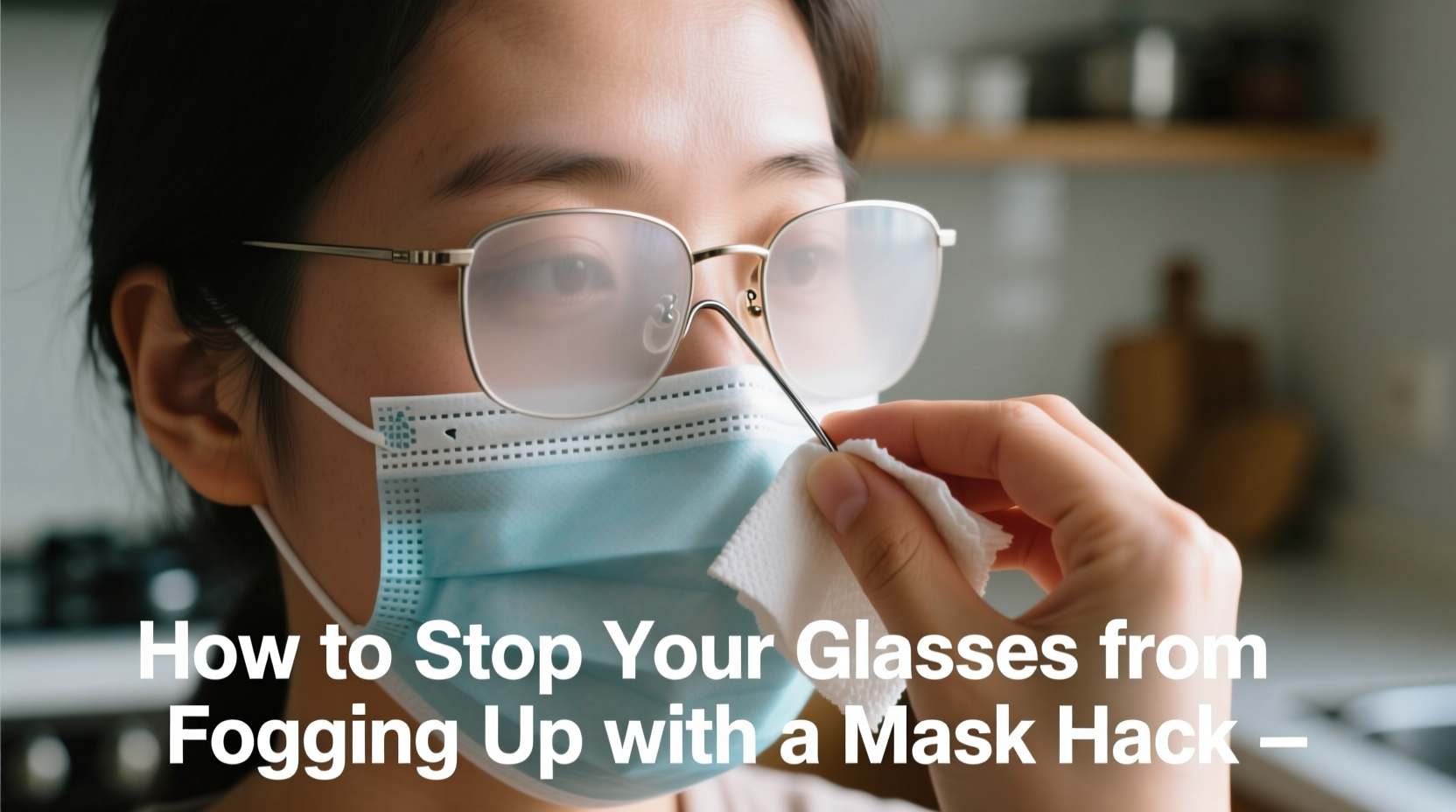
Fog forms when warm, moist air comes into contact with a cooler surface. Your breath is both warm and humid. When you wear a mask without a proper seal at the top, that moisture rises and meets your cooler eyeglass lenses, creating condensation. This is the same principle behind bathroom mirrors fogging during a hot shower.
According to Dr. Rachel Strohl, an optometrist and vision researcher at the University of Michigan, “The key to stopping fog is redirecting airflow away from the lenses. It’s not about eliminating moisture—it’s about controlling where it goes.”
“Proper mask fit is the single most important factor in preventing fogging. If air isn’t escaping upward, it won’t fog your glasses.” — Dr. Rachel Strohl, Optometrist
This explains why surgical masks, which often sit loosely on the nose bridge, tend to cause more fog than well-fitted cloth masks with adjustable features. Understanding this mechanism helps identify effective solutions—ones that focus on sealing, airflow redirection, and surface treatment.
Step-by-Step Guide: How to Stop Fogging Using the Mask Seal Hack
The most reliable way to prevent fogging is to ensure your mask fits snugly across the bridge of your nose. This stops warm air from escaping upward. Follow these steps to achieve a secure seal:
- Choose the right mask: Use a mask with a built-in nose wire or one that allows you to insert a flexible strip (like a pipe cleaner or twist tie).
- Position the mask correctly: Place the mask over your nose, mouth, and chin. Ensure no gaps on the sides.
- Mold the nose wire: Press the metal strip firmly along the contours of your nose using both hands. Start at the center and work outward to eliminate any space between the mask and skin.
- Test the seal: Exhale sharply while wearing the mask. If you feel air coming out the top, readjust the wire and try again.
- Add extra support if needed: For added security, use medical tape or hypoallergenic adhesive strips to anchor the top edge of the mask to your skin.
This method works because it redirects exhaled air downward, toward your mouth and chin, rather than letting it rise toward your lenses. It’s also the foundation upon which other anti-fog strategies build.
Top 5 Household Hacks to Prevent Lens Fogging
If adjusting your mask doesn’t fully solve the problem, combine it with one of these accessible, low-cost techniques. Many rely on surfactants—substances that reduce surface tension and prevent water droplets from forming.
- Soap and Water Method: Gently wash your lenses with dish soap and water. Rinse lightly and let them air dry without wiping. The microscopic soap residue disrupts fog formation. Works for 3–6 hours per application.
- Tape the Top of the Mask: Use a small strip of medical tape or breathable adhesive (like paper tape) to seal the upper edge of the mask to your skin. This blocks airflow without compromising comfort.
- Double-Mask Technique: Wear a surgical mask underneath a tighter-fitting cloth mask. The inner layer acts as a moisture barrier, while the outer mask improves fit and filtration.
- Use a Tissue Insert: Fold a tissue into a thin strip and place it inside the top edge of your mask, along the nose bridge. It absorbs moisture before it reaches your glasses.
- Hairdryer Trick (Preventive): Briefly warm your lenses with a hairdryer on low heat before putting on your mask. Warmer lenses are less likely to cause condensation when exposed to warm breath.
Do’s and Don’ts: What Actually Works (and What Doesn’t)
| Do | Don’t |
|---|---|
| Use a mask with a nose wire – ensures a tight seal and prevents upward airflow. | Wear loose-fitting masks – allows breath to escape and fog lenses quickly. |
| Apply a thin layer of soapy water to lenses – creates an anti-fog coating. | Use Windex or window cleaners – can strip anti-reflective coatings. |
| Secure the mask with tape – especially useful for long shifts or physical activity. | Pinch only the center of the nose wire – leaves gaps on the sides. |
| Insert a folded tissue inside the mask – absorbs moisture and improves fit. | Rely solely on anti-fog sprays without sealing the mask – temporary fix without addressing root cause. |
The table highlights a crucial point: combining multiple strategies increases effectiveness. For example, sealing the mask *and* treating the lenses gives far better results than either method alone.
Real-World Example: A Nurse’s Solution During Long Shifts
Sarah Lin, an ER nurse in Seattle, faced constant fogging during 12-hour shifts. “I was constantly wiping my glasses, which wasn’t hygienic and made me miss details during patient assessments,” she said. After experimenting with different methods, her routine now includes:
- A KN95 mask with a moldable nose clip pressed firmly across her entire nasal ridge.
- A small piece of breathable paper tape anchoring the top edge to her skin.
- Lenses treated each morning with a diluted drop of Dawn dish soap, rinsed and air-dried.
- A folded facial tissue tucked inside the upper lining of the mask to absorb residual moisture.
“It takes two minutes to set up, and I don’t have to touch my glasses all shift,” Sarah explained. “My coworkers started copying the method, and now half the unit uses it.” Her case illustrates how practical, layered solutions can resolve persistent fogging in high-pressure environments.
Checklist: Your Anti-Fog Action Plan
Follow this checklist every time you put on your mask and glasses to ensure maximum clarity:
- ☐ Choose a mask with a flexible nose wire or add one using a pipe cleaner or twist tie.
- ☐ Mold the nose wire tightly along the full length of your nose bridge.
- ☐ Test for leaks by exhaling sharply—adjust until no air escapes upward.
- ☐ Apply a light anti-fog treatment: rinse lenses with soapy water and air dry.
- ☐ Insert a folded tissue inside the top of the mask to absorb moisture.
- ☐ Secure the mask with medical tape if necessary, especially for prolonged wear.
- ☐ Avoid touching your glasses throughout the day to preserve the coating and hygiene.
Repeating this routine daily ensures consistent performance. Keep a small bottle of diluted dish soap in your bag for quick reapplications when needed.
Frequently Asked Questions
Can I use toothpaste to prevent fogging?
No. While some suggest toothpaste as a DIY solution, it’s abrasive and can scratch lenses, especially those with anti-reflective or UV coatings. Stick to mild dish soap instead.
Why do my glasses fog up more in cold weather?
Colder ambient temperatures increase the temperature difference between your warm breath and the lens surface, accelerating condensation. The contrast makes fog appear faster and thicker. Pre-warming lenses slightly or improving mask seal becomes even more critical in winter.
Are there permanent anti-fog coatings for glasses?
Yes. Some optical labs offer professional hydrophobic or anti-fog coatings applied during lens manufacturing. These last longer than DIY methods but require professional application. Ask your optician about available options if fogging is a chronic issue.
Expert Insight: What Eye Care Professionals Recommend
Dr. Alan Zhou, an ophthalmologist and assistant professor at Johns Hopkins, emphasizes prevention through fit and material science. “We’ve seen a surge in patients complaining about fog-related eye strain and discomfort since masks became widespread. The simplest fix is often overlooked: make sure your mask fits like a second skin across the nose.”
“The best anti-fog strategy is engineering the airflow, not just treating the symptom. Seal first, treat second.” — Dr. Alan Zhou, Ophthalmologist
He also cautions against over-reliance on commercial anti-fog sprays, noting that many contain chemicals that may irritate sensitive eyes or degrade lens materials over time. “If you’re going to use a spray, patch-test it first and avoid getting it near your eyes.”
Conclusion: Clear Vision Starts with Smart Habits
Foggy glasses don’t have to be an unavoidable part of mask-wearing. By understanding the physics of condensation and applying practical, evidence-based hacks, you can maintain clear vision throughout the day. The most effective approach combines proper mask fit, simple lens treatments, and smart use of everyday materials. Whether you’re a healthcare worker, teacher, commuter, or parent, these strategies restore comfort, safety, and confidence.
💬 Have a favorite fog-prevention trick? Share your experience in the comments and help others see clearly—without the haze.








