In the world of horology, few debates stir as much quiet passion as the one between ultra-thin and classic watch designs. One represents modern minimalism and engineering precision; the other, timeless presence and mechanical tradition. While ultra-slim watches have surged in popularity over the past decade—fueled by fashion-forward brands and celebrity endorsements—it's worth asking: are they more than just a fleeting trend? Or do they offer tangible benefits that justify their growing dominance?
This isn’t merely about aesthetics. The choice between an ultra-thin and a classic watch affects comfort, versatility, durability, and even how others perceive you. Understanding the real-world implications of each design helps collectors, professionals, and casual wearers make informed decisions that align with lifestyle and long-term value.
The Rise of the Ultra-Thin Watch
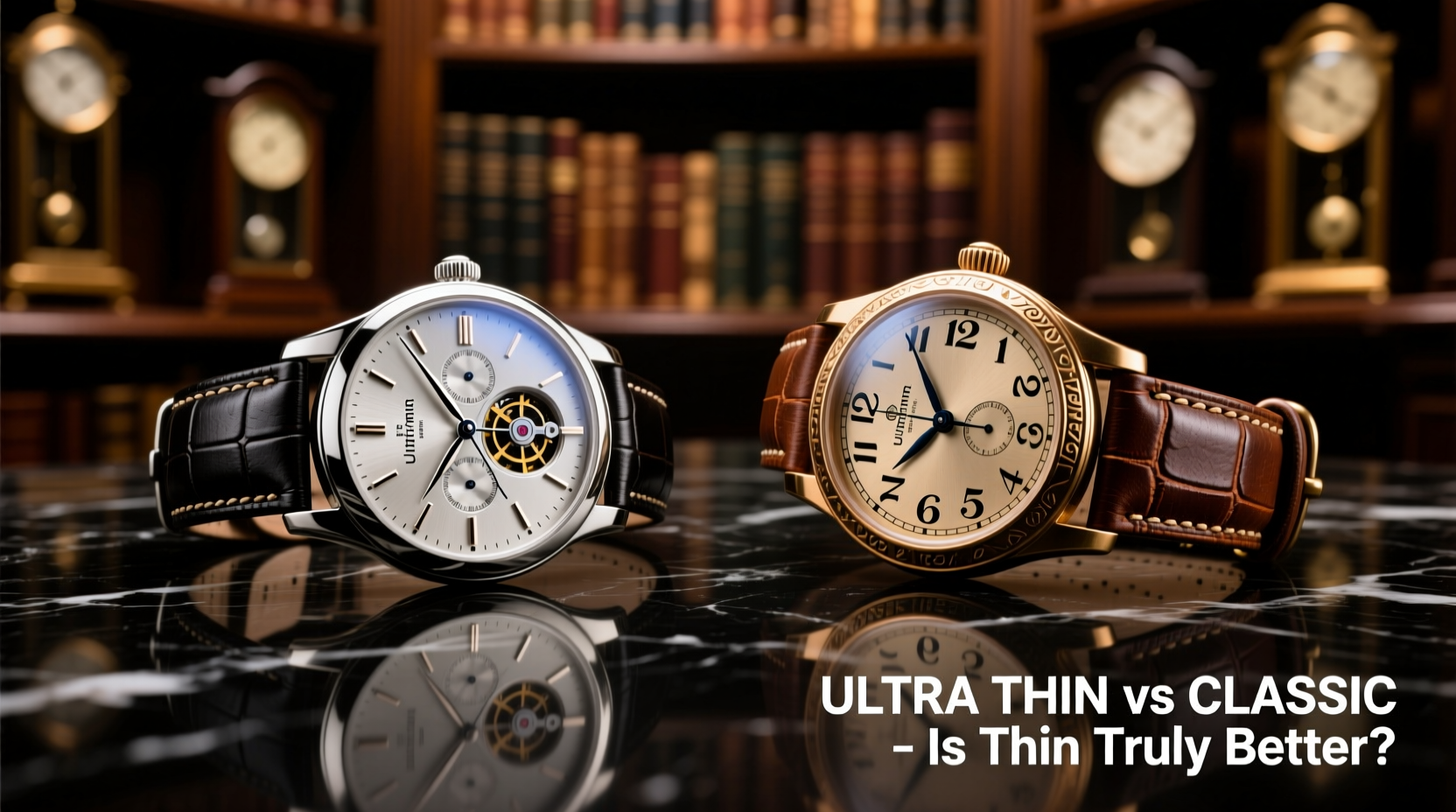
Ultra-thin watches trace their roots to the mid-20th century, but recent advancements in movement technology have pushed them into the mainstream. Brands like Piaget, Jaeger LeCoultre, and Bulgari have achieved feats once thought impossible—packing full mechanical movements into cases under 5mm thick. Even luxury sport watches now come in “dressier,” slimmer variants.
Today’s demand is driven by evolving fashion sensibilities. Modern tailoring favors slim-fit suits and layered outfits where a bulky watch can disrupt the drape of fabric. An ultra-thin model slips seamlessly under a shirt cuff, offering discretion without sacrificing elegance. This practical advantage has made them favorites among executives, designers, and those who value subtlety over statement.
Tip: If you frequently wear tailored clothing or work in a corporate environment, an ultra-thin watch enhances professionalism by staying hidden under the cuff when needed.Design & Comfort: How They Feel on Wrist
Comfort is often the most immediate differentiator. Ultra-thin watches distribute weight evenly and sit flush against the wrist, reducing pressure points. This makes them ideal for all-day wear, especially for those with smaller wrists or sensitive skin. The low profile also minimizes snagging on sleeves or keyboards—a small but meaningful detail in daily life.
Classic watches, particularly dive or pilot models, prioritize presence. Their thickness often stems from robust water resistance, rotating bezels, or chronograph complications. While these features serve functional purposes, they can make the watch feel top-heavy or cumbersome during prolonged use. However, many enthusiasts appreciate the heft as a tactile reminder of craftsmanship and mechanical complexity.
It’s not just about thickness—case diameter and lug-to-lug distance matter too. A large but thin watch may still feel awkward if it extends beyond the wrist bones. Conversely, a moderately thick but well-proportioned classic watch can feel balanced and secure.
Key Differences in Wearability
| Feature | Ultra-Thin Watches | Classic Watches |
|---|---|---|
| Thickness | Typically 5–7mm | Often 10–14mm+ |
| Weight | Light to moderate | Moderate to heavy |
| Cuff Clearance | Excellent | Poor to moderate |
| All-Day Comfort | High | Varies (often lower) |
| Dress Code Suitability | Formal, business | Casual, sport, field |
Durability and Practicality: Beyond First Impressions
One of the most overlooked aspects of ultra-thin watches is their vulnerability. To achieve such slimness, manufacturers must minimize case depth, which limits space for gaskets, shock protection, and crown seals. As a result, many ultra-thin models offer only basic water resistance—30 meters at best—making them unsuitable for swimming or showering.
Classic watches, by contrast, are often built for resilience. A Rolex Submariner or Omega Seamaster isn't just thick; its structure is engineered to withstand pressure, impact, and environmental stress. Thicker cases allow for reinforced crystal mounts, screw-down crowns, and deeper internal components—all contributing to longevity.
“An ultra-thin watch is like a grand piano: exquisitely crafted, but not something you take hiking.” — Daniel Roy, Independent Watchmaker & Horological Conservator
This doesn’t mean slim watches are fragile. High-end examples from Patek Philippe or Vacheron Constantin undergo rigorous testing. But they require more mindful handling. Dropping an ultra-thin watch on tile can damage the movement due to limited shock absorption. For active lifestyles or unpredictable environments, classic builds remain more forgiving.
Value and Longevity: Trend or Timeless Investment?
The question of whether ultra-thin watches are “worth it” ultimately comes down to purpose. If your goal is a piece that ages gracefully, holds value, and transcends seasonal trends, consider the resale market. Classic models—especially tool watches with proven track records—tend to appreciate or at least retain value better than niche dress variants.
However, certain ultra-thin pieces defy this pattern. The Piaget Altiplano, for instance, has maintained strong collector interest due to its historical significance and technical mastery. Similarly, vintage Jaeger LeCoultre Futurematics from the 1950s command high prices today, proving that thinness, when executed with innovation, can become iconic.
Yet for every enduring ultra-thin model, there are dozens of fashion-driven releases that fade quickly. These are often powered by quartz movements, made in larger quantities, and lack the emotional resonance of mechanical counterparts. Buyers should distinguish between genuine horological achievement and minimalist marketing.
Tip: When evaluating value, look beyond thickness. Prioritize movement type, brand heritage, production volume, and service history.Mini Case Study: The Executive’s Dilemma
Mark, a 42-year-old financial advisor, owned a robust stainless steel chronograph for years. It was durable and versatile, but he noticed clients occasionally glanced at its bulk during handshakes. After switching to a 5.5mm Breguet Classique, he reported feeling more polished in meetings. The watch didn’t draw attention—but when noticed, it conveyed refinement. He kept his chronograph for weekends, but the ultra-thin became his weekday signature. His experience reflects a broader shift: professional settings increasingly favor understatement over boldness.
How to Choose: A Practical Decision Framework
Selecting between ultra-thin and classic depends less on hype and more on honest self-assessment. Follow this step-by-step guide to find the right fit:
- Evaluate your wardrobe: Do you wear formal attire regularly? If yes, a slim watch integrates better.
- Assess your activity level: Frequent travel, sports, or manual work favor sturdier, thicker models.
- Consider wrist size: Smaller wrists (under 7\") benefit from low-profile designs to avoid imbalance.
- Determine primary use: Is this for business, collecting, or everyday wear? Each context favors different traits.
- Test before buying: Always try both styles side by side. Photos can misrepresent proportions.
Checklist: What to Ask Before Buying
- Does it fit comfortably under my shirt cuff?
- Is the water resistance sufficient for my lifestyle?
- What type of movement does it have (manual, automatic, quartz)?
- Can I easily access servicing for this brand?
- Is it likely to remain stylish in 5–10 years?
Frequently Asked Questions
Are ultra-thin watches less accurate?
No, accuracy depends on the movement, not case thickness. Many ultra-thin watches use high-precision mechanical or quartz calibers. However, thinner movements may be more sensitive to positional variance or shocks, requiring more frequent regulation if hand-wound.
Can I wear an ultra-thin watch every day?
You can, but with caution. Daily wear increases exposure to drops, moisture, and dust. If your routine involves physical tasks, consider alternating with a more durable piece. Regular maintenance is essential to preserve performance.
Do classic watches go out of style?
True classics rarely do. Models like the Audemars Piguet Royal Oak, Cartier Tank, or Tudor Black Bay have endured for decades because their design balances proportion, function, and identity. Trends may influence popularity, but iconic shapes remain relevant.
Conclusion: Substance Over Silhouette
Ultra-thin watches are more than a trend—they represent a legitimate evolution in design philosophy, prioritizing elegance, ergonomics, and technical finesse. But they aren’t universally superior. Their worth depends on how well they align with your needs, not just how sleek they appear in a magazine spread.
Classic watches endure because they were built to last—physically and stylistically. Yet dismissing ultra-thins as mere fashion accessories overlooks the engineering brilliance behind them. The smartest approach isn’t choosing one over the other, but curating a collection where each serves a distinct role.
💬 What’s your go-to watch for daily wear? Share your thoughts and experiences—we’d love to hear how you balance style, comfort, and practicality in your timepiece choices.








