In today’s fast-evolving fashion landscape, the question of whether two-piece skirt suits still hold relevance is more than a passing trend—it's a reflection of shifting workplace culture, personal expression, and sartorial priorities. Once the cornerstone of professional wardrobes, matching sets face increasing competition from curated separates. While some view coordinated suits as outdated, others argue they offer unmatched polish and cohesion. The real answer lies not in declaring one superior, but in understanding when, where, and how each option serves your lifestyle best.
The Evolution of the Two-Piece Skirt Suit
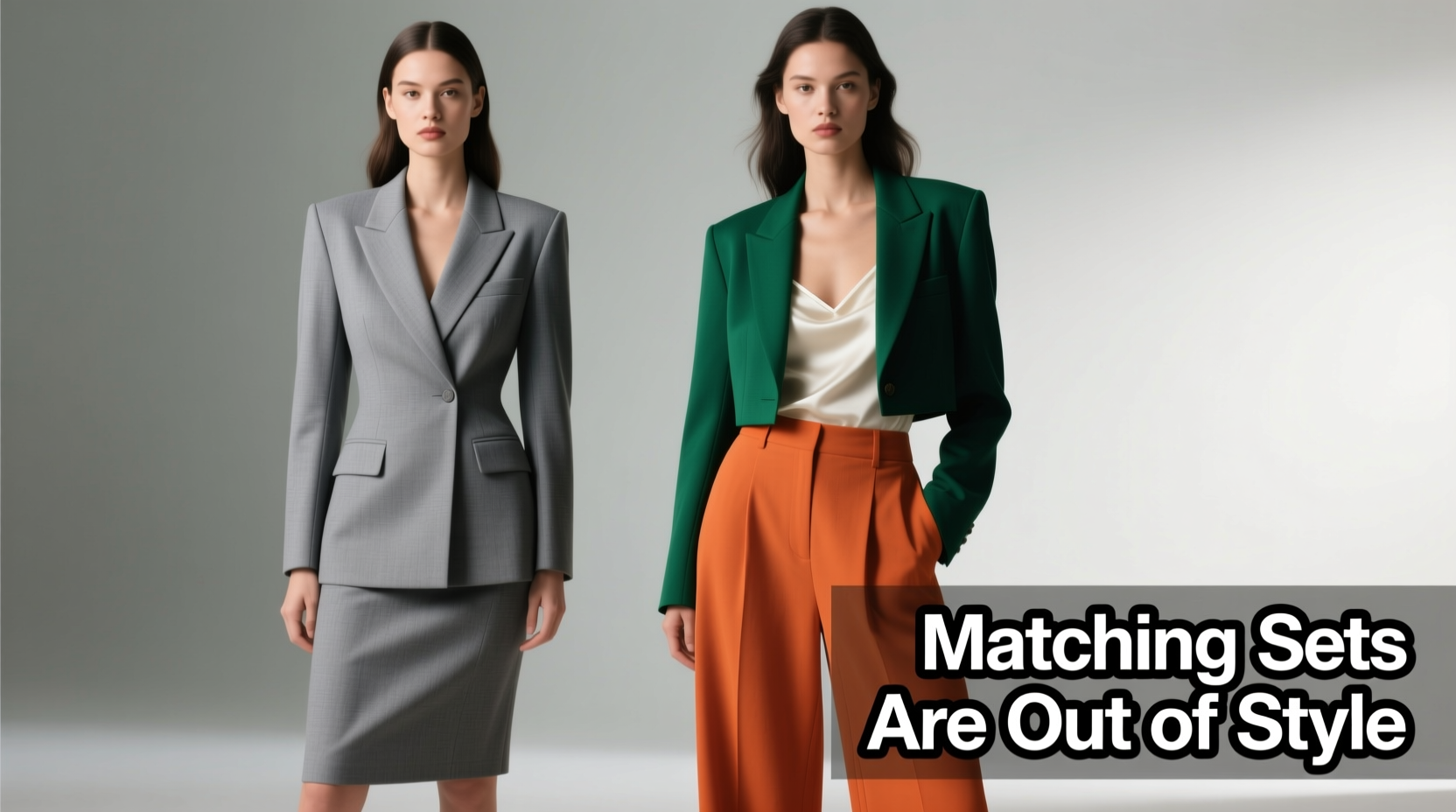
The two-piece skirt suit emerged as a symbol of authority and professionalism in the mid-20th century. Pioneered by designers like Coco Chanel and later embraced by corporate women breaking into male-dominated fields, the matching jacket and skirt combo projected confidence, unity, and attention to detail. For decades, it was the default choice for job interviews, board meetings, and formal events.
Today, while the traditional skirt suit hasn’t disappeared, its dominance has waned. Modern workplaces have adopted more relaxed dress codes, and fashion values individuality over uniformity. Yet, the silhouette remains relevant—especially in conservative industries like law, finance, and government—where polished presentation still matters.
Designers continue to reinvent the classic suit with softer tailoring, cropped jackets, asymmetrical hems, and bold textures. These updates keep the ensemble feeling fresh rather than retro.
Tip: Update a vintage-looking skirt suit with modern accessories—swap pumps for ankle boots or add minimalist gold jewelry.Separates: The Rise of Strategic Styling
Separates—mixing and matching blazers, skirts, trousers, and tops—offer unparalleled flexibility. Instead of being confined to a single coordinated look, wearers can pair a navy blazer with a black pencil skirt one day and a floral midi skirt the next. This modularity extends wardrobe longevity and supports sustainable fashion practices by maximizing outfit combinations.
With separates, you’re not limited by color or fabric consistency. A well-chosen blazer can elevate casual pieces, while tailored skirts can transition from office to evening with a simple top change. This adaptability makes separates ideal for hybrid lifestyles where work, social engagements, and travel intersect.
Fashion influencers and stylists increasingly favor separates for their creative potential. “The power of separates lies in curation,” says New York stylist Lena Torres. “It’s not about throwing things together—it’s about building a vocabulary of pieces that speak to your identity.”
“Matching sets signal formality; separates signal intentionality.” — Lena Torres, Fashion Stylist
Matching Sets vs. Separates: A Practical Comparison
To understand which approach suits your needs, consider functionality, cost, and styling effort. The following table outlines key differences:
| Factor | Two-Piece Skirt Suit | Separes (Mix & Match) |
|---|---|---|
| Time Efficiency | High – Ready-to-wear coordination | Medium – Requires thoughtful pairing |
| Versatility | Low – Limited to full-set wear or partial use | High – Multiple combinations possible |
| Professional Impact | Strong – Projects authority and polish | Variable – Depends on execution |
| Cost Efficiency | Moderate – One purchase, limited reuse | High – Each piece used independently |
| Fashion Longevity | Risk of looking dated if cut/style is traditional | Higher – Easier to update with trends |
When Matching Sets Still Shine
Despite growing preference for separates, there are moments when a two-piece skirt suit is not just appropriate—but essential.
- Formal Interviews: In conservative fields, a matching suit conveys seriousness and preparedness.
- Court Appearances: Legal settings demand uniformity and decorum; a skirt suit meets both.
- Corporate Presentations: When commanding attention, a cohesive look minimizes distractions.
- Uniform Dress Codes: Some organizations still require or strongly encourage coordinated business attire.
A real-world example: Sarah Kim, a junior attorney at a Chicago firm, wears her navy wool skirt suit during client depositions. “Clients expect a certain image,” she explains. “Even if I wear separates the rest of the week, that suit gives me credibility in high-stakes situations.”
Mini Case Study: The Hybrid Wardrobe Approach
Marketing executive Naomi Patel faced wardrobe fatigue after years of relying solely on separates. While flexible, her closet lacked cohesion. She decided to invest in one modern two-piece skirt suit in a soft taupe bouclé fabric. Paired with a silk camisole, it became her go-to for pitch meetings. On casual Fridays, she wears the skirt with a tucked-in sweater and sneakers, and the jacket with jeans and loafers.
This hybrid model—owning a few coordinated sets while building around them with separates—allowed Naomi to balance professionalism with personal style. Her experience reflects a broader trend: intentional integration, not outright rejection, of matching sets.
How to Future-Proof Your Professional Wardrobe
Whether you lean toward suits or separates, longevity comes down to smart choices. Follow this checklist to build a timeless, adaptable collection:
Checklist: Building a Balanced Work Wardrobe- Invest in one well-tailored two-piece skirt suit in a neutral tone (navy, gray, or charcoal).
- Choose separates in complementary colors and weights (e.g., a wool-blend blazer with a matching-line skirt).
- Prioritize fabric quality—wool blends, crepe, and structured cottons last longer and drape better.
- Ensure consistent undertones (cool, warm, or neutral) across all pieces for effortless mixing.
- Add statement separates—like a patterned skirt or textured blazer—to inject personality.
- Store suits together on padded hangers to maintain shape and prevent mismatched storage.
FAQ: Common Questions About Matching Sets and Separates
Are matching sets completely out of style?
No. While less dominant than in previous decades, matching sets remain stylish when updated with contemporary cuts, fabrics, and styling. A sharply tailored skirt suit in a modern silhouette is far from outdated—it’s a strategic tool in a polished wardrobe.
Can I mix a skirt suit jacket with other bottoms?
Yes, if the fabric and weight allow. Blazers from skirt suits often work well with dark trousers or even tailored denim, especially if they’re unlined or in lightweight material. Avoid pairing with incongruent textures (e.g., a tweed jacket with athletic leggings).
Which option is more sustainable?
Separes generally offer better sustainability due to higher wear frequency per item. However, a high-quality two-piece suit made from durable, ethically sourced materials and worn consistently over years can also be a sustainable choice. The key is mindful consumption, not category preference.
Conclusion: Style Is Personal, Not Prescriptive
The debate between two-piece skirt suits and separates isn’t about obsolescence—it’s about context. Matching sets aren’t out of style; they’ve simply evolved from default uniform to intentional choice. Likewise, separates aren’t inherently more modern; they’re more versatile, but only effective when thoughtfully assembled.
Your wardrobe should reflect your environment, values, and aesthetic—not arbitrary fashion rules. Whether you reach for a coordinated suit or craft an ensemble from separates, what matters most is how you wear it: with confidence, care, and clarity of purpose.
💬 What’s your stance? Do you reach for matching sets or rely on separates? Share your thoughts and styling tips in the comments—let’s redefine professional fashion together.