Crossbody lanyard phone cases have become essential accessories for modern life—offering hands-free convenience, enhanced security, and everyday style. Whether you're navigating a crowded city, traveling, or simply moving between errands, these compact carriers keep your phone within reach while reducing strain on your pockets and hands. But constant contact with skin, clothing, and outdoor environments means they accumulate dirt, oils, bacteria, and grime faster than most realize. Without proper care, materials degrade, straps weaken, and hygiene suffers. This guide delivers a thorough, science-backed approach to cleaning and preserving your lanyard case so it remains clean, functional, and durable over time.
Understanding Your Lanyard Case Materials
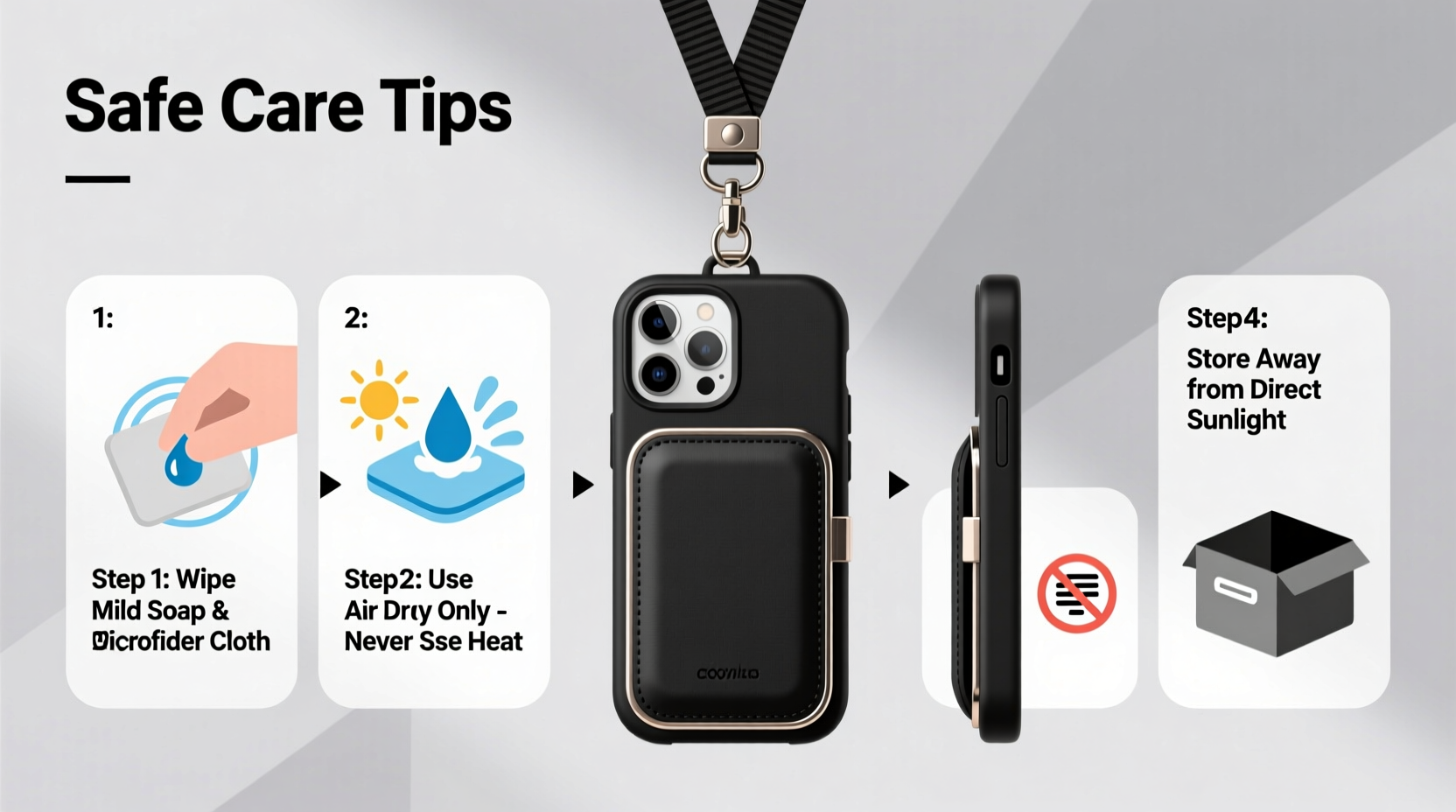
Before cleaning, identify the materials used in your lanyard phone case. Most models combine two or more components: a protective phone sleeve (often silicone, TPU, or hard plastic) and a strap made from nylon, polyester, neoprene, leather, or recycled fabric. Each material responds differently to moisture, friction, and cleaning agents. Misidentifying or mismanaging them can lead to warping, discoloration, or structural failure.
For example, silicone resists water and mild detergents well but may yellow under UV exposure. Nylon straps are durable but prone to absorbing sweat and odors. Leather accents add elegance but require conditioning to prevent cracking. Always check manufacturer labels or product specifications before applying any cleaning method.
Tip: If unsure about the material, test cleaning solutions on a small, hidden area first—like the back of the strap or inside edge.Step-by-Step Cleaning Process
A systematic cleaning routine prevents buildup and extends the lifespan of your lanyard case. Follow this six-step process every 2–4 weeks, depending on usage frequency and environment.
- Remove your phone and detach accessories. Take out your device, pop off any carabiners or clips, and separate modular parts if possible.
- Dry brush surface debris. Use a soft-bristle toothbrush to gently dislodge dust, lint, and pocket residue from seams and crevices.
- Prepare a mild cleaning solution. Mix lukewarm water with a drop of pH-neutral dish soap or gentle hand wash. Avoid bleach, alcohol, or abrasive cleaners.
- Clean the strap and case body. Dip a microfiber cloth into the solution, wring thoroughly, and wipe all surfaces. For textured areas, use the damp brush with light pressure.
- Rinse and dry properly. Wipe away soap residue with a clean, damp cloth. Never submerge electronic-compatible cases unless labeled waterproof. Air-dry completely—away from direct sunlight or heat sources—for at least 4 hours.
- Sanitize (optional). After drying, lightly mist non-porous surfaces with 70% isopropyl alcohol using a spray bottle, then wipe immediately. Do not apply to fabric or leather sections.
“Daily contact transforms lanyards into bacterial reservoirs. Regular cleaning reduces microbial load by up to 95%.” — Dr. Lena Patel, Microbiologist & Public Health Researcher
Do’s and Don’ts of Lanyard Maintenance
To preserve both appearance and function, follow best practices while avoiding common mistakes that accelerate wear.
| Do’s | Don’ts |
|---|---|
| Wipe down after heavy sweating or rain exposure | Machine wash unless explicitly stated as safe |
| Use a microfiber cloth for polishing | Soak leather or fabric straps in water |
| Store flat or hung when not in use | Leave in hot cars or near radiators |
| Condition leather components monthly | Use household disinfectants like Clorox wipes |
| Inspect stitching and buckles weekly | Over-tighten adjustable sliders |
Real-World Example: The Commuter’s Dilemma
Jamal, a New York City subway rider, used his black nylon lanyard daily for eight months without cleaning. By winter, the strap darkened around the neck area, developed a sour odor, and the clasp began slipping. After researching care methods, he followed the gentle hand-wash protocol outlined here. He restored the color with a baking soda paste (one teaspoon mixed with water), deodorized with a vinegar-water mist (3:1 ratio), and conditioned the snap closure with silicone lubricant. Within a week, the case looked and felt like new. More importantly, Jamal reported increased comfort and confidence using it daily. His experience underscores how neglect compounds small issues into major failures—and how simple maintenance reverses damage.
Tip: Rotate between two lanyard cases weekly to reduce wear and allow full drying time between uses.Long-Term Care Checklist
Maintaining your lanyard case isn't just about periodic cleaning—it's an ongoing practice. Use this checklist monthly to ensure longevity:
- ✅ Inspect for frayed threads, loose rivets, or worn padding
- ✅ Clean phone compartment to remove dust and oil buildup
- ✅ Check clip strength by gently tugging against a fixed object
- ✅ Condition non-fabric straps with appropriate protectant (e.g., silicone spray for synthetics, leather balm for genuine leather)
- ✅ Verify compatibility with updated phone models if using a universal fit case
- ✅ Store in a breathable cotton pouch when traveling or unused for days
Frequently Asked Questions
Can I put my lanyard phone case in the washing machine?
Only if the manufacturer explicitly states it’s machine-washable. Most integrated cases contain rigid components or coatings that deteriorate under agitation and high heat. Hand washing is safer and more effective for preserving integrity.
How often should I replace my lanyard case?
With proper care, a high-quality lanyard case lasts 1.5 to 3 years. Replace it if you notice persistent odors after cleaning, weakened attachment points, cracked materials, or poor phone fit. Safety and hygiene should outweigh sentimental value.
Is it safe to disinfect the case with alcohol wipes?
Limited use of 70% isopropyl alcohol on hard, non-porous surfaces (like TPU or polycarbonate) is generally safe. However, repeated use damages matte finishes and degrades adhesives. Never use alcohol-based products on fabric, canvas, or leather portions.
Final Thoughts: Make Maintenance Effortless
The best cleaning routine is one you actually follow. Integrate lanyard care into existing habits—wipe it down during your nightly phone charge, perform a deep clean every full moon, or pair maintenance with seasonal wardrobe changes. Think of it not as a chore, but as part of responsible tech hygiene. Just as you update software and protect screens, physical upkeep ensures reliability and safety.
Well-maintained lanyard cases offer peace of mind, better ergonomics, and longer service life. They stay fresher, look sharper, and perform reliably when you need them most. A few minutes of attention now saves money, reduces waste, and enhances your daily experience.
💬 Start today: Pick up your lanyard case, inspect it closely, and schedule your first proper cleaning session. Share your before-and-after notes or favorite tips in the comments—your insight could help someone else extend their case’s life too.