When choosing outdoor gear, one of the most practical decisions is what kind of pants to wear—especially when weather turns unpredictable. Tactical pants have gained popularity among hikers, urban commuters, and outdoor workers for their durability and utility. But how do they hold up against dedicated rain pants when the skies open? Is it smart to rely on tactical pants in the rain, or should you invest in a separate pair designed specifically for wet conditions?
The answer isn’t black and white. It depends on your activity, environment, and expectations. This article breaks down the key differences between tactical and rain pants, evaluates real-world performance in wet conditions, and helps you decide whether one type can pull double duty—or if you need both.
Understanding the Core Differences
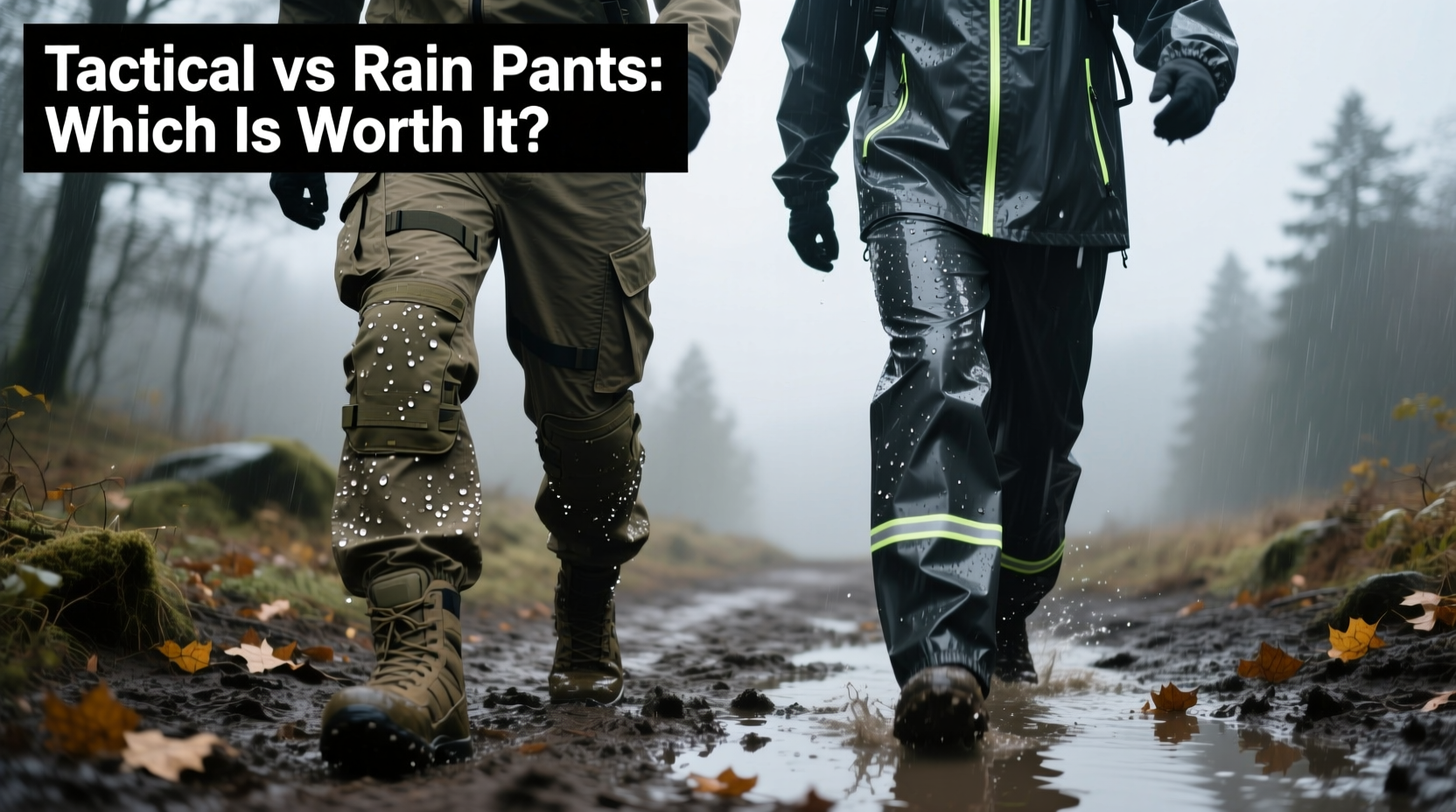
Tactical and rain pants serve different primary purposes, which shapes their design, materials, and functionality.
- Tactical pants are built for durability, mobility, and storage. They’re typically made from ripstop nylon or cotton-poly blends, feature reinforced knees and seats, and include multiple pockets (including MOLLE-compatible webbing). Their goal is versatility across rugged environments.
- Rain pants, on the other hand, are engineered for weather protection. They use waterproof membranes like Gore-Tex or coated polyester, with sealed seams and minimal external features to prevent water ingress. Breathability and packability are top priorities.
While some tactical pants incorporate water-resistant treatments, few are fully waterproof. Rain pants prioritize staying dry over carrying gear or enduring abrasion.
Tip: Never assume a \"water-resistant\" tactical pant will keep you dry in heavy rain—it may shed light moisture but won’t replace a true rain shell.Performance in Wet Conditions: A Side-by-Side Comparison
| Feature | Tactical Pants | Rain Pants |
|---|---|---|
| Water Resistance | Moderate (DWR-treated fabric; not fully sealed) | High (fully waterproof with taped seams) |
| Breathability | Good to moderate (depends on material blend) | Variable (premium models breathe well; budget ones trap heat) |
| Durability | Excellent (abrasion-resistant, reinforced stitching) | Fair to poor (thin fabrics prone to tearing) |
| Pocket Utility | High (multiple secure, deep pockets) | Low (minimal or no pockets) |
| Packability | Poor (bulky, don’t compress well) | Excellent (often fits in its own pocket) |
| Comfort in Dry Weather | Excellent (flexible, breathable, functional) | Poor (plastic-like feel, noisy, restrictive) |
This comparison shows that each type excels in different areas. Tactical pants offer long-term wearability and utility but fall short in sustained downpours. Rain pants deliver essential wet-weather protection but lack comfort and function outside rainy scenarios.
Real-World Scenario: Hiking the Pacific Northwest Trail
Consider Alex, an experienced hiker tackling a multi-day trek through Washington’s Olympic Peninsula. The forecast calls for intermittent drizzle and sudden storms. He packs his favorite tactical cargo pants—durable, comfortable, and loaded with pockets for navigation tools and snacks.
On day one, a light mist rolls in. His pants’ DWR coating beads water initially, keeping him dry for about 30 minutes. But as the rain intensifies, moisture seeps through the fabric and waistband. By midday, his legs are damp, and the soaked fabric clings uncomfortably. Worse, the thick material dries slowly overnight, leaving him starting day two in cold, clammy pants.
In contrast, another hiker wears lightweight rain pants over her hiking trousers. When the rain hits, she zips them on in seconds. Despite hours in steady rain, her base layers stay dry. After the storm passes, she removes the shells, packs them into a pouch, and continues comfortably.
This example illustrates a crucial point: relying solely on tactical pants in persistently wet climates risks discomfort and reduced safety due to prolonged exposure to dampness.
“Waterproof doesn’t mean breathable unless engineered for both. Many users confuse water resistance with full protection—and end up hypothermic because their ‘tough’ pants held more water than air.” — Dr. Lena Torres, Outdoor Safety Researcher, National Institute for Wilderness Health
Can Tactical Pants Be Made More Rain-Resistant?
Yes—with limitations. Several strategies can enhance a tactical pant’s performance in light rain:
- Reapply DWR treatment: Over time, the factory-applied water-repellent finish wears off. Use a spray-on DWR renewer (like Nikwax TX.Direct) every few months to restore beading.
- Add a rain shell layer: Wearing tactical pants under lightweight rain chaps or full rain pants combines durability with waterproofing.
- Choose hybrid models: Some brands now make “all-weather tactical pants” with laminated membranes (e.g., Fjällräven Expedition or 5.11 TDU with HyrdroTech). These bridge the gap but often cost more and weigh heavier.
- Pair with gaiters: Prevents runoff from entering at the ankle, especially helpful in muddy or snowy terrain.
Checklist: Choosing Between Tactical and Rain Pants
Use this checklist to determine the best option for your needs:
- ✅ Will you face sustained rain or standing water? → Choose rain pants or layer them over tactical pants.
- ✅ Do you need to carry tools, phones, or survival gear daily? → Tactical pants offer superior organization.
- ✅ Is weight and pack space critical? → Rain pants win for compactness.
- ✅ Will you be moving through brush, rocks, or urban debris? → Tactical pants resist tears better.
- ✅ Are you commuting or doing light outdoor work in variable weather? → High-quality tactical pants with DWR may suffice.
FAQ: Common Questions Answered
Can I wear tactical pants in the rain instead of rain pants?
You can in light or brief rain, especially if the pants have a durable water repellent (DWR) finish. However, in heavy or prolonged rain, tactical pants will eventually soak through. For reliable protection, rain pants are necessary.
Are there tactical pants that are actually waterproof?
A few models exist with waterproof membranes, such as the 5.11 ATAC Waterproof or Tru-Spec All-Weather Tactical Pants. These combine tactical features with sealed seams and laminated liners. They’re heavier and less breathable than standard tactical pants but perform much better in wet conditions.
Should I carry rain pants even if I wear tactical pants?
Yes, if you're venturing into unpredictable weather. Think of rain pants as insurance. Even the best tactical pants aren’t substitutes for proper rain gear when conditions turn severe. Packable rain pants add minimal weight and can save your day—or your health—in a downpour.
Final Verdict: One or Both?
Tactical pants are excellent all-around performers—comfortable, tough, and highly functional. But they are not a replacement for dedicated rainwear. If your activities involve frequent exposure to rain, snow, or high humidity, owning both types of pants is ideal.
Wear tactical pants as your primary outer layer in dry or mildly damp conditions. Keep a pair of packable rain pants in your backpack or vehicle for when the weather shifts. This layered approach gives you the best of both worlds: utility when you need it, and protection when you must have it.
For urban professionals, weekend adventurers, or emergency responders, the investment in both categories pays off in reliability, comfort, and preparedness.
💬 Have experience using tactical pants in the rain? Share your story or tips below. Help others decide whether to rely on durability—or pack the rain shell.