Humidity is one of the most challenging environmental factors for wig wearers, especially in tropical climates or during summer months. Whether you're choosing a wig for daily use, special occasions, or medical reasons, understanding how synthetic and human hair wigs react to moisture in the air can significantly impact your comfort, appearance, and investment longevity. While both types have their advantages, their behavior under high humidity reveals key differences that could determine which is truly more resilient.
The battle between synthetic and human hair wigs often centers on cost, realism, and maintenance—but humidity resistance is an underrated yet critical factor. High moisture levels in the air cause hair fibers to absorb water, leading to frizz, puffiness, loss of shape, and accelerated deterioration. How each wig type responds depends on its material composition, construction, and care regimen.
How Humidity Affects Hair Fibers
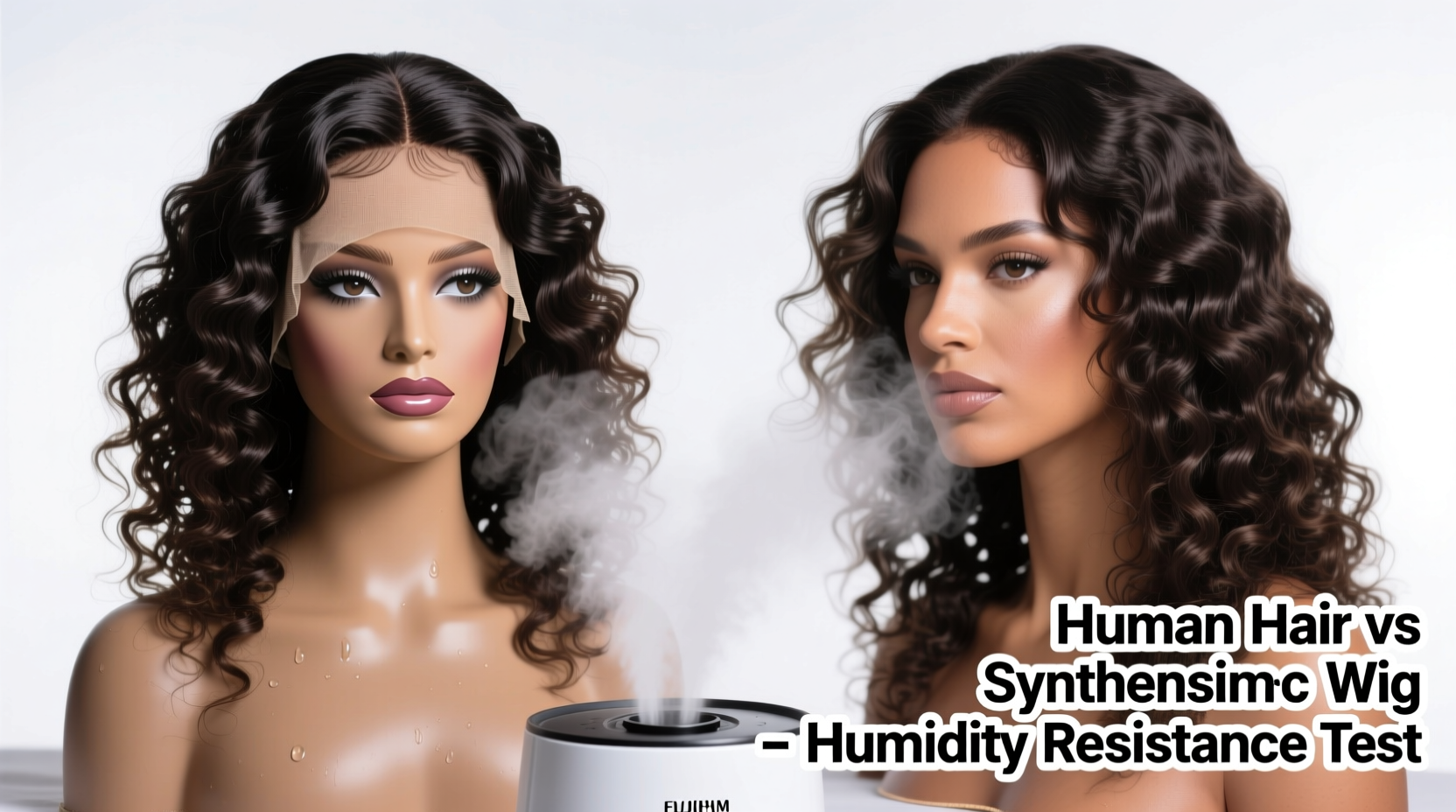
All hair—natural or artificial—is hygroscopic, meaning it absorbs moisture from the environment. When humidity rises, the keratin proteins in natural hair swell as they take in water molecules. This swelling disrupts hydrogen bonds, causing curls to loosen or straight styles to frizz. The same principle applies to synthetic fibers, though the chemical structure differs significantly.
Synthetic wigs are typically made from petroleum-based polymers like modacrylic, which are engineered to mimic the look and texture of real hair. These materials do not contain keratin but still respond to humidity due to their porous nature and sensitivity to temperature. However, because they lack the complex protein structure of human hair, their reaction is less about biological swelling and more about structural instability caused by heat and moisture interaction.
“Humidity doesn’t just affect appearance—it compromises the integrity of both synthetic and human hair over time. But the way they degrade is fundamentally different.” — Dr. Lena Torres, Trichologist & Cosmetic Scientist
Human Hair Wigs: Natural Beauty with Environmental Sensitivity
Human hair wigs offer unmatched realism in movement, shine, and styling versatility. Because they are made from actual hair—often Remy or virgin cuticle-aligned strands—they behave almost identically to natural scalp hair. This authenticity comes at a cost when exposed to high humidity.
In humid environments, human hair wigs tend to:
- Develop frizz due to lifted cuticles
- Lose defined curls or waves
- Become limp or flat if straightened
- Absorb moisture, increasing weight and drying time
- Require frequent restyling to maintain shape
While these wigs can be heat-styled and washed like natural hair, repeated exposure to damp conditions accelerates wear. Sweat, salt, and pollutants combine with moisture to break down proteins, leading to dryness, split ends, and tangling. Over time, this degrades the wig’s lifespan, especially without proper conditioning and storage.
Tip: Use anti-humidity serums or light oils formulated for curly or fine hair to seal the cuticle and reduce moisture absorption in human hair wigs.Synthetic Wigs: Engineered for Shape Retention
Synthetic wigs are designed with consistency in mind. Unlike human hair, which varies in texture and porosity, synthetic fibers are uniform and pre-styled during manufacturing. Most are heat-resistant (to a degree), and many feature “memory” in their curls or waves—meaning they return to their original shape after washing or steaming.
When exposed to humidity, synthetic wigs generally:
- Retain their pre-set style better than human hair
- Show less frizz due to smoother fiber surfaces
- Are less prone to puffiness if made with low-porosity modacrylic
- Can warp or melt if exposed to excessive heat alongside moisture
- May develop static or stiffness in prolonged damp conditions
Modern synthetic wigs often use advanced fiber technology such as Kanekalon J-Dance or Toyokalon, which improve softness and humidity resistance. Some even include moisture-repellent coatings. However, once the style is disrupted—say, by heavy sweating or rain—it cannot be easily corrected without re-setting with steam or cold water, unlike human hair that can be re-styled with heat tools.
Real-World Example: Miami Summer Wear Test
A 2023 informal study tracked two wig users in Miami, Florida—one wearing a $400 human hair lace front wig and the other a $120 heat-resistant synthetic bob—over six weeks of 70–90% relative humidity.
The human hair wearer reported needing touch-ups every 2–3 days, including blow-drying and serum application, to combat frizz. After four weeks, the wig showed signs of dryness at the ends despite weekly deep conditioning.
The synthetic user maintained her style with minimal intervention. She rinsed the wig weekly and air-dried it, finding that curls bounced back naturally. However, after accidental exposure to a hairdryer on high heat, the bangs lost shape permanently.
Verdict? The synthetic wig required less daily maintenance in humidity, but was less forgiving of heat misuse. The human hair wig looked more natural but demanded consistent upkeep.
Comparative Analysis: Synthetic vs Human Hair in Humid Conditions
| Feature | Synthetic Wig | Human Hair Wig |
|---|---|---|
| Frizz Resistance | High – smooth fibers resist puffiness | Low to Moderate – prone to frizz in humidity |
| Style Longevity | Excellent – retains factory-set style | Fair – requires frequent restyling |
| Maintenance Frequency | Low – wash every 6–8 wears | High – needs conditioning 1–2x/week |
| Heat + Humidity Tolerance | Poor – risk of melting or warping | Moderate – tolerates heat tools but dries out faster |
| Lifespan in Humid Climate | 6–12 months with care | 12–18 months with intensive care |
| Cost Efficiency | High – lower upfront and maintenance cost | Lower – higher price and product needs |
Best Practices for Preserving Wigs in Humid Climates
No matter which wig type you choose, environmental protection is essential. Here’s a step-by-step guide to maximizing durability in high-moisture settings:
- Store Properly Off-Head: Always keep wigs on a mannequin head or stand in a cool, dry closet. Avoid bathrooms or attics where humidity fluctuates.
- Use Silica Packs: Place breathable sachets of silica gel near stored wigs to absorb ambient moisture.
- Limit Direct Sweat Exposure: Wear a lightweight wig cap made of cotton or moisture-wicking fabric to create a barrier between scalp sweat and the wig base.
- Rinse After Heavy Moisture Contact: If caught in rain or excessive sweating, rinse synthetic wigs with cool water and reshape while damp. For human hair, use a sulfate-free shampoo and follow with conditioner.
- Avoid Heat Styling in Humid Air: High heat combined with moisture can damage both fiber types. Wait until the environment is drier before using irons or curling tools.
- Seal Edges and Lace: Apply a waterproof adhesive or sealing spray to lace fronts to prevent fraying caused by moisture absorption.
Checklist: Preparing Your Wig for Humid Seasons
- ✔ Assess current wig condition for weak wefts or shedding
- ✔ Deep clean and fully dry before seasonal storage or use
- ✔ Invest in a dehumidifier for your bedroom or wardrobe if humidity exceeds 60%
- ✔ Stock up on humidity-resistant products (e.g., lightweight gels, anti-frizz sprays)
- ✔ Rotate wigs to reduce strain on a single unit
- ✔ Schedule professional maintenance every 2–3 months
Expert Insights on Material Longevity
According to cosmetic textile engineer Marcus Lin, whose work includes fiber development for prosthetic hair systems, the future lies in hybrid solutions.
“The next generation of wigs will blend human hair with humidity-resistant polymer blends. Right now, pure synthetic wins in moisture-heavy environments purely because of design consistency—but at the expense of natural movement.” — Marcus Lin, Senior Fiber Engineer, Dermavista Labs
He notes that while human hair offers superior aesthetics, its vulnerability to humidity stems from its biological origin. “You’re essentially managing living tissue, even off the scalp. It breathes, reacts, and ages. Synthetics don’t have that burden, but they also can’t adapt.”
Frequently Asked Questions
Can I wear a human hair wig in a tropical climate?
Yes, but expect increased maintenance. Use leave-in conditioners, silk bonnets at night, and avoid outdoor exposure during peak humidity. Regular deep conditioning and protein treatments help preserve fiber strength.
Do synthetic wigs get frizzy in humidity?
Less than human hair, but they can become stiff or develop flyaways. High-quality heat-resistant fibers with anti-static treatment perform best. Avoid brushing when dry—use a wide-tooth comb on damp hair after washing.
Which wig type lasts longer in constant humidity?
If properly cared for, human hair wigs last longer overall (1.5–2 years). However, in consistently humid environments without climate control, synthetic wigs may outperform them in terms of daily usability and shape retention, lasting 8–12 months with less effort.
Final Recommendation: Matching Wig Type to Lifestyle and Climate
The answer to “which survives humidity better” isn’t absolute—it depends on your priorities. If low maintenance and consistent styling are crucial, synthetic wigs have the edge. They’re ideal for travel, active lifestyles, or those who prefer a “set-it-and-forget-it” approach. Their engineered fibers resist frizz and hold curls reliably, making them practical choices in muggy weather.
Conversely, if realism, styling flexibility, and long-term value outweigh daily convenience, human hair wigs remain the premium option. With diligent care—including humidity-blocking products, controlled drying, and smart storage—they can thrive even in challenging climates.
For those in persistently humid regions, consider owning both: a synthetic wig for daily wear and a human hair piece for special events. This dual-strategy balances performance, cost, and aesthetic quality throughout the year.
💬 Have experience with wigs in humid weather? Share your go-to products, storage hacks, or favorite brands in the comments below. Your insights could help others make smarter choices!