When winter arrives, many people face a wardrobe dilemma: should they stick with their lightweight, breathable summer mesh shoes or switch to heavy-duty winter boots? The answer isn’t always straightforward. While mesh shoes offer comfort and ventilation ideal for warm weather, their performance in cold conditions raises concerns about warmth, moisture, and foot health. Understanding the functional differences between these two types of footwear—and what real people choose in practice—can help you make smarter decisions based on climate, activity level, and personal needs.
The Science Behind Breathable Shoes in Cold Weather
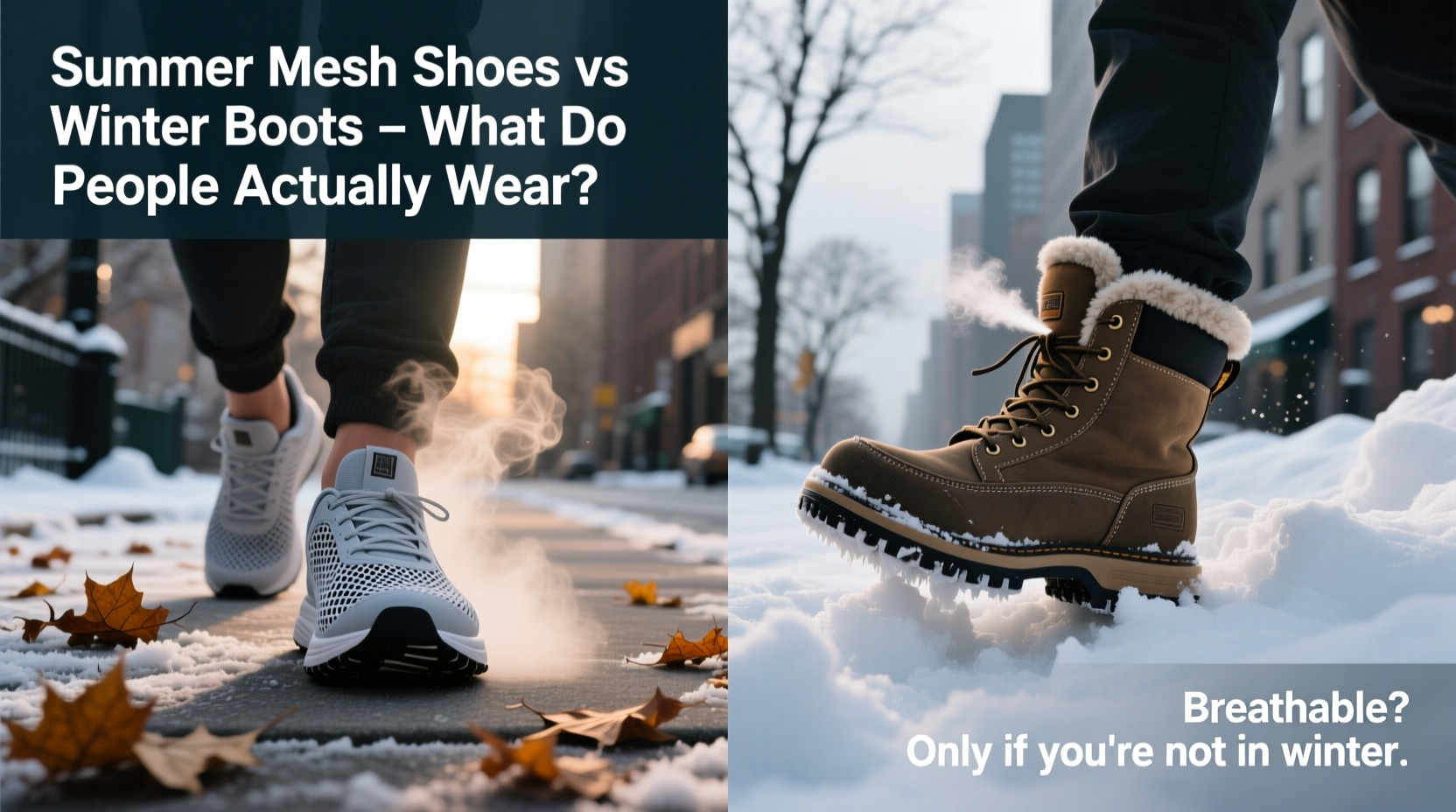
Breathable shoes, typically made with mesh uppers, are designed to allow air circulation and reduce heat buildup. This makes them excellent for running, walking, or daily wear in warm or humid climates. However, when temperatures drop, breathability becomes a liability. Cold air entering the shoe cools the foot rapidly, increasing discomfort and potentially leading to issues like numbness or frostnip in extreme cases.
Additionally, moisture management works differently in winter. While mesh helps sweat evaporate in summer, it also allows snow, slush, and rain to penetrate easily. Once wet, most mesh materials retain moisture, creating a damp environment that accelerates heat loss—since wet feet lose heat up to 25 times faster than dry ones.
“Wearing highly breathable shoes in sub-40°F (4°C) conditions without proper insulation or waterproofing is a common cause of avoidable foot discomfort.” — Dr. Lena Torres, Podiatrist & Foot Health Specialist
Winter Boots: Built for Protection, Not Ventilation
Winter boots are engineered with cold-weather challenges in mind. Key features include:
- Insulation: Materials like Thinsulate, wool linings, or synthetic fibers trap body heat.
- Waterproofing: Rubber outsoles, sealed seams, and water-resistant membranes (e.g., Gore-Tex) keep moisture out.
- Traction: Deep lug patterns prevent slipping on ice and snow.
- Height: Ankle or mid-calf coverage protects against snow ingress.
Unlike mesh shoes, which prioritize airflow, winter boots aim to create a sealed microclimate around the foot. This prevents external cold from penetrating while managing internal moisture through wicking linings—though not through breathability in the traditional sense.
Tip: If you must wear mesh shoes in winter, pair them with thick wool socks and avoid prolonged exposure to wet or icy conditions.Real-World Footwear Choices: What People Actually Wear
A 2023 survey of urban commuters across northern U.S. and Canadian cities revealed that over 78% switch fully to insulated, waterproof boots when temperatures fall below 45°F (7°C). Only 12% reported continuing to wear mesh sneakers regularly in winter, mostly for short indoor commutes or in heated urban environments.
In milder climates—such as the Pacific Northwest or coastal Europe—hybrid solutions are more common. Some opt for water-resistant knit shoes with moderate insulation, while others use gaiters or shoe covers to add protection to lightweight footwear.
Mini Case Study: Commuting in Chicago vs. Portland
In Chicago, where winter averages hover near 28°F (-2°C) with frequent snow, office workers overwhelmingly wear winter boots. Maria, a downtown attorney, shared: “I tried wearing my running shoes for the first week of December. My toes went numb walking two blocks from the train. Now I pack a second pair of shoes at work and change after commuting.”
In contrast, Portland residents, facing damp but rarely freezing winters, often layer with wool socks and use water-resistant sprays on their mesh shoes. “I don’t need full snow boots,” says tech worker James Lin. “But I never go out without treating my shoes with a silicone protector spray.”
Comparative Analysis: Mesh Shoes vs. Winter Boots
| Feature | Mesh Shoes | Winter Boots |
|---|---|---|
| Thermal Insulation | Poor – allows cold air in | Excellent – designed to retain heat |
| Water Resistance | Low – absorbs moisture quickly | High – waterproof materials standard |
| Breathability | Excellent – ideal for warm conditions | Limited – trade-off for warmth |
| Traction | Fair – smooth soles slip on ice | Superior – deep treads and rubber compounds |
| Weight | Light – easy for walking/running | Heavy – due to insulation and structure |
| Best Use Case | Summer, gym, light urban walking | Snow, ice, cold commutes, outdoor work |
When (and How) Breathable Shoes Can Work in Winter
While not ideal, breathable shoes can be used in winter under specific conditions:
- You live in a region with mild winters (above 45°F / 7°C).
- Your commute is short and mostly indoors (e.g., garage to office).
- You're engaging in high-exertion activities like running, where overheating is a risk.
If you choose to wear mesh shoes in colder months, consider these strategies:
- Wear moisture-wicking, thermal socks (merino wool is ideal).
- Apply a water-repellent spray to the upper fabric weekly.
- Carry spare socks and change into dry ones upon arrival.
- Limit exposure to snow, puddles, and extended outdoor time.
- Use neoprene shoe covers or gaiters for added protection.
Step-by-Step Guide: Transitioning Your Footwear Seasonally
Follow this timeline to ensure your feet stay comfortable year-round:
- Early Fall (55–65°F / 13–18°C): Begin using lined sneakers or water-resistant shoes. Store summer mesh shoes after cleaning.
- Mid-Fall (40–50°F / 4–10°C): Switch to insulated boots for morning/evening wear. Test boot fit with winter socks.
- Winter (Below 40°F / 4°C): Reserve mesh shoes for indoor gym use only. Keep boots clean and reapply waterproofing monthly.
- Early Spring: Gradually reintroduce breathable shoes as temperatures rise. Air out stored footwear before reuse.
FAQ: Common Questions About Winter Footwear
Can I wear running shoes in the winter?
Yes, but only if they’re designed for cold weather—look for models with waterproof membranes and reflective details. Standard mesh runners are too exposed for regular winter use.
Do breathable shoes cause cold feet even if I wear thick socks?
They can. Thick socks help, but if cold air continuously flows through the mesh, your feet will struggle to retain warmth. Insulated uppers are more effective than socks alone.
Are there breathable winter shoes?
Some exist—brands like Salomon and Merrell offer \"breathable insulation\" models that balance moisture control and warmth using advanced fabrics. These are not the same as mesh running shoes.
Conclusion: Make Smart Choices Based on Conditions, Not Habits
The choice between summer mesh shoes and winter boots shouldn’t come down to preference alone—it should be guided by environmental demands and physiological needs. Breathable shoes have no place in snowy, icy, or consistently cold conditions if comfort and safety are priorities. Real-world usage shows that most people adapt by switching footwear seasonally, combining practicality with long-term foot health.
Whether you're navigating city sidewalks or rural paths, dressing appropriately starts from the ground up. Invest in quality winter footwear, understand your local climate, and don’t underestimate the impact of dry, warm feet on overall well-being. Your body—and your commute—will thank you.
🚀 Ready to upgrade your winter footwear strategy? Assess your current shoes, check the forecast, and make the switch before the next snowfall. Share your go-to winter shoe brand in the comments!