
In an age where technology moves faster than jet lag can set in, travelers are reevaluating how they communicate across language barriers. For years, handheld translation devices have been the go-to tool for tourists, business professionals, and language learners navigating foreign countries. But now, a new contender has entered the scene: smart glasses with real-time translation capabilities. Are these sleek, futuristic wearables actually replacing the trusted handheld translator—or is the shift more hype than habit?
The answer isn’t binary. While smart glasses offer undeniable novelty and hands-free convenience, their real-world performance, cost, and accessibility still lag behind the reliability of dedicated handheld devices. Yet early adopters and tech-forward travelers are beginning to make the switch, drawn by seamless integration and instant visual or auditory feedback.
The Evolution of On-the-Go Translation
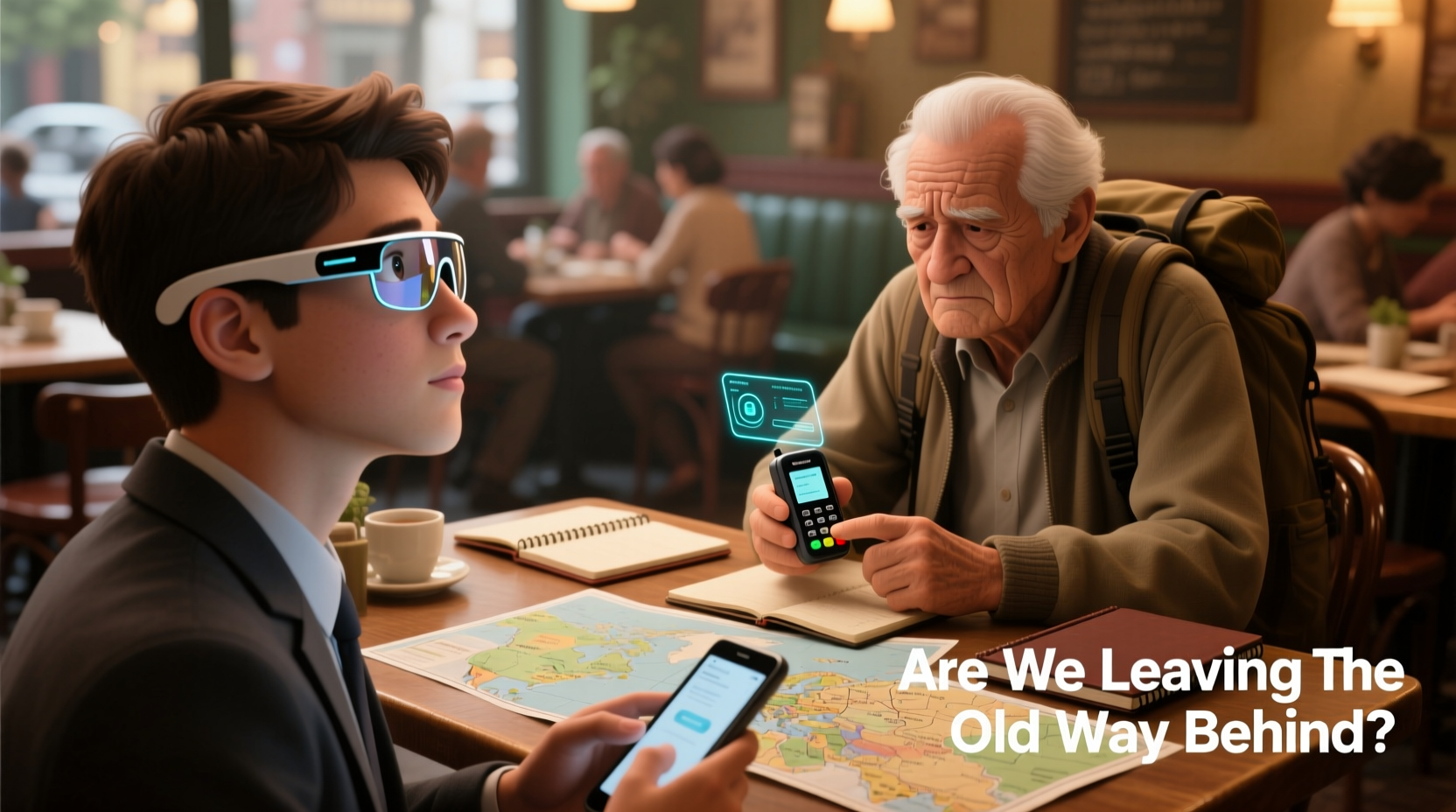
Translation tools have come a long way from phrasebooks and pocket dictionaries. The first generation of electronic translators emerged in the 1990s—clunky, limited, and often comically inaccurate. Fast forward to today, and both smart glasses and modern handheld translators leverage AI-powered natural language processing, cloud-based databases, and voice recognition to deliver near-instant results.
Handheld translators like the Pocketalk, ili, and Timekettle WT2 Edge have carved out a loyal user base by focusing on one thing: clarity. These devices prioritize fast speech-to-speech translation in dozens of languages, often without needing Wi-Fi. In contrast, smart glasses—such as those developed by XREAL, Ray-Ban Meta, and Google’s rumored next-gen hardware—aim to blend translation into everyday vision, overlaying subtitles in real time or feeding audio through discreet earbuds.
The difference lies not just in form factor, but in philosophy: one enhances conversation, the other enhances perception.
Smart Glasses: The Future of Language Assistance?
Smart glasses promise a sci-fi experience: look at a street sign, and translated text appears in your field of view. Hear someone speak, and you receive whispered translations seconds later. Companies like Google and Microsoft have demonstrated prototypes that detect spoken language, transcribe it, translate it, and play it back—all within five seconds.
For travelers who value immersion and minimal disruption, this is revolutionary. No need to pull out a device, press a button, or hold something in your hand while trying to order food or ask for directions. The interaction feels more natural, less mechanical.
“Wearable translation could redefine cross-cultural communication by removing the physical barrier between people.” — Dr. Lena Torres, Human-Computer Interaction Researcher at MIT Media Lab
However, current limitations remain significant. Battery life on most smart glasses lasts only 2–3 hours under heavy translation use. Accuracy drops in noisy environments, and latency—especially in offline mode—can break the flow of conversation. Additionally, privacy concerns arise when recording public conversations, and cultural sensitivity becomes an issue when wearing devices that appear to be constantly listening or filming.
Tip: If using smart glasses for translation, pre-download language packs and test audio settings in quiet environments before relying on them abroad.Handheld Translators: Still the Gold Standard?
Despite the buzz around wearables, handheld translators continue to dominate practical travel scenarios. Devices like the Pocketalk S support over 80 languages, work offline, and deliver highly accurate two-way speech translation with minimal delay. Their larger microphones pick up voices better in crowded spaces, and their dedicated interface reduces errors caused by misactivation.
These tools are also more affordable. A high-end smart glasses setup can cost $500–$1,000, whereas reliable handheld translators range from $150–$300. For budget-conscious travelers or those making occasional trips, the value proposition is clear.
Moreover, handheld devices are easier to share. Handing your glasses to someone else for a conversation isn’t practical or hygienic. But passing a small, durable translator back and forth fosters mutual understanding—and doesn’t require either party to wear anything unfamiliar.
Comparison: Smart Glasses vs Handheld Translators
| Feature | Smart Glasses | Handheld Translators |
|---|---|---|
| Battery Life | 2–4 hours (heavy use) | 8–12 hours |
| Offline Functionality | Limited (varies by model) | Full support |
| Translation Accuracy | Good (context-sensitive errors) | Excellent |
| Ease of Sharing | Low | High |
| Price Range | $500–$1,000+ | $150–$300 |
| Learning Curve | Moderate to High | Low |
Real-World Use: A Mini Case Study
Sophie Kim, a freelance journalist based in Seoul, recently traveled to rural Turkey for a documentary project. She brought both her Ray-Ban Meta glasses with live translation beta features and a Pocketalk Z. Her goal was to interview locals with minimal English proficiency.
In urban areas with stable internet, the glasses worked impressively—displaying translated subtitles during face-to-face interviews and reducing social awkwardness. But in remote villages with poor connectivity, the glasses failed to load language models, while the Pocketalk, using pre-downloaded packs, continued functioning flawlessly.
“I ended up relying on the handheld device 80% of the time,” she said. “The glasses were cool for short interactions, but when I needed precision and reliability, nothing beat holding a dedicated translator in my hand.”
When Each Tool Shines: A Practical Checklist
Choosing between smart glasses and handheld translators depends on your priorities. Use this checklist to decide which fits your needs:
- ✅ Choose smart glasses if:
- You value hands-free operation
- You travel primarily in connected urban areas
- You’re tech-savvy and comfortable troubleshooting glitches
- You want subtle, real-time visual translation (e.g., reading signs)
- ✅ Choose handheld translators if:
- You visit remote or low-connectivity regions
- You prioritize accuracy and battery longevity
- You share translation duties with companions
- You’re on a tighter budget
FAQ: Common Questions About Modern Translation Tools
Can smart glasses translate written text instantly?
Yes, many models use optical character recognition (OCR) to scan and translate text like menus, signs, or documents. However, accuracy varies depending on font, lighting, and language complexity. Handheld scanners often perform better in low-light or cluttered environments.
Do handheld translators require a phone or app?
Most standalone models do not. Devices like the Pocketalk and ili operate independently, connecting directly to cellular networks or using offline AI. Some models offer companion apps for updates or history review, but core functionality remains self-contained.
Are smart glasses safe for continuous use in public?
Legally and ethically, it depends on local norms. In countries like Japan or Germany, recording audio in public without consent can violate privacy laws. Always check regulations and inform others when using wearable recording features.
Conclusion: Not a Replacement—Yet
While smart glasses represent the future of immersive translation, they haven’t yet displaced handheld devices in practical, everyday use. Most travelers aren’t “ditching the old way” so much as supplementing it. The reality is hybrid: tech enthusiasts may start with glasses but keep a handheld unit as backup; professionals prioritize reliability over novelty.
The transition will accelerate as battery life improves, AI becomes more context-aware, and costs decrease. Until then, the handheld translator remains the unsung hero of cross-language communication—less flashy, but far more dependable.
🚀 Ready to upgrade your travel toolkit? Try a handheld translator on your next trip—or experiment with smart glasses if you’re chasing innovation. Share your experience and help shape the future of global communication.








