
Polaroid photography offers a unique blend of nostalgia and instant gratification. But nothing diminishes the joy of pulling a freshly developed photo from your camera like watching it slowly turn yellow over time. This discoloration isn’t just cosmetic—it signals chemical degradation that can permanently damage your memories. The root cause? Poor storage conditions. While Polaroid film is designed for immediate use and display, its lifespan hinges heavily on how you handle and store both unexposed film packs and finished prints. Understanding the chemistry behind the process and implementing precise storage practices can dramatically reduce or even eliminate yellowing.
The Science Behind Yellowing in Polaroid Photos
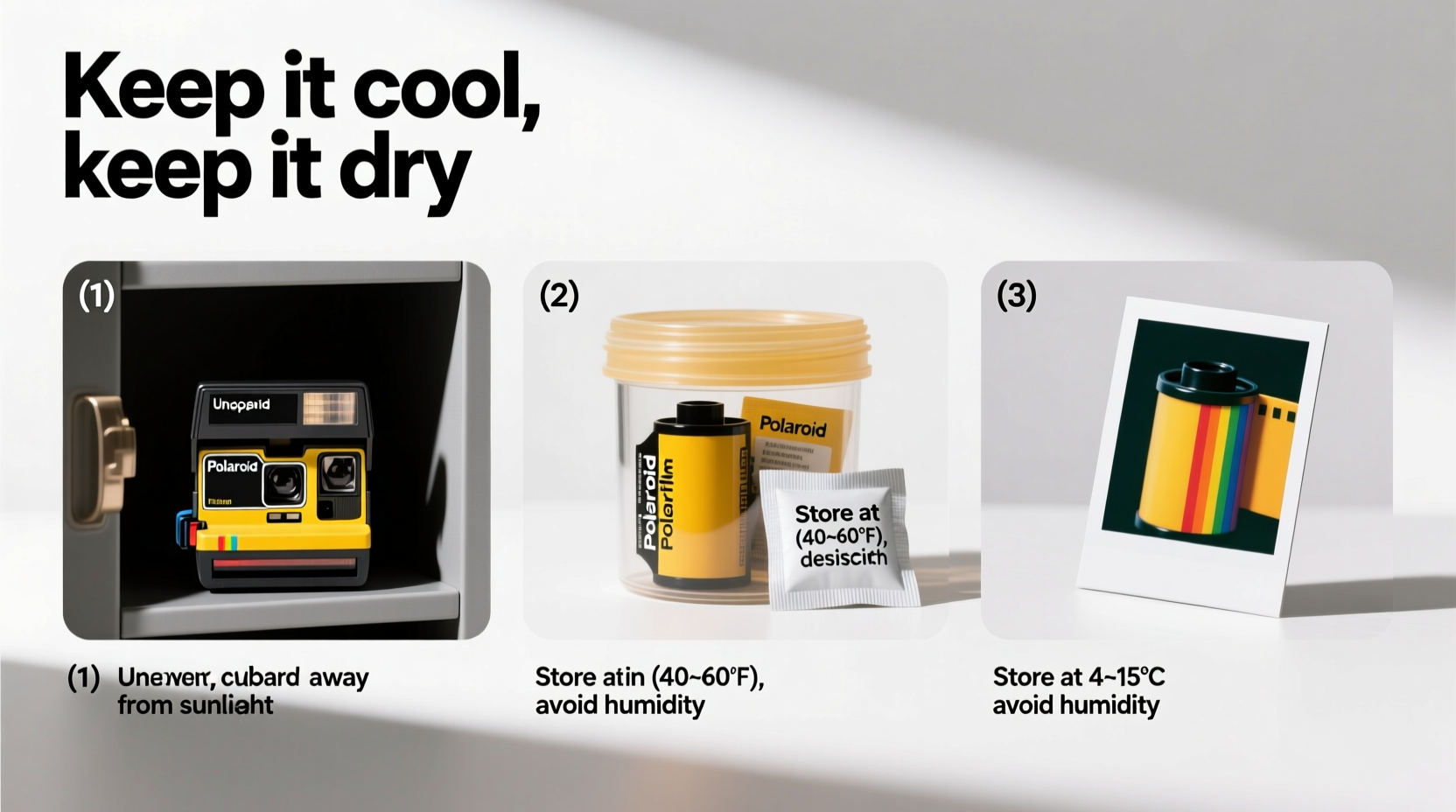
Polaroid photos rely on a complex chemical development process that occurs after ejection from the camera. A network of dyes, reagents, and alkaline solutions work together to form the image. However, this same chemistry makes the print vulnerable to environmental stressors long after development completes. The yellow tint typically appears due to oxidation and breakdown of dye layers, especially when exposed to heat, humidity, or UV light.
The protective layer applied during manufacturing is thin and temporary. Once the photo exits the camera, it begins interacting with air and ambient conditions. High temperatures accelerate chemical reactions within the emulsion, causing color shifts. Humidity promotes mold growth and paper warping, while ultraviolet radiation breaks down organic dyes—particularly blue and green tones—leaving behind a yellowish cast.
“Polaroid prints are not archival by default. Their longevity depends almost entirely on post-exposure care.” — Dr. Lena Torres, Imaging Conservation Specialist, George Eastman Museum
This means that even if you shoot under perfect conditions, improper storage can undo all that effort. The key is to treat each print as a delicate artifact from the moment it develops.
Optimal Storage Conditions for Unexposed Film
Before a photo ever exists, the condition of the film pack determines its potential. Unused Polaroid film contains reactive chemicals sealed in pods. These degrade prematurely if stored incorrectly. Temperature is the most critical factor: all major manufacturers, including Polaroid Originals (now Polaroid), recommend refrigeration for unused film.
Tip: Always store unopened film in the original packaging inside the refrigerator at 4–12°C (39–54°F). Allow it to reach room temperature for 24 hours before use.Why refrigerate? Cold slows down internal chemical reactions, preserving freshness and preventing premature aging of dye developers. However, condensation is a serious risk. Taking film directly from the fridge to a humid environment causes moisture to form on the foil pouch, which can lead to jamming in the camera or uneven development.
Never freeze film. Freezing damages the internal chemistry and can rupture developer pods. Also avoid storing film in garages, attics, or near windows—places where temperatures fluctuate wildly. Even brief exposure to summer heat (above 27°C / 80°F) can ruin a pack.
Do’s and Don’ts of Storing Unused Film
| Do’s | Don’ts |
|---|---|
| Store in original sealed box | Leave film in hot cars or direct sunlight |
| Keep refrigerated below 12°C (54°F) | Freeze film packs |
| Allow warm-up time before use (24 hrs) | Open packaging early |
| Use within 12 months of production date | Store near batteries or strong magnets |
Protecting Developed Prints from Discoloration
Once a photo has fully developed—usually within 10–15 minutes after ejection—it begins its life as a physical object subject to environmental wear. Most people assume the image is “set” at this point, but the truth is that the first few days are crucial for stabilization. During this period, residual chemicals continue to react, and the image remains sensitive to external factors.
To minimize yellowing, keep new prints flat and away from light for at least 24 hours. Avoid touching the image surface; oils from fingers can interfere with the final chemical balance. After stabilization, proper long-term storage becomes essential.
Step-by-Step Guide: How to Store Finished Polaroids
- Wait 24 hours after development before handling or storing.
- Handle by the edges only to prevent fingerprint smudges and oil transfer.
- Place in acid-free sleeves or archival photo protectors. Standard plastic sleeves may contain PVC, which off-gasses and accelerates yellowing.
- Store flat in a rigid box to prevent curling or pressure marks.
- Keep in a cool, dark place between 15–20°C (59–68°F) with low humidity (below 50%).
- Avoid framing immediately. If displaying, use UV-filtering glass and rotate photos periodically.
Curling is another common issue tied to yellowing. As the plastic base and paper layers expand at different rates under heat or moisture, the photo bends. This structural stress further exposes weak points in the dye layer, accelerating discoloration.
Tip: Place finished prints under a light book or photo press for 48 hours to reduce curling without damaging the surface.Real-Life Example: A Collector’s Mistake
Sophie, a vintage camera collector in Portland, accumulated hundreds of Polaroids from the 1980s found in estate sales. She stored them in a wooden drawer near a south-facing window, believing the darkness inside would protect them. Over two years, nearly half her collection developed a deep amber tint, especially along the edges. Some images became completely obscured.
When she consulted a preservation expert, she learned that even indirect sunlight through curtains emits enough UV to degrade dyes over time. The warmth from the sun-heated room pushed humidity levels up during summer, creating ideal conditions for fading and yellowing. After transferring her collection to acid-free boxes in a basement closet (with silica gel packets), no further deterioration occurred. Her experience underscores how subtle environmental factors compound over time.
Environmental Threats and How to Counter Them
Three primary environmental threats contribute to yellowing: heat, light, and moisture. Each operates independently but often synergistically.
- Heat: Speeds up molecular decay. Above 25°C (77°F), chemical instability increases exponentially.
- Light: Especially UV and fluorescent lighting, breaks down chromatic pigments. Blue and green dyes fade first, leaving yellow dominance.
- Moisture: Promotes fungal growth and hydrolysis of binder layers. Relative humidity above 60% significantly raises risk.
Air pollution also plays a role. Ozone, nitrogen oxides, and sulfur compounds in urban environments react with photo surfaces. This is particularly problematic for displays in living rooms or studios near windows.
“Think of your Polaroid like a piece of fruit. It looks fine today, but without refrigeration, it will brown and rot. These photos are organic in behavior, even if they’re man-made.” — Carlos Mendez, Analog Photography Conservator
For those who display Polaroids regularly, rotation is critical. Limit exposure to no more than 4–6 hours per day under LED lighting (which emits minimal UV). Never hang Polaroids in kitchens or bathrooms, where steam and grease accumulate.
Checklist: Protect Your Polaroids from Yellowing
- ✅ Store unused film in the refrigerator (4–12°C)
- ✅ Warm film to room temperature for 24 hours before use
- ✅ Keep developed prints out of direct sunlight for first 24 hours
- ✅ Handle prints by edges only
- ✅ Use acid-free, PVC-free archival sleeves
- ✅ Store flat in a rigid container with desiccant packs
- ✅ Maintain storage environment at 15–20°C and below 50% humidity
- ✅ Avoid hanging Polaroids permanently on walls
- ✅ Rotate displayed photos monthly
- ✅ Inspect collections every 3–6 months for early signs of damage
Frequently Asked Questions
Can I fix a yellowed Polaroid?
Once yellowing occurs due to chemical degradation, it cannot be reversed physically. Digitizing the photo and using color correction software can restore appearance for digital sharing, but the original remains altered. Prevention is the only true solution.
Is it safe to store Polaroids in a regular photo album?
Most standard photo albums use adhesives or plastics that emit harmful gases. Over time, these cause yellowing and sticking. Only use albums labeled “archival,” “acid-free,” and “PVC-free.” Even then, insert glassine interleaving sheets between pages to prevent contact.
Do different Polaroid film types yellow at different rates?
Yes. Older integral films (like SX-70 or 600 series) tend to be more prone to yellowing due to less stable dye chemistry. Newer formulations from Polaroid have improved UV resistance and stabilizers, but still require proper care. Black-and-white films generally last longer than color versions.
Final Thoughts: Treat Every Print Like a Keepsake
The charm of Polaroid lies in its impermanence—but that doesn’t mean we should accept degradation as inevitable. With thoughtful handling and disciplined storage, you can preserve the vibrancy of your instant photos for decades. Whether you're a casual shooter or a dedicated analog artist, every photo deserves protection from the invisible forces of heat, light, and time.
Start today: check your current storage setup. Are your film packs sitting on a shelf in a warm room? Are your favorite prints pinned to a sunlit bulletin board? Small changes now can prevent irreversible damage later. Your future self—and anyone who inherits your collection—will thank you.
💬 Have a Polaroid storage success story or challenge? Share your experience in the comments and help build a community of mindful instant photographers.